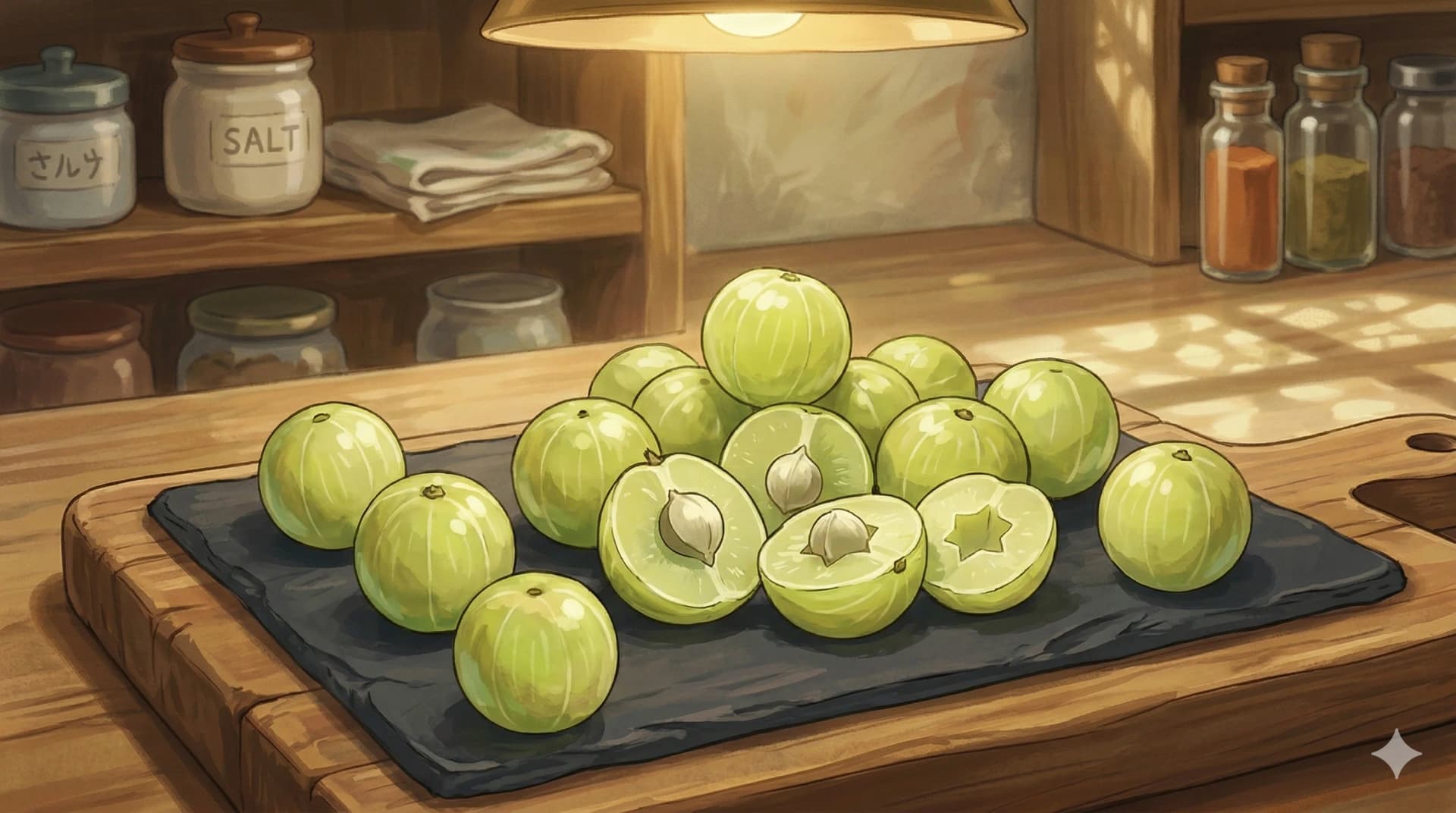
Amla
Also known as: Indian Gooseberry, Amalaki, Emblica officinalis, Phyllanthus emblica
Amla is a small, pale green fruit native to India that occupies a central place in Ayurvedic medicine considered second only to ghee as a rasayana — a rejuvenating food that rebuilds the body's tissues. It is intensely sour, slightly astringent, and strongly bitter when raw, making it unusual as a functional food. Despite its challenging flavor, it is consumed daily across South Asia in powders, pickles, chutneys, and candies, often because people have been told its benefits since childhood.
Flavor Profile
Origin
South Asia, India, Sri Lanka, Southeast Asia
Traditional Medicine Perspectives
Ayurveda
Amla (Amalaki) is considered tridoshic — balancing all three doshas — and is one of Ayurveda's premier rasayanas. It is described as a potent rejuvenator of the blood, liver, and eyes. It is central to Triphala, the most widely prescribed Ayurvedic formula for digestive health and gentle detoxification. Chyawanprash, an ancient jam made with amla and over 40 herbal ingredients, is prescribed as a daily tonic for immunity and vitality.
Modern Scientific Research
Amla contains one of the highest concentrations of vitamin C in any food — approximately 450 to 900 mg per 100g, compared to 50 mg in an orange. Uniquely, amla's vitamin C is bound to tannins that protect it from degradation by heat and oxygen, unlike synthetic ascorbic acid. Research demonstrates powerful antioxidant activity.
Clinical trials show amla reduces total cholesterol, LDL cholesterol, and triglycerides significantly. Studies also document anti-diabetic effects, liver protection, and anti-cancer properties in preclinical research.
Cultural History
Amla appears throughout Ayurvedic literature as a foundational medicine — it is one of the three fruits in Triphala, perhaps Ayurveda's most prescribed compound formula, and is central to the classical rejuvenating preparation chyawanprash. Ancient texts describe amla as containing all five tastes except salty. In Indian culture, the amla tree itself is considered sacred — associated with the god Vishnu and worshipped during the festival of Akshay Navami.
Culinary Uses
Amla is consumed as a fresh fruit (when in season), dried powder, pickle, murabba (sweet preserve), juice, or churna (dried powder blend). Amla powder is added to smoothies, warm water, or herbal preparations. The fresh fruit is eaten with salt and chili in South Asian food culture.
Amla candy (coated in sugar or salt) is a common street food.
Preparation Methods
Mix 1 teaspoon of amla powder in warm water with honey first thing in the morning — a classical Ayurvedic practice. Amla can be juiced with ginger and honey. Fresh amla should be grated or processed quickly as it oxidizes rapidly (though the tannins help slow this).
Traditional Dishes
- Triphala tea
- Chyawanprash
- Amla pickle
- Amla murabba
- Amla juice
Comments
Share your thoughts on this ingredient.
Sign in to comment0 Comments