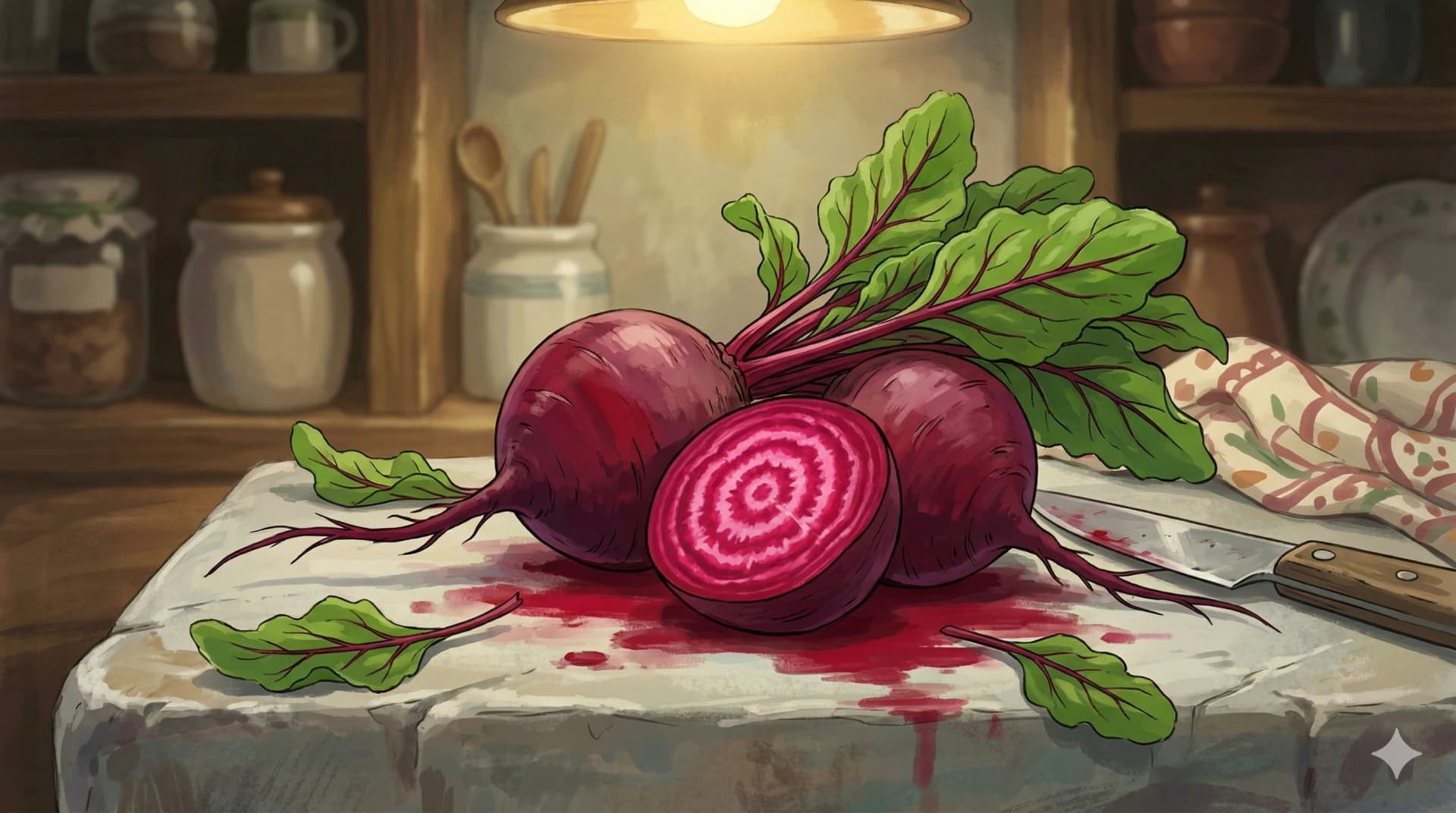
Beetroot
Also known as: Beet, Chukandar, Beta vulgaris
Beetroot is one of the most visually dramatic vegetables in the kitchen: a deep crimson root whose color bleeds into everything it touches, from cutting boards to braising liquids to the palms of the cook. That color, derived from betalain pigments, is not cosmetic. It is a signal of a dense concentration of phytonutrients, and its intensity is a rough proxy for freshness and nutritional potency.
The same compound that stains the hands is the one being studied for cardiovascular and anti-inflammatory effects in clinical research.
In Indian cooking, beetroot is known as chukandar and occupies a different culinary space than it does in Eastern European or British cuisines. Rather than being pickled in vinegar (the dominant Western preparation) or slow-roasted and served whole, chukandar is grated raw and stirred into yogurt for raita, thinly sliced and stir-fried as sabzi, cooked into spiced curries, or reduced with milk and sugar into halwa. The sweetness of beetroot, which is high in natural sucrose, balances readily against the heat of green chili and the acidity of tamarind, making it a natural partner for the flavor vocabulary of South Asian cooking.
The two main types encountered in Indian markets are the familiar dark red table beet and the sugar beet, a larger, paler variety grown industrially for sucrose extraction. The table beet is what is used in cooking. Within table beets, smaller to medium-sized roots tend to be more flavorful and tender than large ones, which can become fibrous and somewhat harsh.
Key facts at a glance:
- It is — A signal of a dense concentration of phytonutrients, and its intensity is a rough proxy for freshness and nutritional potency.
- Within table — Beets, smaller to medium-sized roots tend to be more flavorful and tender than large ones, which can become fibrous and somewhat harsh.
- In Indian cooking — Beetroot is known as chukandar and occupies a different culinary space than it does in Eastern European or British cuisines.
- That color — Derived from betalain pigments, is not cosmetic.
- The same — Compound that stains the hands is the one being studied for cardiovascular and anti-inflammatory effects in clinical research.
- The table — Beet is what is used in cooking.
Flavor Profile
Origin
Mediterranean, North Africa, South Asia
Traditional Medicine Perspectives
Ayurveda:
Beetroot is considered cooling and sweet in Ayurvedic classification, making it beneficial for pitta conditions: inflammation, heat in the blood, skin disorders, and excessive acidity. Its deep red color is associated in Ayurvedic thinking with blood-building properties, and it is traditionally recommended for conditions of blood deficiency, anemia, and weakness following illness or blood loss. The sweetness is considered nourishing and building to the body's tissues (dhatus), particularly the rakta (blood) and mamsa (muscle) tissues. Because of its cooling nature, it is used cautiously in kapha excess and is considered slightly heavy to digest.
Traditional Chinese Medicine:
Chinese medicine similarly associates the color red and the sweet taste with the Heart and Blood. Beetroot is used by some TCM practitioners to tonify Blood, benefit the Liver, and cool the Blood in conditions with heat signs. It is particularly valued for what practitioners describe as "building the yin" while also clearing toxic heat, a combination that makes it useful for chronic inflammatory conditions and for blood-building in anemic states. Its action on the Liver is considered beneficial for detoxification and for smoothing Liver qi stagnation.
Modern Scientific Research
The most extensively studied property of beetroot is its high concentration of inorganic nitrate, which the body converts to nitric oxide through a bacterial-enzymatic process beginning in the mouth. Nitric oxide causes vasodilation, reducing blood pressure and improving blood flow to working muscles. Multiple randomized controlled trials have confirmed that beetroot juice consumption causes measurable reductions in systolic blood pressure, typically in the range of 4 to 10 mmHg, with effects apparent within hours of consumption.
These findings have been replicated across numerous independent research groups and are now considered robust.
Athletic performance research has shown that nitrate loading through beetroot juice improves endurance performance, reduces the oxygen cost of submaximal exercise, and delays the onset of fatigue. Studies in both recreational and competitive athletes have demonstrated measurable benefits to running economy and cycling time trials. This evidence base has made beetroot juice commercially significant as a sports nutrition ingredient.
Beyond cardiovascular and performance applications, the betalain pigments in beetroot (betacyanins and betaxanthins, distinct from anthocyanins found in other red vegetables) have demonstrated antioxidant activity in laboratory assays and show anti-inflammatory effects in several preclinical studies, though clinical evidence for anti-inflammatory benefits in humans remains less developed than the cardiovascular data.
Cultural History
Wild beet, Beta vulgaris in its ancestral form, grew along the Mediterranean coast and into the Middle East and North Africa. Ancient Babylonian and Assyrian records mention beet leaves as food, and the Romans cultivated both the leaves and root, using the leaves primarily as a vegetable and the root medicinally. Roman agricultural texts by Apicius and others describe beet root preparations that would be recognizable today.
The spread of cultivated beetroot across the trade routes of Asia brought it to the Indian subcontinent, where it became assimilated into local culinary traditions over several centuries. By the Mughal period, root vegetables had an established presence in North Indian cooking, and chukandar appears in regional culinary texts and household traditions across the North Indian plains. Unlike many imported vegetables that remained confined to elite or urban cooking, beetroot penetrated deeply into everyday home cooking across Punjab, Rajasthan, and Uttar Pradesh.
In Eastern Europe, the same vegetable became foundational: borscht, the beet-based soup of Ukrainian, Russian, Polish, and Jewish Ashkenazi cuisines, is one of the most regionally significant dishes on the continent, with the deep crimson bowl representing an entire culinary tradition. The parallel development of beet-based culinary cultures across such distant and different cuisines is a testament to the vegetable's adaptability and its appeal across vastly different cooking traditions.
Culinary Uses
Beetroot can be eaten raw, roasted, boiled, steamed, or pressure-cooked. Each method produces a different texture and flavor. Roasting concentrates the sugars and produces a caramelized, intense sweetness with a slightly chewy texture.
Boiling produces softer beets that are easier to peel and have a milder, more uniformly sweet flavor. Pressure cooking is the fastest method and produces results closer to boiling. Raw grated beetroot retains all its vibrant color and a slightly crunchy texture with clean, fresh flavor.
In Indian cooking, raw grated beetroot is the basis for chukandar raita: the grated root is mixed with yogurt, tempered with a small tadka of mustard seeds, curry leaves, and green chili, and seasoned with salt and cumin. The result is cool and slightly sweet against the heat of the tadka, one of the most refreshing preparations in the Indian condiment repertoire. For sabzi, beetroot is cut into matchsticks or small cubes and stir-fried with mustard seeds, curry leaves, coconut (in South Indian versions), and spices.
Beetroot halwa follows the same method as carrot halwa (gajar ka halwa): the grated root is cooked down slowly in ghee, then simmered in full-fat milk with sugar and cardamom until thick and fudge-like.
Preparation Methods
To roast: wrap individual beets in foil with a drizzle of oil and roast at 200C (400F) for 45 to 75 minutes depending on size, until a knife slides in without resistance. Cool, then slip the skins off with your hands (wear gloves to avoid staining).
To boil: place whole unpeeled beets in cold water, bring to a boil, and cook for 30 to 50 minutes until tender. Drain, cool slightly, and peel.
For raw applications (raita, salads): peel raw beet with a vegetable peeler and grate on the large holes of a box grater. Work quickly and use gloves or accept the temporary staining of your hands.
To reduce staining on cutting boards, cut on a surface that can be cleaned immediately, or line the board with plastic wrap. The pigment washes from most surfaces with cold water applied promptly.
Traditional Dishes
- Chukandar raita
- Beetroot sabzi
- Beetroot halwa
- Beetroot chutney
- Borscht
- Beetroot and goat cheese salad
- Beetroot tikki
- Roasted beet with yogurt and herbs
- Beet kvass
- Beetroot pickle (achaar)
Comments
Share your thoughts on this ingredient.
Sign in to comment0 Comments