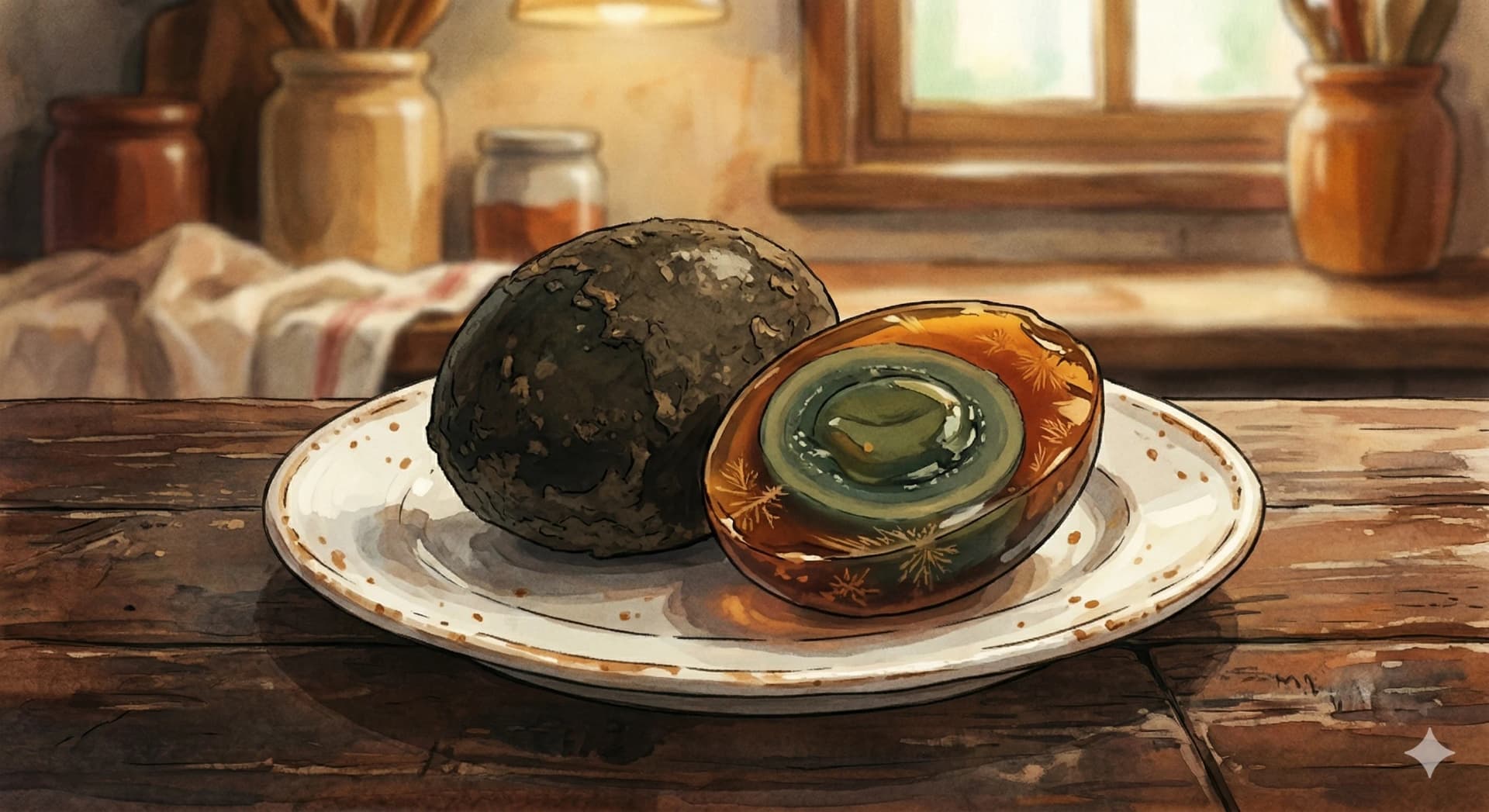
Century Eggs
Also known as: Pi Dan, Thousand-Year Eggs, Preserved Eggs, Pidan, Black Eggs
Century eggs are duck, chicken, or quail eggs preserved in a strongly alkaline medium for weeks to months, resulting in a complete transformation of the egg's color, texture, and flavor. The white becomes a dark, translucent, firm jelly; the yolk turns dark green to black and develops a creamy, almost custardy texture with a complex, sulfurous, and deeply savory flavor unlike any other food. They are one of the most uniquely and proudly Chinese preserved foods, beloved by those who grow up eating them.
Flavor Profile
Origin
China, Hunan, Cantonese cuisine
Traditional Medicine Perspectives
Traditional Chinese Medicine
Century eggs (Pi Dan) are classified as cool and salty in TCM, associated with the Stomach and Large Intestine meridians. They are used to clear heat, detoxify, cool the Blood, and calm the Liver. Prescribed for heat conditions, inflammation, hypertension associated with Liver Yang rising, and constipation. The alkaline processing is understood to increase heat-clearing potency. Should be eaten in moderation.
Modern Scientific Research
Modern century egg production uses sodium hydroxide rather than lime, eliminating lead contamination associated with traditional preparations. The alkaline environment denatures proteins and converts the liquid egg into a gel through protein cross-linking. The dark color of the yolk comes from iron sulfide (from reaction between iron and hydrogen sulfide).
Century eggs retain significant protein and fat-soluble vitamins.
Cultural History
Century eggs have been produced in China for over five hundred years, with the earliest records from the Ming dynasty referencing a preparation from Hunan province. The alkaline preservation method was likely discovered accidentally — eggs falling into lime-rich soil would undergo the transformation. Pi dan is both a beloved everyday ingredient (in congee, with tofu) and a badge of cultural pride for Chinese food lovers worldwide.
Culinary Uses
Serve halved or quartered alongside silken tofu dressed with soy sauce, sesame oil, and ginger for the classic pi dan tofu. Add to congee for extraordinary depth of flavor. Serve with pickled ginger as a palate-awakening starter.
Use in cold salads with cucumber, garlic chili sauce, and sesame oil.
Preparation Methods
Century eggs are fully preserved and require no cooking. Peel the outer coating and remove the thin membrane before eating. For the cleanest cut, use a string or thin wire rather than a knife, or rinse the knife between cuts.
Traditional Dishes
- Pi dan tofu (century egg with tofu)
- Pi dan and lean pork congee (juk)
- Century egg with pickled ginger
- Cold century egg salad with cucumber
- Cantonese century egg starter
Comments
Share your thoughts on this ingredient.
Sign in to comment0 Comments