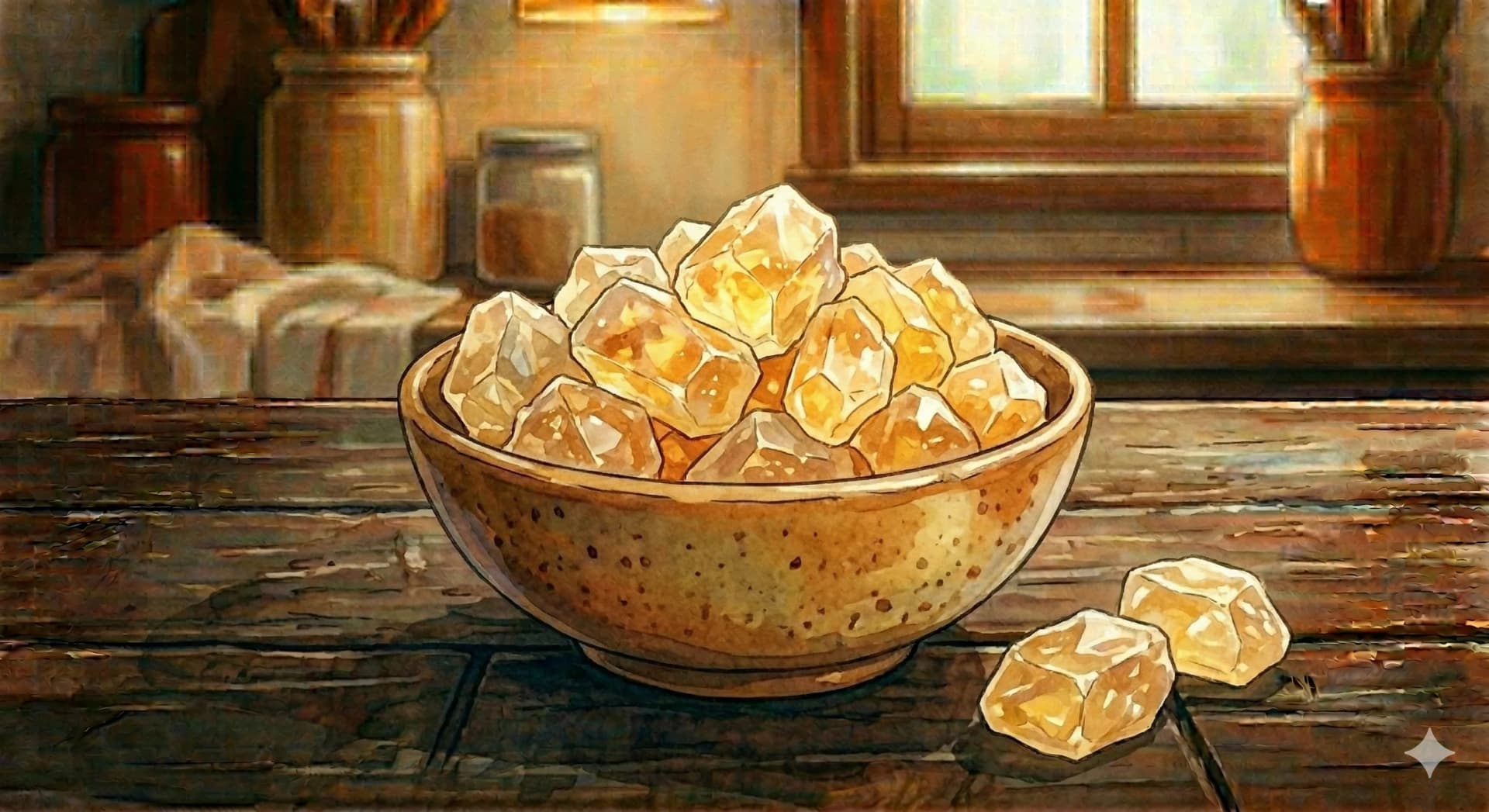
Chinese Rock Sugar
Also known as: Bing Tang, Rock Candy, Yellow Rock Sugar, Crystal Sugar
Chinese rock sugar (bing tang) consists of large, irregular crystals of partially refined cane sugar with a pale golden color and a slightly milder, more nuanced sweetness than white granulated sugar. It is used in braises, glazes, and sweet soups where its slower, gentler dissolution and subtle caramel notes contribute to a richer, glossier result than white sugar can produce. The classic red-braised pork is made with rock sugar for exactly this reason.
Key facts at a glance:
- It is used in braises — Glazes, and sweet soups where its slower, gentler dissolution and subtle caramel notes contribute to a richer, glossier result than white sugar can produce.
- The classic red-braised pork — Made with rock sugar for exactly this reason.
Flavor Profile
Origin
China, Sichuan, Southern China
Traditional Medicine Perspectives
Traditional Chinese Medicine
Rock sugar (Bing Tang) is classified as neutral and sweet in TCM, associated with the Lung and Stomach meridians. It is used to moisten the Lung, stop cough, and nourish Yin. It is considered gentler and less heating than brown sugar, and less cooling than white sugar. It is used in herbal preparations to harmonize other ingredients and in tonic drinks for chronic dry cough and Lung dryness.
Modern Scientific Research
Rock sugar is sucrose in crystalline form and carries the same nutritional profile as refined cane sugar. The pale golden color comes from residual molasses content, which contributes trace minerals not present in fully refined white sugar. No significant unique health benefits have been demonstrated compared to other sucrose sources, though its cultural and culinary applications are well-established.
Cultural History
Rock sugar has been produced in China for at least a thousand years, originating from traditional methods of crystallizing cane sugar syrup. Its distinctive appearance — large, gem-like crystals in shades of amber and white — made it a traditional gift and ceremonial ingredient. In Chinese medicine, rock sugar is considered gentler and more neutral than brown sugar and less cooling than white. It is used in longan and red date teas, bird's nest preparations, and festive dessert soups.
Culinary Uses
Use in red-braised pork, chicken, and duck for a glossy, caramelized coating. Add to sweet soups (tong sui) and therapeutic teas.
Use in glazes for char siu and roast duck. Dissolve in stock for a refined sweetness in braises. Use in traditional Chinese desserts: red bean soup, tremella fungus soup, and longan tea.
Preparation Methods
Break large pieces with a heavy knife or mortar before adding to dishes. Rock sugar dissolves more slowly than granulated sugar — add early in braises and stir occasionally. For glazes, melt in oil or water first before adding other ingredients.
Traditional Dishes
- Red-braised pork (hong shao rou)
- Rock sugar snow pear soup
- Longan and red date tea
- Char siu glaze
- Tremella fungus soup
Comments
Share your thoughts on this ingredient.
Sign in to comment0 Comments