Dumpling Wrappers
Also known as: Jiao Zi Pi, Gyoza Wrappers, Potsticker Wrappers, Dumpling Skin, Shui Jiao Pi
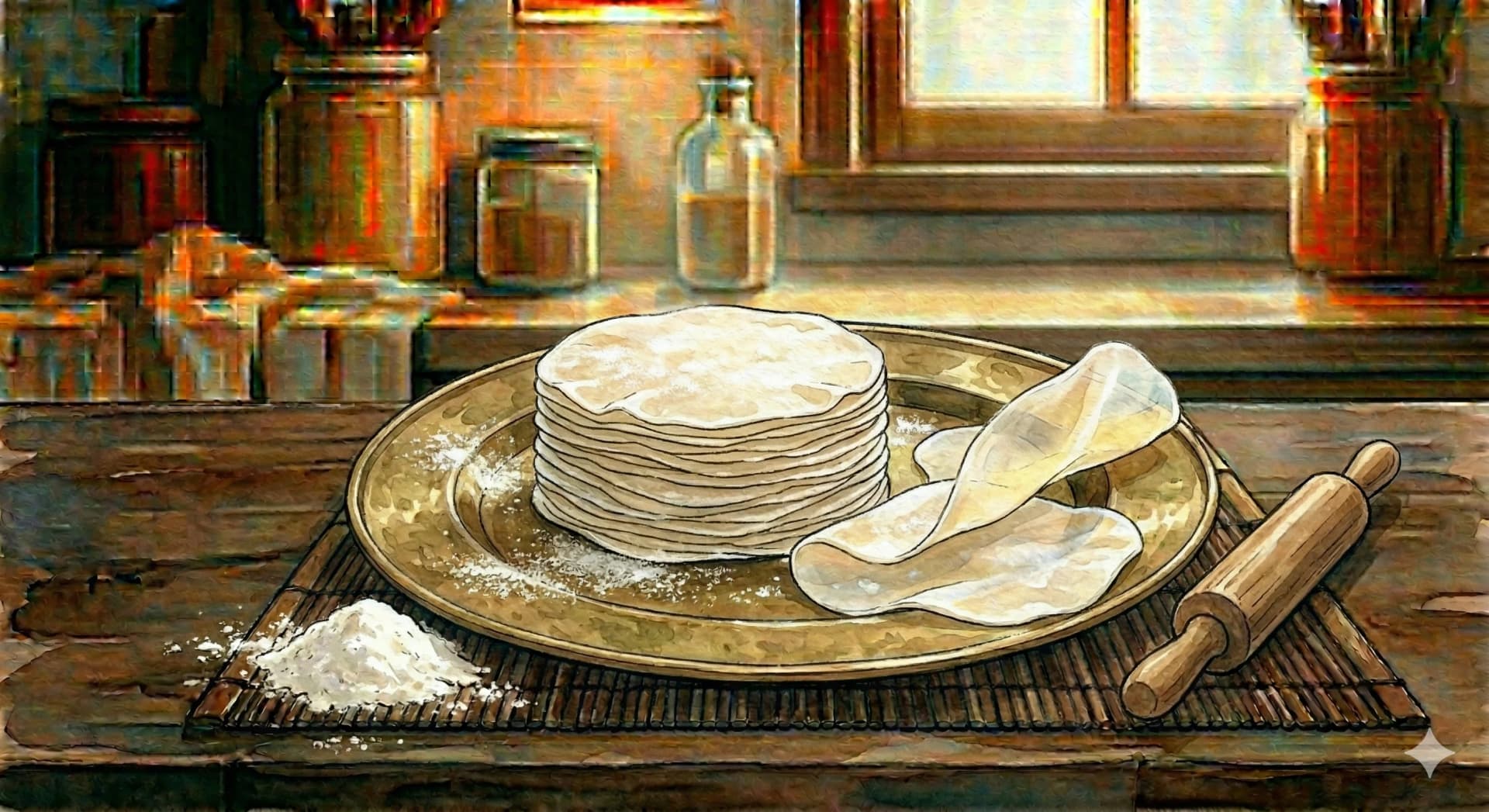
Dumpling wrappers are round discs of wheat dough — thicker than wonton wrappers, usually about 3–4 inches in diameter — designed to encase a filling and be cooked by boiling, steaming, or pan-frying. The dough is typically made with hot water (for softer wrappers ideal for pan-fried potstickers) or cold water (for boiled dumplings where a chewier bite is desired). Store-bought wrappers are a convenience staple; handmade wrappers, rolled to varying thickness, are the mark of a skilled dumpling maker and produce a superior result.
Key facts at a glance:
- Store-bought wrappers — A convenience staple; handmade wrappers, rolled to varying thickness, are the mark of a skilled dumpling maker and produce a superior result.
- Dumpling wrappers — Round discs of wheat dough — thicker than wonton wrappers, usually about 3–4 inches in diameter — designed to encase a filling and be cooked by boiling, steaming, or pan-frying.
- The dough is typically — Made with hot water (for softer wrappers ideal for pan-fried potstickers) or cold water (for boiled dumplings where a chewier bite is desired).
Flavor Profile
Origin
Northern China, China, Japan, Korea
Traditional Medicine Perspectives
Traditional Chinese Medicine
Dumpling wrappers, made from wheat flour, are classified as warm and sweet in TCM, associated with the Spleen and Stomach. Boiled dumplings (shui jiao) are considered the most digestible form; pan-fried and deep-fried versions are more warming and harder to digest. The filling typically provides the medicinal intent of the dumpling.
Modern Scientific Research
Dumpling wrappers contribute primarily carbohydrates from wheat flour, with some protein. Whole wheat dumpling wrappers significantly increase fiber content. The glycemic impact of dumplings is moderated by the filling's fat, protein, and fiber content. Dumplings as a complete food represent a balanced macronutrient combination.
Cultural History
Dumplings (jiaozi) are one of the most important foods in Chinese culture, their crescent shape representing gold ingots of prosperity, and their consumption at Lunar New Year as essential as the holiday itself. Northern China — particularly Shandong, Hebei, and Dongbei — is the heartland of Chinese dumpling culture, where families gather before New Year to make dumplings together.
The Japanese adapted Chinese dumplings into gyoza, adapted for pan-frying. Korean mandu incorporates napa cabbage, tofu, and glass noodles. Each tradition evolved its own wrapper thickness, size, and cooking method.
Culinary Uses
Fill with seasoned pork and napa cabbage (the classic northern Chinese filling), pork and garlic chives, or shrimp and water chestnut. Fold with the pleated seal of handcraftsmanship.
Boil in plenty of water until they float, then cook 1–2 minutes more. Pan-fry in oil, add water, cover to steam, then uncover to crisp for the potsticker method. Steam in a bamboo steamer.
Preparation Methods
To make from scratch: mix flour with boiling water (for pan-fried) or cold water (for boiled), knead until smooth, rest 30 minutes, roll into a log, cut into pieces, roll each thin. Store-bought: keep covered with a damp cloth while filling. To seal: place filling in center, fold into half-moon, and pleat the edge. Freeze uncooked dumplings in a single layer on a tray.
Traditional Dishes
- Chinese jiaozi (boiled)
- Guo tie (pan-fried potstickers)
- Japanese gyoza
- Korean mandu
- Northern Chinese New Year dumplings
Comments
Share your thoughts on this ingredient.
Sign in to comment0 Comments