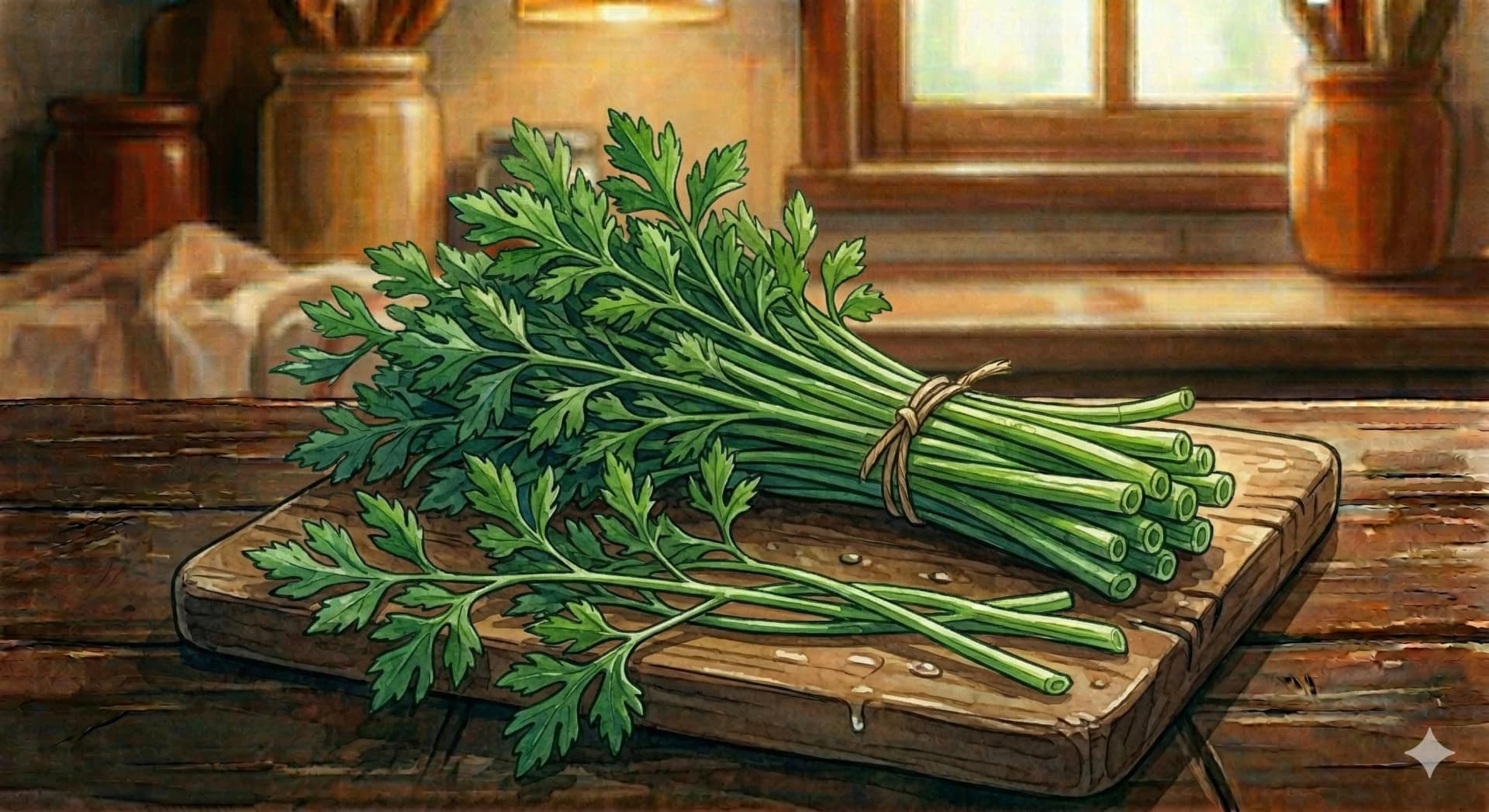
Chinese Celery
Also known as: Qin Cai, Asian Celery, Smallage, Apium graveolens var. secalinum
Chinese celery is a slender, hollow-stemmed variety of celery with an intensely herbal, almost medicinal flavor far more assertive than the thick, mild Western celery most cooks know. Both the stems and leaves are used — the leaves are not discarded as they often are in Western cooking but are prized for their concentrated flavor. Used in stir-fries, cold dishes, soups, and as an aromatic base, Chinese celery adds a distinctive herbal sharpness that is unmistakably its own.
Key facts at a glance:
- Chinese celery — A slender, hollow-stemmed variety of celery with an intensely herbal, almost medicinal flavor far more assertive than the thick, mild Western celery most cooks know.
- Used in stir-fries — Cold dishes, soups, and as an aromatic base, Chinese celery adds a distinctive herbal sharpness that is unmistakably its own.
- Both the stems and leaves — Used — the leaves are not discarded as they often are in Western cooking but are prized for their concentrated flavor.
Flavor Profile
Origin
Mediterranean (origin), China, East Asia
Traditional Medicine Perspectives
Traditional Chinese Medicine
Chinese celery (Qin Cai) is classified as cool and acrid in TCM, associated with the Liver and Stomach meridians. It is used to calm Liver Yang, clear heat, and cool the Blood. It is prescribed for hypertension associated with Liver Yang rising, headache, and dizziness. In TCM dietary therapy, celery is one of the recommended vegetables for people with conditions caused by excess Liver Yang.
Modern Scientific Research
Chinese celery contains phthalides (particularly 3-n-butylphthalide), compounds that have been studied for potential blood pressure-lowering effects — research suggests they may relax arterial smooth muscle. It is rich in apigenin, a flavonoid with documented anti-inflammatory and potential anti-anxiety properties. Chinese celery contains more concentrated levels of these compounds than Western celery due to its smaller, more intense form.
Cultural History
Celery has been cultivated in China for over a thousand years, arriving from the Mediterranean via trade routes and quickly adapting to Chinese culinary use. The Chinese preference for the thin, intensely flavored form developed independently of Western selections for large, mild stalks.
In Sichuan cooking, Chinese celery is paired with preserved meats and dried tofu for a classic cold dish. In northern China, it appears in dumpling fillings and stir-fries. The leaves are used as a fresh herb in soups and broths across Chinese regional cuisines.
Culinary Uses
Stir-fry with preserved meat, dried tofu, and chili for a classic Sichuan cold dish. Use in soups and hot pots as a fresh herbal addition.
Add to dumpling and bun fillings for herbal complexity. Use as a garnish over congee and noodle soups. Combine with beef or lamb in northern Chinese stir-fries.
Preparation Methods
Use both stems and leaves — do not discard the leaves. Cut stems into thin diagonal slices for stir-fries.
Blanch briefly and dress for cold dishes. Add leaves to soups at the last moment. If substituting Western celery, use much less — the flavor is far more intense.
Traditional Dishes
- Celery and dried tofu stir-fry
- Celery and pork stir-fry
- Sichuan cold celery salad
- Celery beef stir-fry
- Hot pot accompaniment
Comments
Share your thoughts on this ingredient.
Sign in to comment0 Comments