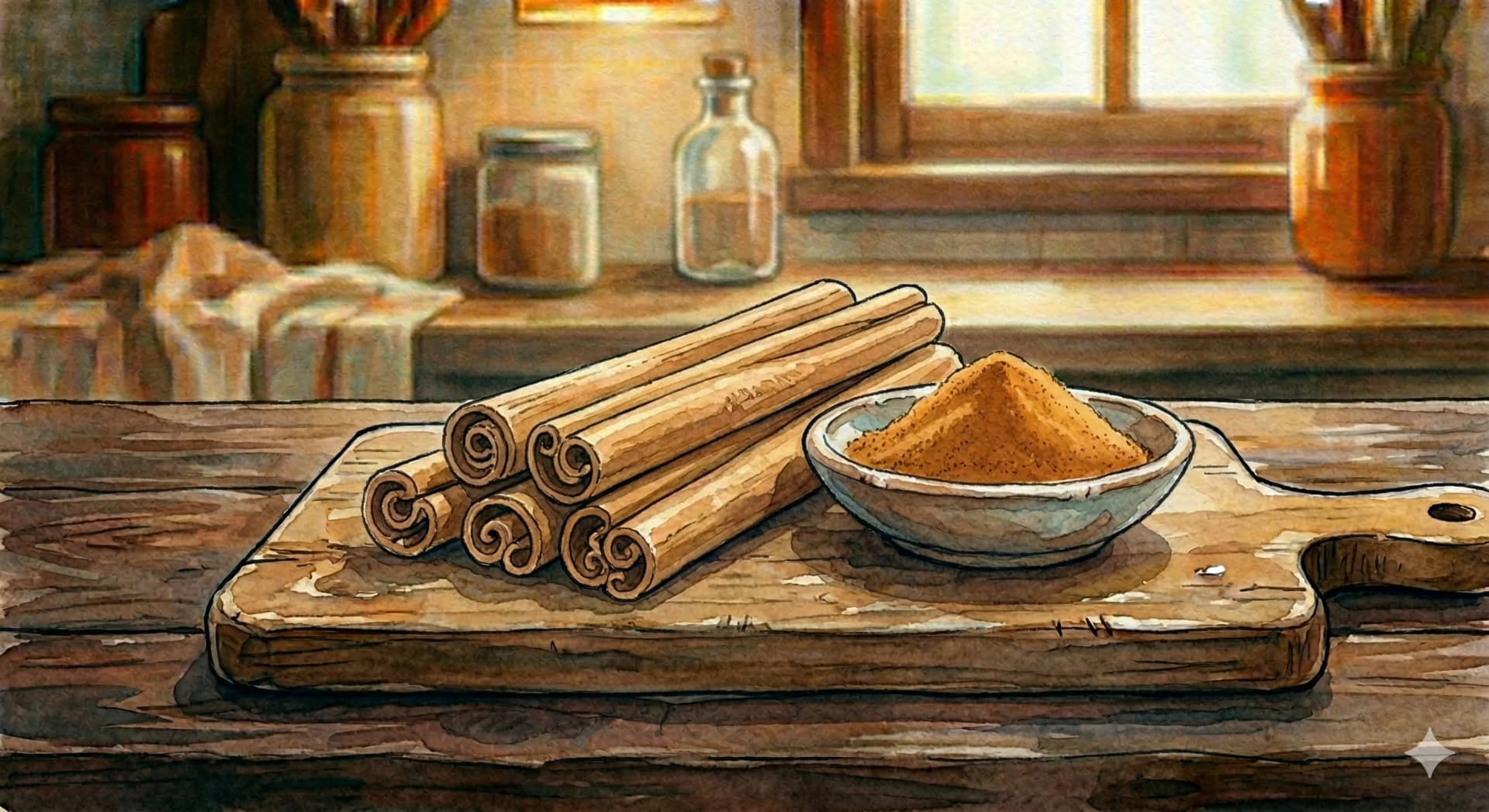
Cinnamon
Also known as: Ceylon Cinnamon, Dalchini, Cinnamomum verum, True Cinnamon
Cinnamon is one of the oldest spices in recorded history — mentioned in ancient Chinese manuscripts dating to 2700 BCE and in Egyptian papyri. The bark of a tropical evergreen tree, it carries a sweet, warm, complex aroma that has made it invaluable in sweet and savory cooking across the world. Ceylon cinnamon (true cinnamon from Sri Lanka) is milder and more complex than the more widely sold cassia variety.
Key facts at a glance:
- Cinnamon is one of — The oldest spices in recorded history — mentioned in ancient Chinese manuscripts dating to 2700 BCE and in Egyptian papyri.
- The bark of a tropical evergreen tree — It carries a sweet, warm, complex aroma that has made it invaluable in sweet and savory cooking across the world.
- Ceylon cinnamon (true cinnamon from Sri Lanka) — Milder and more complex than the more widely sold cassia variety.
Flavor Profile
Origin
Sri Lanka, South India, Southeast Asia
Traditional Medicine Perspectives
Ayurveda
Cinnamon (Tvak) is considered warming, sweet, and pungent in Ayurveda. It is used to stimulate digestive fire (agni), improve circulation, and treat respiratory conditions. It is classified as a deepana and pachana herb — stimulating digestion and helping the body process what it consumes. Ayurvedic texts prescribe it for cold-damp digestive sluggishness, cough, and impaired circulation.
Traditional Chinese Medicine
In TCM, cinnamon bark (Rou Gui) is among the most warming herbs in the pharmacopoeia. It enters the Heart, Kidney, Liver, and Spleen meridians. Used to warm and tonify Kidney Yang, dispel cold, and relieve pain. Prescribed for coldness of the limbs, frequent urination, impotence, and abdominal pain caused by cold. Cinnamon twig (Gui Zhi) is a separate preparation — warming but less extreme — used to promote circulation and relieve exterior cold.
Modern Scientific Research
Cinnamon has been extensively studied for its effects on blood sugar regulation. Several clinical trials show that cinnamon supplementation can reduce fasting blood glucose and improve insulin sensitivity in type 2 diabetics. The compound cinnamaldehyde is responsible for much of its biological activity and shows anti-inflammatory, antimicrobial, and antifungal properties in laboratory research. Note that cassia cinnamon contains coumarin, which in large amounts can be hepatotoxic — Ceylon cinnamon is significantly lower in coumarin and preferable for regular medicinal use.
Cultural History
Cinnamon was among the most prized commodities in ancient trade. Egyptian import records list it alongside gold and ivory.
Arab traders long controlled its source, telling mythologized stories about harvesting it from giant birds' nests to maintain their monopoly. The Portuguese seized Sri Lanka specifically to control the cinnamon trade in the 16th century. In Ayurvedic medicine, cinnamon has been prescribed for digestion, circulation, and respiratory health for over two thousand years.
Culinary Uses
Cinnamon is used in virtually every global cuisine, in both sweet and savory preparations. Essential to Moroccan tagines, Indian biryanis and chai, Mexican mole, and baked goods worldwide. Cinnamon bark is used whole in slow-cooked dishes; ground cinnamon for baking and spice blends. Pairs naturally with cardamom, ginger, nutmeg, clove, and chocolate.
Preparation Methods
Use cinnamon sticks whole in rice dishes, braises, and spiced drinks — remove before serving. Toast sticks lightly in a dry pan before adding to oil to deepen flavor. Ground cinnamon loses potency quickly — buy in small quantities. For medicinal preparations, simmer a whole stick in water or milk for 10 to 15 minutes.
Traditional Dishes
- Chai masala
- Biryani
- Moroccan tagine
- Mexican mole
- Cinnamon rolls
- Apple pie
Comments
Share your thoughts on this ingredient.
Sign in to comment0 Comments