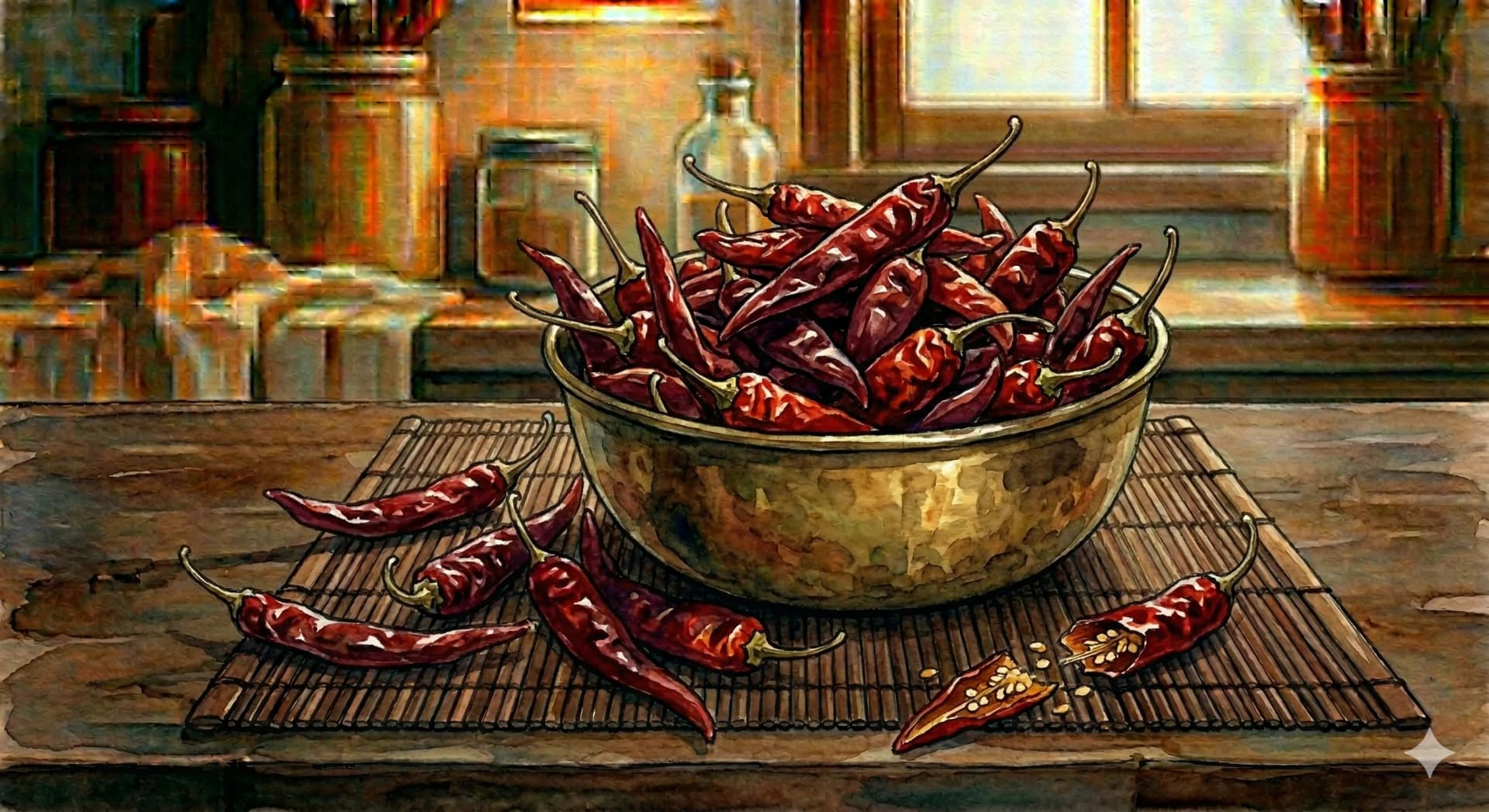
Dried Chilies
Also known as: Gan La Jiao, Dried Red Chilies, Chinese Dried Chilies, Er Jing Tiao (dried), Facing Heaven Chili
Dried chilies are a pantry essential in Chinese cooking — whole dried red chilies that are toasted, rehydrated, or infused in oil to contribute heat, color, and a deep, earthy spice character. Unlike fresh chilies, dried chilies have a concentrated, slightly smoky flavor and less moisture, making them ideal for stir-fries, braising oils, and infused chili preparations. Varieties range from mild Erjing tiao (the elongated chili used for color and moderate heat) to the intensely hot Facing Heaven chili (chao tian jiao) that points upward on the plant.
Key facts at a glance:
- Unlike fresh chilies, dried chilies — A concentrated, slightly smoky flavor and less moisture, making them ideal for stir-fries, braising oils, and infused chili preparations.
- Varieties range from mild — Erjing tiao (the elongated chili used for color and moderate heat) to the intensely hot Facing Heaven chili (chao tian jiao) that points upward on the plant.
- Dried chilies — A pantry essential in Chinese cooking — whole dried red chilies that are toasted, rehydrated, or infused in oil to contribute heat, color, and a deep, earthy spice character.
Flavor Profile
Origin
Americas (origin), Sichuan, Hunan, China broadly
Traditional Medicine Perspectives
Traditional Chinese Medicine
Dried chilies (Gan La Jiao) are classified as hot and acrid in TCM, strongly warming and circulating. They are associated with the Heart and Spleen meridians. Used medicinally to warm the interior, activate Blood circulation, expel cold-damp, and stimulate digestion. Dried chilies are considered more intensely warming than fresh because the drying process concentrates their active compounds.
Modern Scientific Research
Dried chilies contain concentrated capsaicinoids, which show potent anti-inflammatory, analgesic, and antimicrobial properties in research. The drying process reduces water activity but concentrates the capsaicin. Studies suggest capsaicin activates TRPV1 receptors (heat and pain receptors), which may explain both the burning sensation and the endorphin release associated with spicy food consumption. Research also indicates potential metabolic benefits from regular capsaicin consumption.
Cultural History
Chilies arrived in China via the Silk Road in the 16th century and transformed the cooking of Sichuan, Hunan, Guizhou, and Yunnan with remarkable speed. Within a century of their arrival, these regions had built entire cuisines around chili heat — a culinary revolution with few parallels in food history. Different regions cultivated different varieties for different culinary purposes: Erjing tiao in Sichuan for color and moderate heat in doubanjiang, Facing Heaven chilies for intense heat, and various varieties across Hunan for fresh and dried preparations.
Culinary Uses
Toast whole dried chilies in a dry wok until fragrant and slightly darkened before adding oil and other ingredients — this is the base of countless Sichuan stir-fries. Infuse in hot oil for chili oil.
Add whole to braising liquids. Snip with scissors into pieces for stir-fries. Rehydrate in warm water for sauces and pastes.
Preparation Methods
For stir-fries: add whole to hot oil and fry for 30–60 seconds until darkened and fragrant before adding other ingredients. Do not burn — they become bitter. For chili oil: infuse in oil that has cooled slightly from smoking point. Remove seeds for less heat, keep them for more.
Traditional Dishes
- Kung pao chicken
- Mapo tofu base
- Sichuan dry-fried beef
- La zi ji (chili chicken)
- Chili oil
Comments
Share your thoughts on this ingredient.
Sign in to comment0 Comments