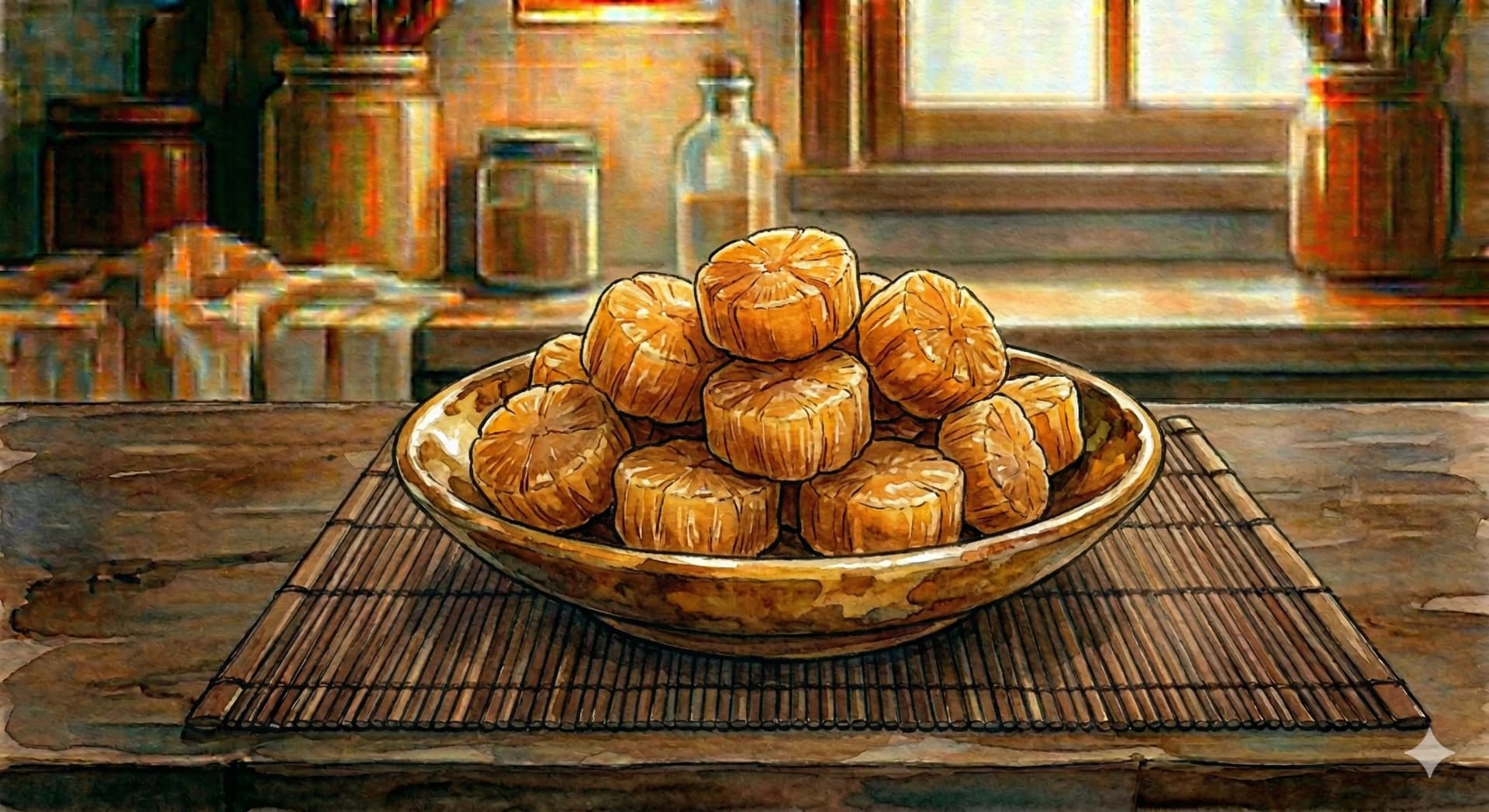
Dried Scallops
Also known as: Gan Bei, Conpoy, Dried Scallop, Yao Zhu
Dried scallops are among the most prized pantry ingredients in Cantonese cooking — concentrated buttons of intensely savory, sweet, oceanic flavor that elevate every dish they touch. The drying process concentrates the natural sweetness and umami of the scallop adductor muscle to extraordinary levels. Whole dried scallops are expensive and treated with great respect; lower-grade broken or shredded pieces are used more freely in everyday cooking. Just a small amount — one or two scallops per dish — is enough to transform a simple congee or braised preparation.
Key facts at a glance:
- Dried scallops — Among the most prized pantry ingredients in Cantonese cooking — concentrated buttons of intensely savory, sweet, oceanic flavor that elevate every dish they touch.
- The drying process concentrates — The natural sweetness and umami of the scallop adductor muscle to extraordinary levels.
- Whole dried scallops — Expensive and treated with great respect; lower-grade broken or shredded pieces are used more freely in everyday cooking.
- Just a small amount — One or two scallops per dish — is enough to transform a simple congee or braised preparation.
Flavor Profile
Origin
China, Japan, Cantonese cuisine, Southern China
Traditional Medicine Perspectives
Traditional Chinese Medicine
Dried scallops (Gan Bei) are classified as neutral and sweet-salty in TCM, associated with the Kidney, Liver, and Spleen meridians. They are used to nourish Yin, benefit the Kidney, tonify the Spleen and Stomach, and dissolve phlegm. Prescribed for Kidney Yin deficiency, fatigue, and poor appetite. Considered a high-quality tonic food.
Modern Scientific Research
Dried scallops are an exceptionally concentrated source of protein and amino acids, particularly glutamic acid and inosinic acid (IMP) — major contributors to umami taste. They provide high levels of zinc, selenium, magnesium, and vitamin B12. Research on the glycine and taurine content of scallops suggests cardiovascular-protective effects. The dehydration process concentrates all nutrients proportionally.
Cultural History
Dried scallops have been produced and traded in China for centuries, with the finest specimens coming from the cold, clear coastal waters of Dalian in northeastern China and from Japan. In Cantonese cuisine, gan bei are a symbol of prosperity and quality — their expense and concentrated flavor making them a luxury ingredient used to signal care and celebration. They feature prominently in New Year dishes, imperial cuisine, and in high-end Cantonese cooking. Conpoy is the Cantonese name by which dried scallops became known internationally through Hong Kong.
Culinary Uses
Add one or two dried scallops to congee for a profoundly flavored base. Use in XO sauce with dried shrimp, chili, and garlic.
Add to clay pot rice for depth. Rehydrate and floss (shred finely) as a topping for congee. The soaking liquid is intensely flavored — add it to the dish.
Preparation Methods
Soak in cold or warm water for 2–4 hours (or overnight) until softened — cold water soaking produces the most delicate result. Reserve the soaking liquid. For flossing: soak until soft, steam briefly, cool, and shred by hand into fine threads.
Comments
Share your thoughts on this ingredient.
Sign in to comment0 Comments