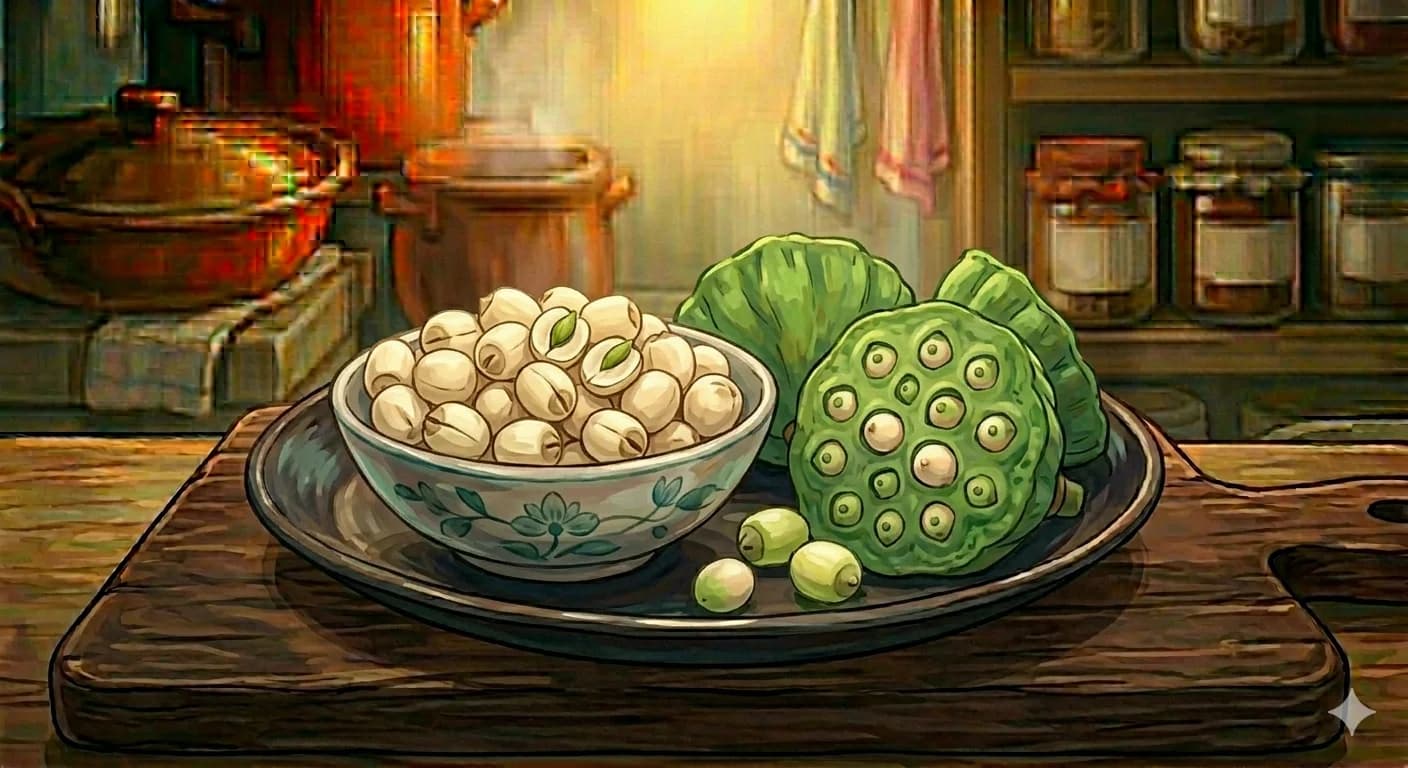
Lotus Seeds
Also known as: Lian Zi, 蓮子, Lotus Nuts
Lotus seeds — the starchy, mildly sweet seeds harvested from the pods of the sacred lotus flower — are one of Chinese cuisine's most elegant ingredients, treasured for their delicate flavor, satisfying texture, and deep cultural symbolism.
Dried lotus seeds have a subtle, starchy sweetness reminiscent of chestnuts or mild beans, with a soft, almost mealy texture when cooked. They do not have a bold or assertive flavor, which is precisely their virtue — they absorb surrounding flavors beautifully and contribute a gentle, grounding presence to both sweet and savory dishes.
In Chinese culture, lotus seeds carry powerful symbolism. The word for lotus seed (liánzǐ, 莲子) sounds like "continuous sons" — making them essential in wedding banquets and fertility celebrations.
Key facts at a glance:
- Seeds of the sacred lotus (Nelumbo nucifera) — harvested from the seed pod
- Subtly sweet and starchy — similar to chestnuts or mild beans
- Deep cultural symbolism — associated with fertility, purity, and continuity
- Versatile — sweet soups, savory dishes, mooncake filling, congee
- Available dried or fresh — dried are more common and keep indefinitely
Flavor Profile
Origin
China, South Asia, Southeast Asia, Egypt
Traditional Medicine Perspectives
Traditional Chinese Medicine
Lotus seed (Lian Zi) is classified as sweet, astringent, and neutral, entering the Spleen, Kidney, and Heart meridians. It is used to tonify the Spleen, stop diarrhea, nourish the Heart, and calm the spirit. It is a common ingredient in formulas for insomnia, palpitations, poor appetite, and chronic diarrhea. The green embryo (lian zi xin) inside the seed is bitter and cooling, used separately to clear Heart fire.
Modern Scientific Research
Lotus seeds contain significant protein (about 17%), complex carbohydrates, and dietary fiber, making them nutritionally substantial for a seed. They provide B vitamins, magnesium, potassium, and phosphorus.
Research has identified alkaloids in the lotus seed embryo (the green shoot inside), including liensinine and neferine, which have been studied for potential sedative and antiarrhythmic properties in laboratory settings.
The seeds also contain gallic acid and other phenolic compounds with demonstrated antioxidant activity in vitro. However, the amounts consumed in food are modest, and clinical studies in humans are limited.
Cultural History
The lotus has been sacred in Chinese and South Asian cultures for millennia, symbolizing purity, enlightenment, and rebirth — the flower blooms pristine from muddy water. Lotus seeds carry this symbolism into the kitchen, where they represent fertility and continuity.
Lotus seeds appear in some of the most important ceremonial foods in Chinese culture: wedding soups, New Year's desserts, and mooncakes for the Mid-Autumn Festival. Lotus seed paste is one of the most prized mooncake fillings, requiring hours of careful preparation.
In Buddhist cuisine, lotus seeds are valued both for their symbolism (the lotus is sacred in Buddhism) and their practical qualities as a nutritious, shelf-stable protein source for vegetarian monks.
Culinary Uses
Simmer soaked lotus seeds in sweet soups (tong sui) with rock sugar, jujubes, snow fungus, and goji berries — this is one of the most classic and beloved Chinese desserts. The lotus seeds become tender and creamy, absorbing the sweet broth.
Mash cooked lotus seeds into a smooth paste with sugar and oil for lotus seed paste — the filling for premium mooncakes and various dim sum pastries. This requires patience but produces an incomparably silky result.
Remove the green embryo (heart) before cooking if you want pure sweetness — the embryo is bitter. However, the embryo is deliberately used in teas for its cooling, calming properties.
Add to savory preparations: lotus seeds work beautifully in congee, braised pork, and stuffed poultry. They absorb braising liquids and contribute a pleasant starchy texture.
Preparation Methods
Soak dried lotus seeds in water for at least 4 hours, preferably overnight. Split each seed and remove the green embryo (lian zi xin) if you want a purely sweet flavor — the embryo is bitter.
For sweet soups, simmer the soaked seeds for 45-60 minutes until tender throughout. For paste, cook until very soft, then mash and stir with sugar and oil over low heat until smooth.
Fresh lotus seeds (available in late summer at Asian markets) need no soaking and cook much faster, but they are seasonal. Dried lotus seeds, while requiring more preparation, are available year-round and keep indefinitely.
Traditional Dishes
- Lotus seed sweet soup
- Mooncake filling
- Eight treasure congee
- Lotus seed and pork rib soup
- Lotus seed paste buns
Comments
Share your thoughts on this ingredient.
Sign in to comment0 Comments