Snow Fungus
Also known as: Bai Mu Er, Silver Ear, Tremella, White Fungus, 银耳
Snow fungus (Tremella fuciformis) — a translucent, frilly, cloud-like mushroom — is one of the most prized beauty and wellness ingredients in Chinese culture, treasured for its ability to create a luscious, collagen-like texture when simmered slowly.
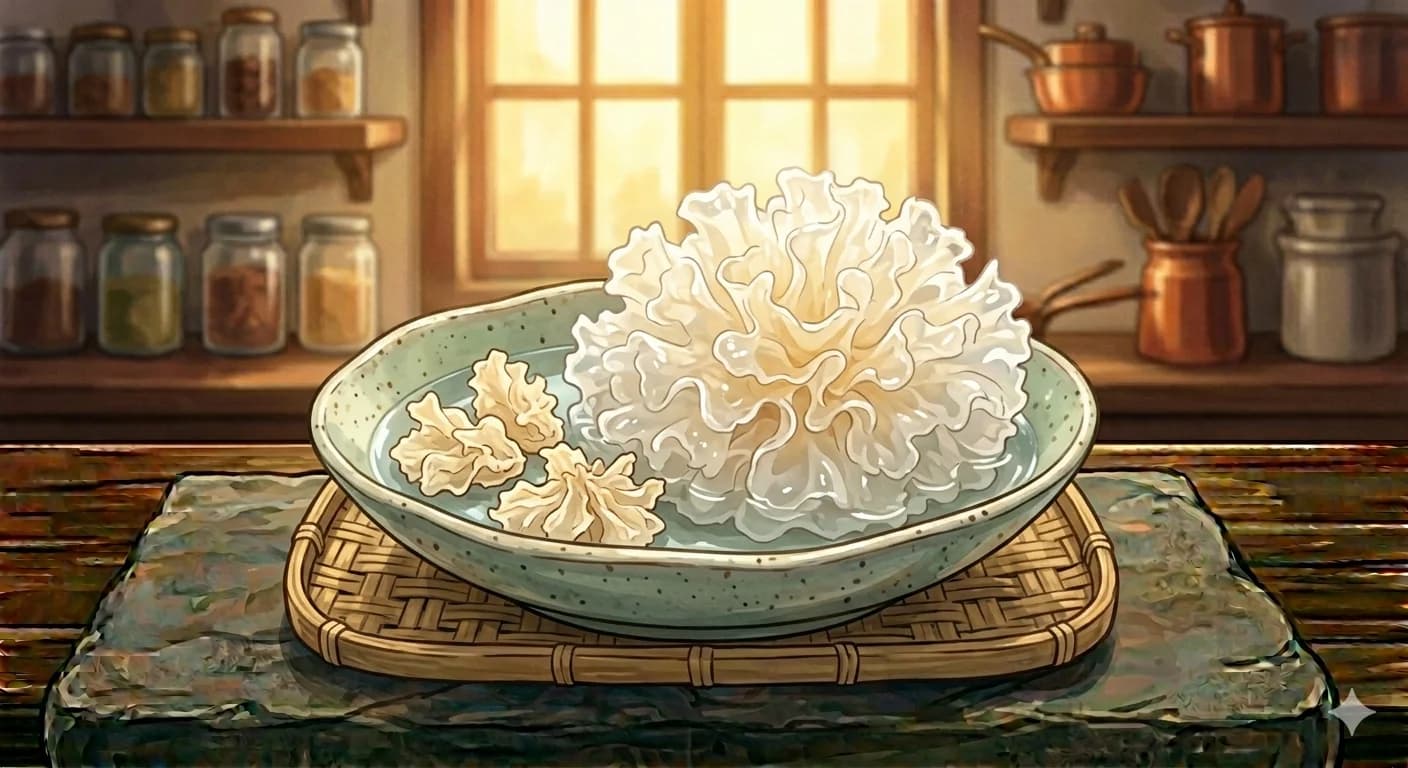
Dried snow fungus looks like a pale yellow, crinkly ball. When soaked and cooked, it transforms into soft, gelatinous, almost jelly-like petals with a subtle sweetness and absolutely no mushroomy flavor. Its texture is the point — silky, bouncy, and luxuriously smooth.
In Chinese culinary tradition, snow fungus is the star ingredient in sweet soups believed to nourish the skin from the inside out. It has been called the "poor woman's bird's nest" because it creates a similar gelatinous texture to the far more expensive bird's nest soup.
Key facts at a glance:
- Tremella fuciformis — a translucent, jelly-like fungus
- Prized for texture, not flavor — silky, gelatinous, collagen-like
- Beauty food — traditionally associated with luminous skin and youthful appearance
- "Poor woman's bird's nest" — similar texture to expensive bird's nest at a fraction of the cost
- Dried form — reconstitutes into a dramatically larger, cloud-like mass
Flavor Profile
Origin
China, Southeast Asia, Tropical regions worldwide
Traditional Medicine Perspectives
Traditional Chinese Medicine
Snow fungus (Bai Mu Er/Yin Er) is classified as sweet, bland, and neutral, entering the Lung, Stomach, and Kidney meridians. It is a premier yin-nourishing food, used to moisten the Lungs, nourish the Stomach yin, and generate fluids. It is prescribed for dry cough, dry skin, and thirst from yin deficiency. It is considered one of the best food-grade herbs for nourishing yin and promoting beauty.
Modern Scientific Research
Snow fungus produces Tremella polysaccharides, which have remarkable water-retention properties — they can hold nearly 500 times their weight in water. This property has made them a subject of interest in both food science and cosmetics.
Research suggests these polysaccharides may have immunomodulatory, antioxidant, and skin-hydrating properties. Some cosmetic studies have compared tremella polysaccharides to hyaluronic acid for moisture retention, finding comparable performance in certain formulations.
The fungus also contains vitamin D, dietary fiber, and various minerals. Animal studies have investigated potential hepatoprotective and neuroprotective effects, though human clinical data remains limited.
Cultural History
Snow fungus has been used in Chinese cuisine and medicine for over a thousand years, with particular prominence in the beauty practices of imperial court women. The concubine Yang Guifei of the Tang dynasty — one of the four great beauties of Chinese history — is legendarily associated with snow fungus as part of her beauty regimen.
In Cantonese tong sui (sweet soup) culture, snow fungus soup is one of the most classic and frequently prepared desserts, especially valued by women for its perceived skin-nourishing properties.
Snow fungus has been called the "poor woman's bird's nest" — it creates a similar luscious, gelatinous texture to the expensive delicacy at a fraction of the cost.
Snow fungus cultivation was once difficult, making it expensive and reserved for the wealthy. Modern cultivation techniques have made it widely affordable, but its association with luxury and beauty persists.
Culinary Uses
Soak dried snow fungus in cold water for 30-60 minutes until fully expanded. Trim away the hard yellow core, then tear or cut into bite-sized pieces.
Simmer with rock sugar, goji berries, jujubes, and lotus seeds for the classic Cantonese sweet soup. Cook over low heat for 1-2 hours — the longer you simmer, the more gelatinous and silky the texture becomes.
For a modern approach, blend cooked snow fungus into smoothies or dessert soups for added body. It can also be used in savory preparations — added to chicken soups or steamed egg custards for textural contrast.
Preparation Methods
Soak in cold water for 30-60 minutes — the fungus expands dramatically, so use a large bowl. After soaking, trim the hard, yellowish core (it does not soften) and tear the frilly edges into pieces.
For the silkiest texture, simmer in a covered pot over very low heat for 1.5-2 hours. A slow cooker works exceptionally well. Some cooks add a pinch of alkaline water (lye water) to speed up the softening.
Select snow fungus that is pale white to light yellow and dry with no dark spots or off-odors. Very white, bleached-looking specimens may have been treated with sulfur — natural snow fungus has a slight yellowish tint.
Traditional Dishes
- Snow fungus sweet soup
- Snow fungus with papaya
- Snow fungus and pear soup
- Eight treasure congee
- Snow fungus and lotus seed soup
Comments
Share your thoughts on this ingredient.
Sign in to comment0 Comments