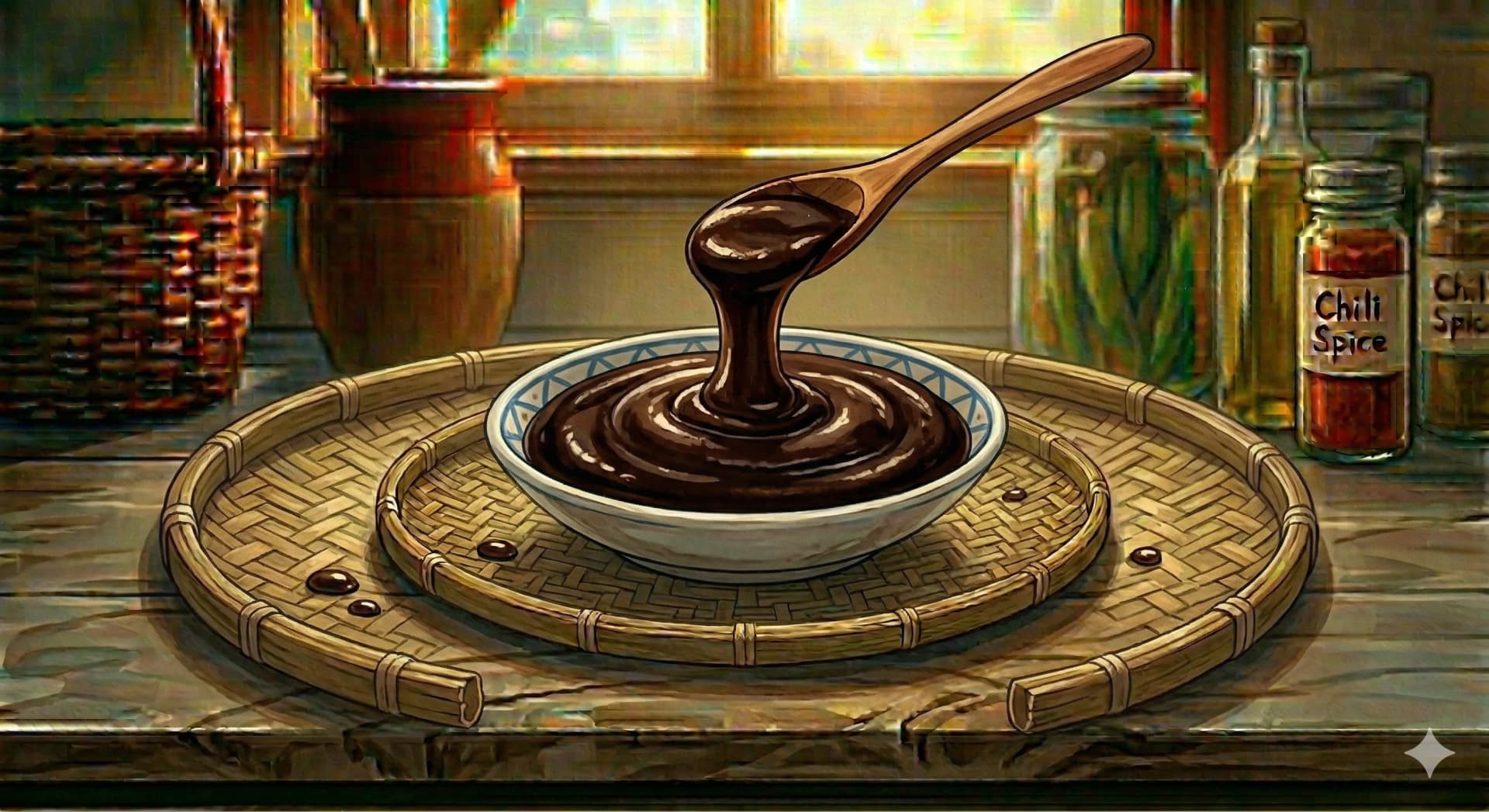
Sweet Bean Sauce
Also known as: Tian Mian Jiang, Sweet Flour Paste, Sweet Wheat Paste, Beijing Sauce
Sweet bean sauce (tian mian jiang, meaning 'sweet wheat sauce') is a thick, dark, glossy paste made from fermented wheat flour and salt with a characteristic sweetness.
Richer and sweeter than ground bean sauce, it is the authentic sauce served with Peking duck and mu shu pork, and one of the most distinctive condiments of northern Chinese cuisine.
Its sweetness comes not from added sugar but from the natural sugars produced during the fermentation of wheat starch.
Key facts at a glance:
- Tian mian jiang — meaning 'sweet wheat sauce' in Chinese
- Authentic sauce for Peking duck — brushed onto thin pancakes with scallions and cucumber
- Sweetness from fermentation — natural sugars produced during wheat starch fermentation, not added sugar
- Deeply tied to Beijing food culture — a standard pantry ingredient in traditional households
- Contains antioxidant Maillard reaction products — from fermentation and processing
Flavor Profile
Origin
Beijing, Northern China, China
Traditional Medicine Perspectives
Traditional Chinese Medicine
The wheat base of sweet bean sauce is considered slightly cooling and nourishing to the Heart in TCM. The fermented nature and sweetness make it digestive and harmonizing. It is considered appropriate for most constitutions and used in culinary medicine for its mild, centering qualities.
Modern Scientific Research
Sweet bean sauce, like ground bean sauce and other fermented wheat and soy products, contains organic acids, free amino acids, and Maillard reaction products from its fermentation and processing.
Research on similar fermented grain products suggests antioxidant properties and benefits for digestive health from prebiotic compounds produced during fermentation.
Cultural History
Sweet bean sauce is deeply tied to the imperial food culture of Beijing. Its use in Peking duck — brushed onto thin pancakes along with scallions and cucumber — is one of the most recognizable food rituals in Chinese cuisine.
The sauce was a standard pantry ingredient in traditional Beijing households and features prominently in older Chinese cookbooks as a base condiment for savory dishes.
Culinary Uses
Use as the sauce for Peking duck pancakes — brush onto the pancake, top with duck, cucumber, and scallion. Use in mu shu pork.
Dilute with stock for a dipping sauce. Add to stir-fries for sweetness and body.
Combine with sesame oil and a little water for a sauce for cold noodles. Stir-fry briefly in oil to develop flavor before adding other ingredients.
Preparation Methods
For Peking duck service: heat in a small pan with a little oil, sesame oil, and sugar until fragrant and slightly thinned.
Thin with warm water for a brushable consistency.
Can be used cold as a spread or condiment.
Traditional Dishes
- Peking duck (Běijīng kǎoyā)
- Mu shu pork
- Zha jiang mian (sweet version)
- Beijing lamb skewers (as marinade)
- Jing jiang rou si (shredded pork in sweet bean sauce)
Comments
Share your thoughts on this ingredient.
Sign in to comment0 Comments