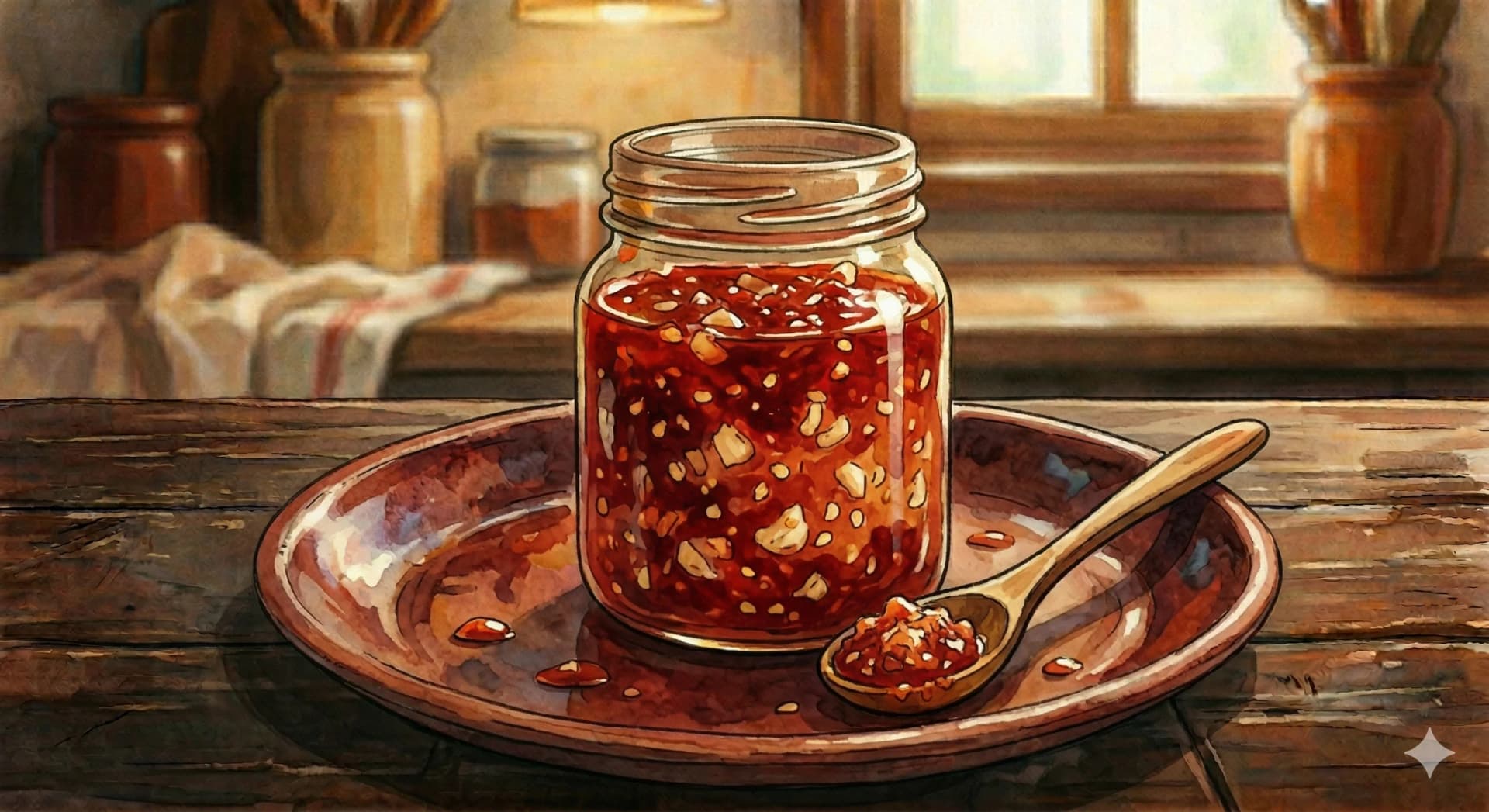
Chili Garlic Sauce
Also known as: Tuong Ot Toi, Sambal Bawang Putih, La Suan Jiang
Chili garlic sauce is a rough-textured, bright-red condiment made from coarsely ground fresh red chilies and garlic. Vivid, sharp, and intensely aromatic, it sits somewhere between a fresh sauce and a condiment — it has the brightness of fresh chilies with enough preservation to live in the fridge for months. The most widely known version in the West is Huy Fong's chili garlic sauce, though similar preparations exist across Chinese, Vietnamese, and Southeast Asian cooking.
Key facts at a glance:
- Vivid, sharp — And intensely aromatic, it sits somewhere between a fresh sauce and a condiment — it has the brightness of fresh chilies with enough preservation to live in the fridge for months.
- Chili garlic sauce — A rough-textured, bright-red condiment made from coarsely ground fresh red chilies and garlic.
- The most widely known version in the West — Huy Fong's chili garlic sauce, though similar preparations exist across Chinese, Vietnamese, and Southeast Asian cooking.
Flavor Profile
Origin
Vietnam, Southern China, Southeast Asia
Traditional Medicine Perspectives
Traditional Chinese Medicine
Garlic (Da Suan) is considered warm, acrid, and strongly detoxifying in TCM. It is associated with the Spleen, Stomach, and Lung meridians and is prescribed for food poisoning, intestinal parasites, and respiratory infections. Combined with chili's warming, circulation-activating properties, chili garlic sauce represents a strongly warming, detoxifying condiment.
Modern Scientific Research
Garlic is one of the best-researched culinary plants. Allicin, formed when raw garlic is crushed, shows significant antimicrobial, antiviral, and antifungal activity.
Meta-analyses suggest regular garlic consumption is associated with modest reductions in blood pressure and LDL cholesterol. Capsaicin from chilies adds anti-inflammatory and metabolic effects. The raw preparation preserves more allicin than cooked garlic.
Cultural History
Chili garlic preparations are found across southern Chinese cuisine, Vietnam, Thailand, Malaysia, and Indonesia — wherever both chilies and garlic are central to cooking. The chunky, barely-processed style reflects a preference for texture and fresh heat over the smooth, cooked qualities of more processed chili sauces. The rise of Huy Fong Foods (founded by Vietnamese-Chinese immigrant David Tran) brought this style to global prominence through the restaurant trade.
Culinary Uses
Use as a condiment for noodles, dumplings, rice porridge, and any dish that needs a boost of heat and garlic flavor. Stir into sauces, marinades, and dressings.
Add to stir-fry sauces. Spread on toast as an aggressive condiment. Particularly well-suited as a table condiment for Vietnamese and Chinese noodle soups.
Preparation Methods
Keep refrigerated after opening. The sauce is already seasoned — taste before adding extra salt. Stir before use as the solids may settle. A spoonful into any sauce or dressing adds instant garlic-chili complexity.
Traditional Dishes
- Pho (condiment)
- Cantonese noodle soups
- Spring rolls
- Congee
- Fried rice
Comments
Share your thoughts on this ingredient.
Sign in to comment0 Comments