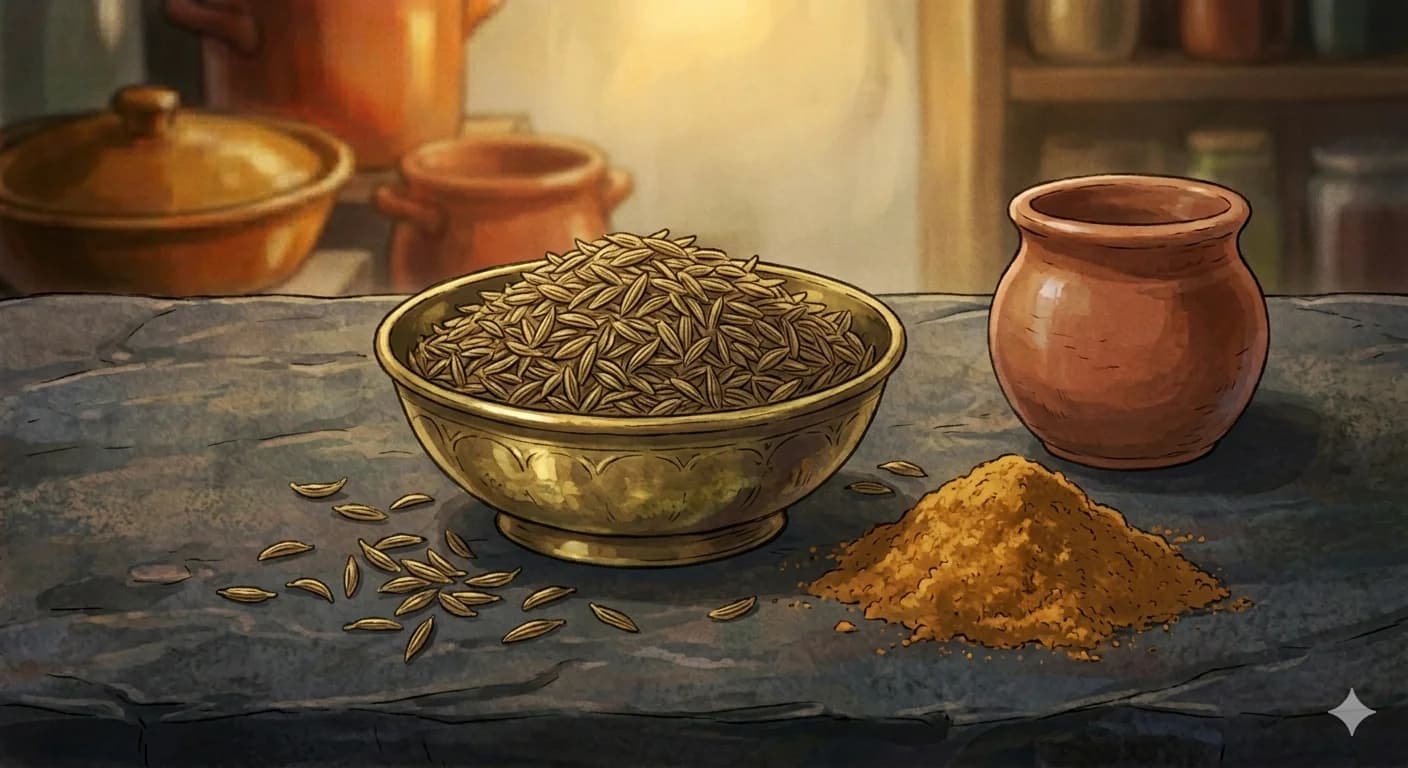
Cumin
Also known as: Jeera, Cuminum cyminum, Roman Caraway
Cumin is one of the most widely consumed spices in the world after pepper. Native to a region spanning the eastern Mediterranean to South Asia, its warm, earthy, slightly bitter flavor forms the aromatic backbone of South Asian, Middle Eastern, Mexican, and North African cooking. Cumin seeds are used whole or ground, and their character transforms dramatically depending on whether they are raw, toasted, or bloomed in hot oil.
Key facts at a glance:
- Cumin seeds — Used whole or ground, and their character transforms dramatically depending on whether they are raw, toasted, or bloomed in hot oil.
- Cumin is one of — The most widely consumed spices in the world after pepper.
Flavor Profile
Origin
Eastern Mediterranean, Iran, South Asia, North Africa
Traditional Medicine Perspectives
Ayurveda
Cumin (Jeeraka) is considered one of Ayurveda's most important digestive herbs. It is tridoshic when used in appropriate amounts and is classified as a deepana (digestive stimulant) and carminative. Ayurvedic texts prescribe jeera water — whole seeds boiled in water and strained — as a daily digestive tonic for improving agni, reducing bloating, and enhancing nutrient absorption.
Traditional Chinese Medicine
Cumin (Ziran) is used in regional Chinese medicine and is classified as warming, entering the Kidney and Spleen meridians. It is used to warm the interior, relieve pain, and treat cold-damp digestive conditions including nausea, diarrhea, and abdominal pain. Its use is more common in the cuisine and medicine of western China (Xinjiang and Sichuan).
Modern Scientific Research
Cumin has been studied for effects on digestion, blood sugar, and fat metabolism. Research suggests that cumin can stimulate the secretion of bile, aiding fat digestion.
Clinical trials have found that cumin supplementation reduces fasting blood glucose and improves lipid profiles in overweight subjects. Its essential oil shows significant antimicrobial activity. The compound thymoquinone, found in cumin, shows anti-cancer properties in preclinical research.
Cultural History
Cumin has been cultivated for at least five thousand years — seeds have been found in ancient Egyptian tombs, and it appears in records of ancient Mesopotamia. It was used medicinally in ancient Rome and Greece. In South Asia, cumin is foundational to Ayurvedic medicine and daily cooking. Mexican and Latin American cuisines absorbed it through Spanish colonialism, which had itself inherited it from Moorish Andalusia.
Culinary Uses
Cumin is used whole or ground. Whole seeds are commonly bloomed in hot ghee or oil as the first step in South Asian cooking, releasing aromatic compounds before other ingredients are added. Ground cumin is used in spice blends including garam masala, chili powder, and ras el hanout. It pairs naturally with coriander, turmeric, chili, and garlic.
Preparation Methods
Toast whole cumin seeds in a dry pan until fragrant and slightly darkened — 60 to 90 seconds — before grinding or adding to dishes. Bloom whole seeds in hot oil before adding other ingredients for maximum flavor release. Freshly ground cumin from toasted seeds has dramatically more flavor than pre-ground.
Traditional Dishes
- Dal tadka
- Hummus
- Chili
- Cumin rice
- Falafel
- Moroccan lamb
- Fennel, Cumin & Coriander Digestive Tea
Comments
Share your thoughts on this ingredient.
Sign in to comment0 Comments