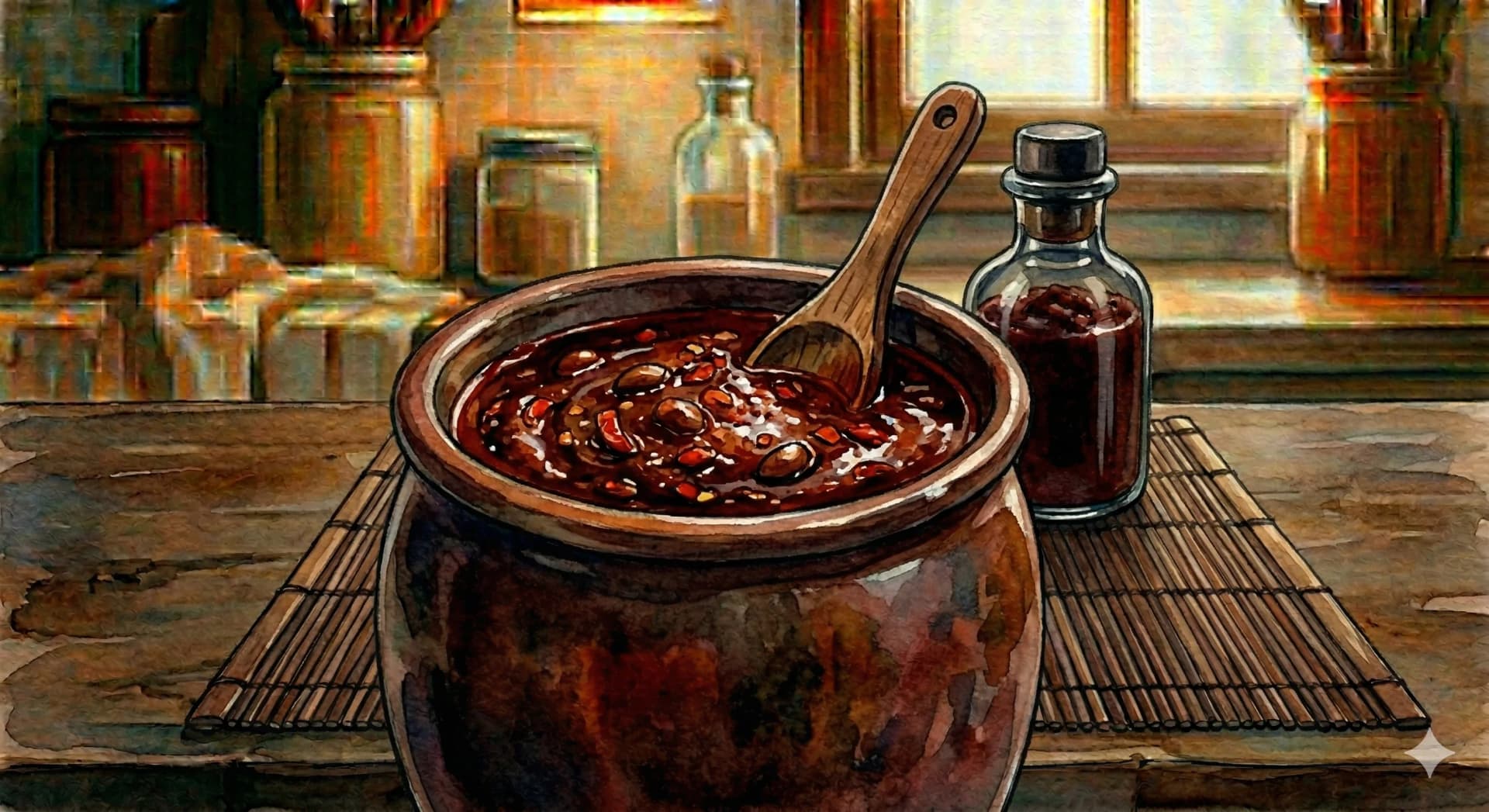
Doubanjiang
Also known as: Toban Djan, Pixian Douban, Spicy Bean Paste, Broad Bean Chili Paste, La Doubanjiang
Doubanjiang is the 'soul of Sichuan cuisine' — a fermented paste of broad beans, chilies, salt, and wheat that is aged for months or years into a complex, deeply savory, intensely spicy condiment. The finest comes from Pixian county in Chengdu, where it is aged in outdoor vats and turned daily. There is no substitute for it in Sichuan cooking: it is the foundation of mapo tofu, twice-cooked pork, and countless other dishes.
Key facts at a glance:
- The finest comes from Pixian county in Chengdu — Where it is aged in outdoor vats and turned daily.
- Doubanjiang — The 'soul of Sichuan cuisine' — a fermented paste of broad beans, chilies, salt, and wheat that is aged for months or years into a complex, deeply savory, intensely spicy condiment.
- There is no substitute — For it in Sichuan cooking: it is the foundation of mapo tofu, twice-cooked pork, and countless other dishes.
Flavor Profile
Origin
Pixian, Chengdu, Sichuan, China
Traditional Medicine Perspectives
Traditional Chinese Medicine
The fermented broad bean base of doubanjiang (Cang Dou) is considered cooling and beneficial to the Spleen and Stomach in TCM. The chili component adds warming properties, creating a balanced condiment that is neither purely heating nor cooling. Fermentation is understood to make foods more digestible and to support the Spleen's transforming and transporting functions.
Modern Scientific Research
Doubanjiang's double fermentation (broad beans and chili together) produces a complex array of amino acids, organic acids, and bioactive peptides. Research on similar fermented chili and bean pastes shows significant antioxidant activity, antimicrobial properties from the chili compounds, and beneficial changes to the food's amino acid profile during aging. The long fermentation produces glutamates naturally, contributing to its intense umami character.
Cultural History
Doubanjiang production in Pixian dates to at least the 17th century, after chilies were introduced to Sichuan via the Silk Road. The combination of broad beans (a pre-existing fermented paste ingredient) with the newly arrived chili created a condiment of extraordinary depth. Pixian doubanjiang is now a protected geographical indication product. Premium versions aged three years or more (san nian chen) are considered Sichuan's equivalent of aged balsamic vinegar.
Culinary Uses
Always stir-fry doubanjiang in hot oil first to bloom its flavor and reduce raw fermented edge — this step is non-negotiable in Sichuan cooking. Use as the flavor base for mapo tofu, twice-cooked pork, Sichuan eggplant, and spicy braises. Dissolve into broths for a numbing-spicy hot pot base. A small amount added to stir-fry sauces adds instant depth.
Preparation Methods
Heat oil in a wok until shimmering. Add doubanjiang and stir-fry over medium heat for 1–3 minutes until the oil turns deep red and the paste becomes fragrant. This blooming step is essential. Refrigerate after opening — it keeps for months.
Traditional Dishes
- Mapo tofu
- Twice-cooked pork (hui guo rou)
- Sichuan eggplant
- Dan dan noodles
- Water-boiled beef (shui zhu niu rou)
Comments
Share your thoughts on this ingredient.
Sign in to comment0 Comments