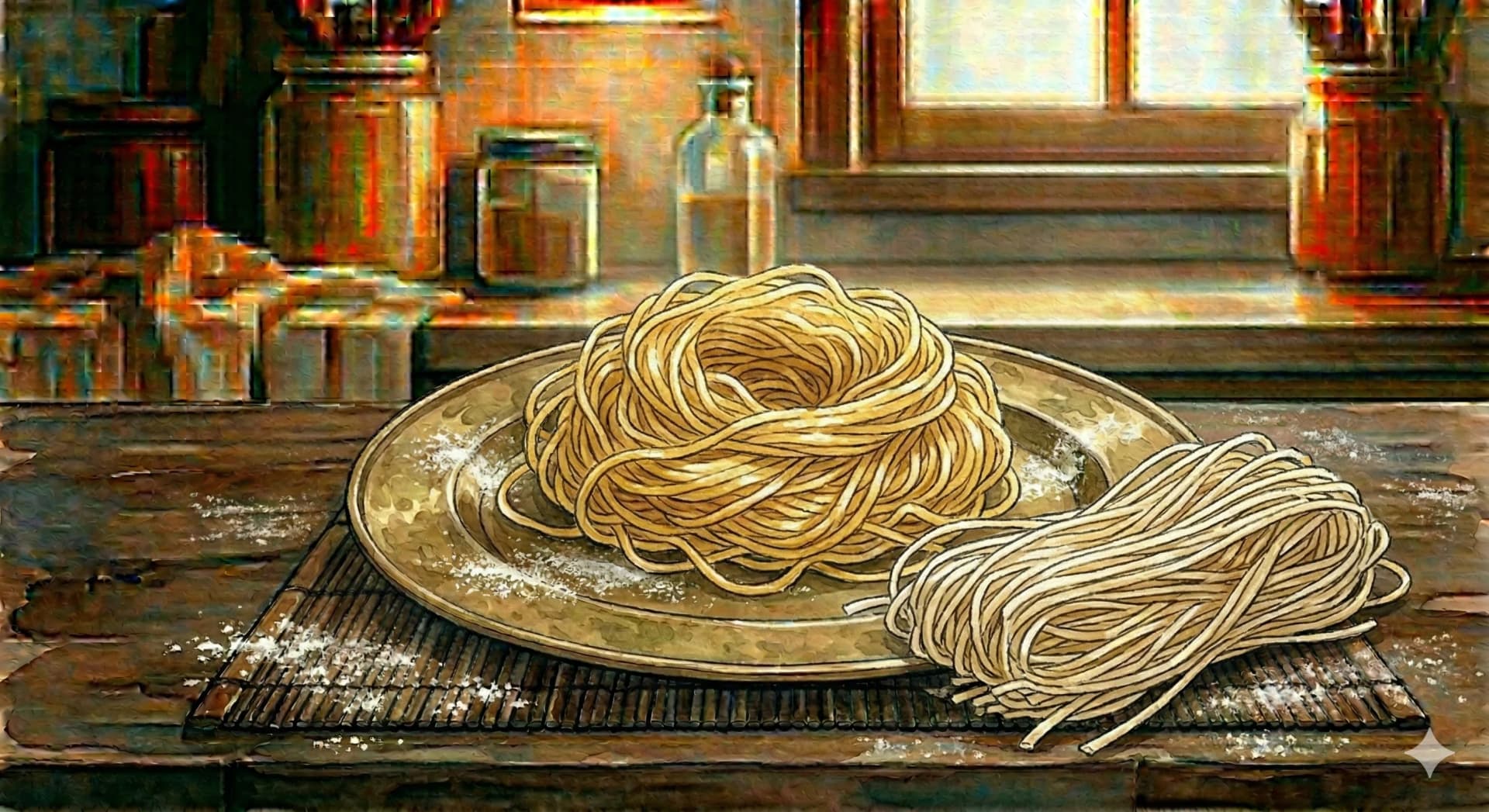
Egg Noodles
Also known as: Ji Dan Mian, Cantonese Egg Noodles, Wonton Noodles, Mee, Lo Mein Noodles
Egg noodles are wheat noodles enriched with egg, giving them a characteristic golden color, a slightly richer flavor, and above all a springy, resilient texture (known in Cantonese as 'QQ') that sets them apart from plain flour noodles. They are the backbone of Cantonese noodle culture: the thin, springy strands that fill bowls of wonton soup, the crispy fried bed beneath beef and black bean sauce in pan-fried noodles, the slippery rich strands tossed with oyster sauce in lo mein. Cantonese egg noodles at their finest are made with fresh eggs in alkaline water, producing a characteristic texture and color.
Key facts at a glance:
- Cantonese egg noodles at their finest — Made with fresh eggs in alkaline water, producing a characteristic texture and color.
Flavor Profile
Origin
China, Cantonese cuisine, Southeast Asia
Traditional Medicine Perspectives
Traditional Chinese Medicine
Egg noodles are considered warming and sweet in TCM, associated with the Spleen and Stomach. The wheat provides Qi tonification; the egg adds Yin-nourishing and Blood-building properties. Long noodles have strong symbolic significance in Chinese culture — associated with longevity, they must never be cut and are essential at birthday celebrations.
Modern Scientific Research
Egg noodles are a significant source of complex carbohydrates and provide protein from both wheat and egg content. The eggs add fat-soluble vitamins (A, D, E, K), choline, and lutein. The glycemic index of egg noodles is lower than plain wheat noodles due to the fat and protein content of the egg.
Cultural History
Egg noodles have been made in China for over two thousand years. In Cantonese cooking, the egg noodle achieved a particular level of refinement — the fresh noodles of Hong Kong, made daily by noodle shops, are among the finest in the world. The bouncy texture that defines a great Hong Kong wonton noodle was traditionally achieved by using bamboo poles to knead the dough — the pole kneading incorporates air and develops gluten in a specific way. Egg noodles traveled with Cantonese migrants throughout Southeast Asia, becoming central to the noodle cultures of Malaysia, Singapore, and Vietnam.
Culinary Uses
Use thin Cantonese egg noodles in wonton soup — blanch separately and add to broth just before serving. Pan-fry until crispy on both sides for the classic Hong Kong preparation, then top with sauced beef, seafood, or vegetables. Toss with oyster sauce, sesame oil, and char siu for a simple lo mein. Match thickness to application: thin for soups, medium for tossed and pan-fried.
Preparation Methods
Fresh egg noodles: blanch in boiling water for 30–60 seconds (thin) to 2 minutes (thick), drain immediately, and toss with a little oil to prevent sticking. Dried egg noodles: follow package instructions, typically 3–5 minutes. For crispy pan-fried noodles: blanch, drain thoroughly, spread in an oiled pan, and cook without moving until a golden crust forms.
Traditional Dishes
- Wonton noodle soup
- Hong Kong pan-fried crispy noodles
- Lo mein with char siu
- Beef brisket noodle soup
- Malaysian curry mee
Comments
Share your thoughts on this ingredient.
Sign in to comment0 Comments