Miso
Also known as: Fermented Soybean Paste, Shinshu Miso, Hatcho Miso
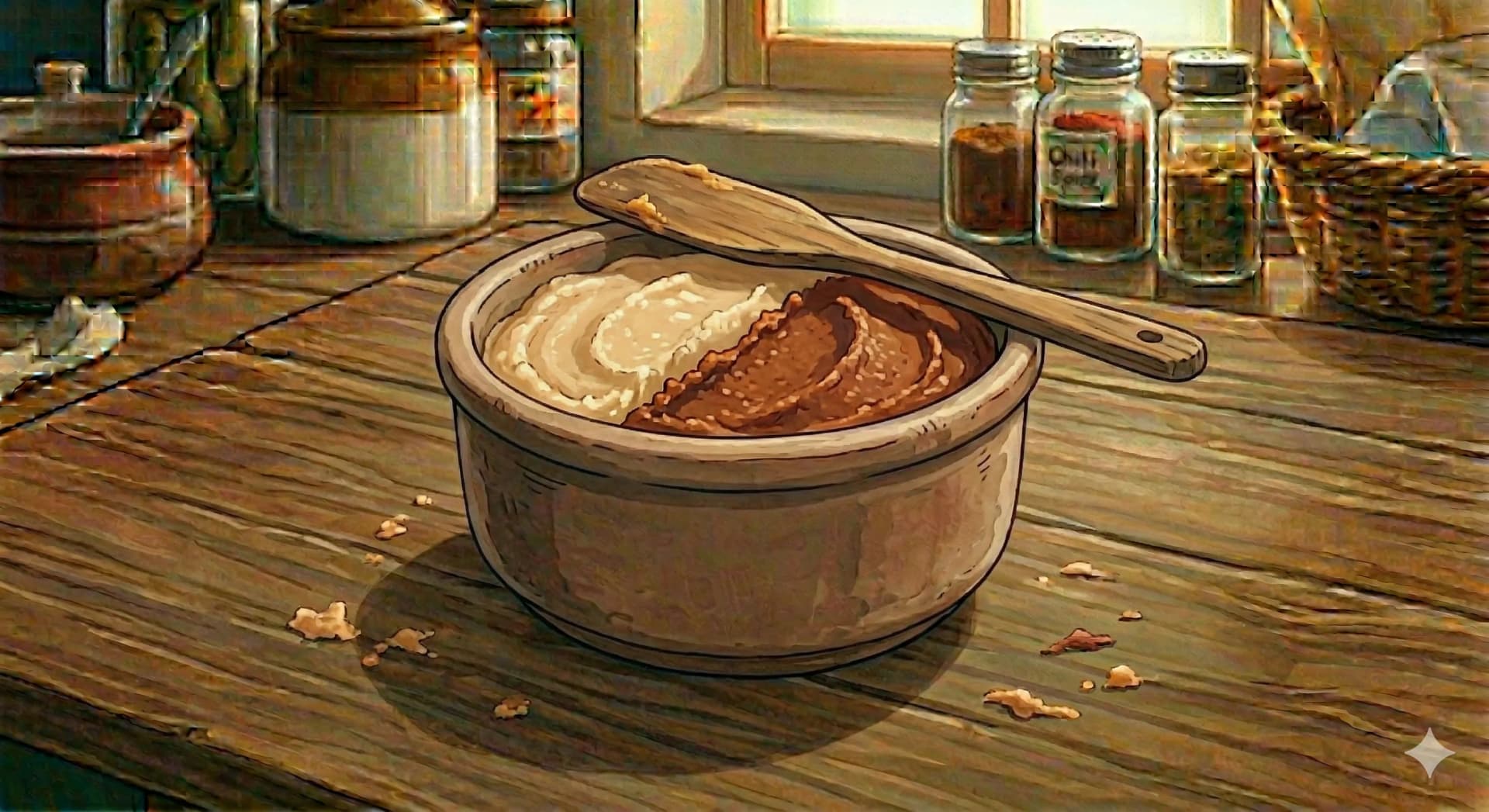
Miso is a fermented paste made from soybeans, salt, and a mold culture (koji), with optional additions of rice or barley. It has been produced in Japan for over a thousand years and exists in dozens of regional varieties — from the pale, sweet white misos (shiro) aged for weeks, to the intensely funky, almost black hatcho miso aged for three years or more.
At its core, miso is one of the oldest and most sophisticated fermented foods in human history.
Key facts at a glance:
- Koji-fermented — soybeans, salt, and mold culture, with optional rice or barley
- Wide spectrum — from pale, sweet shiro to dark, intense hatcho aged 3+ years
- 1,000+ years in Japan — central to Buddhist monastic cooking and the broader diet
- Probiotic rich — live beneficial bacteria that survive in the gut
- Never boil — high heat destroys probiotics and volatile flavor compounds
Flavor Profile
Origin
Japan, China, Korea
Traditional Medicine Perspectives
Traditional Chinese Medicine
Fermented soy products are valued in TCM for their ability to harmonize the Middle Jiao (digestive system), reduce food stagnation, and support the Spleen and Stomach. The fermentation process is understood to make nutrients more bioavailable and the proteins easier to digest. Fermented foods are generally considered beneficial for the digestive Qi.
Modern Scientific Research
Miso is rich in probiotics (live beneficial bacteria) that survive in the gut and influence the microbiome. Epidemiological data from Japan suggests that regular miso consumption is associated with lower rates of breast cancer, stomach cancer, and cardiovascular disease.
Research shows miso contains antioxidants and isoflavones that may protect against hormone-related cancers.
The fermentation process significantly reduces antinutrients in soybeans while increasing bioavailability of minerals and B vitamins including B12.
Cultural History
Miso arrived in Japan from China via Korea sometime between the 7th and 10th centuries CE, where it became central to Buddhist monastic cooking and then to the broader Japanese diet.
The Edo period (1603–1868) saw miso production industrialize, with distinct regional varieties developing.
Miso soup has been a morning staple in Japan for centuries — consumed at breakfast alongside rice and pickles as part of the standard traditional meal.
Culinary Uses
Miso is used as a seasoning rather than an ingredient — a spoonful transforms the depth of soups, marinades, dressings, and sauces.
Never boil miso after adding it to soups — high heat destroys probiotics and volatile flavor compounds.
Stir miso into a small amount of warm liquid first to dissolve before adding to a dish. Pairs with ginger, sesame, citrus, butter, and mushrooms.
Preparation Methods
Dissolve miso in a small amount of warm (not boiling) liquid before adding to dishes.
For miso soup, turn off heat, ladle broth into a small bowl with miso, whisk to dissolve, then pour back into the pot.
Store miso covered in the refrigerator indefinitely — it improves with age.
Comments
Share your thoughts on this ingredient.
Sign in to comment0 Comments