Japanese Cuisine
Shoyu Ramen (Tokyo-Style Soy Sauce Ramen)
A clear, soy-seasoned pork bone broth with wavy noodles, meltingly tender chashu, and the quiet depth of six slow hours
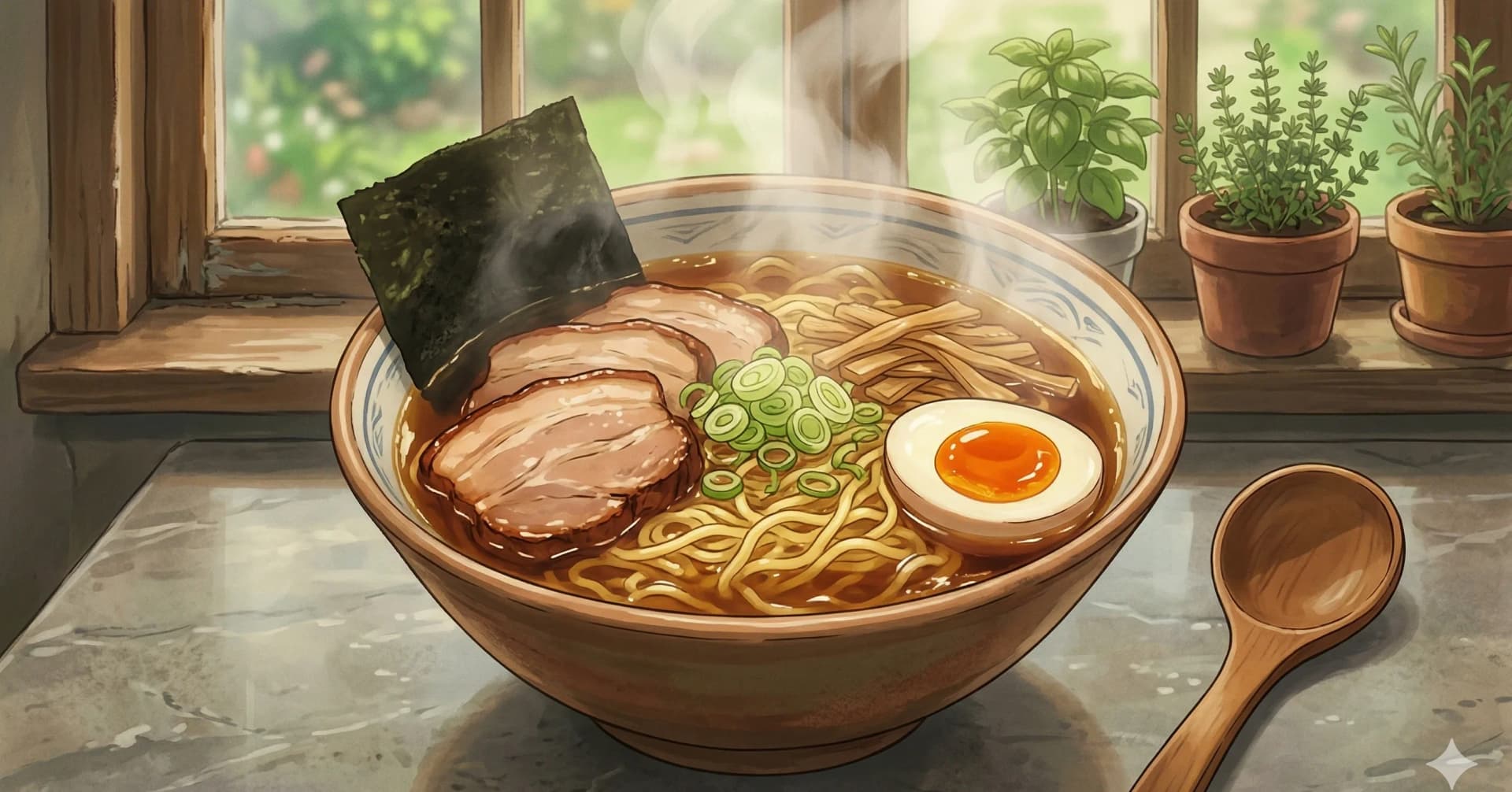
Shoyu ramen is the oldest style of ramen in Japan, and it remains the quietest. Where tonkotsu ramen announces itself with a milky, opaque broth and aggressive boil, shoyu ramen works in the other direction. The broth is clear, the color a gentle amber from the soy tare stirred into the bottom of each bowl, and the flavor arrives in layers rather than all at once. Pork bones provide the body. Chicken fat, stirred in during the last hours of simmering, adds a round richness that sits just beneath the surface. The soy tare, intensely salty on its own, ties everything together when it meets the hot broth and blooms into something balanced and deeply savory.
This recipe comes from Master Masamoto Ueda of Bizentei, a beloved neighborhood ramen shop in Tokyo that served the surrounding community for nearly fifty years. His original formula produced 150 bowls. Namiko Hirasawa Chen at Just One Cookbook scaled it down to eight servings for home kitchens, and that is the version adapted here. The method is not technically difficult. There are no tricky emulsifications, no pressure cooker timing to manage. You simmer bones in water for six hours, braise pork belly in a soy sauce mixture for two of those hours, and assemble bowls at the end. The active work is about thirty minutes. The rest is patience and occasional skimming.
The first bowl of shoyu ramen was served at Rairaiken in the Asakusa district of Tokyo in 1910, during the Meiji period. On its busiest day, that shop served nearly three thousand customers. The taste of soy sauce was already so familiar across Japan that this new dish spread quickly to every corner of the country. More than a century later, shoyu ramen remains the standard against which all other styles are measured. It is a bowl that rewards restraint, both in the making and in the eating.
At a Glance
Yield
8 servings
Prep
30 minutes
Cook
6 hours
Total
6 hours 30 minutes
Difficulty
Medium
Ingredients
Broth Ingredients
- 12 qtwater
- 1¼ lbpork leg bones (thigh bones and knuckles, called genkotsu in Japanese)
- 1/2large onion, skin on, root trimmed
- 5 clovesgarlic, skin on
- 1knob fresh ginger, skin on (about 5 cm), sliced thinly
- 3½ ozrendered chicken fat
- —Green parts of 2 Tokyo negi (long green onions), or 4 scallions
Pork Ingredients
- 2 lbpork belly, cut into 2 long narrow strips (about 4 cm x 5 cm x 25 cm each), skin removed
Tare Ingredients
To Assemble
To Serve
- —Chashu, sliced 3 mm thin while cold
- —Menma (seasoned bamboo shoots)
- —Thinly sliced scallion greens
- —Nori sheets
- —Ramen egg (ajitsuke tamago), halved
Method
- 1
Rinse the pork leg bones under cold running water, rubbing away any loose debris. Place them in a bowl of cold water and soak for 10 minutes. Drain, rinse again, and set aside. This draws out residual blood that would cloud the broth.
- 2
Tie each pork belly strip with butcher twine at roughly 1.5 cm intervals. Wrap firmly but without squeezing the meat out of shape. The belly will become very tender during cooking and the twine prevents it from falling apart. ### Build the soup broth (hours 0 to 3)
- 3
Place the water, pork leg bones, onion half, garlic cloves, and sliced ginger in a 12-quart stockpot. Set over high heat and bring to a boil, uncovered. This will take 20 to 30 minutes. Do not cover the pot at any point during the entire cooking process. Evaporation is part of how the broth concentrates.
- 4
Once boiling, skim the grey foam and scum that rise to the surface with a fine-mesh skimmer. Take your time here. A clean broth depends on diligent skimming in the first 15 minutes, when the bulk of the impurities surface. The liquid beneath the foam should be relatively clear with a faint golden tint.
- 5
Lower the tied pork belly strips gently into the pot. Return to a boil and continue cooking uncovered on high heat. Skim any new foam that appears. Continue cooking for 2 hours total from the initial boil, skimming periodically. As the liquid level drops, add up to 1 L of water to maintain enough volume to keep the bones submerged.
- 6
At about the 1 hour 50 minute mark, ladle out 480 ml of the broth and set it aside in a bowl. This will become the base of the shoyu tare.
- 7
At the 2-hour mark, add the rendered chicken fat and the green parts of the Tokyo negi to the pot. Continue cooking on high heat for 1 more hour. The chicken fat will melt into the broth and add a round, gentle richness that distinguishes this style from leaner broths. ### Make the shoyu tare
- 8
While the broth continues to cook, combine the reserved 480 ml of broth with the soy sauce, sake, mirin, and salt in a separate pot. Bring to a gentle simmer over medium heat, stirring until the salt dissolves. Turn off the heat and set aside. This mixture will taste intensely salty on its own. That is correct. It will balance when a small amount meets a full bowl of unseasoned broth. ### Braise the chashu (hours 3 to 5)
- 9
At the 3-hour mark of the total broth cooking time, carefully lift the pork belly strips from the stockpot with tongs and transfer them to a tray. The meat will be tender, so handle it gently. The broth continues simmering in the stockpot.
- 10
Transfer the pork belly strips to the pot with the shoyu tare. Place an otoshibuta (drop lid) or a circle of aluminum foil directly on the surface of the liquid. Bring to a gentle simmer over low heat. Braise for 2 hours. Do not use a pot lid on top. The drop lid keeps the pork submerged and distributes the sauce evenly without trapping steam.
- 11
Spoon the tare over the pork belly occasionally during braising. The meat is too delicate to flip, so basting from above is the safer approach. After 2 hours, the pork will be deeply colored and yielding to the touch.
- 12
Carefully lift the chashu from the sauce. Use scissors to cut and remove the butcher twine, working gently to avoid pulling the tender meat apart. Let the chashu cool to room temperature, then refrigerate until cold and firm. Cold chashu slices cleanly. Warm chashu crumbles. If serving the same day, place the chashu in the freezer for up to 1 hour until firm but not frozen. ### Finish the soup broth (hours 3 to 6)
- 13
After removing the pork belly at the 3-hour mark, reduce the stockpot to low heat. Continue simmering uncovered for 3 more hours. The broth will reduce steadily. By the end, you should have roughly 3 L of concentrated, clear, golden broth with a gentle pork aroma and a body that feels slightly viscous on the tongue.
- 14
Strain the broth through a fine-mesh strainer into a clean pot. Press the solids gently with a spatula to extract as much liquid as possible. Discard the bones, onion, garlic, ginger, and negi. For an even cleaner broth, strain a second time through a strainer lined with cheesecloth. ### Finish the tare
- 15
Skim the surface of the braising sauce to remove any fat or stray bits of meat. Transfer to a smaller container. This is your finished shoyu tare. It will keep in the refrigerator for up to 2 weeks. ### Cook the noodles and assemble
- 16
Bring a large pot of water to a rolling boil for the noodles. Reheat the soup broth in a separate pot, keeping it at a simmer. Warm your ramen bowls by filling them with hot water and letting them sit for a minute, then draining.
- 17
Place 15 to 30 ml of shoyu tare in the bottom of each warmed bowl. Start with the smaller amount. You can always add more, but you cannot take it away. Add 1 Tbsp of finely sliced white negi or scallion to the bowl as well.
- 18
Pour 360 ml of piping-hot broth into each bowl over the tare. Stir gently to combine. The broth will shift from pale gold to a warm amber as the tare dissolves.
- 19
Cook the ramen noodles in the boiling water according to the package directions, usually 60 to 90 seconds for fresh wavy noodles. They should feel springy with a slight resistance at the center. Drain thoroughly. Wet noodles dilute the broth.
- 20
Transfer the drained noodles to the bowl. Use chopsticks to lift and fold them so they sit neatly in the broth rather than clumping.
- 21
Slice the chilled chashu into pieces about 3 mm thick. If the knife drags, dip it in hot broth between cuts to clean the fat from the blade. Arrange the chashu slices, menma, scallion greens, and a sheet of nori on top of the noodles. Serve immediately. The noodles begin absorbing broth the moment they enter the bowl, and every minute of delay softens them further.
Key Ingredient Benefits
Pork leg bones (genkotsu). The femur and knuckle bones of the pig, named genkotsu in Japanese for their resemblance to a clenched fist. These bones are prized for ramen because their marrow and connective tissue release gelatin slowly over hours of simmering, giving the broth body without the opacity of a hard-boiled tonkotsu. Look for them at Asian grocery stores such as H Mart, or ask a butcher to save them. Pork neck or spine bones are an acceptable substitute, though they produce a slightly different flavor profile.
Pork belly. The cut used for chashu throughout Japan. The alternating layers of fat and lean meat respond beautifully to long braising, becoming tender enough to cut with chopsticks while holding their shape when sliced thin. The skin should be removed before cooking, as it can become unpleasantly chewy in the braising liquid. If pork belly is unavailable, pork shoulder (Boston butt) can be cut into strips and braised the same way, though the texture will be leaner and slightly firmer.
Rendered chicken fat (schmaltz). Shelf-stable rendered chicken fat is available at many grocery stores and online. Its role in this recipe is to add a round, aromatic richness to the broth that pork bones alone do not provide. In traditional ramen shops, the aroma oil is often the cook's signature element. Do not substitute with butter or vegetable oil, as the flavor profile is quite different.
Soy sauce. Regular koikuchi (dark) soy sauce is used for the tare here, which is characteristic of Tokyo-style shoyu ramen. This differs from the usukuchi (light-colored) soy sauce used in tonkotsu ramen tare, where preserving a pale broth color matters. The darker soy sauce contributes a deeper, more caramelized flavor and gives the finished broth its signature amber hue. Soy sauce is rich in glutamic acid, a natural source of umami.
Fresh ramen noodles. Made from wheat flour, water, salt, and kansui (an alkaline mineral solution). The kansui gives ramen noodles their characteristic yellow tint and springy, chewy texture. Wavy noodles are traditional for shoyu ramen, as their curls trap the lighter broth in small pockets. Straight noodles, more common in tonkotsu styles, let the thicker broth coat them evenly instead. Sun Noodles and Myojo are widely available brands. If you cannot find fresh noodles, frozen ramen noodles are a good alternative; dried instant noodles are a distant third option.
Why This Works
The clarity of shoyu ramen broth is not accidental. It comes from cooking the bones at a steady, moderate boil rather than the aggressive rolling boil used for tonkotsu ramen. In tonkotsu, violent agitation forces fat and collagen into a stable emulsion, creating the milky opacity that defines that style. Here, the gentler heat extracts gelatin and flavor from the bones while allowing the fat to rise to the surface, where the chicken fat joins it and contributes richness without cloudiness. Diligent skimming in the early stages removes the protein-rich scum that would otherwise break into tiny particles and scatter through the liquid, dulling both appearance and flavor.
The shoyu tare is built on the braising liquid from the chashu, which means it carries not only soy sauce, sake, and mirin but also dissolved pork fat, rendered collagen, and caramelized meat sugars from two hours of slow cooking. This is a more complex seasoning base than a simple soy sauce mixture, and it is why the tare tastes rounded rather than sharp. The principle is the same one at work in pho bo, where the spice-charred bones contribute aromatic depth to the broth, or in boat noodles, where the braising liquid of the meat becomes inseparable from the soup itself.
Rendered chicken fat, added during the middle stage of cooking, dissolves into the broth and raises the perception of richness without adding visible fat. In Japanese ramen terminology, this aromatic fat layer is called kaeshi or aroma oil, and it is considered one of the three pillars of any ramen bowl alongside the broth and the tare. The chicken fat here is subtle, but removing it would leave the broth feeling thin and one-dimensional.
Substitutions & Variations
Chicken-based broth. Replace the pork leg bones with 600 g of chicken carcasses or wings. The broth will be lighter and cook in about 3 hours rather than 6. This is closer to a chintan (clear broth) style used in some regional shoyu ramen variations. Keep the chicken fat addition as written.
Quicker chashu. If braising pork belly for 2 hours feels like too much, use pork shoulder sliced into thick rounds and braise for 90 minutes. The result is leaner but still flavorful. Alternatively, sear thinly sliced pork loin in a hot pan and marinate briefly in a small amount of the tare for a lighter topping.
Vegetable approach. This broth depends on animal bones for its body. For a plant-based alternative, try a kombu and dried shiitake dashi enriched with soy milk, though this produces a fundamentally different bowl. The tare can remain the same.
Spicy shoyu. Add 1 tsp of la-yu (Japanese chili oil) or a small spoonful of tobanjiang (fermented chili bean paste) to each bowl before adding the broth. The heat pairs well with the soy-forward flavor and is a popular variation at ramen shops.
Miso shoyu blend. Stir 1 Tbsp of red (aka) miso into the bowl alongside the tare for a deeper, earthier flavor that bridges shoyu and miso ramen styles. This is a common home-kitchen improvisation rather than a traditional shop style. For a dedicated miso soup, see miso shiru.
Richer toppings. A halved ramen egg (ajitsuke tamago) marinated overnight in soy sauce and mirin is the most popular addition. Nori, bean sprouts blanched for 30 seconds, corn kernels, and a pat of butter are all common in regional variations across Japan.
Serving Suggestions
Shoyu ramen is a complete meal in a single bowl, but Japanese ramen shops commonly offer small plates alongside. Gyoza are the classic companion, their crispy, pan-fried bottoms providing crunch against the soft noodles and warm broth. A small bowl of rice is another traditional side, useful for soaking up the last of the broth at the bottom of the bowl.
For a larger table, set out bowls of miso shiru as a lighter alternative, or offer udon noodles for guests who prefer a thicker, chewier texture. A plate of quick-pickled cucumbers or daikon dressed with rice vinegar cuts through the richness and keeps the palate fresh. Cold soba noodles with a dipping sauce make a pleasant contrast during warmer months.
If you are feeding a crowd and want to offer a noodle soup spread, the broth here sits comfortably alongside the milky richness of tonkotsu ramen and the aromatic complexity of pho bo. Each bowl tells a different story about what patience and bones and water can become.
Storage & Reheating
The soup broth keeps in an airtight container in the refrigerator for up to 3 days. It will gel lightly as it cools, which is a sign of good gelatin extraction. It freezes well for up to 1 month. Individual portion containers (360 ml each) make it easy to defrost only what you need. Reheat gently on the stovetop until piping hot. If the broth looks slightly cloudy after reheating, a brief simmer will restore clarity.
The shoyu tare keeps in the refrigerator for up to 2 weeks. Its high salt and soy content act as natural preservatives.
Chashu keeps in the refrigerator for 3 to 4 days or in the freezer for up to 1 month. Slice it while cold, then reheat slices briefly in the hot broth or in a warm pan. Leftover chashu is excellent in fried rice, over steamed rice with a drizzle of tare, or sliced thin as a snack alongside drinks.
Ramen noodles do not store well once cooked. They absorb liquid rapidly and turn soft and bloated within minutes. Always cook noodles fresh for each serving. Keep uncooked fresh noodles in the refrigerator according to the package directions, or store dried and frozen noodles in the pantry or freezer until needed.
Cultural Notes
Shōyu ramen (醤油ラーメン) is Tokyo-style soy sauce ramen, and it is the oldest documented ramen style in Japan. Every other regional ramen in the country grew out of it. The first recorded version appeared in 1910 at the Rairaiken restaurant in Tokyo's Asakusa district, where a Chinese-Japanese cook named Ozaki Kanichi pulled together Chinese immigrant noodle traditions (Cantonese lao mian and Shanghai-style noodle soup) and reworked them into something distinctly Japanese, using soy sauce instead of the chili oils and dark bean pastes those traditions ran on. Rairaiken is still open at its Asakusa location and is treated by ramen people as the spiritual birthplace of the dish.
The Tokyo style sits apart from other Japanese ramen in a few specific ways. The broth is clear and amber rather than milky and opaque. The spicing is restrained. The soy seasoning takes the lead. The base is a long-simmered stock of chicken and pork bones with kelp, dried fish, and dried mushroom, combined at the moment of serving with a concentrated soy-sauce tare (タレ) that supplies most of the dominant flavor. The soup leans on umami depth rather than fat richness. That restraint is the point.
Ramen as a category has had one of the loudest global rises of any single Japanese food in the last few decades. From Asakusa it spread across Japan during the 20th century, with major regional styles emerging in different cities: Sapporo's miso ramen, Hakata's tonkotsu ramen, Wakayama's tonkotsu-shoyu, Onomichi's seafood-based ramen, and dozens more. The 2010s global boom, driven by Japanese chains opening overseas, by American-led ramen shops, and by ramen documentaries, has made ramen recognizable to people who know almost nothing else about Japanese food.
Through all of that, shōyu ramen has kept its position as the classical reference point. The heavier tonkotsu and miso versions sell more, but the Tokyo bowl is the one ramen cooks measure themselves against.
Nutrition Facts
Calories: 773kcal (39%)|Total Carbohydrates: 42g (15%)|Protein: 22g (44%)|Total Fat: 48g (62%)|Saturated Fat: 18g (90%)|Cholesterol: 70mg (23%)|Sodium: 1350mg (59%)|Dietary Fiber: 1g (4%)|Total Sugars: 3g
You Might Also Like
Ratings & Comments
Ratings & Comments
Ratings
Share your thoughts on this recipe.
Sign in to rate and comment