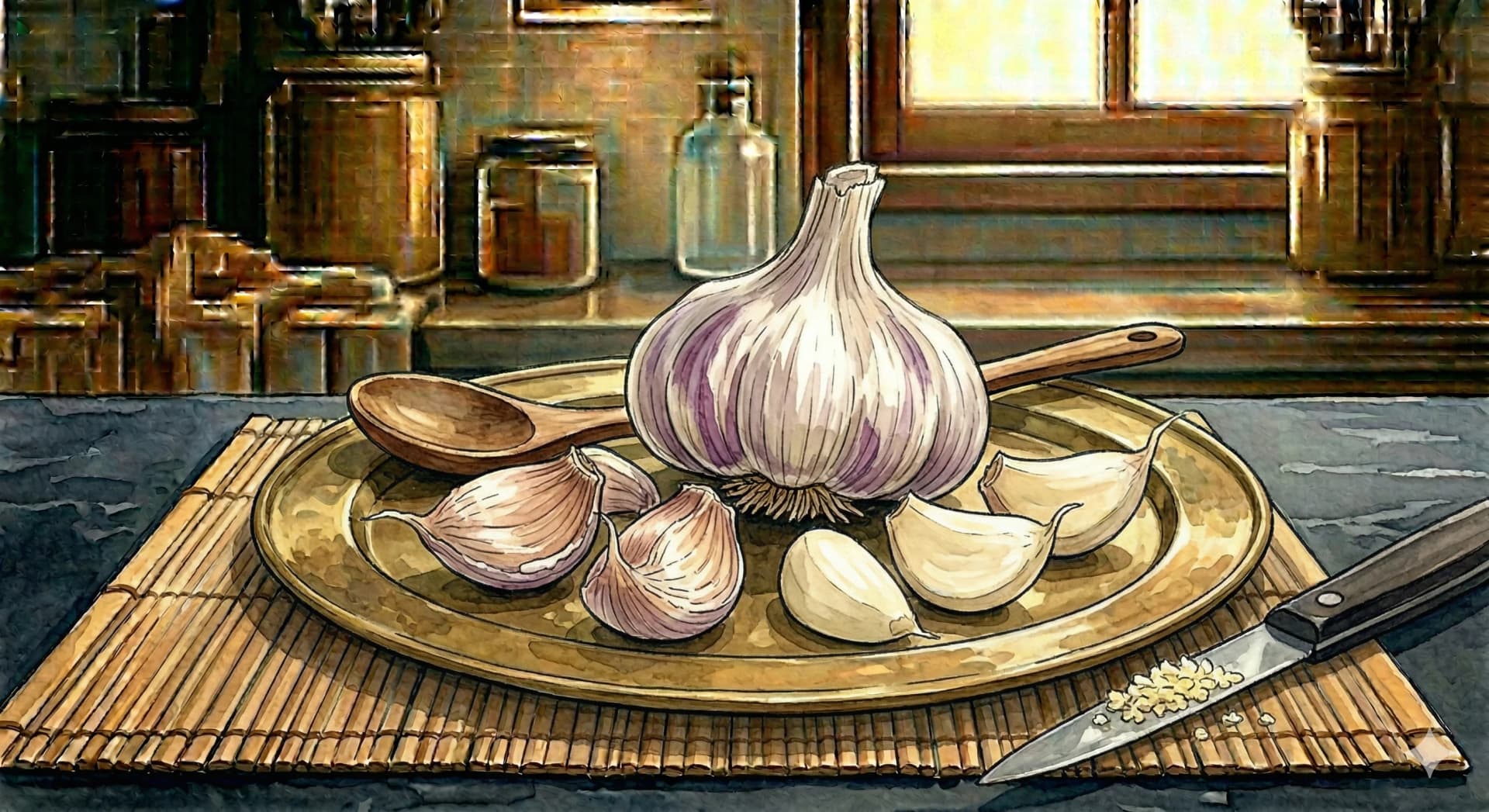
Garlic
Also known as: Da Suan, Allium sativum, Suan
Garlic is one of the most fundamental aromatics in Chinese cooking and across virtually every world cuisine. Pungent raw, sweet when roasted, and transformatively fragrant when cooked in hot oil, it appears in some form in nearly every savory dish in the Chinese kitchen.
In Chinese cooking the standard preparation is thin-sliced, minced, or smashed — rarely whole. Its flavor anchors stir-fries, sauces, marinades, and condiments from Cantonese to Sichuan to northern Chinese traditions.
Key facts at a glance:
- Universal aromatic — appears in nearly every savory Chinese dish
- Three forms — sliced, minced, or smashed, rarely used whole in Chinese cooking
- Flavor transformer — pungent raw, sweet roasted, fragrant in hot oil
- One of the "holy trinity" — alongside ginger and scallion as Chinese cooking's essential base
Flavor Profile
Origin
Central Asia (origin), China, Shandong
Traditional Medicine Perspectives
Ayurveda
Garlic (Lahsun) is classified as hot, pungent, and oily in Ayurveda. It is considered a rasayana — a rejuvenating tonic — particularly for Vata conditions. It is used to kindle digestive fire, warm the channels, and support the nervous system. Cooked garlic is preferred over raw in Ayurvedic tradition for people with sensitive digestion.
Traditional Chinese Medicine
Garlic (Da Suan) is classified as warm, acrid, and strongly detoxifying in TCM. Associated with the Spleen, Stomach, and Lung meridians, it is used to resolve toxicity, kill parasites, stop dysentery, and reduce swelling. It is prescribed for food poisoning, intestinal parasites, respiratory infections, and abscesses. Raw garlic is considered more medicinally potent than cooked.
Modern Scientific Research
Garlic is among the best-researched functional foods. Allicin, formed when raw garlic is crushed or chopped, has documented antimicrobial, antiviral, and antifungal activity.
Meta-analyses show regular consumption is associated with modest reductions in blood pressure (3–8 mmHg systolic) and LDL cholesterol. Research also suggests immune-supportive effects and potential cancer-preventive properties from organo-sulfur compounds.
Cooking reduces allicin content — allowing crushed garlic to sit for 10 minutes before heating preserves more bioactive compounds.
Cultural History
Garlic has been cultivated in China for over four thousand years and appears in early Chinese medical texts as a broad-spectrum medicinal plant. It spread from Central Asia along trade routes and became foundational to cooking across Asia, the Middle East, and Europe.
In Chinese culinary tradition, garlic is one of the three essential aromatics alongside ginger and scallion — the flavor base on which a vast proportion of Chinese dishes is built.
Specific regional preparations — the black garlic of Shandong, the pickled garlic of northern cuisine, the crispy garlic of Cantonese sauces — reflect centuries of culinary refinement.
Culinary Uses
Use minced in stir-fry sauces, marinades, and dumpling fillings. Slice thinly for Cantonese preparations. Smash with the flat of a knife for braises and master stocks.
Fry in oil until golden for crispy garlic toppings. Use raw in cold sauces, vinaigrettes, and chili preparations. Pair with ginger and scallion as the foundational aromatic base for most Chinese cooking.
Preparation Methods
Smash cloves with the flat of a cleaver to loosen the skin before peeling. Mince finely for sauces, slice for stir-fries, keep whole for braises.
For maximum medicinal benefit, crush and let sit 10 minutes before cooking.
Store at room temperature in a cool, dry place — not the refrigerator.
Traditional Dishes
- Mapo tofu
- Kung pao chicken
- Garlic fried rice
- Cantonese steamed prawns with garlic
- Sichuan cold cucumber salad
- Punjabi Chicken Curry
Recipes Using Garlic
- Grilled Lemongrass Pork (Thịt Nướng)
- Niu Rou Yang Cong Jiaozi (Beef and Onion Dumplings)
- Ayam Goreng Lengkuas (Galangal Fried Chicken)
- Banh Mi (Bánh Mì)
- Bai Qie Ji (White Cut Chicken)
- Grilled Pork Noodle Bowl (Bún Thịt Nướng)
- Boat Noodles (ก๋วยเตี๋ยวเรือ)
- Broken Rice Plate (Cơm Tấm)
- Steamed Rice Rolls (Bánh Cuốn)
- Braised Black Cod (Eundaegu-jorim / 은대구조림)
- Gobi Manchurian
- Bubur Ayam (Indonesian Chicken Rice Porridge)
- Chicken and Broccoli in White Sauce (白汁鸡花椰)
- Bun Rieu (Vietnamese Crab and Tomato Noodle Soup)
- Spicy Beef Noodle Soup (Bún Bò Huế)
- Char Siu (Chinese BBQ Pork)
- Ga Kho Gung (Vietnamese Caramelized Ginger Chicken)
- Canh Khổ Qua (Vietnamese Stuffed Bitter Melon Soup)
- Bun Cha (Vietnamese Grilled Pork with Rice Noodles)
- Turmeric Coconut Chicken (Gulai Ayam)
- Turmeric Fried Fish
- Fresh Spring Rolls (Gỏi Cuốn)
- Kare Raisu (Japanese Chicken Curry Rice)
- Spicy Enoki Mushrooms (Maeun Paengi Beoseot)
- Gai Yang (Thai BBQ Chicken)
- Carom-Spiced Fish Curry (Ajwaini Machi Curry)
- La Zi Ji (Chongqing Spicy Chicken)
- Gaeng Pa Gai (Thai Jungle Curry with Chicken)
- Sweet-Sour Parsi Stew (Khattu Meethu Estew)
- Cashew Chicken Stir-Fry (Gai Pad Med Mamuang / ไก่ผัดเม็ดมะม่วงหิมพานต์)
- Ga Nuong Xa (Vietnamese Grilled Lemongrass Chicken)
- Hu Tieu Nam Vang (Phnom Penh Noodle Soup)
- Jok (Thai Rice Congee with Pork Meatballs)
- Karaage (Japanese Fried Chicken)
- Opor Ayam (Javanese Chicken in Coconut Milk)
- Braised Pork Leg on Rice (Khao Kha Moo / ข้าวขาหมู)
- Kerala Beef Masala
- Fish in Banana Leaf (Patrani Machi)
- Ayam Bakar (Indonesian Grilled Chicken)
- Onion Coconut Curry (Kandyache Pitley)
- Lotus Root Shrimp Salad (Gỏi Ngó Sen Tôm Thịt)
- Ayam Percik (Malaysian Flame-Grilled Coconut Chicken)
- Beef Rendang (Rendang Daging)
- Chicken Rendang (Rendang Ayam)
- Caramelized Fish in Clay Pot (Cá Kho Tộ)
- Pad Thai (ผัดไทย)
- Paneer Bhurji
- Bo Kho (Vietnamese Beef Stew)
- Dan Dan Noodles (担担面)
- Yu Xiang Qie Zi (Chinese Eggplant with Garlic Sauce)
- Char Kway Teow (炒粿條)
- Khao Tom (Thai Rice Soup with Shrimp)
- Crispy Stuffed Crepe (Bánh Xèo)
- Parsi Okra Chicken (Bheeda Ma Murgi)
- Shoyu Ramen (Tokyo-Style Soy Sauce Ramen)
- Country Chicken Curry (Nandan Kozhi Curry)
- Five-Spice Roast Chicken
- Fried Fish, Delhi-Style (Kaanta Gali Machli)
- Soy Sauce Fried Noodles (Pad See Ew / ผัดซีอิ๊ว)
- Blue Rice Herb Salad (Nasi Kerabu)
- Pad Kra Pao Moo (ผัดกระเพราหมู)
- Turmeric Chicken Soup (Soto Ayam)
- Zhajiangmian (Fried Sauce Noodles)
- Beef in Black Bean Sauce (豉汁牛肉)
- Pad Kra Pao Gai (Holy Basil Chicken Stir-Fry)
- Sai Krok Isan (Thai Fermented Sausage)
- Nam Prik Ong (Northern Thai Pork and Tomato Dip)
- Black Chickpea Dal (Maa Chana Dal)
- Panang Curry
- Slow-Cooked Bitter Melon (Dum Ke Kareley)
- Ma Po Dou Fu (Mapo Tofu)
- Bitter Melon with Egg
- Chicken Satay (Satay Ayam)
- Xiang Gu Shao Dou Fu (Braised Tofu with Mushrooms)
- Xi Hong Shi Chao Dan (Tomato Egg Stir-Fry)
- Suan Rong Zheng Xia (Cantonese Steamed Shrimp with Garlic)
- Yu Tou Dou Fu Tang (Fish Head Tofu Soup)
- Thit Kho Trung (Vietnamese Caramelized Pork Belly and Eggs)
- Slow-Cooked Quail, Green Spices (Dum Ka Bateyr Hara Masala)
- Som Tam Thai (Green Papaya Salad)
- Black Nut Beef Soup (Rawon)
- Goan Dried Fish Curry (Gaadh Muzh)
- Jiao Yan Xia (Salt and Pepper Shrimp)
- Zi Ran Yang Rou (Cumin Lamb)
- Vegetable Coconut Stew (Sayur Lodeh)
- Caramelized Pork & Eggs (Thịt Kho Tàu)
- Lo Mai Gai (Lotus Leaf Sticky Rice)
- Jakarta Creamy Beef Soup (Soto Betawi)
- Prawn Kabiraji Cutlet
- Malaysian Mutton Soup (Sup Kambing)
- Curry Laksa
- Xia Ren Chao Fan (Shrimp Fried Rice)
- Broth-Cooked Pilaf (Yakhni Pulao)
- Black Bean Chicken
- Kou Shui Ji (Sichuan Mouthwatering Chicken)
- Thai Sour Curry (Gaeng Som)
- Vada Pav
- Gan Bian Si Ji Dou (Dry-Fried Green Beans)
- Fried Spring Rolls (Chả Giò)
- Suan Rong Chao Xiao Bai Cai (Garlic Bok Choy Stir-Fry)
- Gong Bao Ji Ding (Kung Pao Chicken)
- Shaking Beef (Bò Lúc Lắc)
- Japchae (Glass Noodles with Vegetables)
- Dou Ban Dou Fu (Stir-Fried Tofu with Chili Bean Paste)
- Banana Leaf Steamed Fish (Pepes Ikan)
- Liang Ban Mu Er (Wood Ear Mushroom Salad)
- Parsi Chicken with Potato Straws (Salli Murgi)
- Tempe Goreng (Indonesian Fried Tempeh)
- Kimchi Fried Rice (Kimchi Bokkeumbap / 김치볶음밥)
- Mughlai Royal Pilaf (Shahjhani Pulao)
- Yangzhou Chao Fan (Yangzhou Fried Rice)
- Beef Tendon Noodle Soup (牛筋面)
- Dao Xiao Mian (Knife-Cut Noodles, 刀削面)
- Red Pork on Rice (Khao Moo Daeng / ข้าวหมูแดง)
- Cha Ca La Vong (Hanoi Turmeric Fish with Dill)
- Chao Bai Cai (Stir-Fried Napa Cabbage)
- Golden Mughlai Curry (Kundan Kaliyan)
- Taiwanese Beef Noodle Soup (紅燒牛肉麵)
- Gan Chao Niu He (Beef Chow Fun)
- Shui Zhu Yu (Sichuan Boiled Fish)
- Bao Zai Fan (Claypot Rice)
- Jiaozi (Pork and Chive Dumplings)
- Hong Shao Yu (Red Braised Fish)
- Hokkien Mee (福建面)
- Lamb Ishtu
- Curry Puff (Karipap)
- Momos
- Dou Chi Zheng Yu (Steamed Fish with Black Bean Sauce)
- San Bei Ji (Three Cup Chicken)
- Hui Guo Rou (Twice Cooked Pork)
- Hainanese Chicken Rice
- Nasi Lemak
Comments
Share your thoughts on this ingredient.
Sign in to comment0 Comments