Chinese Cuisine
San Bei Ji (Three Cup Chicken)
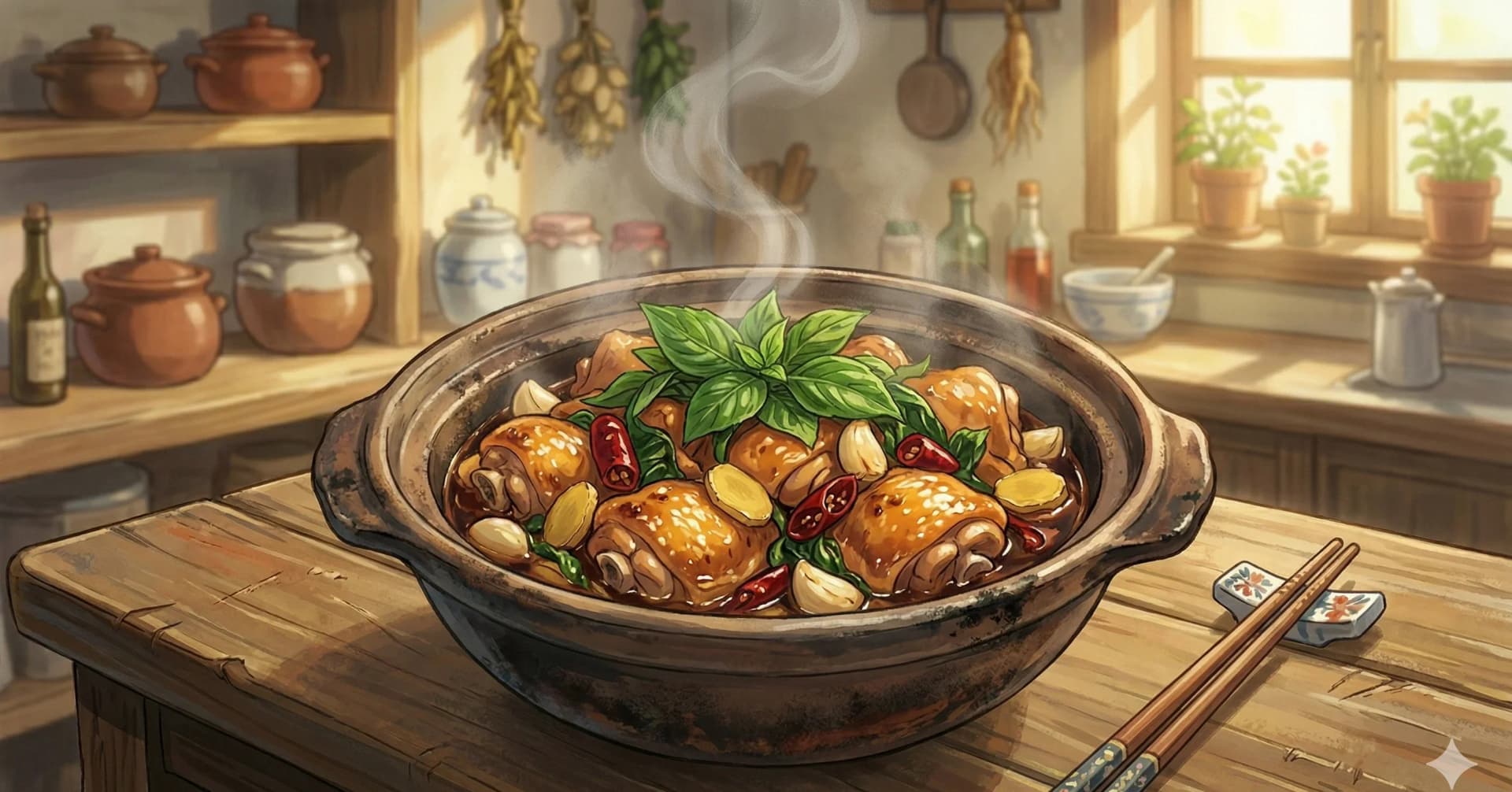
Taiwanese braised chicken with soy sauce, sesame oil, and rice wine, finished with Thai basil
Three Cup Chicken gets its name from its three foundational liquids: one cup sesame oil, one cup soy sauce, and one cup rice wine. In practice, these proportions are adjusted for balance, but the principle holds. These three ingredients, reduced together with chicken over high heat, create a sauce that is impossibly glossy, deeply savory, and fragrant with the toasted nuttiness of sesame. When a handful of Thai basil is thrown in at the very end, the heat wilts the leaves and releases a sharp, sweet anise-like perfume that cuts through the richness and lifts the entire dish.
While the dish has roots in Jiangxi province on the Chinese mainland, it is most closely associated with Taiwan, where it has become one of the island's most beloved home-cooked dishes. Taiwanese three cup chicken tends to be sweeter and more aromatic than mainland versions, with the addition of Thai basil (which does not appear in the original Jiangxi preparation) being the most significant difference. The Taiwanese version, served bubbling in a small clay pot at the table, is the one that has achieved global recognition.
The practical key is the initial step of frying the chicken in sesame oil. Untoasted (or lightly toasted) sesame oil can withstand the heat of a moderate stir-fry, and cooking the chicken in it from the start infuses the meat with sesame flavor from the outside in. The garlic and ginger, added in generous quantities, become soft and sweet during braising, transforming from sharp aromatics into almost candy-like morsels that are as good to eat as the chicken itself.
At a Glance
Yield
4 servings
Prep
15 minutes
Cook
30 minutes
Total
45 minutes
Difficulty
Medium
Ingredients
- 1¾ lbbone-in, skin-on chicken thighs and drumsticks, chopped into 4 cm pieces through the bone
- 3 tbspsesame oil (toasted)
- 1 tbspvegetable oil
- 3¼ tbspfresh ginger, sliced into coins
- 12 clovesgarlic, peeled and left whole
- 2dried red chilies, halved
- ¼ cupTaiwanese rice wine (mi jiu) or Shaoxing wine
- 2 tbsplight soy sauce
- 1 tbspdark soy sauce
- 1½ tbsprock sugar (or 15 g brown sugar)
- —Large handful of fresh Thai basil (about 30 g)
Method
- 1
If your chicken pieces are large, use a cleaver to chop them through the bone into pieces about 4 cm. Bone-in pieces braise better and add body to the sauce. Pat the chicken dry with paper towels.
- 2
Heat the sesame oil and vegetable oil together in a clay pot or heavy-bottomed skillet over medium heat. The vegetable oil raises the smoke point slightly, protecting the sesame oil from burning.
- 3
Add the ginger coins and whole garlic cloves. Fry gently for 2 to 3 minutes, stirring occasionally, until the ginger is fragrant and the garlic is golden on the outside. The aroma should be warm and toasty.
- 4
Increase the heat to medium-high. Add the chicken pieces skin-side down. Cook without moving for 3 minutes, allowing the skin to brown and the chicken to release from the pan. Turn the pieces and brown the other side for 2 minutes. The chicken does not need to be cooked through at this stage.
- 5
Add the dried chilies and stir briefly.
- 6
Pour in the rice wine. It will deglaze the pan, sizzling vigorously and picking up all the browned bits from the bottom. Let the alcohol cook off for about 30 seconds. The fumes will smell sharply of wine.
- 7
Add the light soy sauce, dark soy sauce, and rock sugar. Stir to combine and dissolve the sugar.
- 8
Bring to a boil, then reduce the heat to medium-low. Cover and braise for 15 minutes. The chicken should simmer gently in the sauce, with the liquid level about halfway up the chicken pieces.
- 9
Remove the lid. Increase the heat to medium-high. Cook uncovered for 8 to 10 minutes, stirring and turning the chicken pieces occasionally. The sauce will reduce dramatically, becoming thick, glossy, and almost syrupy. You want it to coat each piece of chicken with a dark, shiny glaze.
- 10
Watch carefully during the reduction phase. The sugar in the sauce can burn quickly once most of the liquid has evaporated. When the sauce is thick enough to coat the back of a spoon and the chicken pieces are deeply lacquered, you are close.
- 11
Taste the sauce. It should be robustly savory, slightly sweet, and deeply aromatic with sesame. Adjust with a pinch more sugar if too salty, or a splash of soy sauce if too sweet.
- 12
Turn off the heat. Immediately add the Thai basil, pressing it into the hot chicken and sauce. Cover the pot for 30 seconds to wilt the basil in the residual heat.
- 13
Remove the lid. The basil should be wilted but still bright green, releasing its distinctive sweet, anise-like fragrance.
- 14
Serve immediately in the clay pot or transfer to a warm serving dish. Serve with steamed white rice.
Key Ingredient Benefits
Sesame oil is rich in sesamol and sesamin, antioxidant compounds that research suggests may support cardiovascular health and have anti-inflammatory properties. It is calorie-dense, and this dish uses it generously.
Thai basil contains eugenol, the same compound found in cloves, which has been studied for its antimicrobial and anti-inflammatory properties. In traditional Asian medicine, basil is considered a warming herb that supports digestion.
Garlic cooked whole and slowly, as in this dish, develops a mellow sweetness as the harsh allicin converts to milder sulfur compounds. These compounds are traditionally associated with immune and cardiovascular support.
Why This Works
Sesame oil is used here not as a finishing drizzle but as the primary cooking fat, which is unusual in Chinese cooking. The toasted sesame oil infuses the chicken, ginger, and garlic with its nutty flavor from the very beginning of the cooking process. The combination with soy sauce and rice wine creates a braising liquid that reduces into a concentrated, emulsified sauce. The natural gelatin released from the bone-in chicken helps the sauce achieve its glossy, clinging consistency.
Rock sugar contributes to the sauce's gloss. It caramelizes more cleanly than granulated sugar and produces a shinier finish, which is important in a dish where the visual appeal of the lacquered chicken is part of the experience.
Thai basil is added at the very end because its volatile aromatic compounds are destroyed by prolonged heat. The brief contact with the hot chicken and sauce wilts the leaves and releases their essential oils without destroying them, creating a fragrant burst that serves as an aromatic counterpoint to the rich, heavy sauce.
Substitutions & Variations
- Chicken: Bone-in, skin-on pieces are essential for the sauce's body. Boneless thighs can work but will not produce the same glossy, rich sauce. Some versions use a whole chicken, chopped.
- Thai basil: Regular Italian basil can substitute in a pinch, though the flavor is milder and lacks the anise quality. Some cooks add a few torn shiso leaves for complexity.
- Rice wine: Taiwanese mi jiu is traditional. Shaoxing wine or dry sherry are acceptable substitutes. Mirin is too sweet.
- Vegetarian: Firm tofu, fried until golden, or king oyster mushrooms sliced into thick rounds can replace the chicken. Reduce the braising time.
- Three cup tofu: A popular vegetarian version that follows the same method with pressed, fried tofu cubes.
Serving Suggestions
Serve bubbling in a clay pot at the center of the table, if possible. The visual and aromatic impact of the clay pot presentation is part of the dish's appeal. Accompany with steamed white rice and a simple green vegetable, such as blanched choy sum or stir-fried water spinach. A light soup balances the richness of the chicken. For a Taiwanese home-style meal, add a cold cucumber salad and a plate of stir-fried greens.
Storage & Reheating
Store leftovers in an airtight container in the refrigerator for up to 3 days. The sauce will thicken and gel when cold. Reheat in a covered pot over medium heat, adding a splash of water to loosen the sauce. The basil will lose its freshness, so add a few fresh leaves when reheating if available. Freezes well for up to 1 month, though the basil will not survive the freezing process.
Cultural Notes
San bei ji (三杯雞, "three-cup chicken") is the Taiwanese braised chicken dish whose name describes the three liquid ingredients added in equal measure to a clay pot of chicken pieces: one cup soy sauce, one cup rice wine (traditionally Taiwanese rice wine, sometimes substituted with Shaoxing), and one cup sesame oil. The chicken cooks down in the liquid with sliced ginger, whole garlic cloves, dried chilies, and rock sugar until the liquid reduces to a glossy dark glaze that coats the meat. The dish is finished with a generous handful of fresh Thai basil (jiu ceng ta, nine-storied tower) added in the last thirty seconds, which wilts into the dish and contributes the herbal aromatic note that completes the Taiwanese flavor signature.
The dish has a documented Chinese origin in the Jiangxi province of southern China, where the technique is said to date to the Song dynasty and is associated with the imprisonment of the patriot-general Wen Tianxiang (1236-1283) before his execution. The dish was reportedly prepared by an elderly woman in Wen's honor using the simple ingredients she had on hand. The original Jiangxi version uses pork rather than chicken and a heavier sauce, but the technique migrated to Taiwan with mainland Chinese immigrants in the seventeenth century and was adapted by Taiwanese cooks into its modern form: chicken instead of pork, more sesame oil for the signature dark gloss, and the addition of Taiwanese basil for the herbal finish.
The dish is one of the central items in the Taiwanese culinary canon and appears at virtually every traditional Taiwanese restaurant worldwide, served in a small black cast-iron pot still bubbling from the burner. The standard accompaniment is plain steamed rice and a clear soup, with the diner spooning the rich chicken and its glaze over rice and pushing the basil leaves to the side for the bright herbal flavor between bites. The dish is also a fixture of Taiwanese home cooking and is often the first dish that young Taiwanese cooks living abroad attempt to recreate the food memories of home, since the ingredients are widely available and the technique is forgiving.
Nutrition Facts
Calories: 489kcal (24%)|Total Carbohydrates: 10.2g (4%)|Protein: 27.5g (55%)|Total Fat: 35g (45%)|Saturated Fat: 7.5g (38%)|Cholesterol: 158mg (53%)|Sodium: 738mg (32%)|Dietary Fiber: 0.3g (1%)|Total Sugars: 5.9g
You Might Also Like
Ratings & Comments
Ratings & Comments
Ratings
Share your thoughts on this recipe.
Sign in to rate and comment