Malaysian Cuisine
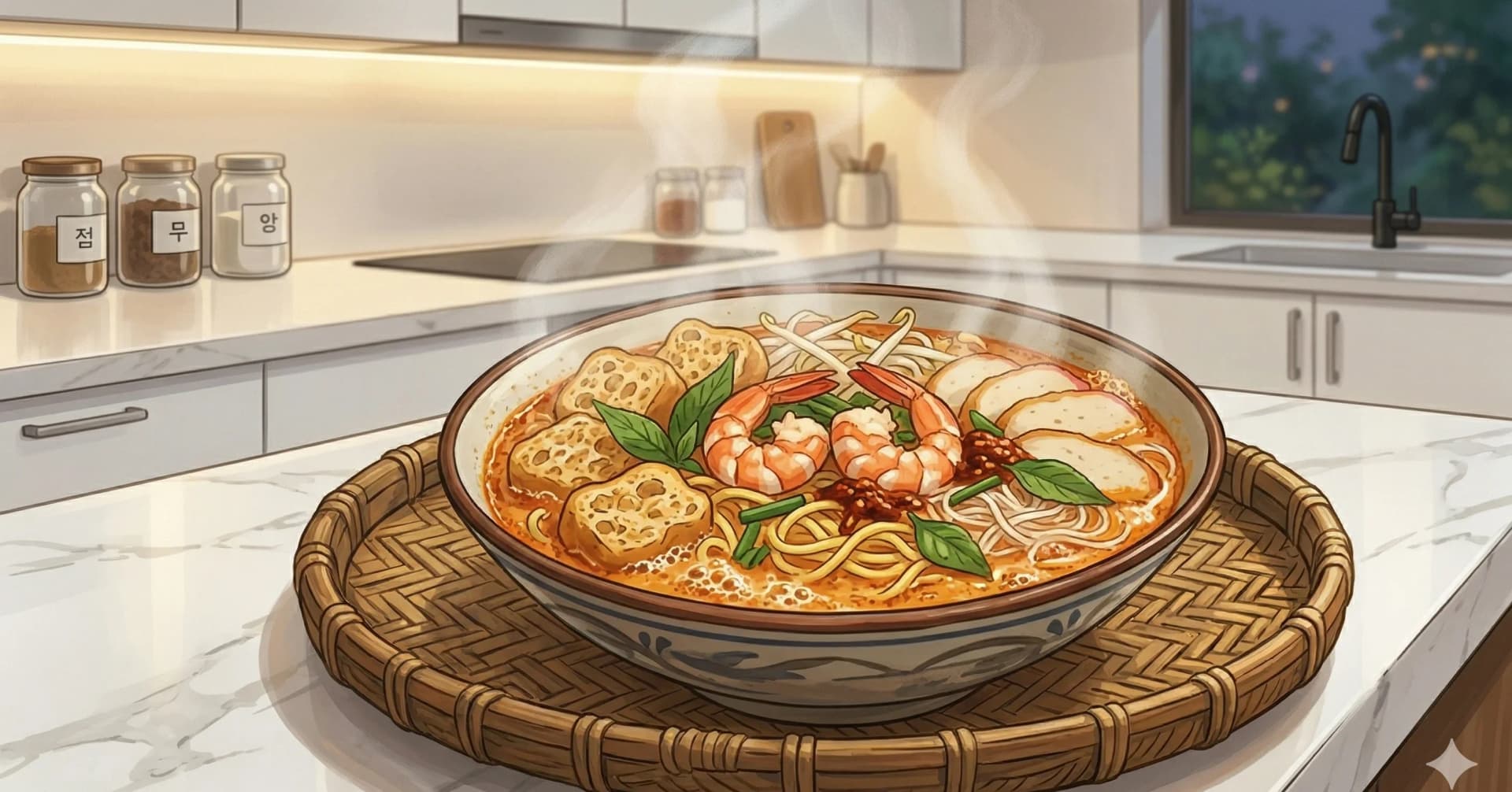
Curry Laksa
Spicy coconut noodle soup with shrimp, tofu puffs, and rice vermicelli
Laksa is one of those dishes that reveals the true range of Malaysian cooking. It is not one thing. The word covers a broad family of noodle soups that shift in character from state to state, stall to stall, and household to household. Asam laksa, the sour tamarind-based version from Penang, bears almost no resemblance to the creamy, curry-scented bowl most of the world knows as laksa. This recipe is the latter: curry laksa, sometimes called laksa lemak, the coconut milk version that has become the ambassador of the genre far beyond Southeast Asia.
The soul of a good curry laksa is its broth. The spice paste, or rempah, brings together lemongrass, galangal, dried shrimp, garlic, shallots, chilies, and belacan into a fragrant base that gets fried until the oil separates and the kitchen smells like the inside of a hawker stall. The coconut milk goes in after that, along with a stock enriched by simmering chicken on the bone. Everything else, the noodles, the tofu puffs, the shrimp, the bean sprouts, is supporting cast. If the broth is right, the bowl is right.
A store-bought laksa paste will get you most of the way. The key is to treat it as a starting point, not a finished product. Sauteing the paste with fresh aromatics, garlic, ginger, lemongrass, and chilies, brings it back to life and closes the gap between convenience and tradition. This is the approach used by home cooks across Malaysia and Australia alike.
Curry laksa shares its love of coconut and spice with Chicken Rendang, and its noodle-soup spirit with northern Thailand's Khao Soi and Vietnam's Pho Bo. If you enjoy the bracing heat of Tom Yum Goong, laksa offers something warmer, rounder, and more enveloping. Serve it alongside Nasi Lemak for a table that covers the essential range of Malaysian flavor.
At a Glance
Yield
4 servings
Prep
30 minutes
Cook
45 minutes
Total
1 hour 15 minutes
Difficulty
Medium
Ingredients
Stock Ingredients
- 2⅛ cupchicken stock or broth
- 1 cupwater
- 1 lbbone-in (about 3–4 pieces), skin-on chicken drumsticks
Broth Ingredients
- 2 tbspneutral oil (such as vegetable or peanut oil)
- 3 clovesgarlic, minced
- 3¼ tbspfresh ginger (about 3 cm), finely grated
- 2 stalkslemongrass, white part only, finely grated or minced
- 3bird's eye chilies, finely chopped (adjust to taste)
- 5 ozlaksa paste
- 3⅓ cupfull-fat coconut milk
- ½ cupevaporated milk (optional, for a creamier, less coconut-heavy broth)
- 1 tbspfish sauce, plus more to taste
- 1¼ tspsugar
- ⅞ tspsalt, or to taste
Noodle Ingredients
- 7 ozdried rice vermicelli
- 7 ozfresh Hokkien noodles (optional, for a two-noodle bowl)
To Assemble
- 4 oztofu puffs (about 10 pieces), halved
- 4 ozbean sprouts
- 12medium shrimp (about 200 g), peeled and deveined
- 3½ ozfish cake, sliced into 5 mm rounds (optional)
- 2hard-boiled eggs, halved
Chili Paste Ingredients
- 1 tbspsriracha or other chili garlic sauce
- 1 tbspchili paste (from a jar of sambal oelek or similar)
- 1 tbspvegetable oil
- 1⅔ tspsoy sauce
- 1small clove garlic, minced
- ¼ ozlaksa paste
- ¾ tspsugar
Method
- 1
Place the chicken stock, water, and drumsticks in a medium saucepan. Bring to a boil over high heat, then lower the heat to maintain a gentle simmer. Cook for 25 to 30 minutes, skimming any foam that rises to the surface. The chicken is ready when the meat pulls easily from the bone and the liquid has reduced by roughly one-third, concentrating in both color and flavor. Remove the drumsticks and set them aside to cool slightly. Discard the skin, then shred the meat from the bones. Set the shredded chicken and the enriched stock aside separately.
- 2
While the stock simmers, prepare the laksa chili paste. Combine the sriracha, chili paste, vegetable oil, soy sauce, minced garlic, laksa paste, and sugar in a small bowl. Stir well and set aside for at least 20 minutes to let the flavors meld. This will be served on the side and also stirred into the broth.
- 3
Heat the neutral oil in a large stockpot or Dutch oven over medium-low heat. Add the garlic and ginger and stir for about 20 seconds, until fragrant but not colored. Add the lemongrass and bird's eye chilies and cook for another minute, stirring steadily, until the lemongrass softens and the aroma sharpens. Raise the heat to medium, add the laksa paste, and cook for 2 to 3 minutes, stirring constantly. The paste will darken slightly and the oil will begin to separate at the edges of the pot. The smell should shift from raw and pungent to deep and toasty.
- 4
Pour in the reserved chicken stock and the coconut milk. If using evaporated milk, add it now. Stir in the fish sauce, sugar, and salt. Add about 10 ml (2 teaspoons) of the prepared chili paste to the broth. Bring everything to a gentle simmer, then lower the heat and cook, partially covered, for 10 minutes. The broth should be a rich, warm orange and taste boldly spiced, creamy, and slightly sweet. Adjust the seasoning with more fish sauce for depth, lime juice for brightness, or sugar to round out any sharp edges.
- 5
Add the tofu puffs to the broth and let them warm through with the lid on and the heat turned off, about 5 minutes. They will absorb some of the broth and become spongy and flavorful.
- 6
While the tofu puffs soak, prepare the noodles. Bring a separate pot of water to a rolling boil. Cook the rice vermicelli according to the packet directions, usually 3 to 4 minutes, until pliable but still slightly firm. They should bend easily without snapping but not feel mushy. Drain and rinse briefly under cold water to stop the cooking. If using Hokkien noodles, blanch them in the same boiling water for 1 minute to loosen and warm them, then drain.
- 7
Bring the broth back to a gentle simmer. Add the shrimp and cook for 2 to 3 minutes, until they curl and turn pink through to the center. Remove the shrimp with a spider strainer or slotted spoon and set aside.
- 8
Divide the noodles among four deep bowls. Top with the shredded chicken, shrimp, tofu puffs, bean sprouts, fish cake slices if using, and a halved egg. Ladle the hot broth over everything, filling each bowl generously. Garnish with cilantro, laksa leaf if you have it, crispy fried shallots, and sliced chili. Serve immediately with lime wedges and the remaining chili paste on the side.
Key Ingredient Benefits
Laksa paste: A good commercial laksa paste typically contains dried shrimp, shallots, lemongrass, galangal, chilies, belacan (shrimp paste), candlenuts, and turmeric. Look for brands where these appear near the top of the ingredient list rather than sugar or thickeners. Por Kwan (available at Asian grocers) and Ayam brand (widely available in supermarkets) are reliable choices. Laksa paste contributes protein from the dried shrimp and anti-inflammatory compounds from the turmeric and galangal.
Coconut milk: Full-fat coconut milk is essential here. It provides the characteristic richness and carries fat-soluble flavor compounds from the spice paste. The lauric acid in coconut fat has been studied for potential antimicrobial properties, though the primary role here is culinary. Shake the can well before opening. See the Nasi Lemak recipe for more notes on working with coconut milk.
Tofu puffs: These fried tofu pieces are a textural cornerstone of laksa. They are high in protein and absorb broth like sponges. Find them in the refrigerated section of Asian grocery stores. They keep well frozen for up to 3 months.
Lemongrass: The citral in lemongrass gives it that unmistakable lemony, floral fragrance. Only the pale, tender inner core of the bottom third of the stalk is used. Lemongrass has been used in traditional Southeast Asian medicine as a digestive aid and mild fever reducer, though these uses remain largely anecdotal.
Fish sauce: A fermented condiment that adds umami depth without a distinctly fishy flavor when used in small amounts. It is rich in amino acids, particularly glutamic acid, which amplifies savory taste. Start with the amount listed and add more gradually, tasting as you go.
Bean sprouts: Mung bean sprouts add a fresh, watery crunch that lightens the rich broth. They are a good source of vitamin C and folate. Use them the day you buy them, as they wilt quickly.
Why This Works
Sauteing the laksa paste with fresh aromatics before adding liquid is the single most important step in this recipe. Commercial laksa paste is a shelf-stable concentrate, and its volatile compounds, the floral notes in lemongrass, the sharp bite of fresh galangal, the heat of raw chili, have faded during processing. Cooking the paste in oil with fresh garlic, ginger, lemongrass, and chilies reintroduces those top notes and triggers the Maillard reaction on the paste's sugars and proteins, building a deeper, more complex base than the paste alone provides.
Simmering chicken on the bone in stock creates a double-strength broth. The collagen in the drumstick bones and connective tissue dissolves into gelatin over the 25-minute simmer, giving the broth a body and lip-coating richness that water or plain stock cannot match. This gelatin also helps emulsify the coconut fat into the broth, preventing the greasy separation that can plague thinner laksa.
The two-noodle combination of rice vermicelli and Hokkien noodles, traditional in serious laksa joints, provides textural contrast. The thin, slippery vermicelli carries broth into each bite, while the thicker, chewier Hokkien noodles give the teeth something to work against. Adding tofu puffs to the hot broth off the heat lets them absorb liquid without breaking apart, turning them into small sponges that release a burst of flavor when bitten.
Substitutions & Variations
From-scratch laksa paste: For a fully homemade rempah, blend 8 dried red chilies (soaked), 4 shallots, 4 cloves garlic, 2 stalks lemongrass (white part), a 3 cm piece of galangal, a 3 cm piece of fresh turmeric (or 5 g ground), 15 g dried shrimp (soaked), 5 g belacan, and 4 candlenuts (or macadamia nuts) into a smooth paste with a splash of oil. Fry the paste in 45 ml of oil over medium-low heat for 8 to 10 minutes until deeply fragrant and the oil separates.
Protein swaps: Sliced chicken breast, fish balls, cockles (blood cockles are traditional in Penang), or sliced squid all work. For a richer bowl, add all of them. A handful of cooked mussels or clams, added at the end, brings the bowl closer to the seafood laksa found in some Malaysian hawker stalls.
Vegetarian version: Replace the chicken stock with vegetable stock, omit the shrimp and fish sauce, and use a vegetarian laksa paste (check for shrimp paste in the ingredients). Substitute soy sauce and a spoonful of white miso for the fish sauce. Add extra tofu puffs, fried tempeh cubes, and blanched leafy greens.
Noodle alternatives: Flat rice noodles (the kind used in pad thai) work well. Fresh yellow egg noodles are another common laksa noodle, bringing a chewier bite. Some cooks use a mix of all three.
Heat adjustment: For a milder broth, reduce the bird's eye chilies to one or omit them entirely, and choose a milder laksa paste brand. For more fire, add extra chili paste to the broth and serve with sambal oelek on the side.
Asam laksa variation: For a completely different direction, replace the coconut milk with tamarind water (45 g tamarind pulp soaked in 500 ml hot water, strained), add flaked poached mackerel, and garnish with torch ginger flower (bunga kantan), mint, and pineapple. This is the sour, fish-based laksa of Penang, a different dish entirely but equally compelling.
Northern Thai cousin: If you enjoy curry laksa, try Khao Soi, which shares the coconut curry broth concept but uses egg noodles and a red curry paste base, topped with crispy fried noodles.
Serving Suggestions
Curry laksa is a complete one-bowl meal, but it scales well for a Southeast Asian spread. Nasi Lemak on the side gives you both a broth and a composed plate, covering a wide range of textures and flavors. For a lighter starter before the laksa, consider a bracing bowl of Tom Yum Goong, whose sour-hot clarity makes a good contrast to the laksa's creamy richness.
A table built around noodle soups works beautifully. Set out laksa alongside Pho Bo or Bun Bo Hue and let people taste their way across the spectrum from Southeast Asian coconut curries to clean, aromatic Vietnamese broths. Malaysian Chicken Rendang makes a satisfying side protein, its dry-braised intensity complementing the soupy laksa without competing for the same textural space.
Keep accompaniments simple: extra lime wedges, crispy fried shallots in a small bowl, and the chili paste for those who want more heat. A cold drink is welcome. Iced barley water, teh tarik (pulled milk tea), or a simple lime soda all pair naturally with the richness of the coconut broth.
Storage & Reheating
Broth: Store the laksa broth in an airtight container in the refrigerator for up to 3 days. The coconut fat will solidify on the surface when cold, which is normal. Reheat gently over medium heat, stirring to re-emulsify the fat. Do not boil vigorously, as this can cause the coconut milk to break and become grainy. The broth can be frozen for up to 1 month. Thaw overnight in the refrigerator before reheating.
Noodles: Cooked rice vermicelli and Hokkien noodles are best prepared fresh. If you must store them, toss with a small amount of oil to prevent sticking and refrigerate in a sealed container for up to 1 day. Reheat by dunking briefly in boiling water.
Shredded chicken and shrimp: Store separately from the broth, refrigerated, for up to 2 days. The shrimp will toughen slightly on reheating, so add them to the hot broth at the last moment.
Tofu puffs: These reheat well in the broth and can be stored in the broth itself for up to 2 days. They actually improve with time, absorbing more flavor as they sit.
Chili paste: Keeps refrigerated in a sealed jar for up to 1 week. The flavors deepen over the first day or two.
Assembly note: For meal prep, store the broth, proteins, and chili paste separately. Cook noodles fresh, slice garnishes fresh, and assemble just before serving. Laksa does not hold well once assembled, as the noodles continue to absorb broth and the bean sprouts wilt.
Cultural Notes
Laksa is not one dish but a family of spicy noodle soups that exists in dozens of regional variations across Malaysia, Singapore, and Indonesia. The word itself is thought to derive from the Sanskrit lakṣa (meaning "many" or "ten thousand"), a reference to the many spices and ingredients in the dish, or alternatively from the Persian lakhsha (meaning "noodle"). The origins are most strongly associated with the Peranakan (Straits Chinese) community: the descendants of Chinese merchants who settled in Malaysian and Singaporean coastal cities and intermarried with local Malay populations from the 15th century onward, creating a distinct hybrid culture and cuisine.
The two largest branches of the laksa family are curry laksa (also called laksa lemak, "rich laksa") and asam laksa (sour laksa). Curry laksa, the version most often featured in international Malaysian restaurants, is built on a deeply spiced coconut-curry broth and is most associated with Kuala Lumpur, Singapore, and Melaka. Asam laksa, the sourer, fish-broth version, is most famous in Penang, where the "Penang asam laksa" tradition uses ground mackerel, tamarind, and the pungent bunga kantan (torch ginger flower) for a sharply sour, fish-forward soup. Within these two main branches, dozens of further regional variations exist: Sarawak laksa, Johor laksa, Kedah laksa, Ipoh laksa, Singapore laksa, Katong laksa, and others, each with its own ingredient choices and preparation techniques.
The dish has been ranked among the world's greatest dishes by international food publications repeatedly. CNN Travel placed Penang asam laksa at number 7 on its "World's 50 Best Foods" list in 2011. It is widely considered one of the defining contributions of Peranakan cooking to global cuisine. In modern Malaysia, regional laksas attract such intense local loyalty that asking which type of laksa is best is socially risky in many communities. Penangites will defend their asam laksa with the same fire that Sarawakians defend their distinctive Sarawak laksa.
Nutrition Facts
Calories: 1206kcal (60%)|Total Carbohydrates: 122.1g (44%)|Protein: 40.1g (80%)|Total Fat: 66.3g (85%)|Saturated Fat: 46.4g (232%)|Cholesterol: 172mg (57%)|Sodium: 1506mg (65%)|Dietary Fiber: 9.4g (34%)|Total Sugars: 19.6g
You Might Also Like
Ratings & Comments
Ratings & Comments
Ratings
Share your thoughts on this recipe.
Sign in to rate and comment