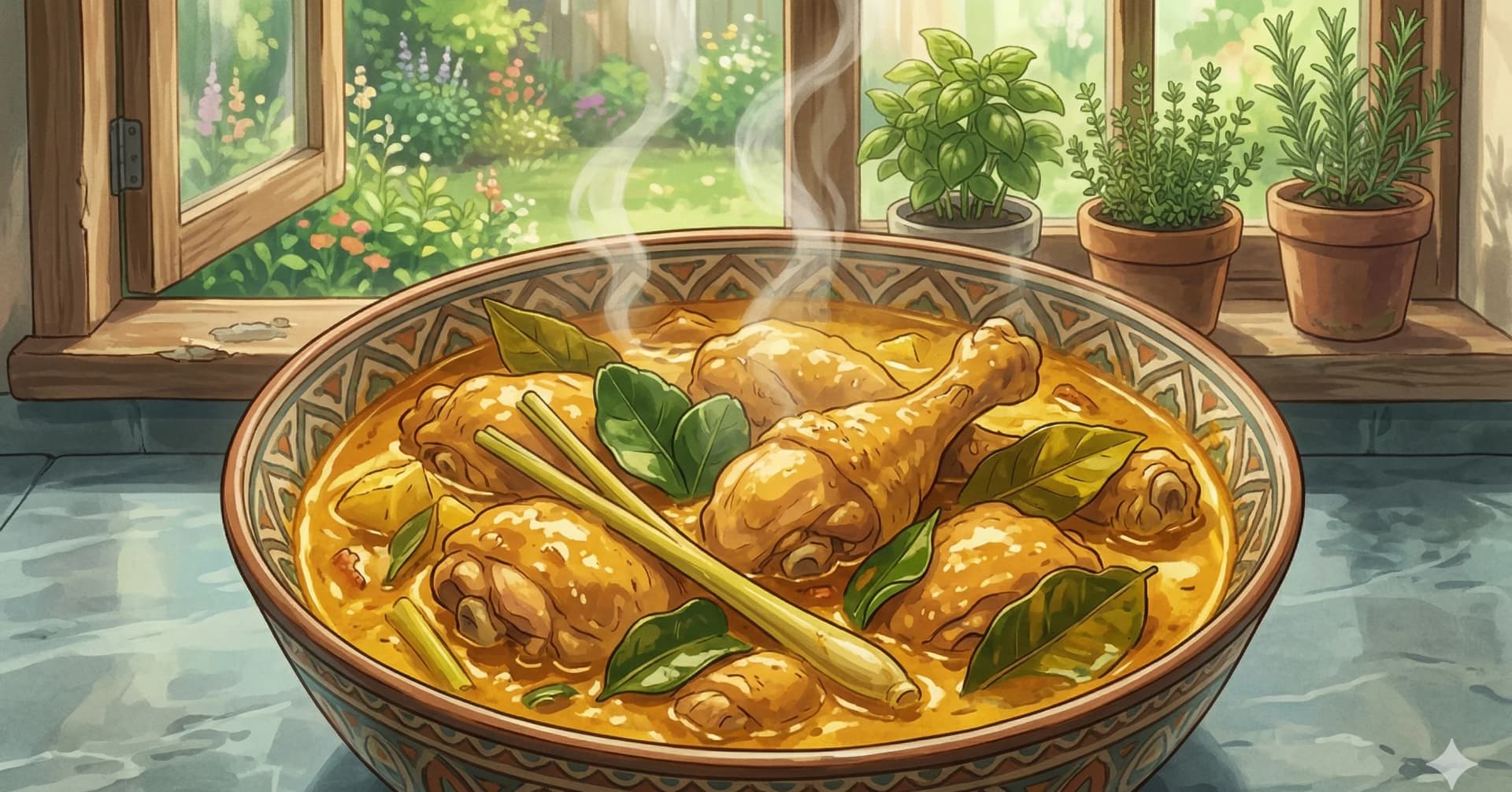
Malaysian Cuisine
Turmeric Coconut Chicken (Gulai Ayam)
Malaysian coconut chicken curry with turmeric, lemongrass, and toasted coconut
Gulai ayam belongs to a family of coconut curries that stretches across the Malay Peninsula, Sumatra, and the broader Nusantara world. The word gulai refers to any dish cooked in a spiced coconut gravy, and chicken is perhaps its most beloved filling. Where a rendang cooks down until nearly dry and a korma leans toward gentle sweetness, gulai holds a middle ground: rich and saucy, distinctly golden from turmeric, and layered with the warm hum of cinnamon, cloves, and cardamom working alongside fresh aromatics like lemongrass and galangal.
What sets this version apart is kerisik, toasted grated coconut pounded to a paste. It thickens the gravy and adds a nutty depth that bridges the gap between a light curry and a full chicken rendang. A Malay friend once described a good gulai as a hybrid of rendang and curry, and that feels right. The spice paste is built from dried chilies, shallots, garlic, ginger, and galangal, all pounded or blended into a rough rempah, then married with ground coriander, cumin, and turmeric. The chicken is marinated in this paste before it ever touches the pot, which means the spices penetrate the meat rather than simply surrounding it.
The dish is not aggressively hot. The dried chilies bring warmth and color more than searing heat, and the coconut milk rounds everything into a gentle, enveloping richness. Serve it with plain steamed rice and let the curry do the talking, or pair it with roti jala, the lacy net crepes that are made for scooping up coconut gravies. It sits naturally alongside nasi lemak on a spread, and shares the same coconut soul as opor ayam, though gulai is bolder and more golden. For a Southeast Asian curry comparison, try it back to back with a Thai green curry to taste how different traditions handle coconut and aromatics.
At a Glance
Yield
4 servings
Prep
30 minutes
Cook
45 minutes
Total
1 hour 15 minutes
Difficulty
Medium
Ingredients
Kerisik Ingredients
- 2¾ ozdesiccated coconut (unsweetened)
Spice Paste Ingredients
- 10dried red chilies, stems removed, soaked in warm water for 15 minutes
- 4shallots (about 80 g), peeled and roughly chopped
- 3 clovesgarlic, peeled
- 2 cmpiece fresh ginger, peeled and sliced
- 2 cmpiece fresh galangal, peeled and sliced
- 1 stalklemongrass, tender white part only, sliced
- 5candlenuts (or substitute raw macadamia nuts)
- 2 tbspwater, to help blend
Chicken Ingredients
- 2¾ tbspground coriander
- 1⅞ tspground turmeric
- 2⅓ tspground cumin
- 1½ lbbone-in, skin-on chicken pieces (thighs and drumsticks preferred), cut into serving portions
Curry Ingredients
- 3 tbspneutral oil (coconut or vegetable)
- 1medium onion (about 120 g), finely chopped
- 1cinnamon stick (about 5 cm)
- 4green cardamom pods, lightly crushed
- 6 wholecloves
- 3⅛ cupwater
- 1¼ cupfull-fat coconut milk
- 3medium potatoes (about 350 g), peeled and quartered
- 10curry leaves (optional but recommended)
- 1⅔ tspsalt, or to taste
- 1¼ tspsugar, or to taste
Method
- 1
Prepare the kerisik. Heat a dry frying pan over medium-low heat. Add the desiccated coconut and toast, stirring constantly, until it turns an even golden brown and the kitchen smells deeply nutty, about 8 to 10 minutes. Watch it closely in the last few minutes as it can tip from golden to burnt quickly. Transfer the toasted coconut to a mortar or small food processor and pound or pulse until it releases its oils and forms a rough, oily paste. Set aside.
- 2
Make the spice paste. Drain the soaked chilies and add them to a food processor along with the shallots, garlic, ginger, galangal, lemongrass, candlenuts, and water. Blend until you have a fairly smooth paste, scraping down the sides as needed. If using a mortar and pestle, start with the harder ingredients (candlenuts, galangal) and work toward the softer ones. The paste should smell pungent and bright, with lemongrass cutting through the heat of the chilies.
- 3
Combine the spice paste with the dry spices (coriander, turmeric, cumin) and the kerisik in a large bowl. Add the chicken pieces and turn them thoroughly in the mixture until every piece is well coated. Let this marinate for at least 15 minutes at room temperature, or up to 2 hours in the refrigerator. The turmeric will tint the chicken a vivid yellow.
- 4
Heat the oil in a heavy-bottomed pot or Dutch oven over medium heat. Add the chopped onion, cinnamon stick, cardamom pods, and cloves. Fry, stirring often, until the onion softens and turns translucent and the whole spices become fragrant, about 3 to 4 minutes. You should be able to smell the cinnamon and cardamom distinctly.
- 5
Add the marinated chicken along with all the paste clinging to it. Stir to combine with the onion and whole spices. Cook, turning the pieces occasionally, for about 3 minutes until the outside of the chicken is sealed and the paste begins to darken slightly.
- 6
Pour in the water. Raise the heat and bring to a boil, then reduce to a gentle simmer. Cover with a lid slightly ajar and cook for 20 minutes, stirring once or twice. The liquid will reduce and the gravy will begin to take on a deeper golden color as the spices infuse.
- 7
Add the potatoes and curry leaves, if using. Continue to simmer, covered, for another 10 to 15 minutes until the potatoes are tender when pierced with a knife and the chicken is cooked through (the juices should run clear, not pink, when you cut into the thickest piece).
- 8
Pour in the coconut milk and stir gently to incorporate. Let the curry return to a bare simmer and cook uncovered for 3 to 5 minutes. The gravy should be creamy and golden, thick enough to coat the back of a spoon but still pourable. Season with salt and sugar to taste. The sugar is not there for sweetness so much as to balance the turmeric and round out the spice.
- 9
Remove from heat and let the curry rest for 10 minutes before serving. Like most coconut curries, gulai ayam improves if you let it sit. Serve warm with steamed white rice or [roti jala](/recipes/roti-jala).
Key Ingredient Benefits
Kerisik (toasted coconut paste): Kerisik is a staple of Malay cooking, used in rendang, gulai, and various kuih (desserts). It provides fat, fiber, and a small amount of iron. Pre-made kerisik is available at some Southeast Asian grocery stores, though the freshly toasted version has a noticeably brighter flavor.
Galangal: A rhizome in the ginger family, galangal has a sharper, more piney flavor than ginger. It contains galangin, a flavonoid with antioxidant activity observed in laboratory studies. Fresh galangal is preferred here; dried or powdered galangal lacks the essential oils that define its contribution. Find it fresh or frozen at Southeast Asian markets.
Candlenuts (buah keras): These waxy, cream-colored nuts are used throughout Malaysian and Indonesian cooking to thicken and enrich sauces. They are mildly toxic when raw, so they are always cooked. Raw macadamia nuts are the closest substitute in both fat content and texture. Cashews can also work, though the flavor leans slightly sweeter.
Turmeric: Fresh turmeric root is ideal if available (use about 2 cm of peeled root in place of the ground). The curcumin in turmeric is fat-soluble, which is why it works well in coconut-based curries where it can dissolve into the oil phase of the gravy. Ground turmeric loses potency over time; replace yours if it has been open for more than a year.
Coconut milk: Use full-fat coconut milk for the best results. The fat carries and distributes the fat-soluble flavors of turmeric, cumin, and the whole spices. Light coconut milk will produce a thinner, less satisfying gravy. Shake the can well before measuring.
Why This Works
Marinating the chicken directly in the spice paste and dry spices before cooking allows the turmeric, cumin, and coriander to begin flavoring the meat at the surface level, rather than relying solely on the surrounding gravy. The salt in the marinade draws moisture from the outer layer of the chicken, creating a concentrated zone where spices can dissolve and adhere.
Kerisik acts as both a thickener and a flavor bridge. When desiccated coconut is dry-toasted, the Maillard reaction produces hundreds of new aromatic compounds, the same nutty, caramelized notes you find in browned butter or toasted sesame. Pounding the toasted coconut releases its oils, which emulsify into the gravy and give it body without the heaviness of additional coconut cream. This is why the gravy has a texture that feels richer than the amount of coconut milk alone would suggest.
Adding coconut milk at the end, rather than at the beginning, protects its fat emulsion. Coconut milk that simmers for a long time can break, releasing pools of oil on the surface and leaving the gravy thin and greasy. A short, gentle simmer after the coconut milk goes in keeps the gravy smooth and cohesive.
The whole spices (cinnamon, cardamom, cloves) are fried at the start because their essential oils are fat-soluble. Blooming them in hot oil extracts and distributes their flavor far more effectively than simply dropping them into liquid. This technique is shared across South and Southeast Asian cooking, from Indian tadka to Malay rempah.
Substitutions & Variations
Chicken: Bone-in, skin-on pieces give the richest flavor and most tender result. Boneless thighs work if you reduce the simmering time by about 10 minutes. Chicken breast dries out easily in a long simmer and is not recommended.
Kerisik: If you cannot find desiccated coconut, use 50 g of freshly grated coconut and toast it in the same way. In a pinch, 2 tablespoons of smooth peanut butter can approximate the thickening effect, though the flavor will differ.
Galangal: If unavailable, increase the ginger to 3 cm. The result will be warmer and less sharp, but still good.
Candlenuts: Substitute with an equal number of raw macadamia nuts or 6 raw cashews. All three serve the same role: contributing fat and body to the spice paste.
Potatoes: Waxy varieties (Yukon Gold, kipfler) hold their shape best. Starchy potatoes like Russet will begin to dissolve into the gravy, which some people prefer as it thickens the sauce further. Sweet potatoes make a pleasant variation, adding a subtle sweetness that pairs well with the turmeric.
Heat level: The 10 dried chilies here produce a mild to moderate warmth. For a gentler curry, reduce to 5 chilies. For more heat, add 2 to 3 fresh bird's eye chilies with the spice paste.
Vegetarian version: Replace the chicken with 400 g firm tofu (pressed and cubed) and 200 g tempeh (sliced). Skip the marinating step and instead fry the tofu and tempeh until golden before adding them to the simmering gravy in the last 10 minutes. The kerisik becomes even more important for body in the absence of chicken fat.
Opor ayam comparison: If you prefer a milder, whiter curry without turmeric, opor ayam uses the same coconut base but relies on candlenuts and a gentler spice profile. Both are Malay coconut curries, but gulai is the bolder sibling.
Serving Suggestions
Steamed white rice is the most natural partner, and a generous ladle of the golden gravy over the rice is half the pleasure. Roti jala, the lacy net crepes, are the classic accompaniment at Malay feasts and weddings, designed to tear and dip into coconut curries exactly like this one. Nasi lemak turns the meal into a proper Malaysian spread, the coconut rice echoing the coconut in the gulai.
For a more substantial table, serve alongside chicken rendang for a study in contrasts: the wet, saucy gulai against the dry, intensely concentrated rendang. A simple cucumber and onion salad dressed with rice vinegar and a pinch of sugar cuts through the richness. Quick-pickled vegetables (acar) do the same work.
If you are building a Southeast Asian dinner with friends, gulai ayam pairs comfortably with a Thai green curry on the same table, each representing a different approach to coconut and spice. A bowl of laksa alongside makes for a generous, soup-and-curry feast.
Storage & Reheating
Refrigerator: Store the curry in an airtight container for up to 3 days. The flavor improves overnight as the spices continue to meld and the gravy thickens slightly. Reheat gently in a pot over medium-low heat, stirring occasionally and adding a splash of water or coconut milk if the gravy has thickened too much. Avoid boiling vigorously, as this can cause the coconut milk to separate.
Freezing: Gulai ayam freezes well for up to 2 months. Cool completely before transferring to freezer-safe containers, leaving a little headroom for expansion. Thaw overnight in the refrigerator. Reheat on the stovetop over gentle heat. The potatoes may soften further after freezing, which some prefer as they partially dissolve into the gravy.
Reheating tips: Microwave reheating works in a pinch. Cover the bowl and heat in 1-minute intervals, stirring between each. The gravy may look slightly oily when it first comes out of the fridge; this is normal and will re-emulsify as it warms. If the curry has thickened into more of a paste, stir in 60 to 80 ml of water while reheating to restore it to a saucy consistency.
Rice: Store leftover rice separately from the curry. Refrigerate within an hour of cooking and use within 2 days. Reheat by sprinkling with water and microwaving covered, or steam in a basket for 5 minutes.
Cultural Notes
Gulai is a vast family of coconut-and-spice braises that stretches across the Malay Peninsula, Sumatra, and the broader Nusantara (Indonesian-Malaysian-Singaporean-southern-Thai) cultural world. The word gulai refers to the cooking method, not to a single dish. Any protein or vegetable cooked in a yellow turmeric-coconut spice gravy can be called gulai, with the main ingredient added after: gulai ayam (chicken gulai), gulai ikan (fish gulai), gulai daun ubi (cassava-leaf gulai), and so on.
The dish belongs most strongly to the Minangkabau Sumatran tradition (also the source of rendang) and to the Malay food cultures of Negeri Sembilan and northern Peninsular Malaysia, both of which trace cultural ancestry back to Minangkabau migration. Gulai is the everyday saucy counterpart to rendang's special-occasion dry reduction. Where rendang reduces the coconut milk all the way down, gulai stops the reduction earlier and keeps the sauce loose and pourable, ready to spoon over rice. The two dishes share a similar foundational rempah (spice paste) but diverge entirely in technique and final result.
In Malaysian restaurant culture, gulai ayam shows up most prominently at nasi kandar and nasi campur mixed-rice stalls, the open-display setups where customers point at multiple dishes to assemble their plate over rice. The dish also features at Malay wedding feasts, kenduri (community gatherings), and Eid al-Fitr open-house tables. Within the broader gulai family, gulai kawah (the massive ceremonial version cooked in cauldron-sized pots) holds particular weight at Malay communal events, where it is prepared communally by male relatives and served to hundreds of guests. The contrast between everyday weeknight gulai ayam and ceremonial gulai kawah captures the dish's full range across Malaysian life.
Nutrition Facts
Calories: 870kcal (44%)|Total Carbohydrates: 49.6g (18%)|Protein: 43g (86%)|Total Fat: 58.7g (75%)|Saturated Fat: 33g (165%)|Cholesterol: 161mg (54%)|Sodium: 1235mg (54%)|Dietary Fiber: 13.2g (47%)|Total Sugars: 10.7g
You Might Also Like
 Easy
EasyIndonesian Cuisine
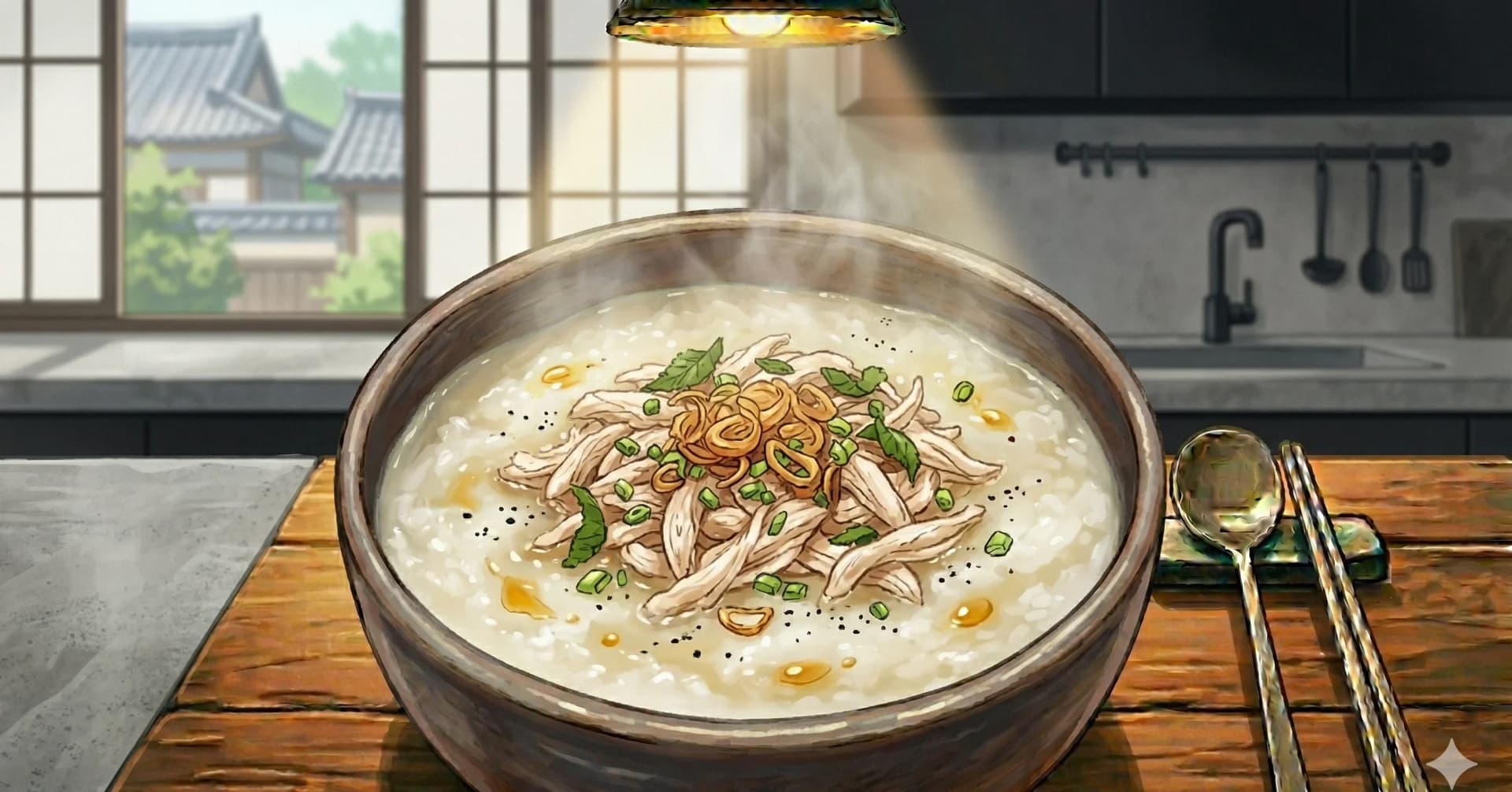
Bubur Ayam (Indonesian Chicken Rice Porridge)
1 hour 10 minutes
 Easy
EasyVietnamese Cuisine
Cháo Gà (Vietnamese Chicken Rice Porridge)
1 hour 30 minutes
 Easy
EasyVietnamese Cuisine
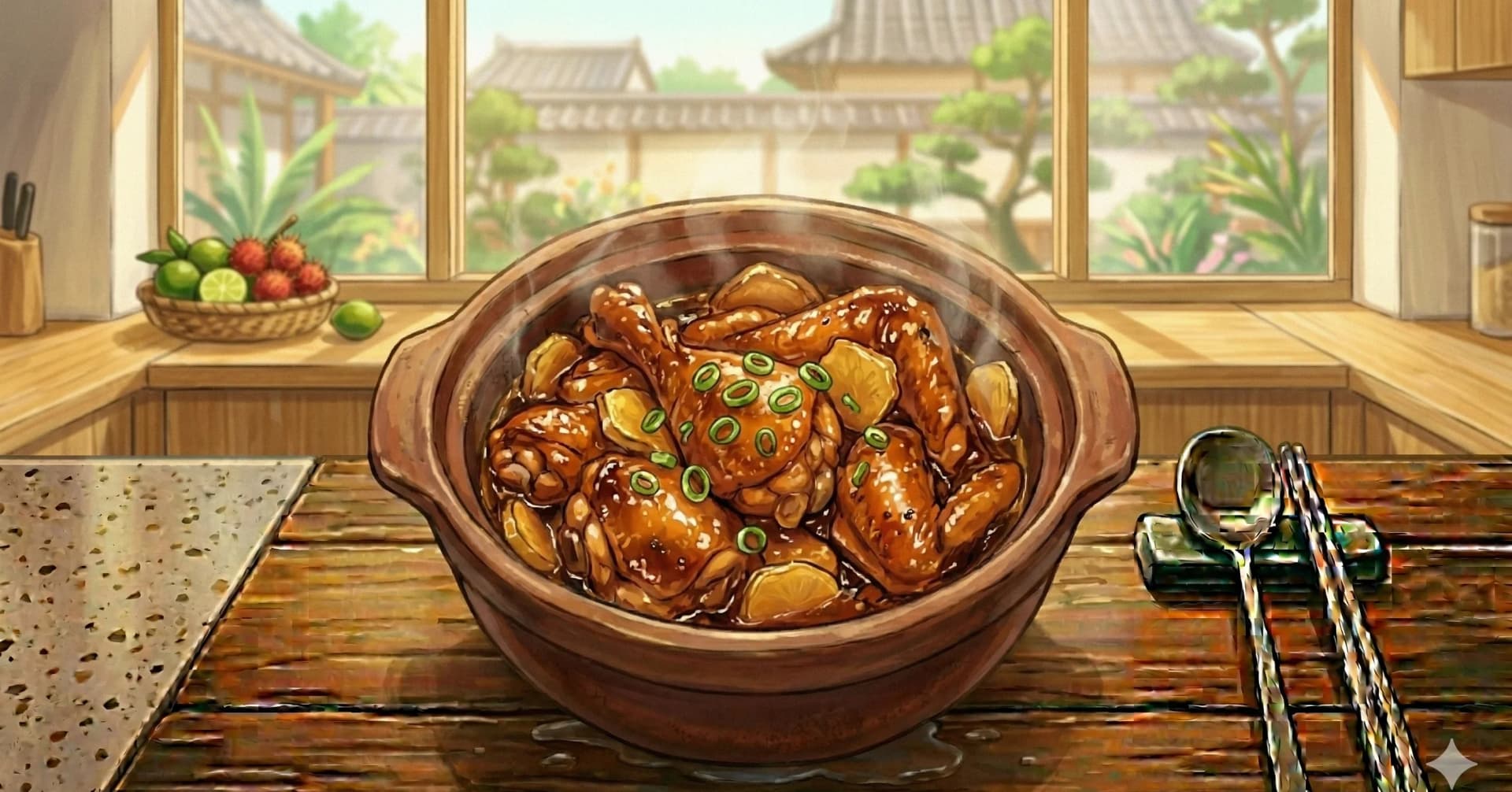
Ga Kho Gung (Vietnamese Caramelized Ginger Chicken)
1 hour
 Medium
Indonesian Cuisine
Ayam Goreng Lengkuas (Galangal Fried Chicken)
1 hour 45 minutes
Ratings & Comments
Ratings & Comments
Ratings
Share your thoughts on this recipe.
Sign in to rate and comment