Salt
Also known as: Yan, Table Salt, Sea Salt, Kosher Salt, Sodium Chloride
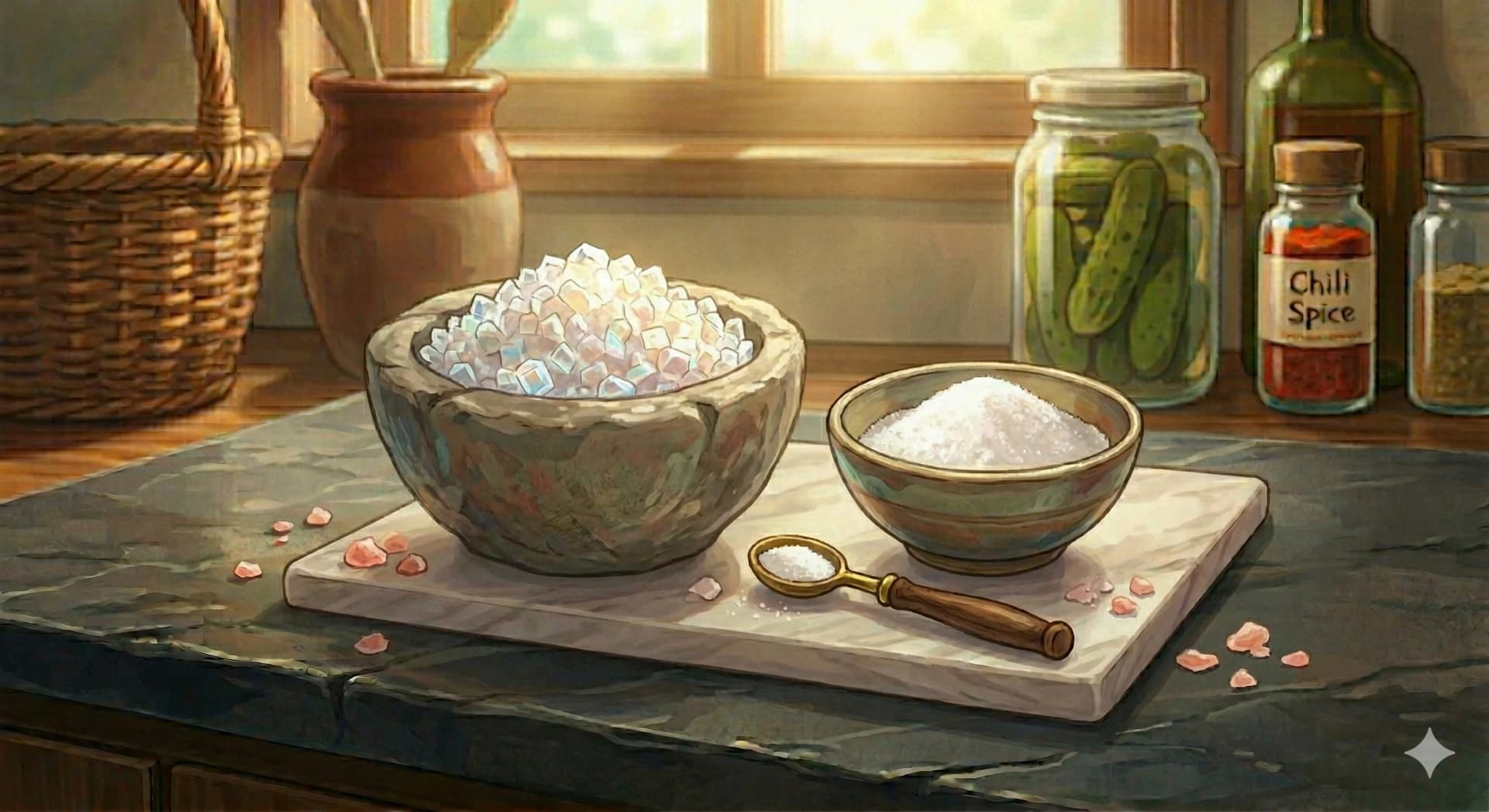
Salt is the most fundamental seasoning in every cuisine in the world — the ingredient without which no dish is truly finished.
In Chinese cooking, salt plays a specific role: it is used as a primary seasoning in dishes where soy sauce would overpower or color incorrectly, in dry brines and cures, in doughs and batters, and as a finishing seasoning at the table. The type of salt matters: fine salt for cooking and curing, coarse sea salt for finishing and for the pepper-salt dips that accompany fried seafood.
Key facts at a glance:
- Most fundamental seasoning — essential to every cuisine in the world
- Used where soy sauce is inappropriate — pale doughs, egg whites, delicate fish
- Salt monopolies shaped Chinese history — funding empires and sparking rebellions
- Sichuan well salt — evaporated from ancient underground brine, prized for clean mineral flavor
- Essential to human physiology — regulates fluid balance, nerve transmission, and muscle function
Flavor Profile
Origin
China broadly, Sichuan (well salt), Coastal China (sea salt)
Traditional Medicine Perspectives
Traditional Chinese Medicine
Salt (Yan) is classified as salty and cold in TCM, associated with the Kidney meridian. It is said to guide other medicinal substances to the Kidney, soften hardness, purge and detoxify, and nourish the Kidney. Salt is used as a processing medium for herbs intended to tonify the Kidney (yan zhi, or salt processing) and as a simple topical treatment. In culinary medicine, appropriate salt intake is considered essential to Kidney function, while excess is cautioned against for its taxing effect on the same organ.
Modern Scientific Research
Sodium chloride is essential to human physiology — it regulates fluid balance, nerve transmission, and muscle function. The relationship between dietary sodium and cardiovascular health is well-established: excessive sodium intake is associated with elevated blood pressure and increased cardiovascular risk.
Current research suggests that the source and context of sodium intake (in whole foods versus processed foods) may matter as much as absolute quantity. Natural mineral salts contain trace amounts of other minerals not present in refined sodium chloride.
Cultural History
Salt production and distribution in China has been one of the most economically significant and politically contentious industries throughout Chinese history. Salt monopolies funded empires and sparked rebellions.
The major salt-producing regions — Sichuan's well salt (from underground brine), coastal sea salt operations, and inland lake salt — each developed distinct qualities valued in regional cooking. Sichuan well salt, evaporated from ancient underground brine, has a particularly clean mineral flavor prized in fine Sichuan cooking.
The salt trade routes shaped the development of Chinese commerce for two thousand years.
Culinary Uses
Use as the primary seasoning when soy sauce is inappropriate (egg white dishes, pale doughs, delicate fish preparations). Use in dry brines for duck and chicken.
Season cooking water for blanching vegetables. Use in dipping salts: Sichuan pepper-salt (hua jiao yan) for fried seafood, and plain sea salt with sesame oil for white-cooked chicken.
Preparation Methods
For most Chinese cooking, fine table salt or fine sea salt is appropriate. For pepper-salt preparations, combine with toasted Sichuan peppercorn or white pepper.
Salt early in braises for deep seasoning; add at the end for brighter impact. Taste throughout cooking — Chinese dishes are seasoned across many layers.
Traditional Dishes
- Salt and pepper squid
- Cantonese white-cooked chicken (with salt dip)
- Saltfish and chicken fried rice
- Sichuan pepper-salt prawns
- Dry-brined duck
- Haleem
Recipes Using Salt
- Niu Rou Yang Cong Jiaozi (Beef and Onion Dumplings)
- Banh Mi (Bánh Mì)
- Bhel Puri
- Butter Chicken (Murgh Makhni)
- Bok Choy in Ginger Sauce (姜汁白菜)
- Boat Noodles (ก๋วยเตี๋ยวเรือ)
- Steamed Rice Rolls (Bánh Cuốn)
- Braised Pork with Potatoes (薯仔炆豬肉)
- Beef Brisket Soup (清湯牛腩)
- Gobi Manchurian
- Chicken and Broccoli in White Sauce (白汁鸡花椰)
- Chicken Achar
- Carrot and Cabbage Thoran
- Char Siu (Chinese BBQ Pork)
- Chicken Chettinad
- Yellow Gravy
- Pan-Fried Cod Fillets (Daegu-jeon / 대구전)
- Turmeric Coconut Chicken (Gulai Ayam)
- Tandoori Chicken
- Fresh Spring Rolls (Gỏi Cuốn)
- La Zi Ji (Chongqing Spicy Chicken)
- Vietnamese Pickled Daikon and Carrot (Đồ Chua)
- Fritters in Yogurt Curry (Kadhi Pakora)
- Butter-Tomato Sauce (Makhni Gravy)
- Gobi Mussallam
- Jiao Hua Ji (Beggar's Chicken)
- Jianbing (Chinese Breakfast Crepe)
- Opor Ayam (Javanese Chicken in Coconut Milk)
- Fish in Banana Leaf (Patrani Machi)
- Cong You Bing (Scallion Pancakes)
- Punjabi Chicken Curry
- Hanoi Noodle Soup (Bún Thang)
- Slow-Roasted Rabbit (Khargosh Ka Mokul)
- Spiced Minced Mutton (Mutton Keema)
- Slow-Cooked Okra (Dum Bhindi)
- Onion Coconut Curry (Kandyache Pitley)
- Layered Flaky Flatbread (Kerala Paratha)
- Beef Rendang (Rendang Daging)
- Chicken Rendang (Rendang Ayam)
- Ikan Bakar (Malaysian Grilled Fish in Banana Leaves)
- Bhindi Masala
- Egg Drop Soup (蛋花汤)
- Dosa
- Lo Bak Go (Turnip Cake)
- Crispy Lentil Doughnuts (Medu Vada)
- Paneer Bhurji
- Fish Moilee
- Xia Ren Chao Dan (Stir-Fried Shrimp with Eggs)
- Lentil Crepes (Moong Dal Chilla)
- Black Pepper Beef (黑椒牛柳)
- Chana Masala
- Mutton Seekh Kebab
- Steamed Spare Ribs with Black Bean Sauce (豉汁蒸排骨)
- Chicken Ginger Rice Wine Soup (薑雞酒湯)
- Malabar Rice Flatbread (Pathiri)
- Beijing Shredded Pork (Jing Jiang Rou Si / 京酱肉丝)
- Lassi (Sweet & Salted)
- Jiu Cai He Zi (Chive Pancakes)
- Malabar Paratha
- Kashmiri Dum Aloo
- Stuffed Egg Paratha (Moglai Paratha)
- Cumin Lion's Mane Mushroom Skewers (Zi Ran Hou Tou Gu Chuan)
- Palak Paneer
- Onion Lentil Fritters (Savala Vada)
- Crispy Stuffed Crepe (Bánh Xèo)
- Maharashtrian Spiced Rice (Masale Bhaat)
- General Tso's Chicken (左宗棠鸡)
- Country Chicken Curry (Nandan Kozhi Curry)
- Five-Spice Roast Chicken
- Rajasthani Chicken Curry
- Blue Rice Herb Salad (Nasi Kerabu)
- Chashu Pork (チャーシュー)
- Kongnamul Guk (Soybean Sprout Soup)
- Turmeric Chicken Soup (Soto Ayam)
- Pav Bhaji
- Pakora
- Sai Krok Isan (Thai Fermented Sausage)
- Nam Prik Ong (Northern Thai Pork and Tomato Dip)
- Samgyeopsal (삼겹살)
- Tandoori Gobi
- Slow-Cooked Bitter Melon (Dum Ke Kareley)
- Lentil Fritters (Parrupu Vada)
- Dosa Masala
- Sheng Jian Bao (Pan-Fried Soup Dumplings)
- Ginger-Spiced Pilaf (Syun Pulao)
- Bitter Melon with Egg
- Egg Curry (Anda Curry)
- Chicken Satay (Satay Ayam)
- Semi-Dry Spiced Mutton (Rarha Gosht)
- Xi Hong Shi Chao Dan (Tomato Egg Stir-Fry)
- Yu Tou Dou Fu Tang (Fish Head Tofu Soup)
- Chicken Feet (鳳爪)
- Maharashtrian Plain Dal (Varan)
- Slow-Cooked Quail, Green Spices (Dum Ka Bateyr Hara Masala)
- Grilled Marinated Pork (Maekjeok / 맥적)
- Steamed Rice Cylinders (Puttu)
- Punjabi Kadhi
- Chinese Stuffed Eggplant (釀茄子)
- Goan Dried Fish Curry (Gaadh Muzh)
- Oi Muchim (Spicy Cucumber Salad)
- Parsi Milk Cream Dessert (Sarvari)
- Chinese Stuffed Peppers (釀辣椒)
- Sweet & Sour Pork (Tangsuyuk / 탕수육)
- Jiao Yan Xia (Salt and Pepper Shrimp)
- Chicken Korma
- Har Gow (Crystal Shrimp Dumplings)
- Chicken 65
- Chinese Tea Eggs (茶叶蛋)
- Roast Suckling Pig (Asada de Leitão)
- Spiced Chickpea Flatbread (Missi Roti)
- Lo Mai Gai (Lotus Leaf Sticky Rice)
- Jakarta Creamy Beef Soup (Soto Betawi)
- Steamed Fish with Ginger and Scallion (薑蔥蒸魚)
- Hobakjuk (Pumpkin Porridge)
- Chinese Steamed Eggs (蒸蛋)
- Wonton Soup (馄饨汤)
- Beef Pho (Phở Bò)
- Samosa
- Malaysian Mutton Soup (Sup Kambing)
- Curry Laksa
- Tamarind Chutney
- Dal Makhni
- Xia Ren Chao Fan (Shrimp Fried Rice)
- Broth-Cooked Pilaf (Yakhni Pulao)
- Kou Shui Ji (Sichuan Mouthwatering Chicken)
- Thai Sour Curry (Gaeng Som)
- Goan Fish Curry
- Vada Pav
- Aloo Ki Tikki
- Sizzling Rice Soup (鍋巴湯)
- Suan Rong Chao Xiao Bai Cai (Garlic Bok Choy Stir-Fry)
- Gong Bao Ji Ding (Kung Pao Chicken)
- Spinach Lentil Fritters (Cheera Vada)
- Zongzi (Sticky Rice Dumplings)
- Sour Kidney & Liver Curry (Khatti Gurda Kaleji)
- Hand-Torn Noodle Soup (Sujebi / 수제비)
- Dahi Vada
- Liang Ban Mu Er (Wood Ear Mushroom Salad)
- Parsi Chicken with Potato Straws (Salli Murgi)
- Xiao Long Bao (Soup Dumplings)
- Braised Pig's Feet (Jokbal / 족발)
- Tempe Goreng (Indonesian Fried Tempeh)
- Galbitang (Short Rib Soup)
- Mughlai Royal Pilaf (Shahjhani Pulao)
- Roti Canai
- Smoky Mashed Eggplant (Baingan Ka Bhartha)
- Rajma
- Yangzhou Chao Fan (Yangzhou Fried Rice)
- Roganjosh
- Dao Xiao Mian (Knife-Cut Noodles, 刀削面)
- Noodles in Sweet Gravy (Mee Rebus)
- Lanzhou Beef Noodle Soup (兰州牛肉面)
- Chao Bai Cai (Stir-Fried Napa Cabbage)
- Golden Mughlai Curry (Kundan Kaliyan)
- Spiced Lentil Fritters (Mysore Bonda)
- Rolled Chickpea Pinwheels (Khandvi)
- Shui Zhu Yu (Sichuan Boiled Fish)
- Bao Zai Fan (Claypot Rice)
- Kerala Fried Fish (Meen Porichattu)
- Jeera Mutter Pulao
- Hong Shao Yu (Red Braised Fish)
- Onion-Fried Rice (Piyazi Chawal)
- Goan Rice Porridge (Pez-Conji)
- Tamarind Rice
- Curry Puff (Karipap)
- Momos
- Bak Kut Teh (Pork Bone Tea)
- Hainanese Chicken Rice
- Reishi Mushroom Congee
- Nasi Lemak
- Spiced Bone Broth
Comments
Share your thoughts on this ingredient.
Sign in to comment0 Comments