Chinese Cuisine
Sheng Jian Bao (Pan-Fried Soup Dumplings)
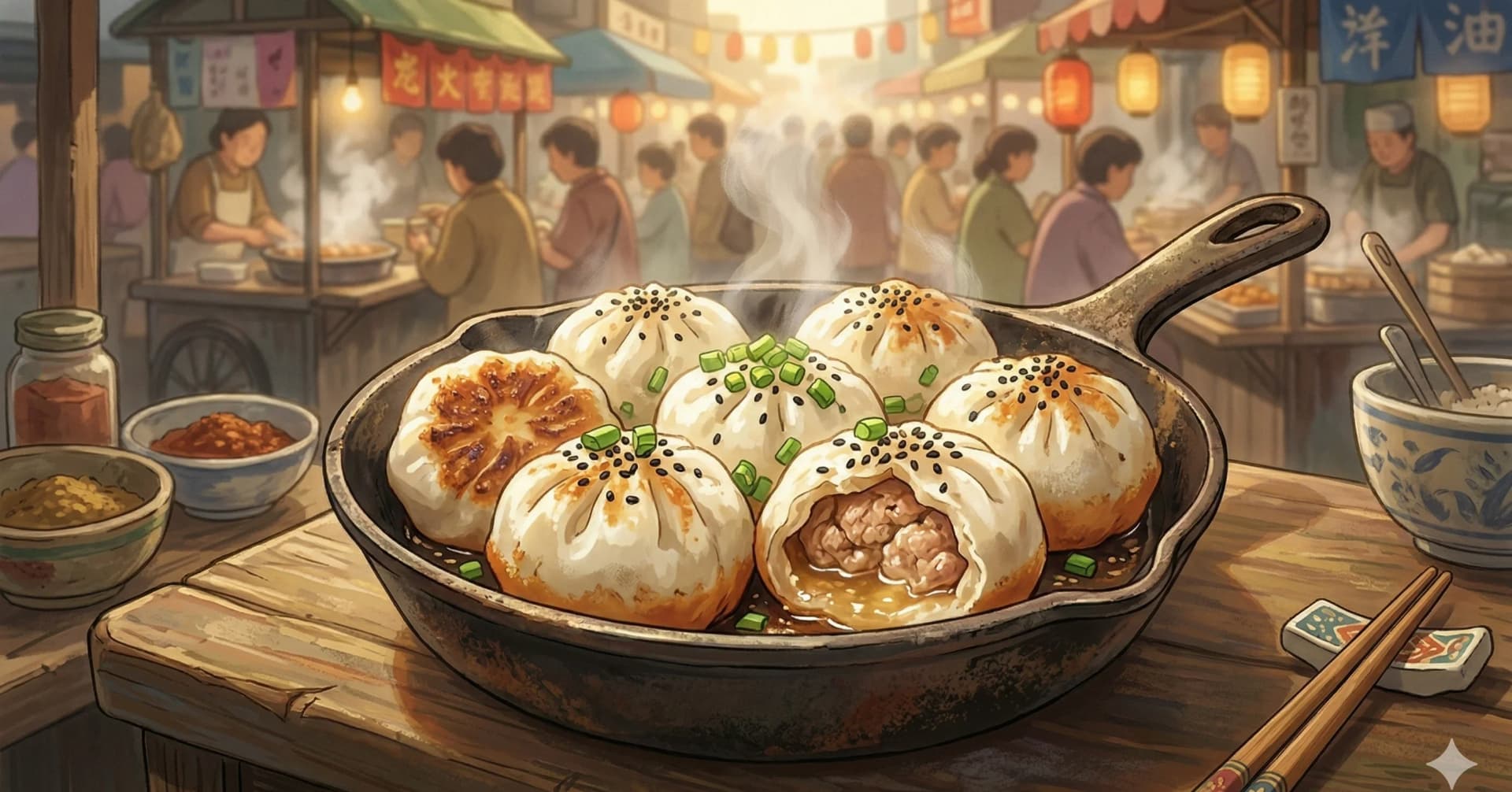
Shanghai's iconic pan-fried buns with a juicy pork filling, crispy bottom, and sesame-scallion top
You hear sheng jian bao before you taste them: the sizzle of dough hitting oiled cast iron, the hiss of water added for steaming, and the crackle as the bottoms crisp again after the steam evaporates. When you pick one up, it is heavier than you expect, dense with soup trapped inside the dough. The bottom is golden and crunchy, the top soft and slightly chewy from the yeasted dough, and when you bite through, a rush of hot, savory pork broth floods your mouth. It is one of the most thrilling textures in Chinese street food.
Sheng jian bao are Shanghai's answer to xiao long bao, the steamed soup dumplings of Jiangnan. Both contain a liquid filling created by gelatin that melts during cooking. But where xiao long bao are delicate and translucent, sheng jian bao are hearty and robust, made with leavened dough and cooked by a combination of pan-frying and steaming that gives them their signature contrast of crispy bottom and pillowy top. They are a breakfast and lunch food in Shanghai, sold from stalls and dedicated shops across the city, typically four to a serving.
The practical key is the aspic, a set gelatin made from pork skin or chicken stock that is chopped and folded into the raw filling. At room temperature, it is solid, which makes the buns easy to fill and pleat. During cooking, the gelatin melts, creating the soup that makes these buns so extraordinary. Without it, you have a perfectly fine pan-fried bun, but with it, you have something that people travel across cities to eat.
At a Glance
Yield
24 buns
Prep
60 minutes (plus resting)
Cook
20 minutes
Total
80 minutes (plus resting)
Difficulty
Involved
Ingredients
Dough Ingredients
- 2⅓ cupall-purpose flour
- ¼ ozinstant yeast
- 1¼ tspsugar
- ½ tspsalt
- ¾ cupwarm water (about 35°C)
- 2 tspvegetable oil
Aspic Ingredients
- 7 ozpork skin, cleaned and any hair removed
- 2⅛ cupwater
- 3 slicesfresh ginger
- 1scallion, cut into pieces
- 2 tspShaoxing wine
Filling Ingredients
- ¾ lbground pork (not too lean)
- 1 tbsplight soy sauce
- 2 tspShaoxing wine
- 1 tspsesame oil
- 1¼ tspsugar
- ½ tspsalt
- ⅞ tspwhite pepper
- 2½ tbspfresh ginger, grated
- 2 tbspwater
- —Chopped aspic (all of the above)
For Frying
- 2 tbspvegetable oil
- ⅓ cupwater (for steaming)
- 1 tbspblack sesame seeds
- 2scallions, finely chopped
Method
- 1
Prepare the aspic in advance (at least 4 hours ahead or the night before). Place the cleaned pork skin in a pot with the water, ginger, scallion, and Shaoxing wine. Bring to a boil, skim any foam, then reduce to a gentle simmer. Cook for 90 minutes, until the liquid is reduced by about half and feels slightly sticky when you rub it between your fingers.
- 2
Strain the liquid through a fine mesh sieve, discarding the solids. Pour into a shallow container and refrigerate until fully set into a firm jelly, at least 3 hours. Once set, chop the aspic into small pieces (roughly 5 mm cubes). Keep refrigerated until needed.
- 3
Make the dough. Combine the flour, instant yeast, sugar, and salt in a large bowl. Add the warm water gradually, mixing with chopsticks until a shaggy dough forms. Add the vegetable oil and knead for 8 to 10 minutes, until the dough is smooth, elastic, and slightly tacky. Cover with a damp cloth and let rest for 30 minutes.
- 4
While the dough rests, prepare the filling. In a bowl, combine the ground pork, light soy sauce, Shaoxing wine, sesame oil, sugar, salt, white pepper, and grated ginger. Add the water a tablespoon at a time, stirring vigorously in one direction after each addition. The water helps create a juicier, more tender filling. The mixture should be cohesive and slightly sticky.
- 5
Fold the chopped cold aspic into the pork mixture. Mix gently to distribute evenly. Refrigerate the filling until you are ready to fill the buns. Cold filling is easier to work with and ensures the aspic stays solid.
- 6
Divide the rested dough into 24 equal pieces (about 20 g each). Roll each piece into a ball and cover with a damp cloth to prevent drying.
- 7
Flatten each ball with your palm, then use a rolling pin to roll into a circle about 8 cm in diameter. The edges should be slightly thinner than the center, which provides a stronger base for pleating and a more delicate top.
- 8
Place about 20 g of filling (roughly a generous tablespoon) in the center of each wrapper. Pleat the edges, pinching and twisting to create 12 to 16 folds that gather at the top, sealing the bun closed. Twist the top to secure.
- 9
Place the pleated buns on a lightly floured surface, seam side up. Cover with a damp cloth and let rise for 15 to 20 minutes, until they feel noticeably puffy and lighter when picked up.
- 10
Heat a large skillet (preferably cast iron or non-stick) over medium heat. Add the vegetable oil and swirl to coat. Place the buns in the skillet seam side up, leaving about 1 cm between each bun. They will expand slightly during cooking.
- 11
Cook over medium heat for 2 to 3 minutes, until the bottoms are golden and crispy. You can lift one gently with a spatula to check.
- 12
Carefully pour in the 100 ml of water. It will splatter, so stand back. Immediately cover with a tight-fitting lid. Reduce heat to medium-low.
- 13
Let the buns steam for 6 to 8 minutes. The water will gradually evaporate. You will hear the sizzling return once the water is gone, which means the bottoms are crisping again.
- 14
Remove the lid. Sprinkle the black sesame seeds and chopped scallions over the buns. Cook uncovered for another 1 to 2 minutes to ensure the bottoms are deeply golden and crispy. The tops should be set and fluffy, the buns expanded and firm.
- 15
Use a spatula to carefully loosen the buns from the pan. Serve immediately, bottom side up to showcase the golden crust. Eat with caution: the soup inside is very hot.
Key Ingredient Benefits
Pork skin is rich in collagen, which converts to gelatin during long simmering. Gelatin is a protein that has been traditionally associated with joint and skin health in Chinese food culture, and some modern research supports its role in connective tissue maintenance.
Ground pork provides complete protein and B vitamins. The fat content is important for flavor and juiciness; overly lean pork produces dry, bland filling.
Sesame seeds are a source of calcium, iron, and lignans, a group of phytoestrogens that research suggests may have antioxidant and mild hormonal balancing properties.
Why This Works
The aspic is the engineering behind the soup. At room temperature, the gelatin is solid, making it possible to fold it into the filling and shape the buns without liquid leaking out. During cooking, the gelatin melts at around 30°C to 40°C, well below the temperature inside the steaming bun, transforming from a solid into the hot, savory soup that makes sheng jian bao so remarkable.
The yeasted dough, unlike the unleavened wrappers used for xiao long bao, provides a sturdier container that can withstand pan-frying without tearing. The yeast also gives the top of the bun a soft, bread-like quality that contrasts with the crispy bottom.
The cooking method combines two types of heat transfer: conduction (from the hot pan) and convection (from the steam). The pan-frying crisps the bottom, while the steam cooks the top and interior. When the water evaporates, the bottom re-crisps, creating the defining textural contrast of the dish.
Substitutions & Variations
- Aspic shortcut: If making pork skin aspic feels daunting, dissolve 7 g of unflavored gelatin powder in 250 ml of hot, well-seasoned chicken stock. Refrigerate until set. The result is lighter than pork skin aspic but still creates soup inside the buns.
- Filling variations: A mix of pork and shrimp is a popular Shanghai variation. Crab meat and pork is a luxurious option.
- Vegetarian: Finely diced firm tofu mixed with chopped wood ear mushrooms, carrots, and cabbage, bound with agar-set vegetable stock for the soup component.
- Without yeast: Some modern recipes use a hot water dough (tangzhong style) instead of yeasted dough. The texture will be different but still delicious.
Serving Suggestions
Serve sheng jian bao in sets of four, as is traditional in Shanghai. Accompany with a small dish of Chinkiang black vinegar mixed with julienned ginger for dipping. Eating technique matters: pick up the bun, bite a small hole in the top, sip the hot soup, then dip the bun in vinegar and eat. A cup of hot soy milk or a bowl of congee on the side completes the Shanghai breakfast experience.
Storage & Reheating
Sheng jian bao are best eaten immediately. The crispy bottoms soften quickly. If you must store them, refrigerate in an airtight container for up to 2 days. Reheat in a lightly oiled skillet with a splash of water, covered, over medium heat until warmed through and the bottoms re-crisp. Alternatively, uncooked buns can be frozen on a sheet pan, then transferred to a freezer bag for up to 1 month. Cook directly from frozen, adding 2 to 3 extra minutes of steaming time.
Cultural Notes
Sheng jian bao (生煎包, "raw-fried bun") is the Shanghai pan-fried soup dumpling that combines the leavened-bun tradition with the soup-filling technique of xiao long bao. The dumpling has a yeasted wheat dough wrapper (unlike the unleavened thin wrapper of xiao long bao), is stuffed with seasoned pork and a piece of chilled pork-skin aspic that melts into broth during cooking, then cooked seam-side-up in a flat-bottomed pan with a small amount of oil and water. The result is a dumpling with a fluffy bread-like top, a crisp pan-fried bottom, a juicy pork filling, and a mouthful of hot broth waiting inside.
The dish is one of the central Shanghai breakfast and street foods and has been served continuously in the city since the 1920s. The most famous sheng jian bao shop in Shanghai, Da Hu Chun (大壺春), opened in 1932 on Sichuan Road and is considered the reference for the form. A second major chain, Yang's Fry Dumpling (小楊生煎), founded in 1994, has expanded to dozens of locations across Shanghai and to other Chinese cities and is more accessible to visitors though less storied. Both shops follow the same basic technique: shape the dough around the meat-and-aspic filling, place the dumplings seam-side up in a flat pan, sprinkle with sesame seeds and chopped scallion, pour in a thin slurry of water and a small amount of flour, cover the pan, and cook at moderate heat for ten to fifteen minutes until the bottoms turn deep golden and the broth inside the dumplings reaches the cooking temperature.
The eating technique parallels xiao long bao but adapted to the bread wrapper. The diner picks up a sheng jian bao with chopsticks, bites a small hole in the side, sucks out the hot broth (carefully, because it is very hot), and then eats the rest of the dumpling. A small dish of black vinegar (Chinkiang) with shredded ginger is provided for dipping, and the contrast between the soft bun top, the crisp browned bottom, the juicy filling, and the bright vinegar is the layered sensory experience that the dish is designed around. Sheng jian bao is sold by the liang (a measure roughly equal to four dumplings) at most Shanghai breakfast shops and is typically eaten standing at a counter or at small plastic tables outside the shop.
Nutrition Facts
Calories: 339kcal (17%)|Total Carbohydrates: 31.5g (11%)|Protein: 17.9g (36%)|Total Fat: 15g (19%)|Saturated Fat: 4.3g (22%)|Cholesterol: 45mg (15%)|Sodium: 442mg (19%)|Dietary Fiber: 1.4g (5%)|Total Sugars: 1.6g
You Might Also Like
 Medium
Chinese Cuisine
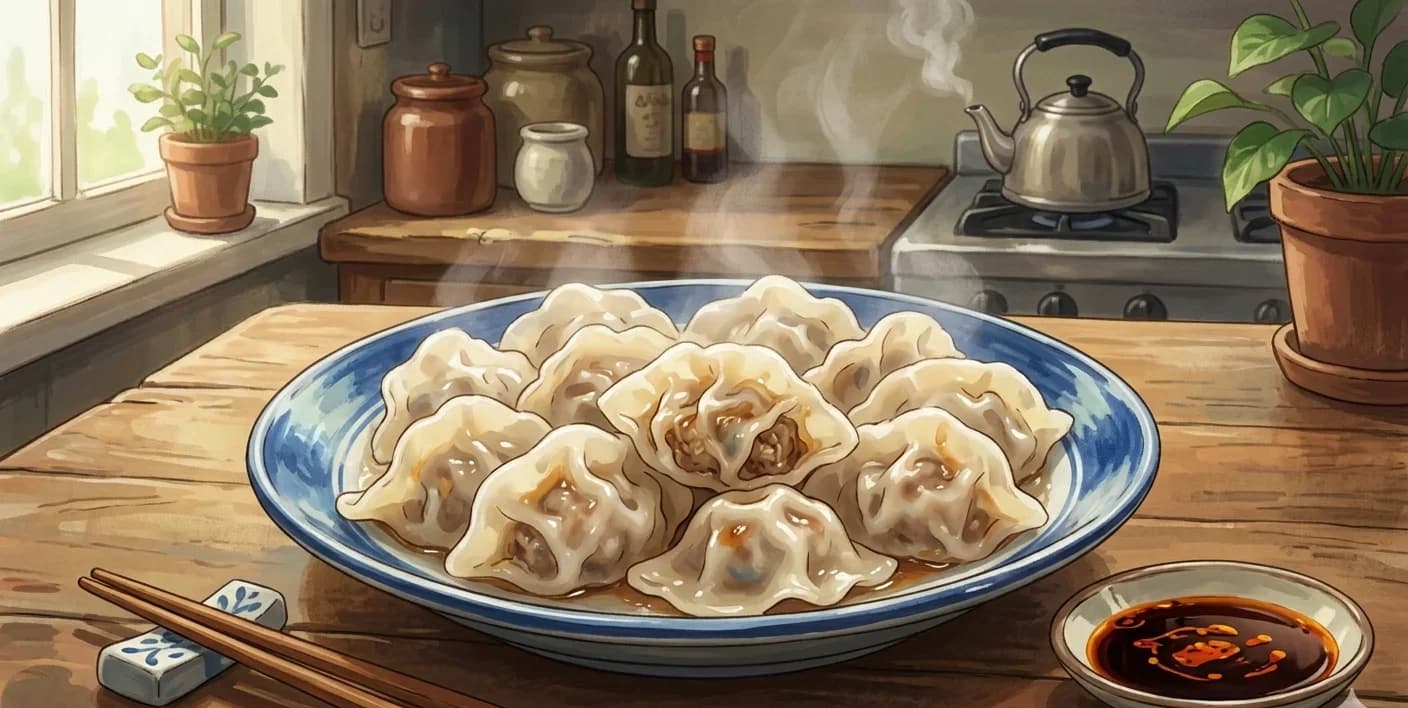
Niu Rou Yang Cong Jiaozi (Beef and Onion Dumplings)
60 minutes
 Medium
Chinese Cuisine
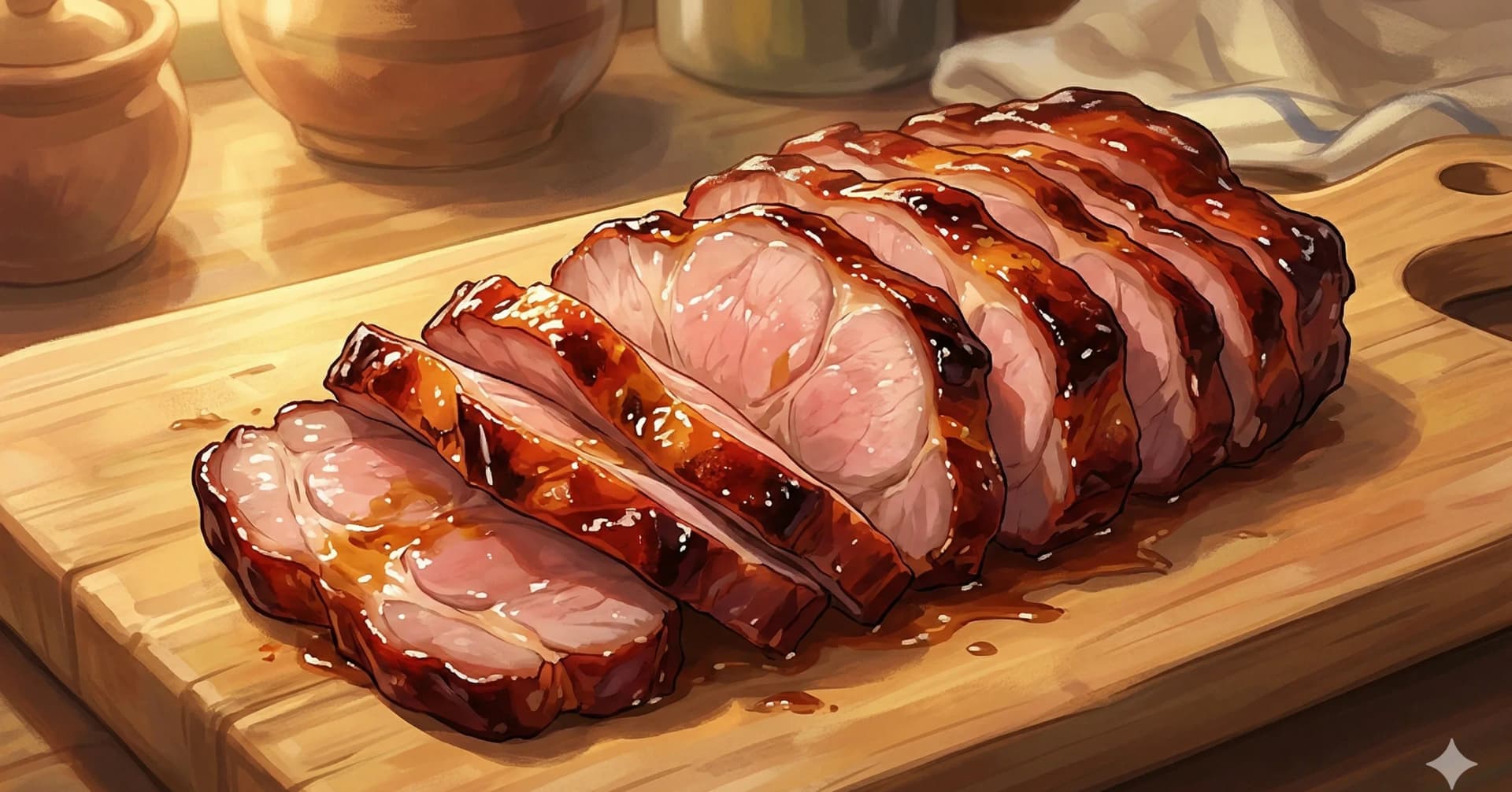
Char Siu (Chinese BBQ Pork)
9 hours (including marinating)
 Medium
Chinese Cuisine
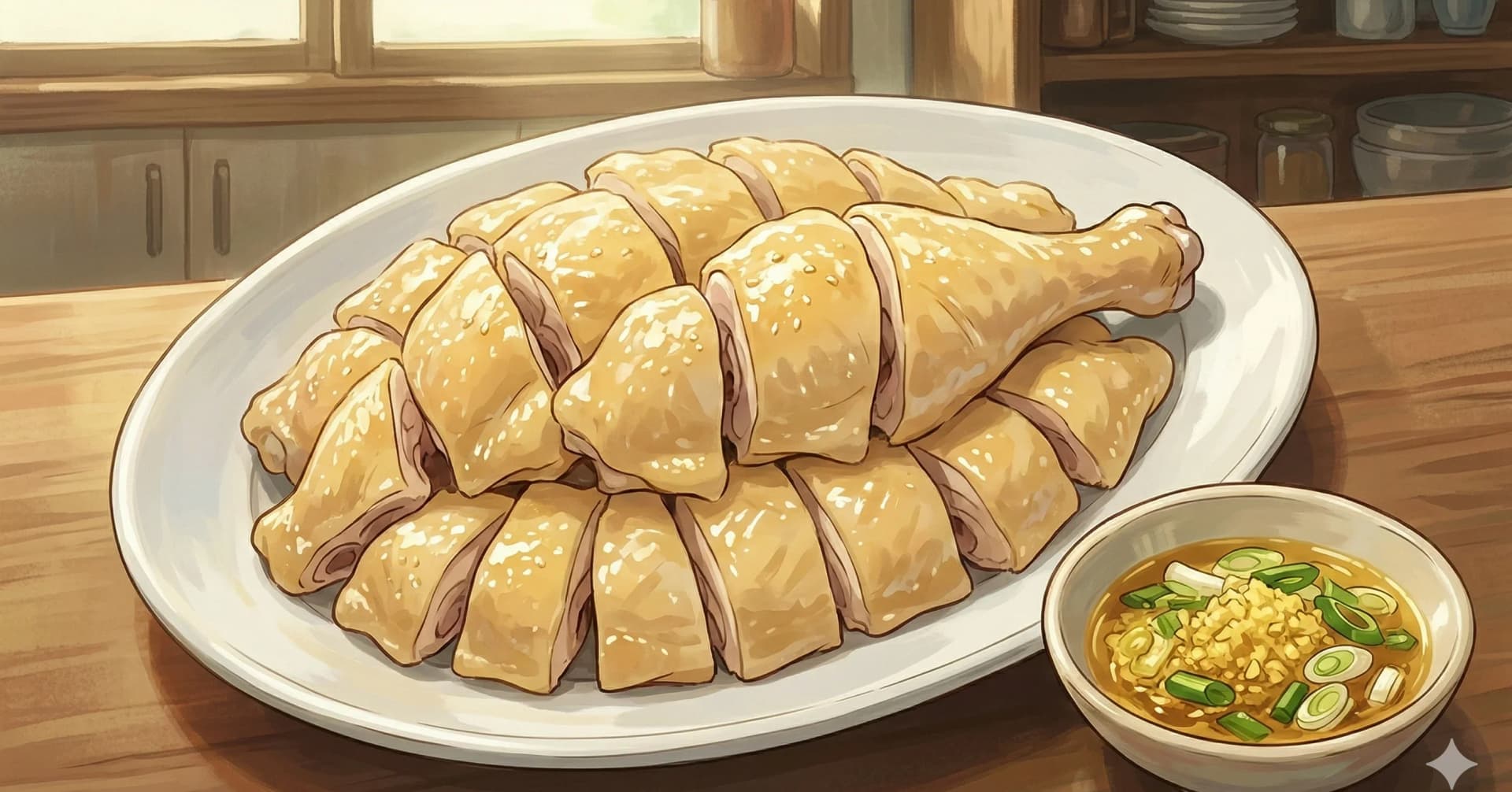
Bai Qie Ji (White Cut Chicken)
4 hours 30 minutes
 Easy
EasyVietnamese Cuisine
Grilled Lemongrass Pork (Thịt Nướng)
2 hours 30 minutes
Ratings & Comments
Ratings & Comments
Ratings
Share your thoughts on this recipe.
Sign in to rate and comment