Chinese Cuisine
Lo Bak Go (Turnip Cake)
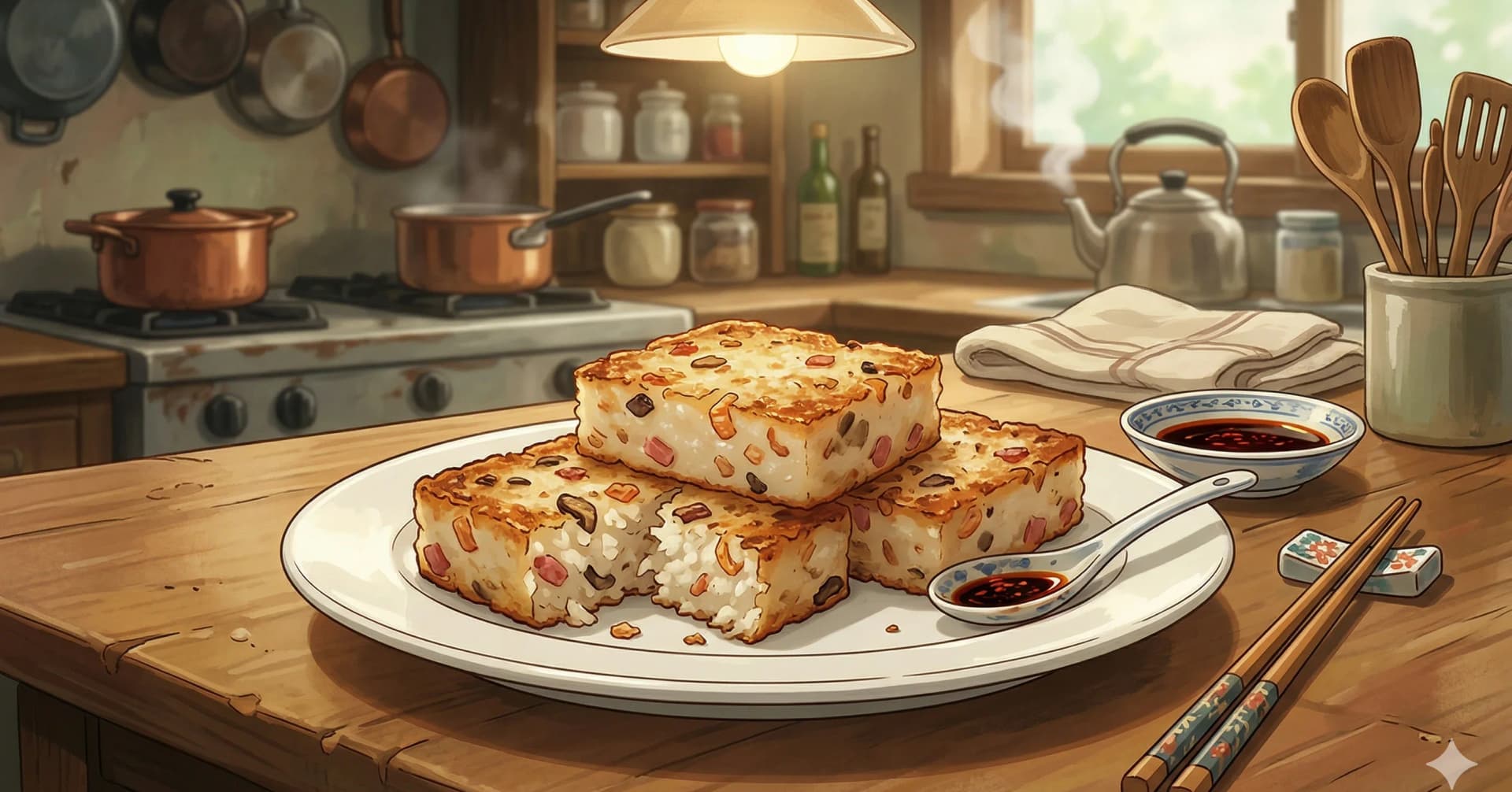
Pan-fried slices of steamed radish cake studded with Chinese sausage, dried shrimp, and shiitake mushrooms
Lo bak go is a fixture of the Cantonese dim sum table, though its name can mislead. There is no turnip in turnip cake. The star ingredient is daikon radish, grated into soft shreds that meld with rice flour batter and become something entirely new during steaming: a tender, savory cake that holds its shape just firmly enough to be sliced and pan-fried into golden, crispy rectangles.
The dish carries deep significance during Lunar New Year celebrations, where it appears alongside other steamed cakes as a symbol of rising prosperity. The Cantonese word for radish cake sounds like "good fortune," and no New Year table would be complete without it. But lo bak go is far too delicious to reserve for one holiday. At dim sum restaurants, it arrives year-round, its sliced surfaces burnished and crackling, usually with a small dish of oyster sauce or chili paste on the side.
What makes a great lo bak go is texture. The interior should be soft and slightly custardy, with visible shreds of radish running through it, while the exterior develops a thin, deeply golden crust during pan-frying. The supporting cast of char siu-adjacent Chinese sausage, briny dried shrimp, and earthy shiitake mushrooms provides bursts of umami in every bite. This version follows the classic Cantonese approach: grate the radish, simmer it gently, fold it into a seasoned rice flour batter, steam until set, then slice and fry. The result is a cake that tastes far more complex than its modest ingredient list suggests.
At a Glance
Yield
6 to 8 servings (one 9x5-inch loaf or 8-inch round cake)
Prep
30 minutes (plus soaking time)
Cook
1 hour 30 minutes
Total
2 hours 30 minutes (plus soaking)
Difficulty
Medium
Ingredients
- ¼ ozdried shrimp, rinsed
- 4dried shiitake mushrooms, rinsed
- 1¼ lbdaikon radish (about 7–7½ radishes), peeled and grated on the large holes of a box grater
- 1scallion, finely chopped
- 1link Chinese sausage (lap cheong), diced into small pieces
- 5½ ozrice flour (not glutinous rice flour)
- 8to 24 g cornstarch (see note in method)
- 240to 360 ml water, divided
- ¾ tspsalt
- ½ tspsugar
- ¼ tspground white pepper
- 2 tbspneutral oil (vegetable, canola, or avocado), plus more for brushing and pan-frying
- —Oyster sauce, soy sauce, or chili garlic sauce for dipping
Method
- 1
Soak the dried ingredients. Place the dried shrimp in a small bowl and cover with warm water. In a separate bowl, soak the dried shiitake mushrooms in warm water for at least 15 minutes, or until softened. Drain both, then finely chop the shrimp and dice the mushroom caps, discarding the tough stems.
- 2
Stir-fry the filling. Heat a wok or large skillet over medium heat and add 2 tablespoons of oil. Add the chopped dried shrimp, diced mushrooms, and Chinese sausage. Stir-fry for about 5 minutes until fragrant and the sausage has rendered some of its fat. The kitchen should smell sweet and savory. Stir in the chopped scallion, then transfer the mixture to a bowl and set aside. Wipe the wok clean.
- 3
Simmer the daikon. Add the grated daikon radish and 1 cup of water to the wok. Bring to a gentle simmer over medium heat and cook for about 10 minutes, stirring occasionally, until the radish is soft and translucent. Some liquid should remain in the wok, roughly 1 cup. If most of the liquid has evaporated, add a splash more water.
- 4
Make the batter. While the daikon simmers, whisk together the rice flour and 1 tablespoon of cornstarch with 1/2 cup of water in a large bowl until smooth. For a moister, more tender cake, use up to 1 cup of water total. For every additional 1/4 cup of water beyond 1/2 cup, add 1 extra tablespoon of cornstarch to maintain structure.
- 5
Combine everything. Pour the hot daikon and its cooking liquid into the rice flour batter. Add the salt, sugar, and white pepper. Stir in the cooked shrimp and sausage mixture. Mix thoroughly with a rubber spatula until the batter is uniform, resembling thick pancake batter. If the consistency seems too thin or loose, pour the mixture back into the wok and stir constantly over low heat until it thickens slightly and becomes more paste-like.
- 6
Steam the cake. Brush a 9x5-inch loaf pan or 8-inch round cake pan generously with oil. Pour the batter in and spread it evenly with the spatula. Set the pan in a steamer over vigorously boiling water. Steam over medium-high heat for 50 minutes (for a loaf pan) or 40 minutes (for a round pan). The cake is done when a chopstick or skewer inserted into the center comes out clean with no wet batter clinging to it.
- 7
Cool and unmold. Remove the pan from the steamer and allow it to cool at room temperature for at least 30 minutes. The cake will firm up significantly as it cools. Run a thin spatula or butter knife around the edges to loosen, then invert the cake onto a cutting board. For the cleanest slices, refrigerate the cake for at least 2 hours or overnight. A chilled cake slices neatly without crumbling.
- 8
Slice and pan-fry. Using a sharp knife dipped in water (to prevent sticking), cut the cake into slices about 1/2 inch thick. Heat a non-stick or well-seasoned cast iron skillet over medium heat with a thin film of oil. Arrange the slices in a single layer without crowding. Fry for 3 to 4 minutes per side, until each surface develops a deep golden crust with slight blistering. The interior should be hot and soft while the exterior is audibly crispy when you tap it with a spatula.
- 9
Serve immediately. Transfer to a plate and serve with oyster sauce, soy sauce, or chili garlic sauce on the side for dipping.
Key Ingredient Benefits
Daikon radish: This long white radish is the soul of the dish. It contains digestive enzymes, including diastase, which may help break down starches. Traditional Chinese medicine classifies daikon as cooling and considers it helpful for clearing phlegm and supporting digestion. Modern research confirms it is a good source of vitamin C and potassium, though the cooking process reduces vitamin C content.
Rice flour: Regular (non-glutinous) rice flour gives the cake its characteristic tender-firm texture. It is naturally gluten-free, making this dish suitable for those avoiding wheat. Do not substitute glutinous rice flour, which would produce a gummy, overly sticky result.
Dried shrimp: These tiny, sun-dried shrimp pack concentrated umami and a pleasant brininess. They are high in protein and calcium but also high in sodium. A small amount goes a long way. In traditional Chinese cooking, dried shrimp are considered warming and nourishing.
Chinese sausage (lap cheong): A cured, air-dried pork sausage with a sweet, slightly boozy flavor from the rice wine used in curing. It is high in fat and sodium. The rendered fat during stir-frying adds richness to the filling that permeates the entire cake.
Why This Works
Grating the daikon rather than dicing it creates a web of fine shreds that bind naturally with the rice flour batter, producing a cake with a cohesive, slightly custardy interior rather than one full of chunky, separate pieces of radish. Simmering the grated daikon before mixing it into the batter serves two purposes: it softens the radish so it melds seamlessly into the cake, and it produces a starchy cooking liquid that enriches the batter.
The ratio of rice flour to liquid is the most important variable. Too much flour produces a dense, rubbery cake. Too much liquid and the cake will not hold together for slicing. The cornstarch acts as insurance, adding just enough binding power to keep a moist cake from falling apart.
Pan-frying the steamed cake is what elevates lo bak go from pleasant to addictive. The Maillard reaction on the surface of each slice creates a thin, crispy shell that contrasts sharply with the soft, almost creamy interior. Medium heat is essential here. Too high and the surface burns before the inside heats through. Too low and the crust never develops that satisfying crunch.
Substitutions & Variations
Daikon: There is no true substitute for fresh daikon in this recipe. Jicama, while sometimes suggested, produces a noticeably different flavor and texture. If your daikon is particularly watery, squeeze out some excess liquid through cheesecloth before adding it to the batter.
Chinese sausage: Cantonese cured pork belly (lap yuk) is the traditional alternative. Diced char siu also works, adding a sweeter, smokier note.
Dried shrimp: Dried scallops, chopped finely, provide a more luxurious version. For a shellfish-free option, increase the mushrooms and add a splash of soy sauce to compensate for the lost brininess.
Mushrooms: Fresh shiitake can replace dried, though the flavor will be milder. Use about 6 fresh caps, diced, and skip the soaking step.
Vegetarian version: Omit the sausage, shrimp, and oyster sauce. Add extra mushrooms, diced carrots, and chopped water chestnuts for texture. Season with vegetarian oyster sauce or light soy sauce.
XO sauce version: Fold 2 tablespoons of XO sauce into the batter for a more complex, spicy-savory variation.
Serving Suggestions
Lo bak go is a natural companion to other dim sum dishes. Serve it alongside har gow and xiao long bao for a spread that covers delicate, soupy, and crispy textures. A bowl of congee makes a warming, gentle counterpoint to the richly flavored cake.
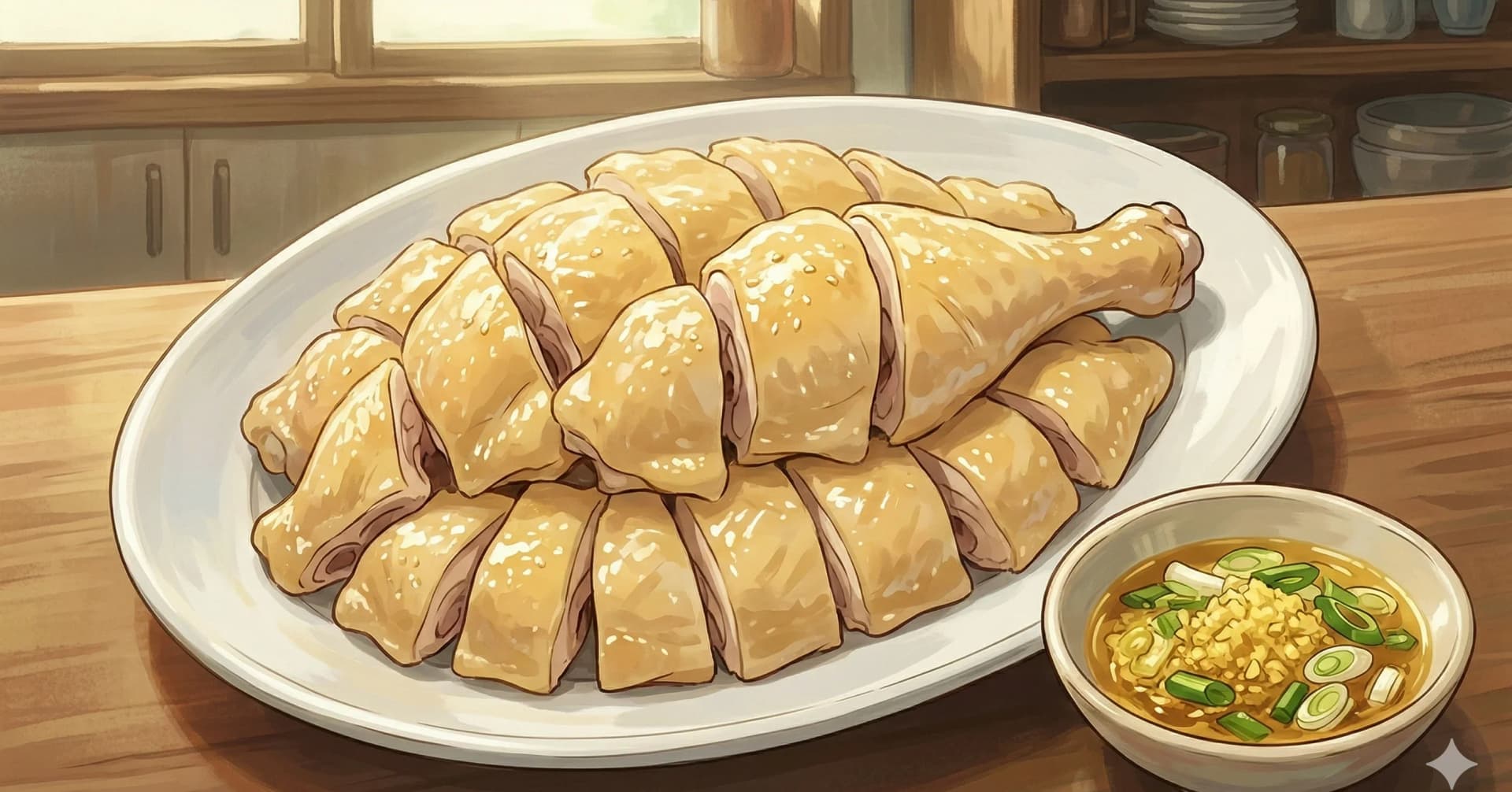
For a Lunar New Year table, pair lo bak go with soy sauce chicken and lo mai gai for a celebration feast that balances steamed, braised, and pan-fried preparations. The cake also works well as a side dish alongside roasted meats like siu yuk.
A simple dipping sauce of oyster sauce thinned with a few drops of warm water is the most traditional accompaniment, though chili garlic sauce or a splash of good soy sauce with sliced fresh chili is equally welcome.
Storage & Reheating
Refrigerating: Wrap the unsliced steamed cake tightly in plastic wrap and refrigerate for up to 5 days. In fact, refrigeration improves the cake by making it firmer and easier to slice cleanly. Slice and pan-fry directly from cold.
Freezing: Slice the chilled cake into portions, wrap individually in plastic wrap, and freeze in airtight bags for up to 2 months. Pan-fry directly from frozen, using medium-low heat and allowing an extra minute or two per side to ensure the center heats through.
Reheating pan-fried slices: Already pan-fried slices lose their crispness in storage. Re-fry briefly in a hot skillet to restore the crust, or accept a softer texture when microwaved.
Cultural Notes
Lo bak go (蘿蔔糕, "radish cake") is the Cantonese savory cake of grated daikon radish bound with rice flour, studded with dried shrimp, Chinese sausage (lap cheong), and dried mushrooms, then steamed in a square pan, sliced into rectangles, and pan-fried until both sides are golden and crisp. The dish has a permanent spot at Cantonese dim sum tables and at Lunar New Year celebrations, where the cake is one of the standard festival items prepared in advance and shared with extended family. The "radish" in the English name is a translation of lo bak, which refers specifically to the long white daikon-style radish rather than the small red Western radish.
The traditional preparation grates two to three pounds of daikon (the radish should be ripe and slightly sweet, not bitter), then cooks it briefly in water to soften and concentrate the flavor. The cooked radish, including its liquid, is mixed with rice flour and a small amount of cornstarch to form a thick batter, then folded with diced and lightly pre-fried lap cheong, soaked dried shrimp, soaked dried mushroom, and white pepper. The batter is poured into a greased square pan and steamed for forty to fifty minutes until set, then chilled overnight to firm up. The chilled cake is sliced into rectangles and pan-fried in oil until both flat surfaces develop a golden crust, served with a small dish of XO sauce, oyster sauce, or chili-garlic sauce for dipping.
The cultural significance peaks at Lunar New Year. The name lo bak go puns on bo bu gao (步步高, "rising step by step"), so the cake symbolizes promotion and progress for the coming year. Many Cantonese families make large pans of lo bak go during the New Year week, slicing and pan-frying portions for breakfast or as snacks during the multi-day celebration. The same technique is used to make related savory cakes: lin go (water chestnut cake), taro go (taro cake, called wu tau go in Cantonese), and various seasonal variations using whatever root vegetables are at peak. Hong Kong dim sum restaurants serve lo bak go year-round as part of the standard pan-fried dim sum lineup.
Nutrition Facts
Calories: 187kcal (9%)|Total Carbohydrates: 32.2g (12%)|Protein: 4.3g (9%)|Total Fat: 4.7g (6%)|Saturated Fat: 1.1g (6%)|Cholesterol: 9mg (3%)|Sodium: 376mg (16%)|Dietary Fiber: 1.9g (7%)|Total Sugars: 2.9g
You Might Also Like
Ratings & Comments
Ratings & Comments
Ratings
Share your thoughts on this recipe.
Sign in to rate and comment