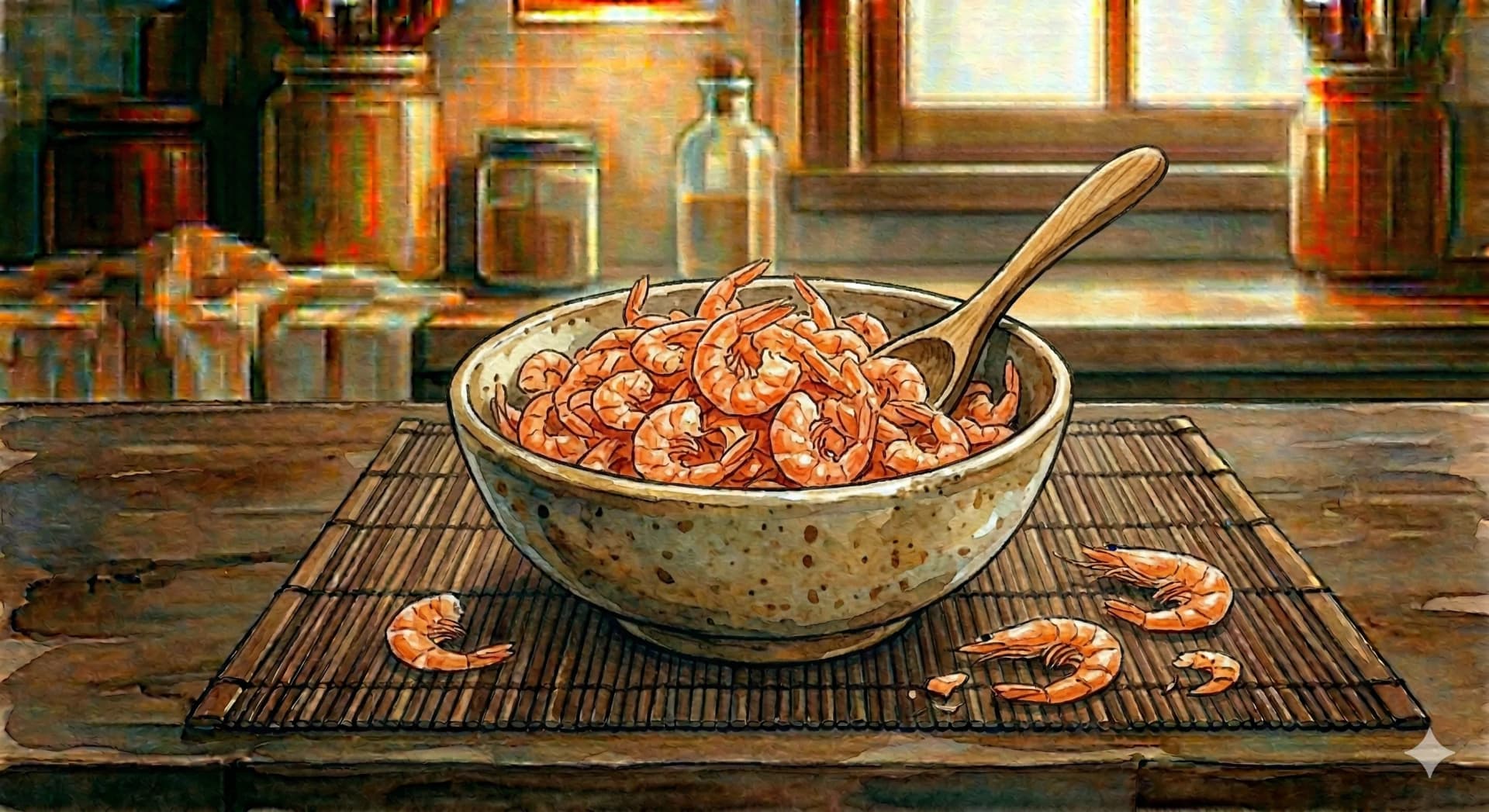
Dried Shrimp
Also known as: Xia Mi, Dried Prawns, Hay Bee, Ebi (Japanese)
Dried shrimp are tiny, intensely flavored orange-pink shrimp that have been salted and sun-dried to a chewy, concentrated form. They are one of the essential umami-boosting ingredients in Chinese, Southeast Asian, and Brazilian cooking — small in size but enormous in flavor impact. Added to stir-fries, scrambled eggs, soups, and stuffings, they impart a savory, oceanic depth that anchors a dish's flavor profile. Unlike dried scallops, dried shrimp are affordable and used with abandon in everyday Chinese home cooking.
Key facts at a glance:
- Dried shrimp — Tiny, intensely flavored orange-pink shrimp that have been salted and sun-dried to a chewy, concentrated form.
- They are one of — The essential umami-boosting ingredients in Chinese, Southeast Asian, and Brazilian cooking — small in size but enormous in flavor impact.
- Added to stir-fries — Scrambled eggs, soups, and stuffings, they impart a savory, oceanic depth that anchors a dish's flavor profile.
- Unlike dried scallops, dried shrimp — Affordable and used with abandon in everyday Chinese home cooking.
Flavor Profile
Origin
China, Southeast Asia, Cantonese cuisine, Fujian
Traditional Medicine Perspectives
Traditional Chinese Medicine
Dried shrimp share the TCM properties of shrimp generally — warm and sweet-salty, associated with the Kidney and Spleen meridians. They are used to tonify Kidney Yang, strengthen the back, benefit Qi and Blood, and nourish the sea of marrow. Prescribed for Kidney Yang deficiency, weakness, and cold-type deficiency conditions.
Modern Scientific Research
Dried shrimp are a concentrated source of protein, iodine, selenium, calcium, and zinc — all amplified by the drying process. Iodine content is particularly high, reflecting the shrimp's marine origin. Research on shellfish consumption shows associations with improved thyroid function (from iodine), immune support (from zinc and selenium), and cardiovascular benefits. The calcium content of dried shrimp is notably high.
Cultural History
Dried shrimp have been produced across coastal China, particularly in Guangdong, Fujian, and Zhejiang provinces, for centuries — a preservation technique that allowed the bounty of the sea to reach inland communities. In Cantonese home cooking, xia mi are a near-universal pantry staple, added to turnip cake, taro cake, and virtually every stir-fried leafy green. Dried shrimp spread globally with Chinese and Vietnamese diaspora communities and became a cornerstone seasoning in Southeast Asian and Latin American cuisines as well.
Culinary Uses
Add a small handful to stir-fried napa cabbage, leafy greens, or bean sprouts for savory depth. Use in turnip cake, taro cake, and other steamed savory cakes.
Add to XO sauce. Use in fried rice and egg dishes.
Grind coarsely and use as a seasoning powder. The soaking liquid is flavorful — add it to the dish.
Preparation Methods
For most applications, soak in warm water for 10–20 minutes to soften and remove excess salt. Drain, reserving the liquid. Chop roughly for stir-fries and stuffings.
Comments
Share your thoughts on this ingredient.
Sign in to comment0 Comments