Thai Cuisine
Pad Thai (ผัดไทย)
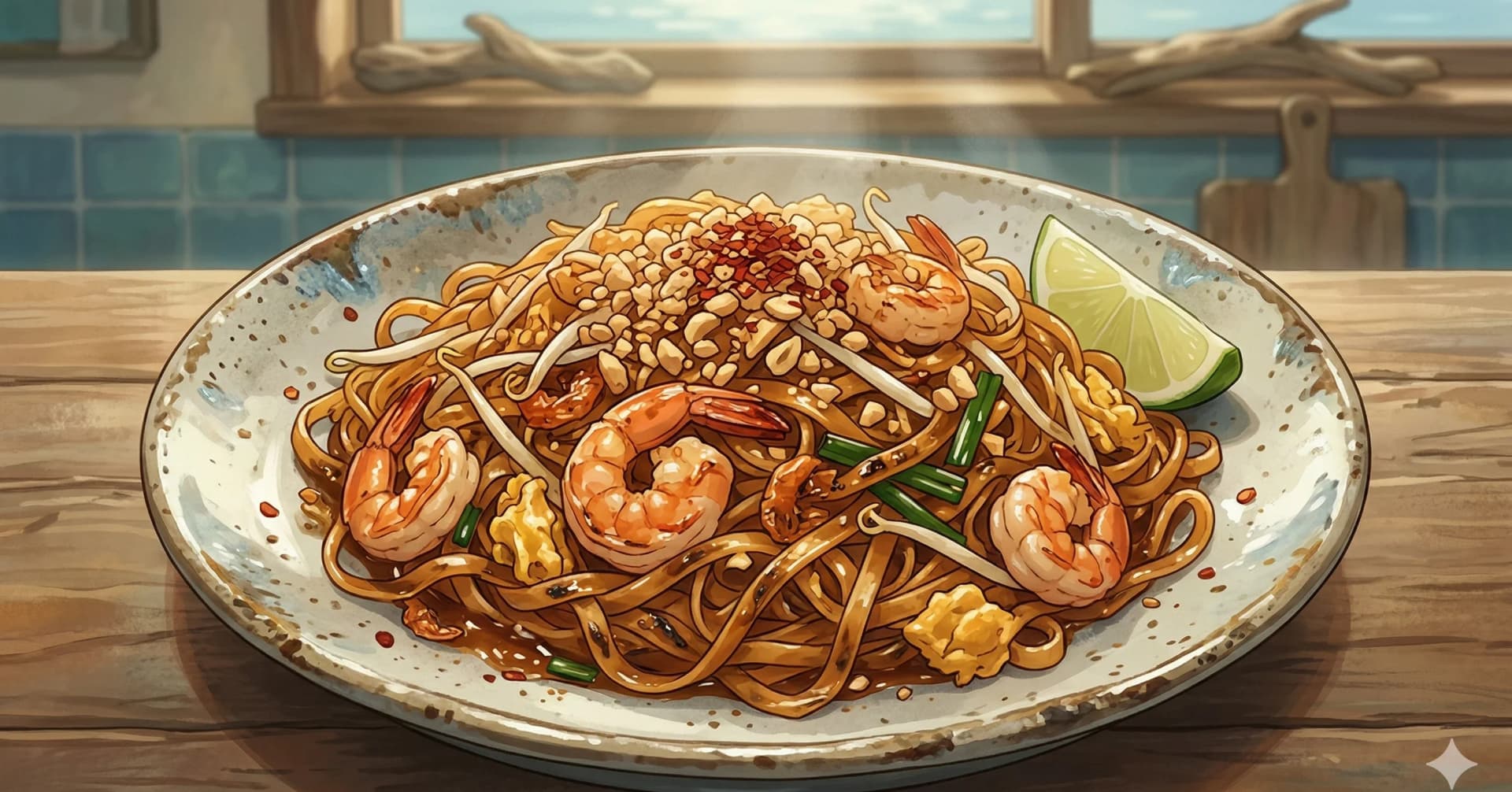
Rice noodles stir-fried with tamarind sauce, shrimp, tofu, egg, and roasted peanuts in the classic Thai street style
The first thing that hits you is the smell: caramelized palm sugar meeting hot tamarind, a wave of sweet-sour-smoky air rising from the wok in a single breath. Then the sizzle of eggs hitting oiled steel, followed by the quiet tangle of softened rice noodles absorbing sauce until each strand turns glossy and deep amber. This is pad thai as it exists on the streets of Bangkok, not the pale, ketchup-sweet version that spread through Western takeaway menus.
Pad thai is a relatively modern Thai dish. It was popularized in the late 1930s and 1940s under Prime Minister Plaek Phibunsongkhram as part of a national identity campaign. The government promoted rice noodles as an alternative to imported Chinese wheat noodles, and distributed standardized recipes to street vendors. What began as a state project became, within a generation, one of the most beloved street foods in Thailand and eventually the world.
The dish delivers a careful balance of four flavors: sweet from palm sugar, sour from tamarind, salty from fish sauce, and savory from dried shrimp and preserved radish. No single element should dominate. The texture is equally considered. Soft noodles sit alongside crispy peanuts, tender shrimp, chewy tofu, and the crunch of raw bean sprouts added just before serving.
One technique matters more than any ingredient. The sauce must be fully absorbed by the noodles before eggs and garnishes go in. If liquid pools in the wok, the noodles will steam instead of fry, and you lose the faintly charred edges that distinguish a well-made pad thai from a soggy one.
At a Glance
Yield
2 servings
Prep
40 minutes (including noodle soak)
Cook
10 minutes
Total
50 minutes
Difficulty
Medium
Ingredients
Sauce Ingredients
- 2¾ tbsppalm sugar, chopped
- 3 tbspwater
- 3 tbsptamarind paste (thick cooking tamarind, not concentrate)
- 2 tbspfish sauce
Stir-Fry Ingredients
- 4 ozdried rice noodles (3–5 mm), medium width
- 3 tbspvegetable oil, plus more as needed
- 10medium shrimp (about 150 g), peeled and deveined
- 3 clovesgarlic, chopped
- 1½ ozshallots, roughly chopped
- 3 ozpressed tofu, cut into small pieces
- 1 ozdried shrimp, roughly chopped
- 1½ ozsweet preserved daikon radish (chai poh) (about ½–1 radish), finely chopped
- —Dried chili flakes, to taste (optional)
- 2eggs
- 4 ozbean sprouts
- ¾ cupgarlic chives, cut into 5 cm pieces
- 1½ ozroasted peanuts, roughly chopped
To Serve
- 1lime, cut into wedges
- —Extra bean sprouts and garlic chives for the side
Method
- 1
Soak the rice noodles in room temperature water for at least 1 hour, or until they are pliable but still firm in the center. They should bend without snapping but not feel soft all the way through. Drain well and cut once with scissors so the strands are roughly half their original length. This makes tossing in the wok much easier and prevents clumping.
- 2
Make the sauce while the noodles soak. Place the palm sugar in a small saucepan over medium heat. Stir as it melts, and continue stirring until the color deepens to a reddish amber, about 3 minutes. Immediately pour in the water, fish sauce, and tamarind paste. The sugar will seize and harden on contact with the liquid. Bring the mixture to a simmer, then turn off the heat and let it sit while you prepare the remaining ingredients. The sugar will dissolve on its own. Check that no lumps remain before you begin cooking.
- 3
Combine the tofu, garlic, shallots, preserved radish, dried shrimp, and chili flakes in a bowl. Grouping these together saves time at the wok, where every second counts.
- 4
Heat a wok over high heat until a drop of water evaporates on contact. Add just enough oil to coat the surface, about 15 ml. Sear the shrimp until they curl and turn pink, roughly 1 minute per side. Transfer to a plate. They will finish cooking later when tossed back in.
- 5
Return the wok to medium heat and add another 15 ml of oil. Add the contents of the tofu bowl and stir-fry until the garlic turns golden and the shallots soften, about 2 to 3 minutes. The preserved radish will start to smell nutty and faintly sweet. If the wok looks dry at any point, add another splash of oil. Skimping here causes the noodles to stick.
- 6
Turn the heat to high. Add the drained noodles and all of the sauce at once. Toss continuously, lifting and folding the noodles so the sauce coats every strand. Keep going until the liquid is fully absorbed and the noodles look glossy, about 2 minutes. Taste a noodle. If it is still too firm, add a small splash of water (no more than 15 ml at a time) and continue tossing until tender. The noodles should be chewy, not mushy.
- 7
Push the noodles to one side of the wok. Add a little oil to the empty space and crack in the eggs. Break the yolks with your spatula and let them set for about 20 seconds without stirring so the bottom firms up. Then fold the noodles over the eggs, flip, and toss to distribute the egg throughout in soft, ragged pieces.
- 8
Toss the seared shrimp back in along with any collected juices. Add the bean sprouts, garlic chives, and half the peanuts. Turn off the heat and toss everything together just until the sprouts and chives wilt slightly. They should retain some crunch.
- 9
Serve immediately on a plate, not piled high but spread to show the tangle of noodles. Top with the remaining peanuts and set a lime wedge alongside. Place a small pile of extra bean sprouts and garlic chives on the side. Squeeze the lime over the noodles before eating.
Key Ingredient Benefits
Tamarind paste: The sour fruit of Tamarindus indica, used across Southeast Asian, Indian, and Latin American cooking. The tartaric acid in tamarind is unusual among fruits and gives it a distinctively sharp sourness different from citric acid. Look for thick cooking tamarind paste (sometimes labeled "concentrate" in Thai brands), not the thinner Indian tamarind water. If starting from a block of pulp, soak 60 g in 120 ml warm water for 20 minutes, then press through a sieve, discarding the seeds and fibers.
Palm sugar: Produced from the sap of sugar palm or coconut palm trees. It has a lower glycemic index than refined white sugar and retains minerals including potassium and iron. Its flavor is rounder and less sharp than brown sugar, with notes of caramel and butterscotch. If unavailable, use an equal weight of dark brown sugar.
Preserved daikon radish (chai poh): Daikon radish preserved with sugar and salt, then dried. It comes in sweet and salty varieties. Pad thai uses the sweet version. Available in plastic bags at Asian grocery stores, usually near the dried shrimp. Rinse briefly before chopping if it tastes overly salty.
Dried shrimp: Small shrimp that have been salted and sun-dried. They are a concentrated source of protein (about 65 g per 100 g) and provide calcium from the shells. The drying process intensifies glutamate content, making them a natural flavor enhancer. Choose medium-sized dried shrimp with a bright orange-pink color and a clean, briny smell.
Why This Works
The sauce is cooked before it goes into the wok, and that step is not optional. Caramelizing the palm sugar first produces a deeper, more complex sweetness than simply dissolving it. The Maillard reactions that occur during caramelization create hundreds of new flavor compounds that raw sugar cannot provide. When the tamarind and fish sauce meet this caramel, the resulting sauce has a rounded, almost smoky quality that cannot be replicated by mixing the ingredients cold.
Soaking the noodles in room temperature water rather than boiling water gives you control. Hot-soaked noodles can go from firm to overcooked in seconds. Room temperature soaking softens them gradually, so they arrive at the wok pliable enough to absorb sauce but firm enough to hold up to high-heat tossing. The final cooking happens in the wok itself, where the noodles finish in the sauce and take on flavor as they soften.
Cooking the eggs under the noodles rather than scrambling them separately is the traditional Bangkok street vendor method. The eggs form a thin layer on the wok surface, then get folded into the noodles in soft sheets. This creates the characteristic ragged egg pieces woven throughout the dish, rather than distinct chunks of scrambled egg sitting on top.
The preserved daikon radish (chai poh) and dried shrimp are what separate an authentic pad thai from a simplified one. Both are concentrated umami sources. The radish adds a chewy, salty-sweet crunch, and the dried shrimp contribute a briny depth that fresh shrimp alone cannot match. Together with the fish sauce, they build three overlapping layers of savory intensity.
Substitutions & Variations
Protein: Chicken thigh (150 g, thinly sliced) or pork loin can replace the shrimp. Slice against the grain and sear in the same manner. For a vegetarian version, omit the shrimp (both fresh and dried), replace fish sauce with soy sauce mixed with a small amount of lime juice, and double the pressed tofu.
Tamarind: If tamarind paste is truly unavailable, a mixture of 30 ml rice vinegar and 10 g brown sugar approximates the sweet-sour balance, though the flavor will be thinner.
Preserved radish: If you cannot find chai poh, the dish will still work without it, but you lose a layer of savory-sweet crunch. A small amount of finely diced kimchi, drained well, provides a similar fermented complexity in a pinch.
Chicken pad thai: Replace shrimp with 200 g boneless chicken thigh, sliced thin. Stir-fry until cooked through before removing, and add oyster sauce (15 ml) to the pad thai sauce for extra depth. This variation, common in Western Thai restaurants, produces a slightly richer dish.
Pad thai with wider noodles: For a heartier version closer to Pad See Ew, use the widest flat rice noodles you can find and add a splash of dark soy sauce with the tamarind sauce for color and a hint of molasses sweetness.
Serving Suggestions
Pad thai is a complete one-plate meal on its own, the way it is eaten on the streets of Bangkok. The raw bean sprouts and garlic chives on the side are not garnish. They are part of the dish, eaten between bites of noodles to refresh the palate.
For a Thai street food spread, serve alongside a bowl of Tom Yum Goong. The hot-and-sour soup provides a sharp, aromatic contrast to the sweet-savory noodles. A plate of Som Tam (green papaya salad) on the table adds a raw, crunchy, fiercely sour counterpoint that Thais consider essential for balancing a noodle dish.
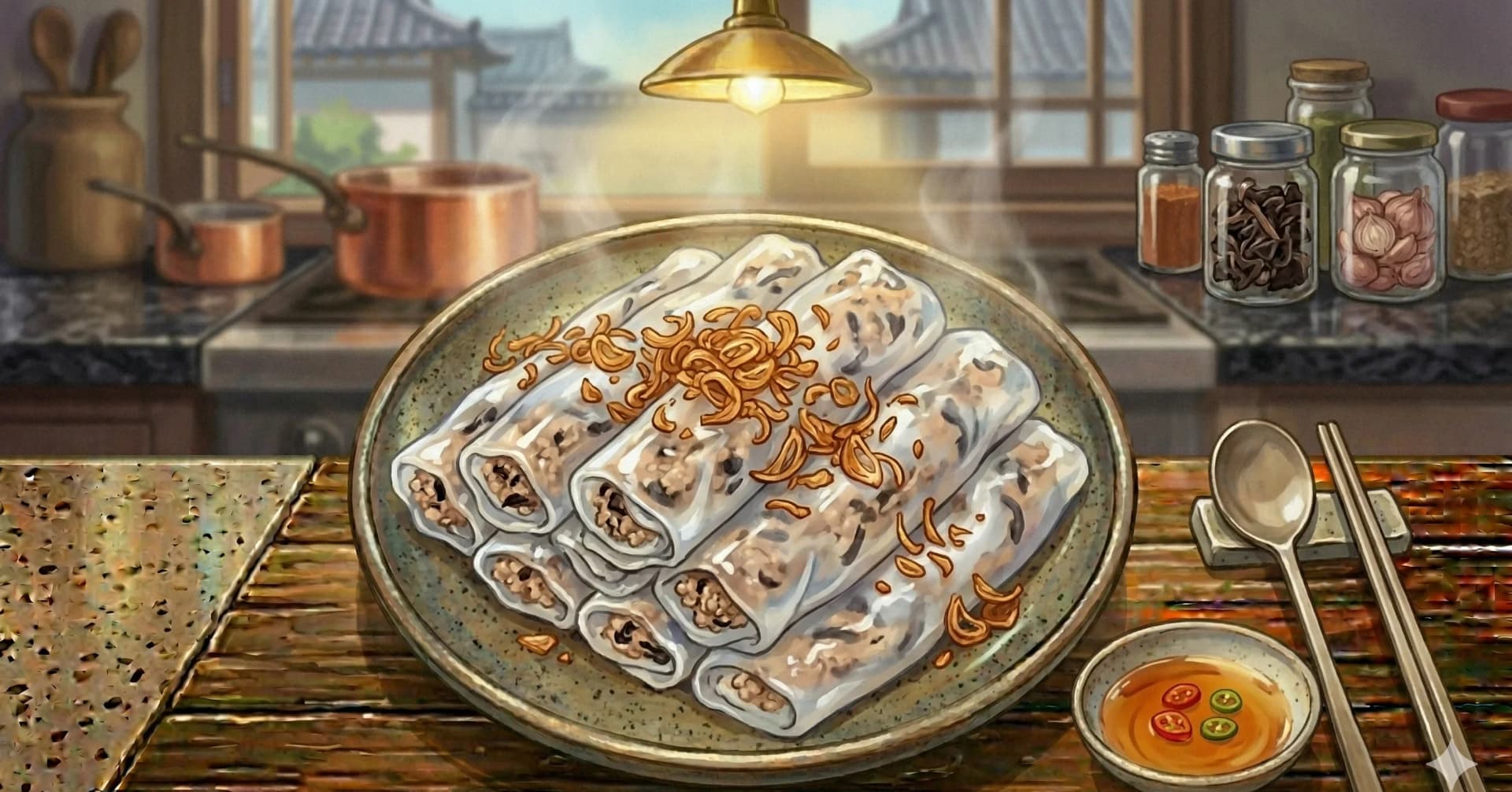
For a fuller dinner with friends, add Green Curry with jasmine rice as a second main course, and set out a plate of Goi Cuon (fresh spring rolls) as a light starter. The cool, herb-filled rolls ease guests into the meal before the heat of the curry arrives. Larb also works well as a shared appetizer, its lime-and-herb brightness clearing the way for richer dishes to follow.
If you enjoy pad thai, explore Pad Krapow (holy basil stir-fry) for another fast wok dish, or Khao Soi for a Northern Thai curry noodle that trades tamarind sweetness for coconut richness.
Storage & Reheating
Pad thai sauce: Can be made up to 5 days ahead and stored in a sealed jar in the refrigerator. It may thicken as the palm sugar settles. Warm gently and stir before using.
Cooked pad thai: Keeps in an airtight container in the refrigerator for up to 2 days, though the texture suffers. The noodles absorb remaining moisture and become softer. Reheat in a hot wok with a splash of oil and a small squeeze of lime juice to revive the flavors. Do not microwave, as this steams the noodles and makes them gummy.
Prepared ingredients: The tofu, garlic, shallots, preserved radish, and dried shrimp bowl can be assembled several hours ahead and kept covered at room temperature. The shrimp can be peeled and deveined a day in advance and refrigerated.
Peanuts: Store chopped roasted peanuts in an airtight container at room temperature for up to 1 week, or in the freezer for several months. Chop just before serving for the best crunch.
Cultural Notes
Pad thai (ผัดไทย, "Thai stir-fry") is younger than most Thais realize. The dish was created in the late 1930s and early 1940s during the government of Field Marshal Plaek Phibunsongkhram, who launched a nation-building campaign aimed at modernizing Thailand and asserting a distinct Thai identity. World War II had cut Thailand's rice supply, and the government wanted a noodle dish that could replace some of the population's rice consumption while displacing the Chinese-style stir-fried noodles that dominated Bangkok street food at the time. A recipe was distributed publicly, and pad thai was promoted as the official noodle of the new Thailand.
The name itself reflects that nationalist origin. "Pad thai" literally means "Thai stir-fry," a deliberate counterpoint to the Chinese stir-fries (pad in Thai borrowed from the Chinese cooking technique) that filled the city. The reformulation kept the Chinese stir-frying method but swapped the Chinese seasonings for distinctly Thai ones: tamarind for sourness, palm sugar for sweetness, fish sauce for salt, and dried chili for heat. The resulting balance of sour, sweet, salty, and spicy is now treated as the signature flavor profile of central Thai cooking.
In Bangkok, the most famous pad thai destination is Thip Samai on Maha Chai Road, founded in 1966 and known for its egg-wrapped version, where the finished noodles are enclosed in a thin omelet pouch at the table. The shop opens around 5 PM and routinely sees lines stretching down the block. Outside Thailand, pad thai has become the country's most internationally recognized dish, a status that often surprises Thai food writers since within Thailand it is just one of dozens of noodle preparations and rarely treated as the country's representative cuisine. Inside Thailand it remains an evening street food, sold from carts and small stalls, with home cooking versions far less common than in the West.
Nutrition Facts
Calories: 834kcal (42%)|Total Carbohydrates: 96.6g (35%)|Protein: 50.6g (101%)|Total Fat: 29.7g (38%)|Saturated Fat: 5.2g (26%)|Cholesterol: 415mg (138%)|Sodium: 1925mg (84%)|Dietary Fiber: 6.3g (23%)|Total Sugars: 31.8g
You Might Also Like
Ratings & Comments
Ratings & Comments
Ratings
Share your thoughts on this recipe.
Sign in to rate and comment