Thai Cuisine
Cashew Chicken Stir-Fry (Gai Pad Med Mamuang / ไก่ผัดเม็ดมะม่วงหิมพานต์)
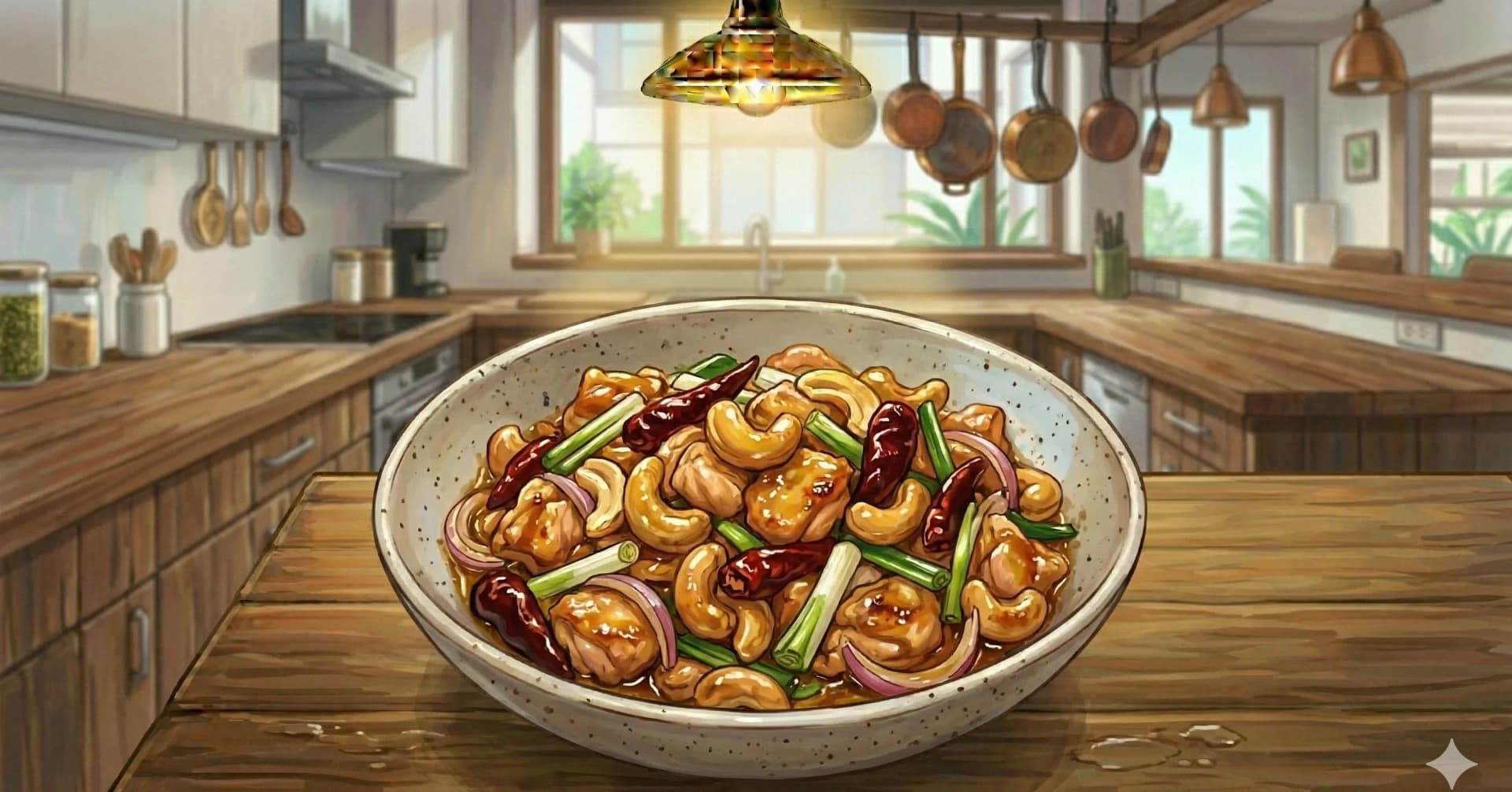
Thai cashew chicken stir-fried with roasted chilies, onion, and a sweet-savory soy glaze
There is a reason cashew chicken appears on nearly every Thai restaurant menu in the world. It is immediately appealing: golden pieces of chicken, whole roasted cashews, and chunks of sweet pepper, all glazed in a sauce that manages to be savory, sweet, and faintly spicy in a single coating. But the versions most people know outside Thailand are often too sweet, too thick, and missing the element that gives the dish its character in Bangkok, the roasted dried chilies that contribute a smoky, toasty warmth that ties the entire plate together.
In Thailand, gai pad med mamuang is a Chinese-influenced stir-fry that belongs to the broader family of dishes adapted from Cantonese cooking and localized with Thai seasonings. The base technique is purely Chinese, rapid wok cooking over high heat, but the flavor profile is Thai through and through. Oyster sauce and soy sauce provide the savory backbone, fish sauce adds the fermented depth that no Chinese version would include, and palm sugar contributes a rounder sweetness than white sugar. The dried chilies are not there for heat alone. They are fried until they darken and puff, which transforms their flavor from raw and sharp to smoky and complex.
What this dish delivers is satisfaction. The chicken is tender, the cashews are crunchy, the sauce is just thick enough to coat without pooling, and the dried chilies add intermittent bursts of smoky warmth. It comes together in 10 minutes of cooking and requires no hard-to-find ingredients, making it one of the most practical Thai dishes for a weeknight dinner.
At a Glance
Yield
2 servings
Prep
15 minutes
Cook
10 minutes
Total
25 minutes
Difficulty
Easy
Ingredients
Sauce Ingredients
- 1 tbspoyster sauce
- 1 tbsplight soy sauce
- 2 tspfish sauce
- 2⅓ tsppalm sugar or brown sugar
- 1 tbspwater
Stir-Fry Ingredients
- ¾ lbboneless, skinless chicken thigh, cut into 2 cm pieces
- 2¾ ozroasted unsalted cashews
- 8to 10 dried red chilies (spur chilies or similar), cut into 3 cm pieces, seeds shaken out for less heat
- 1medium onion (about 120 g), cut into wedges
- 1red bell pepper (about 120 g), cut into 2 cm squares
- 3 clovesgarlic, roughly chopped
- 3scallions, cut into 3 cm lengths
- 2 tbspneutral oil
- 1 tspcornstarch mixed with 1 tbsp water (optional, for a glossier sauce)
Method
- 1
Mix the oyster sauce, soy sauce, fish sauce, palm sugar, and water in a small bowl. Stir until the sugar dissolves. Set aside.
- 2
Heat a wok over high heat until smoking. Add the oil and swirl to coat. When the oil shimmers, add the dried chilies. Stir them through the oil for 15 to 20 seconds until they darken one shade and become fragrant. Do not let them blacken, or they will taste bitter. They should puff slightly and release a toasty, smoky aroma.
- 3
Add the garlic and stir for 10 seconds. Add the chicken pieces in a single layer. Let them sear without moving for about 45 seconds until the bottoms develop golden-brown spots. Toss and sear for another minute until the chicken is mostly cooked through and lightly colored on the outside.
- 4
Add the onion wedges and bell pepper. Stir-fry for 1 to 2 minutes until the onion softens at the edges and the pepper brightens in color but retains some crunch.
- 5
Pour in the sauce. Toss everything together, coating each piece of chicken and vegetable. The sauce should bubble immediately on contact with the hot wok. If you want a glossier sauce, add the cornstarch slurry now and toss for 15 seconds until the sauce thickens slightly and clings to the ingredients.
- 6
Add the cashews and scallions. Toss for 20 seconds, just enough to warm the cashews and barely wilt the scallions. Adding the cashews at the end preserves their crunch. If they go in too early, they soften in the sauce and lose the textural contrast that makes the dish work.
- 7
Taste the sauce. It should be savory first, with a balanced sweetness and a gentle background heat from the dried chilies. Adjust with a dash more fish sauce for salt, a pinch more sugar for sweetness, or a squeeze of lime if you want brightness.
- 8
Plate immediately and serve with steamed jasmine rice. The sauce is concentrated, so the rice is essential for balance. Each bite should include a piece of chicken, a cashew, and a bit of sauce-coated vegetable.
Key Ingredient Benefits
Cashews: A tree nut native to Brazil but now extensively cultivated in Southeast Asia, particularly Vietnam and India. They are rich in monounsaturated fats (oleic acid), magnesium, copper, and phosphorus. Research suggests that regular nut consumption is associated with reduced risk of cardiovascular disease. Roasting intensifies their flavor through Maillard browning without significantly altering nutritional content.
Dried red chilies: Drying and then frying chilies transforms their capsaicin profile and creates new aromatic compounds through pyrolysis. The result is a smoky warmth distinct from the sharp heat of fresh chilies. Capsaicin has been studied extensively for its potential thermogenic and anti-inflammatory effects.
Oyster sauce: A thick, brown condiment made from oyster extracts, sugar, and salt. It provides a concentrated umami flavor and a subtle sweetness. Some brands use artificial oyster flavoring. Look for brands that list oyster extract as the first ingredient.
Why This Works
Frying the dried chilies first in hot oil is the technique that defines this dish. The brief, high-heat exposure triggers Maillard reactions on the chili skin, creating smoky, toasty compounds that infuse the oil. This chili-scented oil then becomes the cooking medium for everything that follows, ensuring the smoky warmth permeates the entire dish rather than sitting only in the chili pieces themselves.
The sauce is deliberately thin and lightly sweet, not the thick, syrupy glaze common in Western adaptations. In Thailand, the sauce in a stir-fry like this is meant to coat the ingredients in a thin, glossy layer, not pool on the plate. The cornstarch slurry is optional and should be used sparingly. The goal is a light sheen, not a heavy gravy.
Cutting the chicken into small, uniform pieces ensures even cooking in the brief wok time. Larger pieces would need longer cooking, which would overcook the vegetables and soften the cashews. The high heat and short cook time keep each component at its ideal texture.
Substitutions & Variations
Protein: Shrimp, tofu, or sliced pork all work well. Shrimp cook even faster than chicken, so add them just a minute before the sauce.
Cashews: Roasted peanuts or macadamia nuts can substitute. For a nut-free version, use roasted sunflower seeds or toasted coconut flakes.
Vegetables: Water chestnuts add crunch. Baby corn, snap peas, or mushrooms are all common additions in Thai restaurants.
Spice level: Use fewer dried chilies and keep the seeds in for milder heat, or increase to 15 chilies for authentic Thai spice levels.
With holy basil: Adding a handful of holy basil leaves at the very end gives the dish a peppery, anise-scented finish that bridges this recipe toward pad kra pao.
Serving Suggestions
Gai pad med mamuang is typically served as one dish among several in a Thai family meal. Pair it with a soup like tom yum goong for a hot-and-sour contrast, and a green salad or som tam for freshness.
For a simpler weeknight dinner, serve it over jasmine rice with a fried egg on top and a side of sliced cucumber dressed with rice vinegar. The mild cucumber and rich egg yolk complement the savory-sweet chicken beautifully.
It also pairs well with pad prik king for a two-stir-fry meal, where the dry curry heat of one contrasts with the milder, nuttier flavors of the other.
Storage & Reheating
Refrigerator: Store in a sealed container for up to 3 days. The cashews will soften, so consider adding fresh roasted cashews when reheating.
Reheating: Reheat in a hot wok or skillet over high heat for 2 minutes. The microwave works but will not restore the seared exterior of the chicken.
Freezer: The dish without cashews freezes well for up to 1 month. Add fresh cashews after reheating.
Prep ahead: The sauce can be mixed, the chicken cut, and the vegetables prepped a day ahead. Refrigerate separately.
Cultural Notes
Gai pad med mamuang himmaphan (ไก่ผัดเม็ดมะม่วงหิมพานต์, "chicken stir-fried with cashew nuts") is the Thai-Chinese stir-fry that has become one of the safest orders on every international Thai restaurant menu. The dish is mild, sweet, slightly smoky, and immediately recognizable, and it is often the dish that Western diners new to Thai food order before working up to anything spicier. Within Bangkok, the dish is more commonly considered a Chinese-Thai restaurant entry than a Thai street food, since the use of cashews and the gentle sauce profile both point to the southern Chinese (especially Cantonese) cooking traditions that shaped many Bangkok restaurant kitchens.
The technique is built around a quick high-heat stir-fry. Boneless chicken thigh, cut into bite-sized pieces and dusted with cornstarch, is fried first to develop a light crust. Cashew nuts (med mamuang himmaphan, sometimes shortened to med mamuang) are fried separately to bring out their toasted aroma. Garlic, dried chilies, and spring onions go in next, followed by the chicken back into the wok, a sauce of oyster sauce, soy sauce, fish sauce, and a small amount of sugar, and finally the cashews and sliced onion stirred in just long enough to coat. The dried chilies are left whole rather than crushed, contributing a faint smoky aroma without serious heat.
The dish is a staple of the khao rad gaeng one-plate-rice lunch counter, where it sits alongside pad krapow moo, pad prik king, and the various stir-fried gravy dishes that fill the typical Thai workplace lunch menu. Most Thai families keep the basic technique in their weeknight repertoire and adapt it to whatever protein is in the fridge: shrimp, beef, and pork versions all exist. The cashews themselves are a luxury ingredient by Thai standards, which is part of why the dish reads as slightly more upscale than a typical noodle plate or stir-fried curry.
Nutrition Facts
Calories: 807kcal (40%)|Total Carbohydrates: 61g (22%)|Protein: 50g (100%)|Total Fat: 44.4g (57%)|Saturated Fat: 8.8g (44%)|Cholesterol: 158mg (53%)|Sodium: 1755mg (76%)|Dietary Fiber: 20.3g (73%)|Total Sugars: 16.2g
You Might Also Like
Ratings & Comments
Ratings & Comments
Ratings
Share your thoughts on this recipe.
Sign in to rate and comment