Thai Cuisine
Pad Kra Pao Moo (ผัดกระเพราหมู)
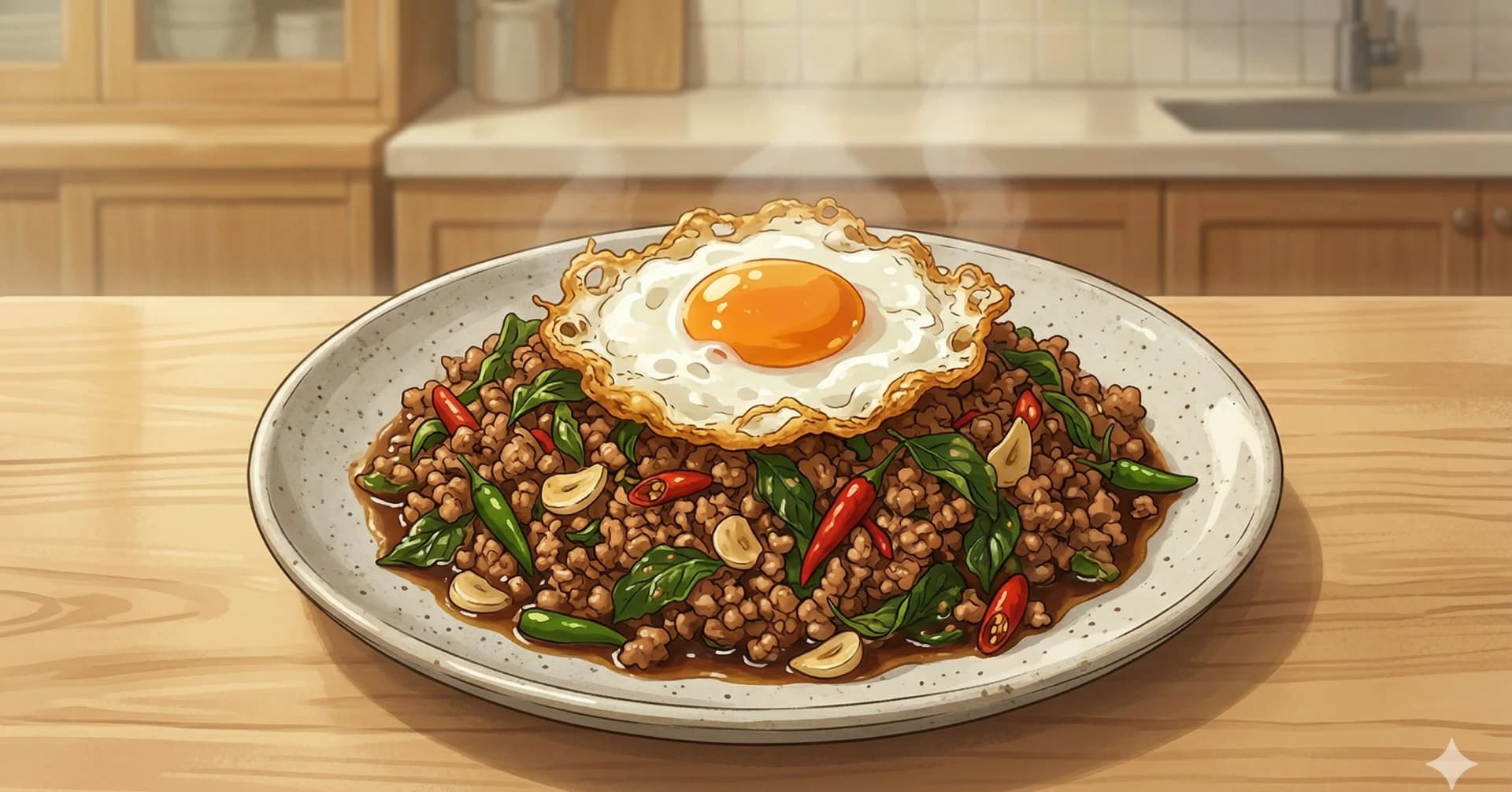
Fiery minced pork stir-fried with holy basil, garlic, and chilies, served over rice with a crispy fried egg
The smell of holy basil hitting a smoking-hot wok is unlike anything else in Thai cooking. It is peppery, faintly clove-like, and almost medicinal in its intensity, a fragrance that announces the dish before you see it. Pad kra pao is Thailand's everyday meal, the dish that office workers, taxi drivers, and students order more than any other at street stalls and food courts across the country. It is fast, cheap, deeply satisfying, and built on a flavor profile that hits every receptor: salty fish sauce, sweet oyster sauce, fiery chilies, pungent garlic, and that singular holy basil aroma tying it all together.
The dish is named for kra pao, the Thai name for holy basil (Ocimum tenuiflorum), which is not the same as the sweet Thai basil used in curries and pho. Holy basil has smaller, slightly serrated leaves with a strong peppery, anise-clove flavor that intensifies rather than fades when exposed to heat. It is this herb that defines the dish. Without it, you have a garlic-chili pork stir-fry. With it, you have something completely different.
Pad kra pao delivers aggressive, unapologetic flavor. The garlic is used generously and cooked only briefly, so it retains a raw edge. The chilies are pounded rather than sliced, releasing their oils and seeds into the sauce. The pork is cooked in large clumps rather than stirred into fine granules, giving it a more satisfying, meaty texture. Topped with a crispy fried egg with lacy, golden edges and a yolk that runs into the rice when you cut into it, this is one of the most complete and satisfying single-plate meals in the world.
At a Glance
Yield
2 servings
Prep
10 minutes
Cook
8 minutes
Total
18 minutes
Difficulty
Easy
Ingredients
Stir-Fry Ingredients
- ¾ lbminced pork (not too lean, 15 to 20 percent fat is ideal)
- 2 cupsloosely packed holy basil leaves
- 6 clovesgarlic, roughly chopped
- 4to 8 bird's eye chilies (Thai chilies), roughly pounded or chopped
- 2 tbspoyster sauce
- 1 tbspfish sauce
- 2 tspdark soy sauce (for color)
- 2⅓ tspsugar
- 2 tbspwater
- 2 tbspneutral oil
Fried Egg Ingredients
- 2eggs
- ¼ cupneutral oil (enough for shallow-frying)
To Serve
- —Steamed jasmine rice
- —Extra fish sauce and sliced chilies in vinegar, on the table
Method
- 1
Pound the garlic and chilies together in a mortar with a pestle, just enough to bruise and crack them. You want a coarse, uneven paste with visible pieces, not a smooth puree. If you do not have a mortar, chop them roughly together on a cutting board, pressing down with the flat of your knife. The bruising releases more oils and flavor than clean cuts.
- 2
Heat a wok over the highest heat your stove can produce. Add the oil and swirl. When the oil begins to smoke, add the pounded garlic and chili mixture. Stir for 10 seconds. The garlic will sizzle immediately and begin to turn golden at the edges.
- 3
Add the minced pork. Spread it across the wok surface and let it sear undisturbed for about 30 seconds. Then break it up into large clumps with your spatula, pressing some of it flat against the wok to develop browning. Continue cooking for 2 to 3 minutes until the pork is cooked through and has some browned, slightly crispy bits.
- 4
Add the oyster sauce, fish sauce, dark soy sauce, and sugar. Toss to combine. The sauces will sizzle and reduce almost instantly on the hot wok surface. Add the water and toss again. The liquid creates a thin sauce that coats the pork rather than pooling on the plate.
- 5
Turn off the heat. Add all the holy basil leaves at once and toss vigorously for 15 seconds. The residual heat wilts the leaves immediately, and the aroma that rises from the wok is the heart of the dish, peppery, warm, and slightly intoxicating. The leaves should wilt but retain their green color.
- 6
While the pork cooks, fry the eggs separately. Heat 60 ml of oil in a small skillet over high heat until the surface shimmers and a drop of water splatters violently. Crack an egg into the oil. It will bubble and puff immediately, the edges crisping into a lacy, golden frill while the white sets and the yolk stays runny. This takes about 1 minute. Remove with a slotted spatula and drain briefly. Repeat with the second egg.
- 7
Plate each serving: a mound of steamed jasmine rice, the holy basil pork spooned alongside or over the rice, and the crispy fried egg placed on top. The yolk should remain intact until the diner breaks it with a spoon, letting it run into the rice and pork.
- 8
Taste a bite of the pork with rice. The flavor should be salty, savory, and spicy, with the holy basil providing a peppery warmth that lingers at the back of the throat. The egg yolk adds richness that rounds out the aggressive seasoning. Adjust with extra fish sauce or chili vinegar at the table.
Key Ingredient Benefits
Holy basil (bai kra pao): Ocimum tenuiflorum, also known as tulsi in Indian tradition, is classified as an adaptogenic herb in Ayurvedic medicine and Thai traditional healing. Research has explored its potential for stress modulation, immune support, and blood sugar regulation, though most studies use concentrated extracts rather than culinary amounts. Its primary aromatic compound, eugenol (also found in cloves), has demonstrated anti-inflammatory and antimicrobial activity in laboratory settings.
Bird's eye chilies: Among the hottest common cooking chilies, measuring 50,000 to 100,000 Scoville units. The capsaicin they contain has been studied for pain modulation, metabolic effects, and cardiovascular benefits. In Thai food tradition, these small chilies are considered stimulating and appetite-enhancing.
Fish sauce: The foundational seasoning of Thai cooking, made from fermented anchovies and salt. It provides naturally occurring glutamate (umami), sodium, and small amounts of protein. High-quality fish sauce has a complex, nuanced flavor that pure salt cannot replicate.
Why This Works
Pad kra pao relies on the Maillard reaction for much of its depth. Letting the minced pork sear undisturbed on the wok surface for that initial 30 seconds creates browned, slightly caramelized bits that contribute a savory complexity beyond what the sauces alone can provide. Breaking the meat into large, irregular clumps rather than fine granules preserves texture and creates surface area for browning.
Holy basil is added off heat for a reason. The volatile aromatic compounds in the leaves, primarily eugenol, beta-caryophyllene, and linalool, begin to break down rapidly at high temperatures. Adding the leaves to residual heat rather than direct flame preserves these compounds, giving the dish a more vivid and complex herbal flavor than if the basil were cooked into the sauce.
The crispy fried egg is cooked in more oil than a typical fried egg, essentially shallow-fried. The high temperature and generous oil cause the egg white to puff and crisp almost instantly, creating the lacy, golden edges that are the hallmark of a Thai street-style fried egg. The yolk stays liquid because the cooking time is so brief.
Substitutions & Variations
Holy basil: Thai sweet basil is the most common substitute but produces a different dish. The flavor shifts from peppery and intense to sweeter and more anise-like. If neither is available, a combination of regular basil and a few fresh mint leaves approximates the aromatic complexity, though imperfectly.
Protein: Chicken (minced or sliced thigh), beef, seafood (prawns and squid), or crumbled firm tofu all work. The dish is called pad kra pao regardless of the protein, with the protein name added as a suffix.
Less spicy: Use large, mild red chilies (prik chee fa) instead of bird's eye chilies, or reduce to 2 chilies.
Pad kra pao with crispy pork belly: Replace minced pork with 200 g of sliced, deep-fried crispy pork belly (moo krob). Add it at the end with the basil so it retains its crunch.
With a fried egg alternative: A soft-boiled egg with a jammy yolk, halved and placed on top, works for those who prefer less oil.
Serving Suggestions
Pad kra pao is almost always eaten as a single plate over rice, the Thai equivalent of a quick lunch. The fried egg on top is standard and considered essential by most Thai diners.
For a more complete meal, pair it with a bowl of tom yum goong as a sharp, sour soup alongside the salty, spicy pork. Or serve family-style with gai pad med mamuang and steamed rice for a meal that offers contrasting flavors from the same cuisine.
Pad kra pao also pairs naturally with a cold Thai beverage like Thai iced tea or Thai iced coffee, where the sweet, creamy drink tempers the chili heat between bites.
Storage & Reheating
Refrigerator: Store the pork mixture (without the egg) for up to 3 days. The holy basil will darken but the flavor holds well.
Reheating: Reheat in a hot wok or skillet for 2 minutes. Add a splash of water if the sauce has dried. Fry a fresh egg for each serving. The egg does not store well.
Freezer: The pork mixture freezes well for up to 1 month. Thaw overnight in the refrigerator before reheating.
Prep ahead: The garlic and chilies can be pounded and the sauces measured ahead. The actual cooking is so fast that minimal prep is needed.
Cultural Notes
Pad krapow moo (ผัดกะเพราหมู) is the pork version of pad krapow, and within Thailand it is by far the most commonly sold preparation of the dish. Walk into any neighborhood food stall in Bangkok at lunchtime and roughly half the orders coming through will be pad krapow moo over rice with a fried egg. The dominance of pork over other proteins reflects both economic reality (pork is the cheapest mainstream meat in Thailand and supports a vast street food industry) and palate preference: the fat in minced pork carries the holy basil's spicy clove note in a way that leaner chicken or beef does not.
The texture decision matters. Pork can be either moo sap (finely minced, almost ground) or moo bai (sliced thinly), and the two produce noticeably different dishes. Moo sap is the version most commonly served on the khao rad gaeng one-plate-rice lunch counter, since the minced meat scoops easily over rice and absorbs the dressing fully. Moo bai is more often found at proper Thai-Chinese restaurants and at higher-end street stalls, where the sliced pork's chew and bite contrast nicely with the soft cooked rice. Most home cooks make whichever version their family prefers.
The dish belongs to the broader category of Thai raat khao dishes ("poured over rice"), where a quick stir-fried preparation is served on top of steamed jasmine rice as a complete one-plate meal. Other dishes in the category include gai pad med mamuang (chicken with cashew nuts), various stir-fried gravy preparations, and the rice-and-curry combinations that fill the khao rad gaeng counter at most Thai workplaces. Pad krapow moo is the unofficial king of the category, and Thai office workers ordering it are often signaling that they want quick, familiar, no-surprises lunch food.
Nutrition Facts
Calories: 773kcal (39%)|Total Carbohydrates: 18.1g (7%)|Protein: 40.9g (82%)|Total Fat: 60.6g (78%)|Saturated Fat: 16.5g (83%)|Cholesterol: 294mg (98%)|Sodium: 1416mg (62%)|Dietary Fiber: 4.2g (15%)|Total Sugars: 8g
You Might Also Like
 Medium
Thai Cuisine
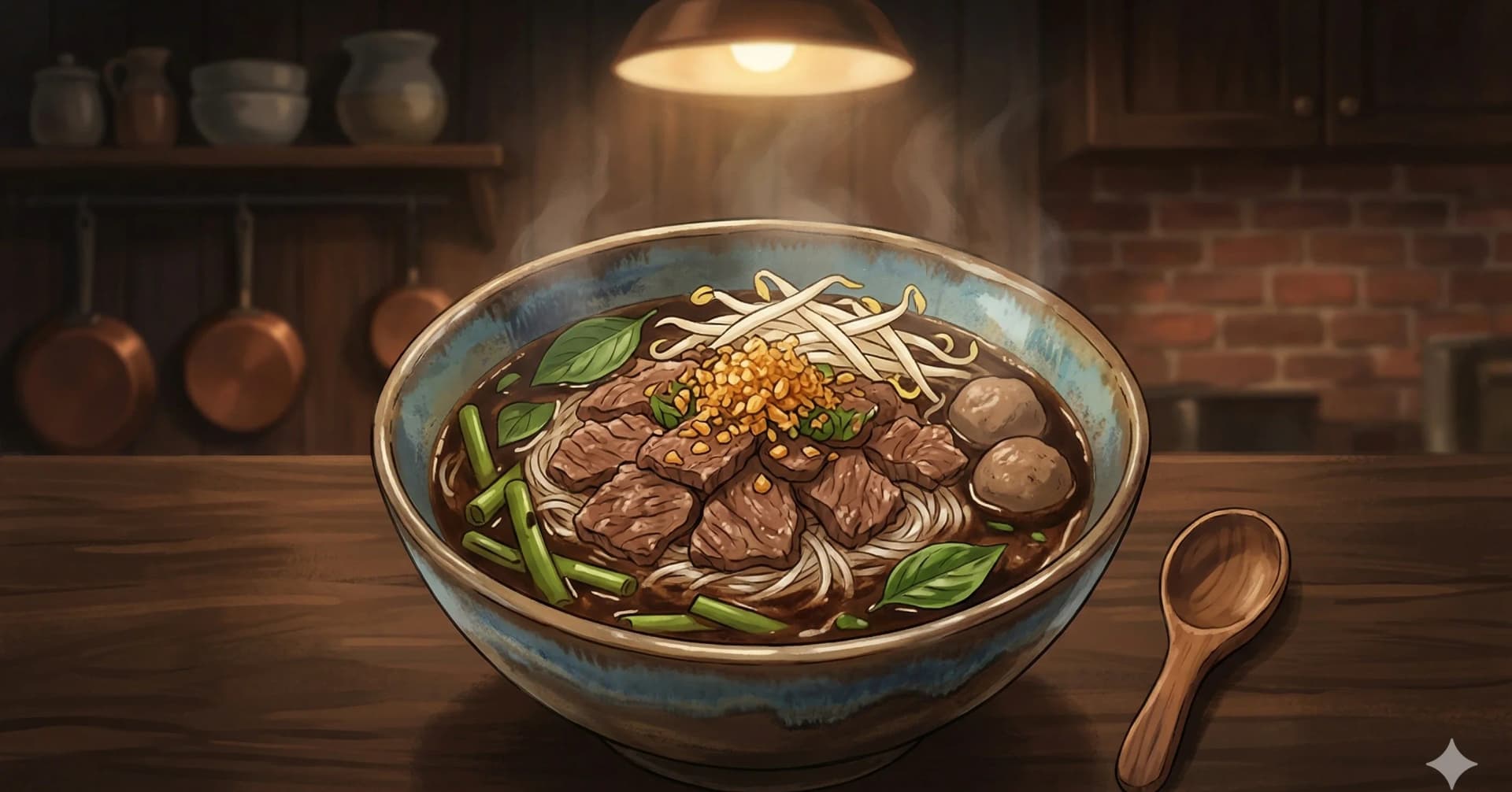
Boat Noodles (ก๋วยเตี๋ยวเรือ)
3 hours 15 minutes
 Medium
Vietnamese Cuisine
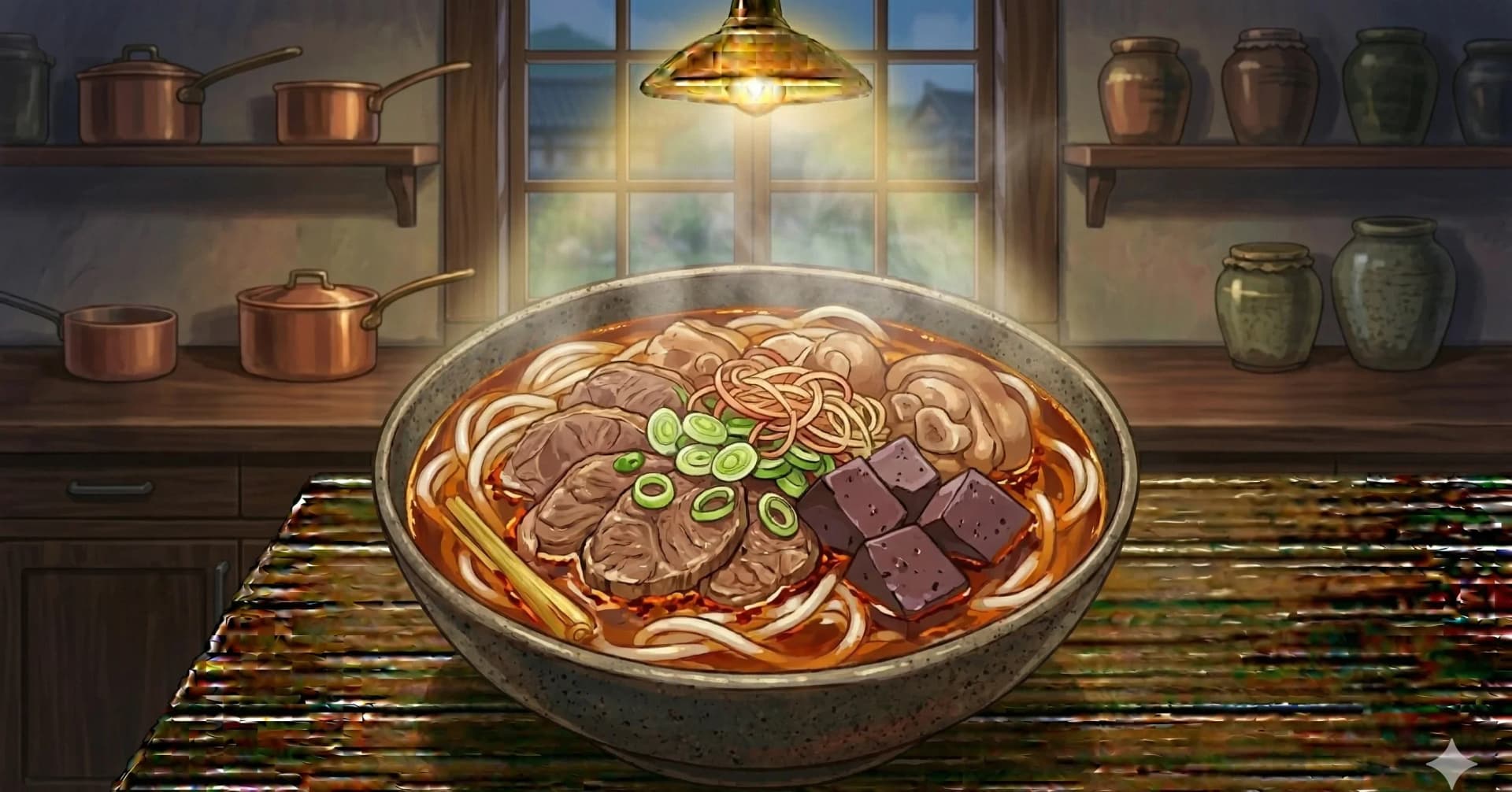
Spicy Beef Noodle Soup (Bún Bò Huế)
3 hours 45 minutes
 Medium
Vietnamese Cuisine
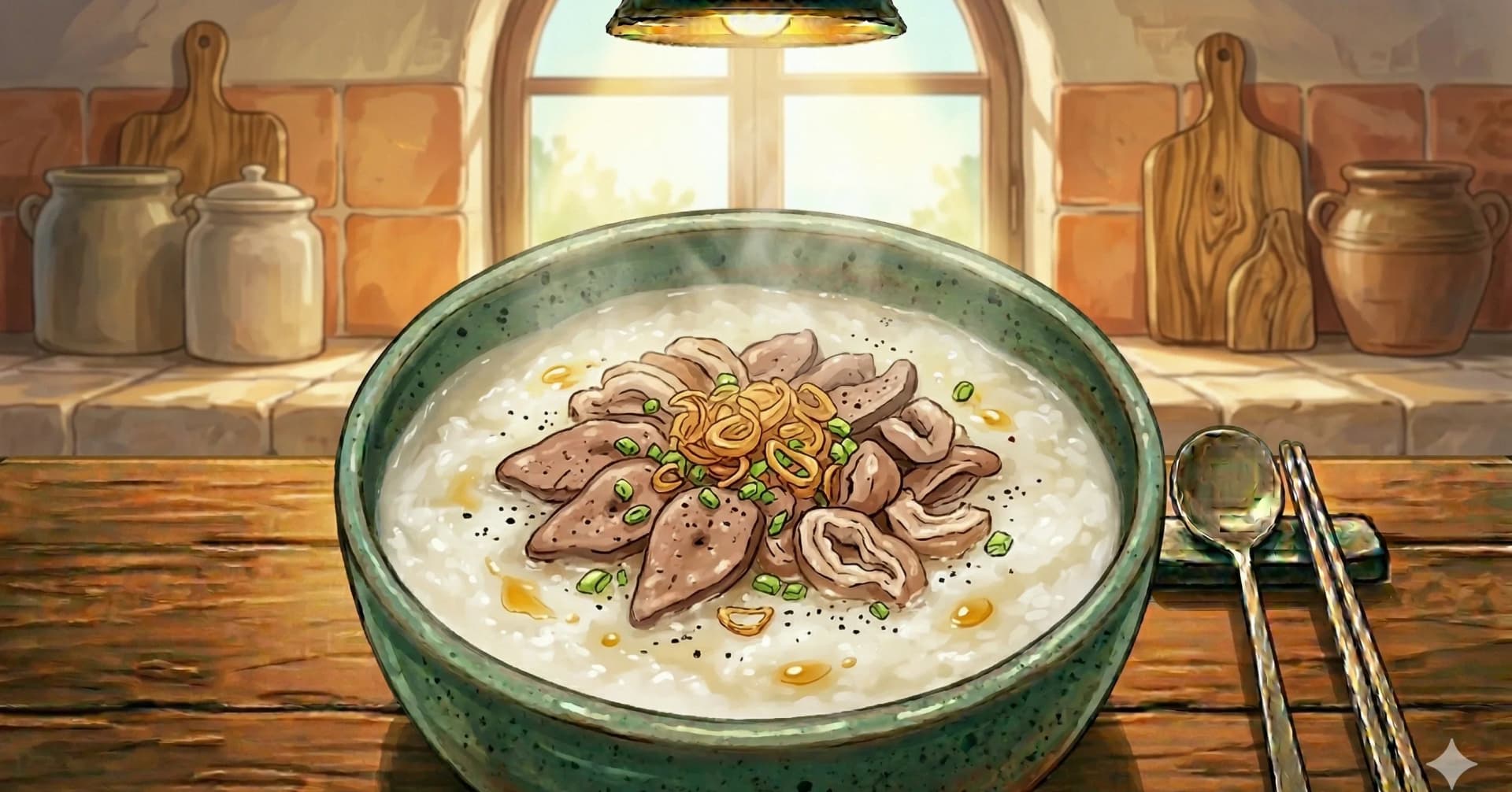
Cháo Lòng (Vietnamese Pork Organ Rice Porridge)
2 hours 15 minutes
 Easy
EasyVietnamese Cuisine
Grilled Lemongrass Pork (Thịt Nướng)
2 hours 30 minutes
Ratings & Comments
Ratings & Comments
Ratings
Share your thoughts on this recipe.
Sign in to rate and comment