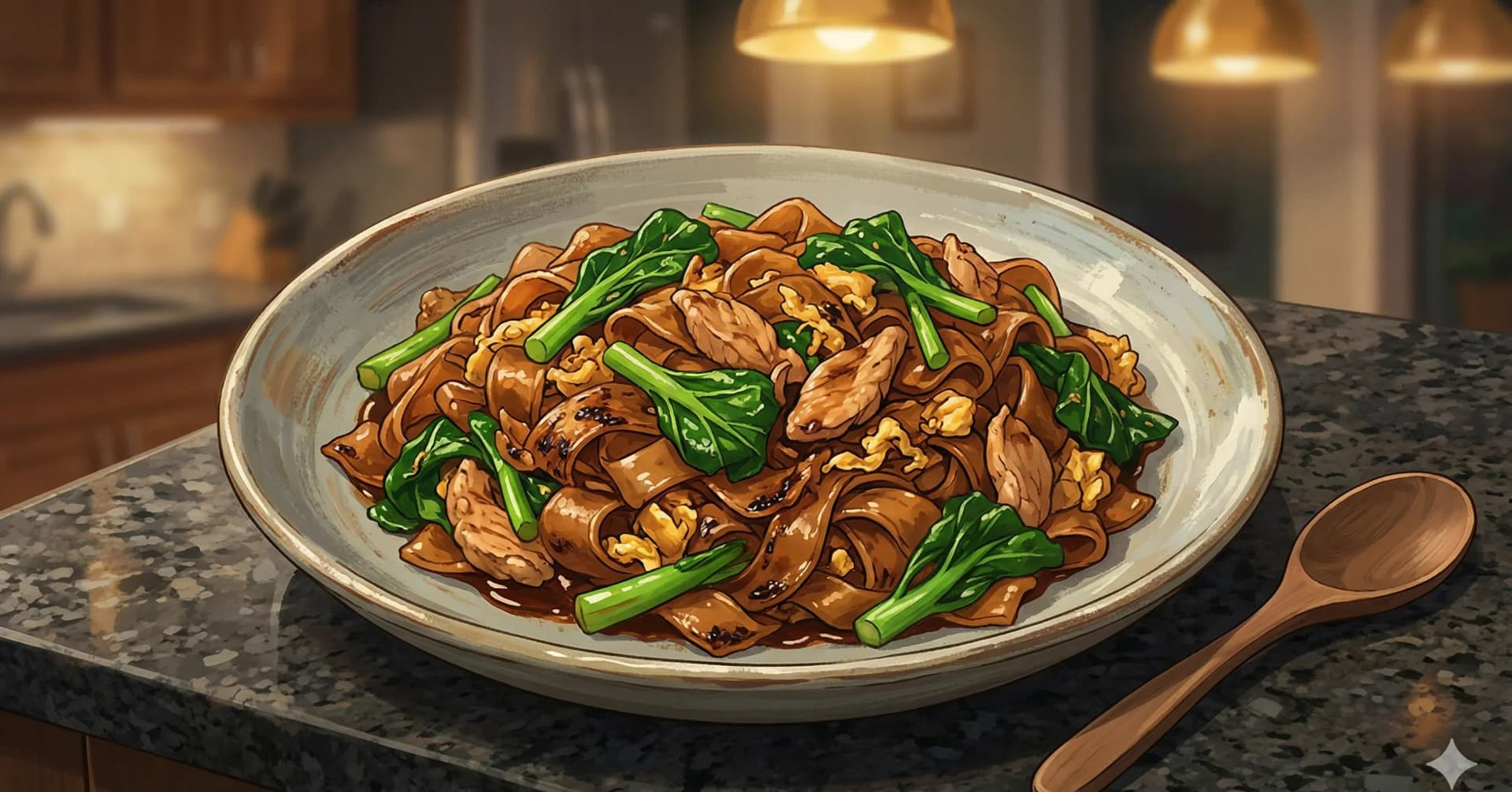
Thai Cuisine
Soy Sauce Fried Noodles (Pad See Ew / ผัดซีอิ๊ว)
Smoky charred wide rice noodles with chicken, Chinese broccoli, and a sweet soy glaze
A tangle of wide rice noodles hits a screaming hot wok and goes quiet for a few seconds, long enough for the underside to blister and darken. That brief contact with searing metal is the entire soul of pad see ew. The name translates roughly to "fried with soy sauce," and the dish is one of the most common street foods in Thailand, sold from carts and shop-houses alongside pad thai and pad krapow. Where pad thai is sweet, sour, and nutty, pad see ew is darker and simpler, built on the caramel depth of dark soy sauce and the clean bitterness of Chinese broccoli.
The dish likely arrived in Thailand with Chinese immigrants who brought their broad rice noodle stir-fries from Guangdong and Teochew provinces. Over generations, Thai cooks adapted the seasoning, adding fish sauce and oyster sauce to the original soy-based formula. The result is a stir-fry that sits comfortably between Chinese and Thai flavor profiles, neither fully one nor the other.
What pad see ew delivers is comfort. The noodles are soft and chewy with patches of smoky char. The sauce is savory and faintly sweet without being cloying. The egg enriches everything it touches. The broccoli stems snap between your teeth, and the wilted leaves carry the sauce into each bite.
The single most important thing to understand is heat. A home burner cannot match a Thai street wok, so you compensate by cooking in small batches, keeping the wok as hot as possible, and resisting the urge to stir constantly. Let the noodles sit against the metal. That patience produces the charred, slightly smoky flavor, called "wok hei," that separates a good plate from a forgettable one.
At a Glance
Yield
2 servings
Prep
20 minutes
Cook
10 minutes
Total
30 minutes
Difficulty
Easy
Ingredients
Marinade Ingredients
- 8 ozboneless, skinless chicken thigh, thinly sliced against the grain
- 2 tsplight soy sauce
- ½ tspsugar
Sauce Ingredients
- 2 tbspoyster sauce
- 1 tbsplight soy sauce
- 1⅔ tspfish sauce
- 1⅔ tspGolden Mountain sauce (or Maggi seasoning sauce)
- 2 tspThai dark soy sauce (see-ew dum)
- 2 tspwhite vinegar
Stir-Fry Ingredients
- 1 lbfresh wide rice noodles (sen yai), separated into individual strands
- 3 tbspvegetable or peanut oil, divided
- 4 clovesgarlic, roughly chopped
- 2large eggs
- 5½ ozChinese broccoli (kai lan), stems sliced on the bias into 5 cm pieces, leaves roughly chopped
- 1⅞ tspsugar
To Serve
- —Ground white pepper, to taste
- —Thai chili vinegar (prik nam som)
- —Dried chili flakes
Method
- 1
Toss the sliced chicken with the light soy sauce and sugar in a small bowl. If the chicken is very lean, add a splash of water to keep it from sticking. Set aside while you prepare everything else, at least 10 minutes.
- 2
Stir together the oyster sauce, light soy sauce, fish sauce, Golden Mountain sauce, dark soy sauce, and white vinegar in a small bowl until combined. If cooking in two batches, divide the sauce evenly now.
- 3
Gently separate the fresh rice noodles into individual strands with your fingers. If the noodles are cold from the refrigerator, microwave them for 30 to 60 seconds until pliable. Tearing or cracking means they need more warmth.
- 4
Heat a wok over the highest flame your stove allows until a drop of water evaporates on contact. Add about 15 ml of oil and swirl to coat. When the oil shimmers and just begins to smoke, add the marinated chicken in a single layer. Let it sear undisturbed for 30 seconds until the edges turn golden, then stir-fry until cooked through, about 2 minutes total. Transfer to a plate.
- 5
Return the wok to high heat and add another 15 ml of oil. Add the garlic and stir once or twice until it turns golden and fragrant, about 10 seconds. Crack the eggs directly into the wok. Let the whites begin to set for a few seconds, then break the yolks and fold loosely. You want large, soft curds rather than finely scrambled bits.
- 6
Immediately add the Chinese broccoli stems to the wok and toss for about 15 seconds until they brighten in color. Add the leaves and toss just until they begin to wilt, another 10 seconds.
- 7
Add the noodles, the sauce, and the sugar. Toss everything together two or three times to distribute the sauce, then stop stirring. Spread the noodles flat against the surface of the wok and let them sit undisturbed for 20 to 30 seconds. You will hear a faint sizzle and see the edges of the noodles in contact with the metal begin to darken and blister. Flip the noodles and repeat on the other side for another 15 to 20 seconds.
- 8
Return the seared chicken to the wok and toss briefly to combine, no more than a few seconds. The residual heat will warm the chicken through without overcooking it.
- 9
Slide the noodles onto a plate. Finish with a generous pinch of ground white pepper. Serve immediately with chili vinegar on the side.
Key Ingredient Benefits
Fresh wide rice noodles (sen yai): These are the same noodles used in chow fun and ho fun dishes across Southeast Asia. Made from rice flour and water, they are naturally gluten-free. Fresh versions are found in the refrigerated section of Asian grocery stores, often labeled "pad see ew noodles" or "wide rice stick." They are highly perishable and stiffen within a day or two, which is why gentle warming before cooking is important.
Thai dark soy sauce (see-ew dum): Thicker and sweeter than Chinese dark soy sauce, this is fermented longer and often includes palm sugar or molasses. It is primarily a coloring and flavoring agent, not a salt source. A small amount turns the entire dish a rich mahogany brown.
Golden Mountain sauce: A Thai seasoning sauce similar in concept to Maggi liquid seasoning but made from hydrolyzed soy protein. It has a concentrated savory, slightly sweet flavor distinct from regular soy sauce. It is widely used in Thai cooking as an umami booster.
Chinese broccoli (kai lan): A brassica vegetable with thick, juicy stems and broad dark green leaves. Per 100 g serving, it provides roughly 88 mg of calcium, 2.5 mg of iron, and significant amounts of vitamins A, C, and K. Its mildly bitter flavor pairs naturally with sweet soy sauces.
Why This Works
The sauce leans on five different seasoning liquids, and each one fills a gap the others leave behind. Oyster sauce provides body and sweetness. Light soy sauce contributes clean salt and umami. Fish sauce deepens the fermented savory character in a way that soy alone cannot. Golden Mountain sauce, a Thai seasoning sauce made from fermented soybeans, adds a particular rounded umami quality that bridges the Thai and Chinese elements of the dish. Dark soy sauce contributes almost no salt but delivers color and a faint molasses sweetness that darkens the noodles to the characteristic deep brown.
The addition of white vinegar, drawn from the RecipeTinEats approach, serves two purposes. It brightens the overall flavor and prevents the sauce from becoming one-dimensionally salty-sweet. The acid is subtle in the finished dish but noticeable in its absence.
Charring the noodles against the wok surface is not decoration. The Maillard reaction and slight caramelization of the sugars in the sauce produce new flavor compounds that taste smoky, toasty, and complex. Stirring constantly prevents this from happening. The technique of spreading, waiting, and flipping mimics what happens naturally in a high-BTU commercial wok burner but adapted for the lower heat of a home stove.
Cooking the protein separately and returning it at the end preserves its texture. Chicken stir-fried with noodles releases moisture that steams the noodles instead of charring them. Removing it and adding it back keeps both elements at their best.
Substitutions & Variations
Noodles: If fresh wide rice noodles are unavailable, use 200 g dried wide rice stick noodles (sometimes labeled "pad see ew" or "chantaboon") soaked in room-temperature water for 30 minutes, then drained. They will not have quite the same chew but will absorb the sauce well.
Protein: Thinly sliced pork loin, flank steak, peeled shrimp, or sliced firm tofu all work. For beef, a brief marinade with a pinch of baking soda (about 1 g) tenderizes the meat noticeably. Shrimp and tofu do not need the soy marinade.
Chinese broccoli: Regular broccoli (florets and peeled stems) or broccolini are the closest substitutes. Gai choy (mustard greens) or bok choy will shift the flavor slightly but remain authentic to the spirit of the dish.
Golden Mountain sauce: Maggi seasoning sauce is the most direct substitute. If neither is available, increase the light soy sauce by 5 ml and add a small pinch of sugar.
Vegetarian version: Replace the oyster sauce with vegetarian oyster sauce (mushroom-based), omit the fish sauce or replace with mushroom soy sauce, and use tofu as the protein. The char on the noodles still carries the dish.
Extra vegetables: Some Thai cooks add halved cherry tomatoes or baby corn in the last minute of cooking. These are not traditional to the street version but are common in Thai home cooking.
Serving Suggestions
Pad see ew is a one-plate meal, complete as it is. In Thailand, it is eaten with a fork and spoon rather than chopsticks, and it arrives at the table with a small caddy of condiments: chili vinegar, fish sauce, dried chili flakes, and sugar. Adjust to taste with each bite.
For a larger Thai meal, serve pad see ew alongside a bowl of tom yum goong. The bright, sour, spicy soup cuts through the richness of the soy-glazed noodles. A plate of som tam on the side adds crunch and acid that refresh the palate between bites.
If you are building a Thai street food spread, pad thai and pad see ew side by side cover the two poles of Thai noodle cooking, one sweet-sour and one savory-dark. Add a bowl of boat noodles for something altogether different, or a pot of khao soi if you want the warmth of coconut curry with your noodles. A simple green curry with jasmine rice rounds out any Thai table.
Storage & Reheating
Leftovers: Pad see ew keeps in an airtight container in the refrigerator for up to 2 days, though the noodles will firm up and lose some of their original chew. The char flavor holds well.
Reheating: A hot wok or large skillet with a small splash of oil is the best method. Spread the noodles in a single layer and let them sit against the hot surface for 30 seconds to re-crisp before tossing. Microwaving works in a pinch but produces steamed rather than charred noodles. Add a few drops of water and cover loosely to prevent drying.
Meal prep: The sauce can be mixed up to 3 days ahead and refrigerated. The chicken can be marinated and refrigerated for up to 24 hours. Slice and prep the broccoli in advance and store it wrapped in a damp towel. The actual stir-frying must happen fresh, as the char does not survive storage.
Cultural Notes
Pad see ew (ผัดซีอิ๊ว, "stir-fry with soy sauce") is the Bangkok-Chinese stir-fried noodle dish that, alongside pad thai, defines the Thai noodle category for most international diners. The name decomposes to pad (stir-fry) plus see ew (the Thai pronunciation of the Hokkien word for soy sauce, si-iu). The dish uses wide flat rice noodles called sen yai ("big noodles"), stir-fried with garlic, egg, Chinese broccoli (gai lan, or pak khana in Thai), and either pork, chicken, or beef, all coated in a glossy dark sauce of soy sauce, dark sweet soy (see ew dam), oyster sauce, and a touch of sugar.
The dish belongs squarely to the Thai-Chinese kitchen tradition that has dominated Bangkok street food since the 19th century, when Teochew and Hokkien Chinese immigrants from southern China settled in large numbers in Thailand's capital. Pad see ew, guay tiew, pad krapow, and many of the most familiar Bangkok dishes carry clear Chinese cooking technique and Chinese-origin ingredients adapted to Thai palates and Thai aromatics. The dish's most direct Chinese relative is the Hokkien char kway teow, though the Thai version is sweeter, less heavily seasoned with shrimp paste, and uses Chinese broccoli rather than the bean sprouts and cockles common in Penang char kway teow.
The defining cooking quality of pad see ew is wok hei, the smoky char that develops when noodles are tossed against a screaming-hot wok surface until the edges of the noodles catch slightly and develop a faint burnt-sugar caramelization. Home stoves rarely produce enough heat for proper wok hei, which is why Thais generally consider pad see ew a restaurant or street stall dish rather than a home cooking project. The dish is closely related to pad kee mao ("drunken noodles," same noodles with chili and basil instead of dark soy) and to rad na ("wide noodles in gravy," the soupy braised cousin).
Nutrition Facts
Calories: 668kcal (33%)|Total Carbohydrates: 66.6g (24%)|Protein: 35.6g (71%)|Total Fat: 27.3g (35%)|Saturated Fat: 6.5g (33%)|Cholesterol: 304mg (101%)|Sodium: 2142mg (93%)|Dietary Fiber: 1.4g (5%)|Total Sugars: 6.7g
You Might Also Like
 Medium
Thai Cuisine
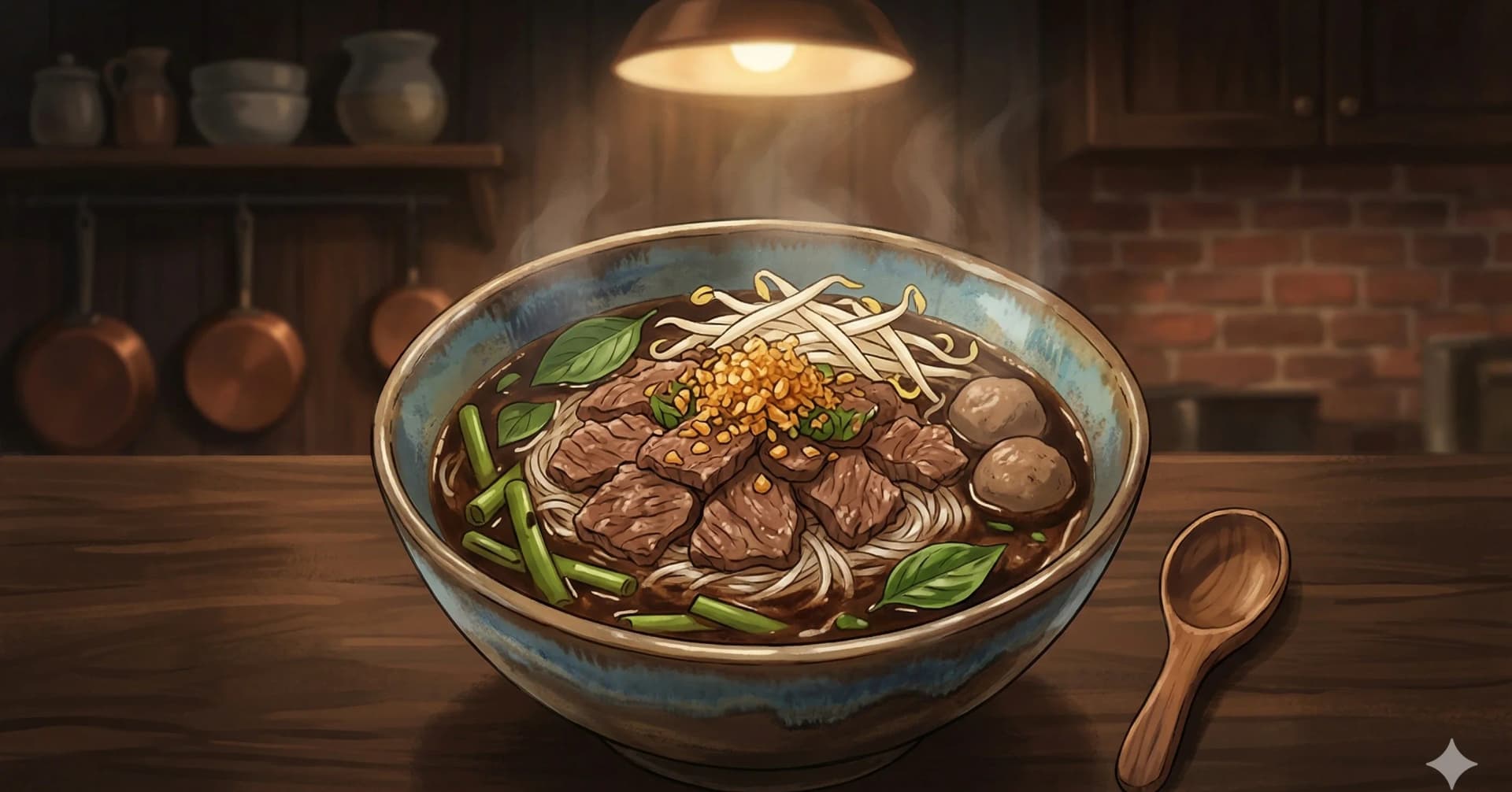
Boat Noodles (ก๋วยเตี๋ยวเรือ)
3 hours 15 minutes
 Easy
EasyCross-Cultural · China
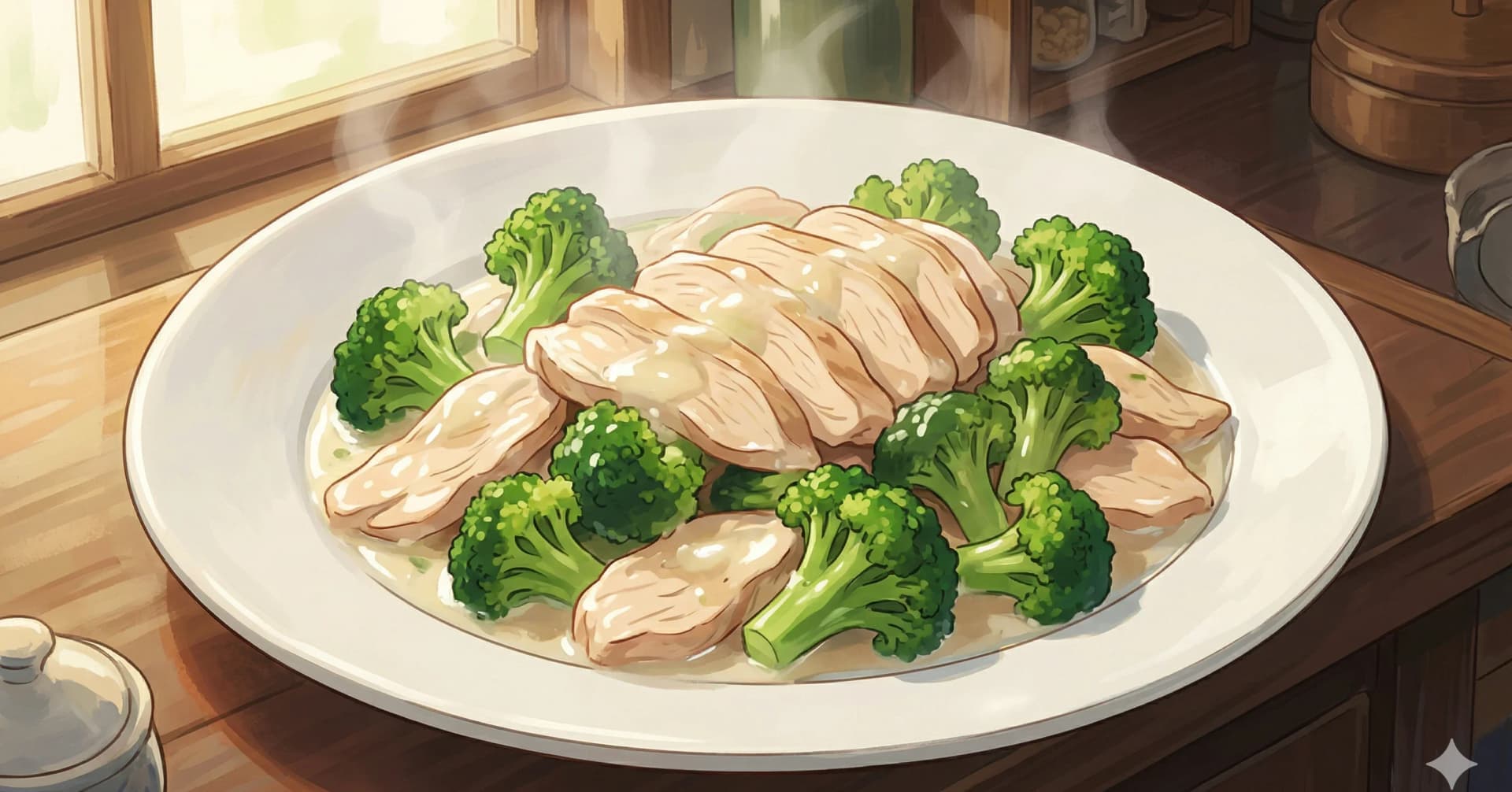
Chicken and Broccoli in White Sauce (白汁鸡花椰)
45 minutes
 Easy
EasyTraditional Chinese Medicine · China
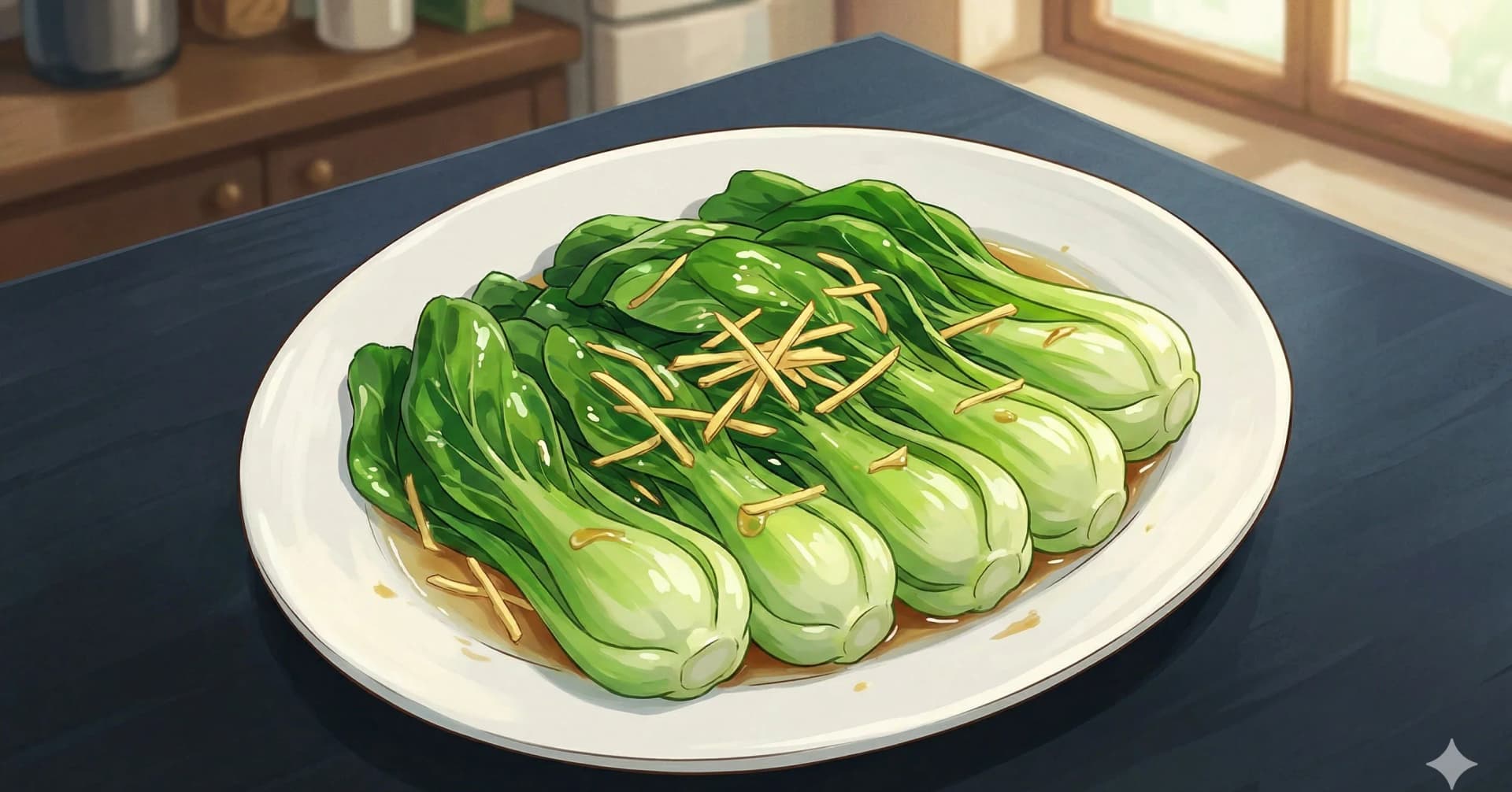
Bok Choy in Ginger Sauce (姜汁白菜)
6 minutes
 Easy
EasyIndonesian Cuisine
Bubur Ayam (Indonesian Chicken Rice Porridge)
1 hour 10 minutes
Ratings & Comments
Ratings & Comments
Ratings
Share your thoughts on this recipe.
Sign in to rate and comment