Cross-Cultural · China
Chinese Steamed Eggs (蒸蛋)
Silky egg custard steamed with warm water, chicken bouillon, and a drizzle of oil, the Chinese comfort food that feels like home
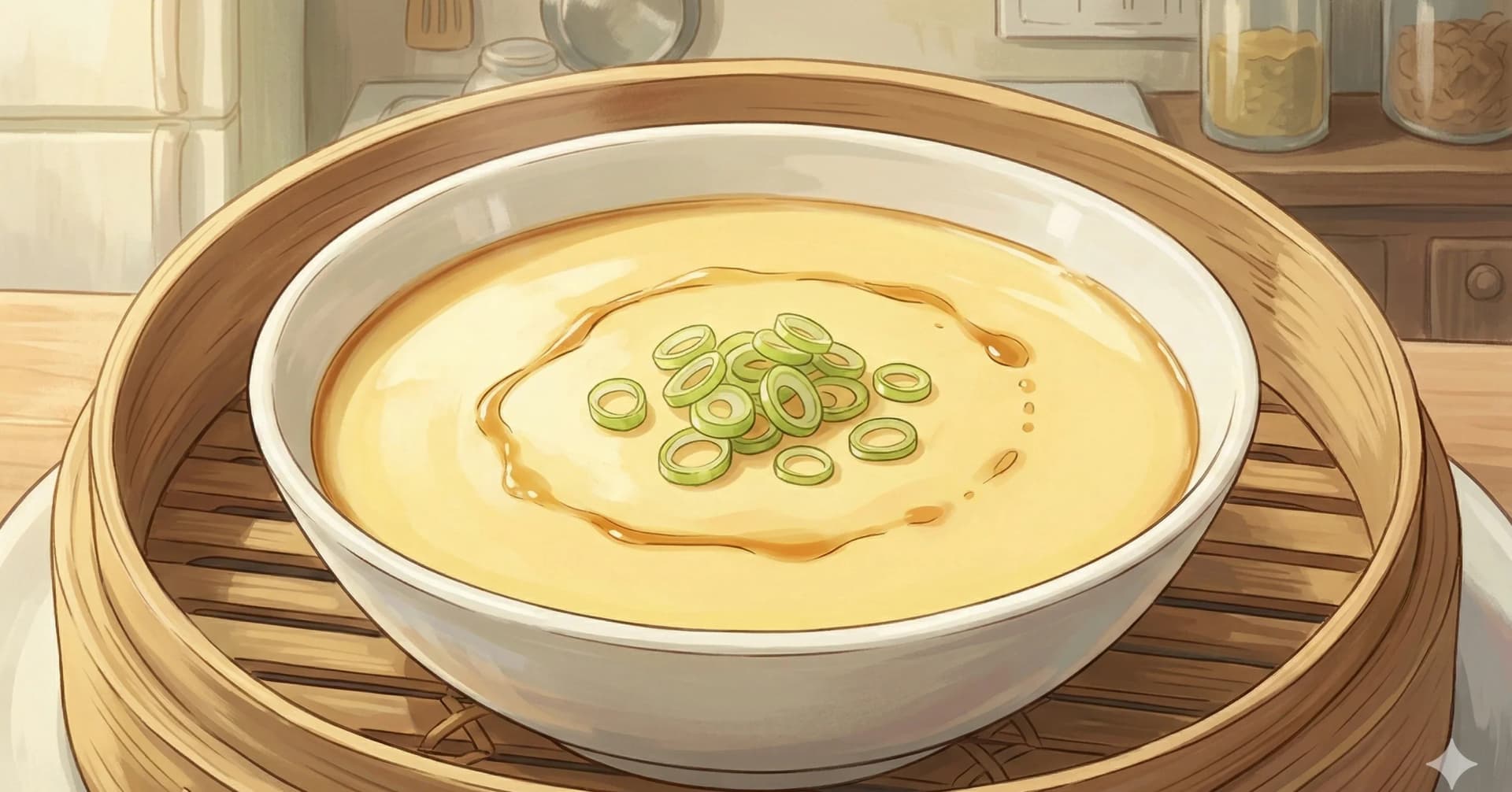
Chinese steamed eggs are one of those dishes that looks like nothing and tastes like everything. It is a savory egg custard, smooth and silky, the kind of food that soothes a sore throat, pleases a fussy child, and satisfies a tired adult who does not feel like cooking. The technique is four eggs, two cups of warm water, a little salt and chicken bouillon, and ten minutes in a steamer. The result is a custard so tender it trembles when you touch the bowl.
The ratio is the key: half a cup of warm water for every egg. The water must be warm, around 35 to 45 degrees Celsius, not hot and not cold. Hot water would scramble the eggs on contact. Cold water takes longer to steam and produces a denser texture. Warm water integrates smoothly and produces the lightest, most delicate custard.
The steaming has two phases. High heat until the water in the steamer returns to a full boil, then a drop to a gentle simmer for about eight minutes. High heat the whole time creates bubbles and craters in the surface. The simmer lets the custard set gently and evenly. When done, the custard should jiggle like gelatin when you shake the bowl, not ripple like liquid. A tablespoon of oil goes in with the eggs, which adds richness and helps the surface stay smooth. Scallions and a dash of white pepper go on at the end, and optionally a drizzle of soy sauce or oyster sauce.
At a Glance
Yield
4 servings
Prep
5 minutes
Cook
10 minutes
Total
15 minutes
Difficulty
Easy
Ingredients
- 4large eggs
- 2 cupswarm water, 35-45°C / 95-115°F
- 1/2 tspsalt
- 1/2 tspchicken bouillon powder
- 1 tbspneutral oil
- 2scallion stalks, chopped, for garnish
- 1 dashwhite pepper
Method
- 1
Set up steamer. Place a rack in a wok with enough water so the bowl sits partially submerged. Remove the bowl, cover, and bring water to a boil.
- 2
Mix eggs. Crack eggs into a bowl. Add salt, chicken bouillon, and oil. Beat with a fork until combined.
- 3
Add warm water. Pour a quarter of the warm water into the eggs and mix until bubbles form. Add the rest and mix again.
- 4
Steam. Place the bowl in the steamer on high heat. When the water returns to a boil (1-4 min), reduce to a simmer. Cook 8 minutes.
- 5
Test doneness. Gently shake the wok. The custard should jiggle like gelatin, not ripple like liquid. If still liquid, steam 1-2 min more.
- 6
Garnish with chopped scallion and white pepper. Optionally drizzle with soy sauce or oyster sauce. Serve.
Key Ingredient Benefits
Eggs: A near-complete protein food and one of the few natural sources of vitamin D. Two large eggs provide about 12 g of protein, choline (essential for liver and brain function), lutein and zeaxanthin (eye health), and B12. The gentle steaming method here preserves nutrients that high-heat methods like frying can degrade. The 1:2 egg-to-water ratio produces a tender custard with about 6 g of protein per serving.
Warm water (or stock): The hidden critical ingredient. Warm water (35-45°C) helps the eggs set into a uniform texture and dissolves any salt or bouillon evenly. Cold water takes too long to come up to temperature in the steamer; boiling water scrambles the eggs on contact. The water is what creates the silky, jiggly custard texture — without enough water the result is dense and rubbery.
Chicken bouillon powder (or dashi): Adds the umami depth that distinguishes a great steamed egg from a bland one. Chicken bouillon is the everyday Chinese choice; dashi (Japanese kelp-bonito stock) makes this dish into Japanese chawanmushi. Even a small amount makes a meaningful difference.
White pepper: Used over black pepper because it does not leave visible dark specks in the pale custard. Provides a gentle, floral, slightly fermented warmth that suits the delicate texture.
Scallions and sesame oil: The classic two-part garnish, added after steaming. Sliced scallion greens add a fresh allium note and the only visual color in the dish. A few drops of toasted sesame oil add nutty depth and a glossy finish. A drizzle of light soy sauce is the traditional third element.
Why This Works
The 1:2 ratio of egg to warm water creates a custard tender enough to eat with a spoon but firm enough to hold its shape when sliced. Too little water produces something dense and rubbery, more like a frittata than a custard. Too much water and the proteins cannot form a stable network, leaving the center liquid. The ratio is non-negotiable for the textbook texture.
The water temperature matters more than home cooks expect. Warm water (35-45°C, body temperature) preserves the eggs' delicate proteins while allowing salt and bouillon to dissolve evenly. Cold water creates a long temperature ramp inside the steamer that produces uneven setting. Hot water partially cooks the eggs on contact, creating visible streaks of scrambled egg in the finished custard.
Straining the egg mixture through a fine sieve before steaming is the difference between a glass-smooth surface and a pockmarked one. The strainer catches the chalazae (those ropy white strands attached to yolks) and any air bubbles introduced during mixing. Both would create imperfections in the finished texture.
The shift from high heat to a gentle simmer is the most important step. High heat throughout would cause the egg proteins to contract rapidly, squeezing out water and creating a honeycomb of air pockets. Gentle heat allows the proteins to set slowly and evenly, trapping the water within the gel matrix. The visual cue is the steam — it should be gentle and continuous, not vigorous and rolling.
Covering the dish (plastic wrap pierced with a few small holes, or a plate placed loosely on top) prevents condensation droplets from falling onto the custard surface, which would leave visible pockmarks. Restaurant kitchens often use a thin plastic film stretched tightly across the dish — the same principle as covering creme brulee during baking.
Substitutions & Variations
Dashi version (chawanmushi): Replace the warm water with dashi stock and omit the chicken bouillon. Add a piece of poached chicken, a shrimp, a slice of shiitake, and a piece of fish cake at the bottom of the cup before pouring in the egg mixture. This produces Japanese chawanmushi, traditionally steamed in individual lidded cups.
Seafood version: Place 3 to 4 raw shrimp or several fresh clams in the bottom of the dish before pouring in the egg mixture. They cook through during steaming and add a sweet, oceanic note.
Richer custard: Replace half the water with unsweetened soy milk for a creamier, slightly denser custard. Some versions use evaporated milk for an even richer mouthfeel.
Meat floss topping (Taiwanese): Top the finished custard with a generous pile of pork floss (rou song) and a drizzle of soy sauce. The crunchy, savory floss against the silky custard is one of the great textural contrasts.
Chinese sausage version: Layer thin slices of lap cheong (Chinese sausage) on top before steaming. The fat from the sausage renders into the custard, adding sweet-savory depth.
Without chicken bouillon: Substitute with a pinch of MSG (controversial but traditional), or a small amount of dashi, or a few drops of light soy sauce added before steaming. Simply increasing the salt produces a flat result.
Egg-to-water ratio variations: Some Cantonese cooks prefer a 1:1.5 ratio (slightly firmer), some Korean cooks prefer 1:2.5 (looser). The 1:2 ratio represents the middle ground.
Steaming time adjustments: For a deeper dish, increase steaming time by 1 to 2 minutes per centimeter of additional depth. For individual ramekins, reduce time to 8 to 9 minutes total.
Serving Suggestions
Chinese steamed eggs is a side dish, designed to accompany steamed rice and a heavier main rather than stand alone. The custard is the gentle counterpoint to bolder flavors. Classic pairings include mapo tofu (the rich, numbing-spicy stew benefits from a cooling foil), tomato egg stir-fry (the two egg dishes side-by-side is a classic home-style combination), and kung pao chicken.
For a simple weeknight meal, serve with steamed rice, a stir-fried green like bok choy, and a quick protein. The steamed eggs do the work of making the table feel complete.
For children or anyone unwell, serve on its own over a small bowl of congee. This is one of the foundational comfort foods of Chinese home cooking — the dish parents make for children too young, too sick, or too tired for anything else.
The dish is also a regular addition to elaborate Chinese banquets, where it provides textural relief between heavier courses. In Cantonese seafood restaurants, it often appears as a palate cleanser before fish.
Pair with hot Chinese tea (jasmine, oolong, or pu-erh). The dish is too gentle for wine or beer; tea is the only appropriate beverage.
Storage & Reheating
Refrigerator: Best eaten immediately. The custard begins to weep liquid (synaeresis) as it cools and stored. If you must store, refrigerate in an airtight container for up to 1 day. Texture suffers but the dish remains edible.
Reheating: Gentle steaming for 2 to 3 minutes is the only method that produces acceptable results. Microwaving works but tends to produce uneven hot spots and can curdle the custard. Avoid stovetop reheating entirely.
Make-ahead components: The egg mixture can be beaten and strained up to 30 minutes ahead, but should be steamed within an hour for the best texture. Garnish ingredients (sliced scallion, sesame oil, soy sauce) can be prepped a day in advance.
Freezing: Not recommended under any circumstances. Egg custards do not survive freezing.
Serving temperature: The dish is meant to be eaten hot or warm. Cold steamed eggs lose their characteristic silky texture and develop an off-putting rubbery quality. Plan to serve within 10 to 15 minutes of finishing the steaming.
Cultural Notes
Chinese steamed eggs (zhēng dàn in Mandarin, jing daan in Cantonese, 蒸蛋) is one of the most fundamental dishes in Chinese home cooking. The dish exists in essentially every Chinese cuisine — Cantonese, Sichuan, Shandong, Hokkien, Hakka, Teochew — with minor regional variations in toppings, ratios, and accompaniments. It is the dish that almost every Chinese child grew up eating, often the first solid food a baby is introduced to after rice congee.
The dish reflects two core principles of Chinese home cooking. The first is yǎng shēng (養生, "nourishing life") — the idea that food should be gentle and easily digested, especially for children, the elderly, and the unwell. Steamed eggs are the canonical yǎng shēng food: high in nutrition, soft, easy on the digestive system, and quick to prepare.
The second principle is technique-forward simplicity. Steamed eggs uses three ingredients (eggs, water, salt) and a single technique (gentle steaming), yet the difference between a great version and a mediocre one is enormous. The dish is often used to evaluate a cook's skill — the smoothness of the surface, the jiggle of the custard, the absence of pockmarks — and Chinese cooking schools sometimes use steamed eggs as a basic technique exam.
The dish is closely related to Japanese chawanmushi (茶碗蒸し, "tea bowl steam"), which substitutes dashi for water and adds ingredients like shrimp, chicken, and ginkgo nuts. Both dishes likely descend from a common ancestral preparation in ancient China that spread along with Buddhism in the 6th-9th centuries CE. The Korean gyeran-jjim (계란찜) is another close cousin, typically served in a clay pot with a looser, more billowy texture.
In Taiwan and Hong Kong, a popular variation tops the custard with rou song (meat floss), creating a sweet-savory dish that has become a signature of Taiwanese breakfast cafes. In Sichuan, the custard is sometimes topped with chili oil and Sichuan pepper for a spicy version that subverts the dish's gentle reputation.
Nutrition Facts
Calories: 108kcal (5%)|Total Carbohydrates: 1g (0%)|Protein: 6.5g (13%)|Total Fat: 8.6g (11%)|Saturated Fat: 1.9g (10%)|Cholesterol: 186mg (62%)|Sodium: 449mg (20%)|Dietary Fiber: 0.2g (1%)|Total Sugars: 0.4g
You Might Also Like
 Easy
EasyCross-Cultural · China
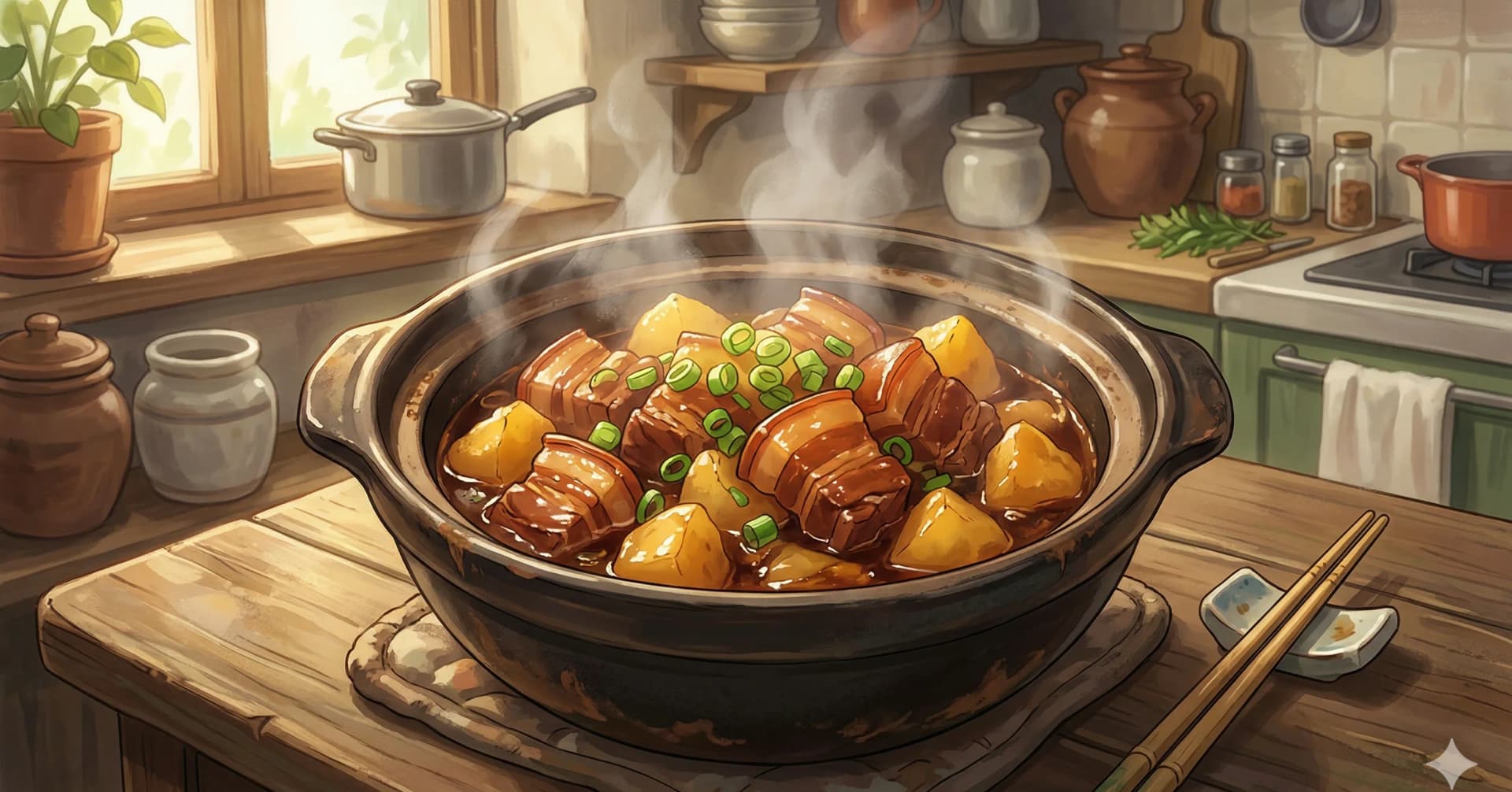
Braised Pork with Potatoes (薯仔炆豬肉)
40 minutes
 Easy
EasyTraditional Chinese Medicine · China
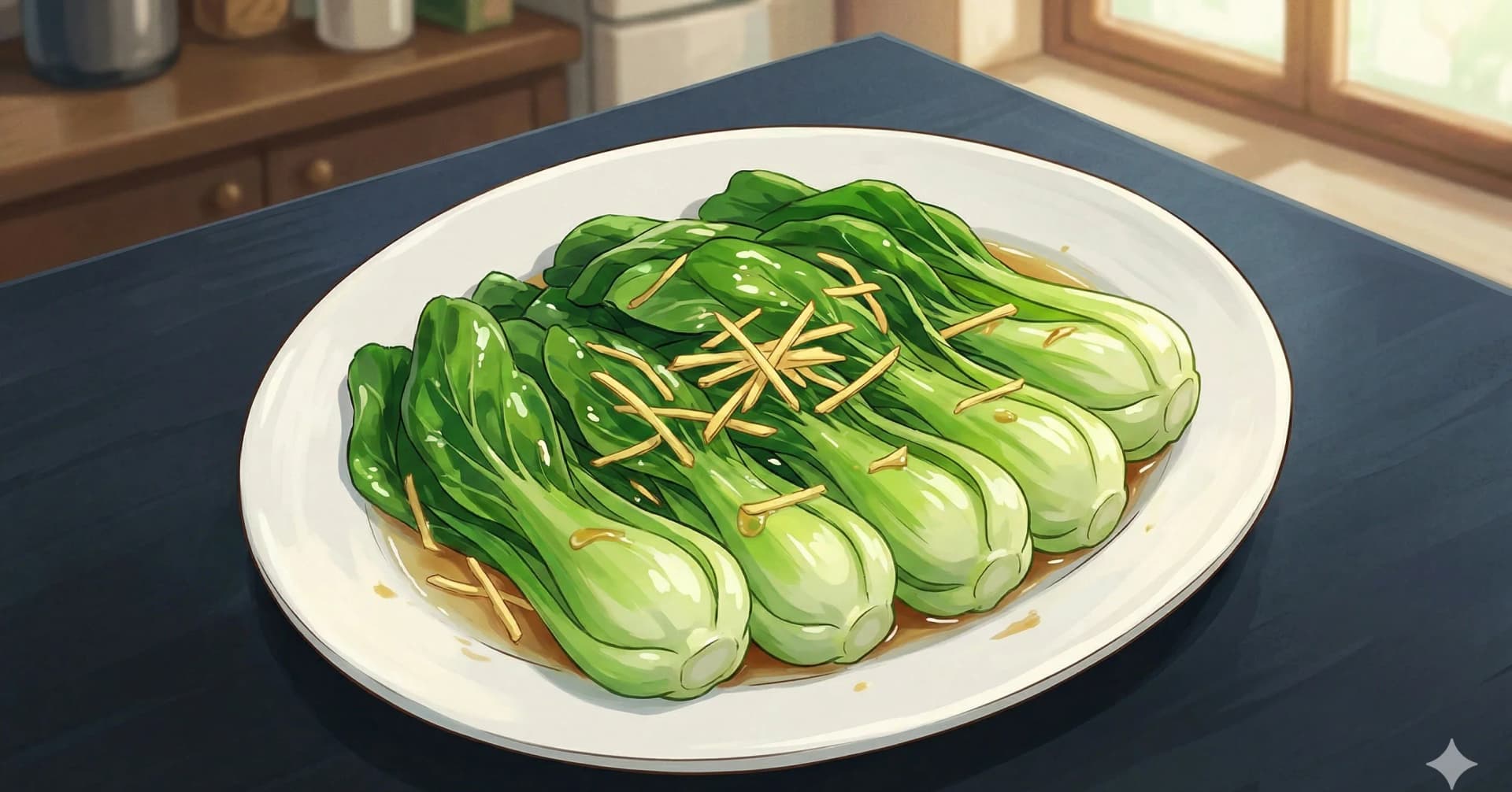
Bok Choy in Ginger Sauce (姜汁白菜)
6 minutes
 Easy
EasyCross-Cultural · China
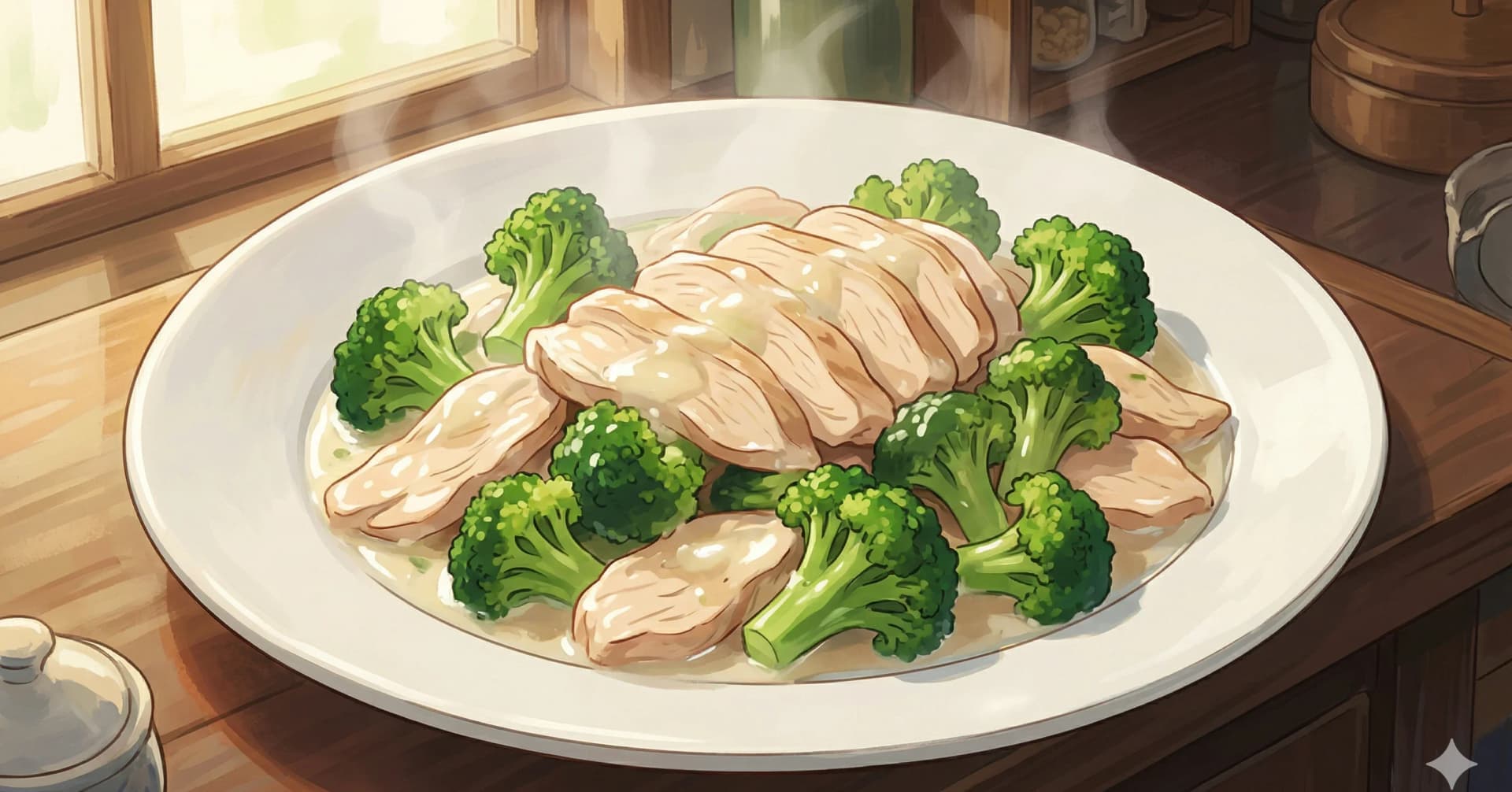
Chicken and Broccoli in White Sauce (白汁鸡花椰)
45 minutes
 Easy
EasyTraditional Chinese Medicine · China
Beef Brisket Soup (清湯牛腩)
145 minutes
Ratings & Comments
Ratings & Comments
Ratings
Share your thoughts on this recipe.
Sign in to rate and comment