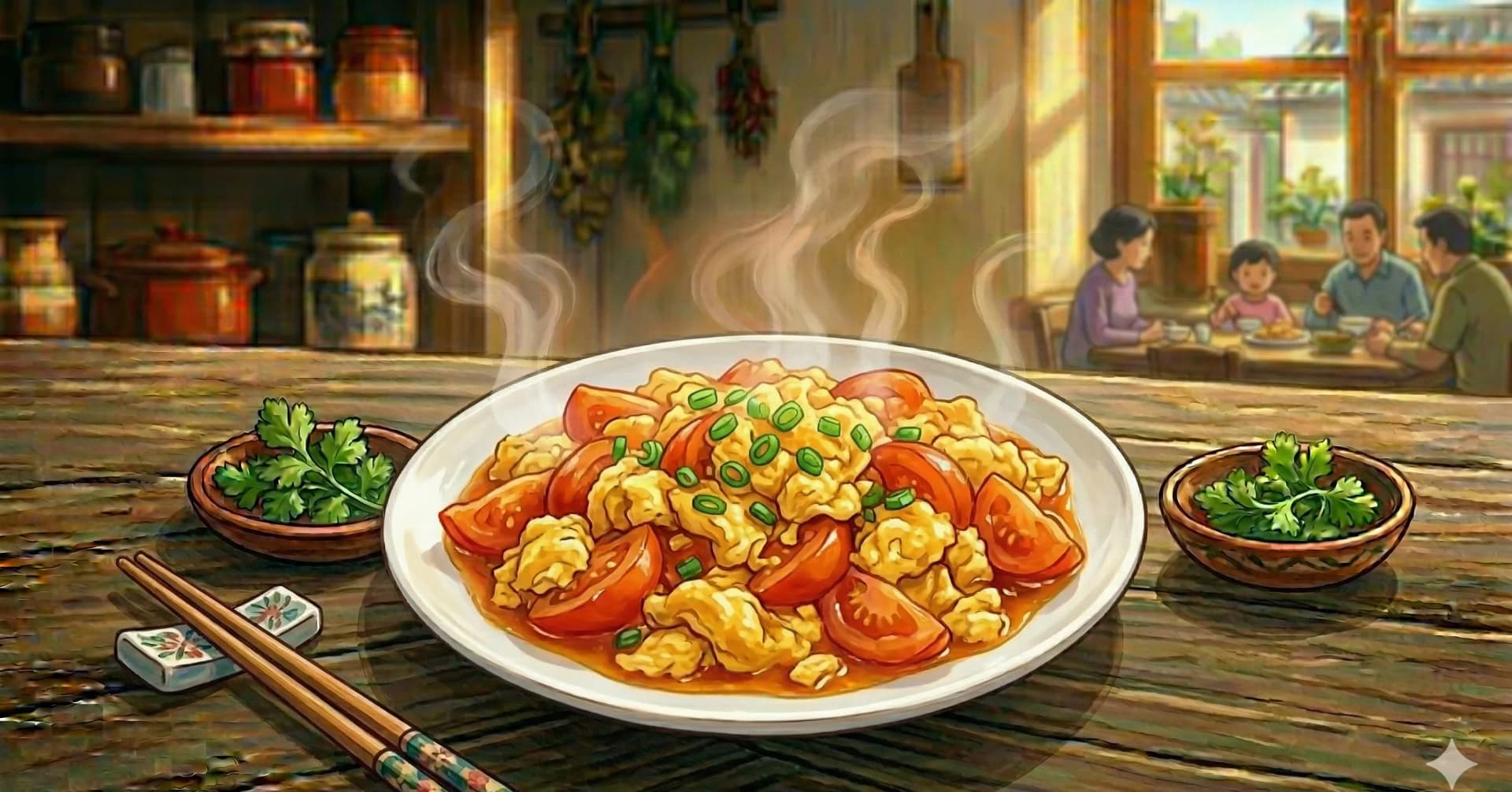
Chinese Cuisine
Xi Hong Shi Chao Dan (Tomato Egg Stir-Fry)
China's beloved home-cooked staple of silky scrambled eggs in a sweet-savory tomato sauce
There is a particular shade of orange-red that exists only in a well-made tomato egg stir-fry, where the bright acidity of ripe tomatoes meets the golden warmth of barely set eggs. It is not a restaurant dish, not a banquet centerpiece, not the kind of thing that earns culinary awards. It is the dish that almost every Chinese person can recall eating in childhood, the one that tastes like home no matter where you are.
Xi hong shi chao dan is arguably the most cooked dish in China. Ask ten families for their version and you will get ten slightly different answers: some add ketchup, some add sugar, some cook the eggs soft and pillowy, others prefer them firmer. What unites them all is the interplay between the jammy, sweet-tart tomatoes and the rich, barely cooked eggs. The dish exists in the space between a sauce and a stir-fry, and its beauty lies in its simplicity.
The one practical insight that separates a good version from a great one is cooking the eggs and tomatoes separately before combining them. The eggs should be scrambled quickly in hot oil until they form large, soft curds, then removed. The tomatoes cook down on their own, releasing their juices into a natural sauce. When the eggs return to the wok at the end, they absorb just enough of that sauce to become silky without turning rubbery. Rushing this process, cooking everything together from the start, produces a muddled dish with tough eggs and undercooked tomatoes.
At a Glance
Yield
3 servings
Prep
10 minutes
Cook
10 minutes
Total
20 minutes
Difficulty
Easy
Ingredients
Egg Ingredients
- 4large eggs
- ⅓ tspsalt
- 1 tspShaoxing wine
- 2 tbspvegetable oil
Stir-Fry Ingredients
- 1 lbripe tomatoes (about 3 medium), cut into wedges
- 1 tbspvegetable oil
- 2 clovesgarlic, minced
- 2⅓ tspsugar
- ½ tspsalt
- 1 tsplight soy sauce
- 2 tbspwater
- 1 tspsesame oil
- 2scallions, green parts sliced, for garnish
Method
- 1
Crack the eggs into a bowl. Add the salt and Shaoxing wine. Beat with chopsticks or a fork until the yolks and whites are just combined but not overly frothy. A few streaks of unmixed white are fine and will create more interesting texture in the finished curds.
- 2
Score a shallow X on the bottom of each tomato. Blanch in boiling water for 15 seconds, then transfer to cold water. Peel the skins, which should slip off easily. Cut the tomatoes into wedges about 2 cm wide.
- 3
Heat a wok over high heat until wisps of smoke appear. Add 30 ml of vegetable oil and swirl to coat. The oil should shimmer and ripple.
- 4
Pour in the beaten eggs all at once. Let them sit undisturbed for about 5 seconds, until the edges begin to set and puff. Then use a spatula to gently push the eggs from the edges toward the center in large, sweeping motions, creating big, soft curds.
- 5
When the eggs are about 70 percent set, still slightly wet and glossy on top, immediately transfer them to a clean plate. They will continue cooking from residual heat. Do not overcook them at this stage.
- 6
Wipe the wok clean if needed and return it to medium-high heat. Add 15 ml of vegetable oil. Add the garlic and stir for 10 seconds, just until fragrant.
- 7
Add the tomato wedges. Let them cook without stirring for about 1 minute, allowing the cut surfaces to sear slightly. Then stir and press gently with the spatula.
- 8
Cook the tomatoes for 3 to 4 minutes, stirring occasionally, until they soften and begin to break down into a chunky sauce. Some pieces should retain their shape while others dissolve into liquid. You will see the juices pool in the bottom of the wok, turning a deep orange-red.
- 9
Add the sugar, salt, light soy sauce, and water. Stir to combine and let the sauce simmer for about 1 minute, until it thickens slightly and the flavors meld.
- 10
Taste the sauce. It should be a balance of sweet and savory with a gentle tang from the tomatoes. Adjust sugar or salt as needed.
- 11
Return the scrambled eggs to the wok. Fold them gently into the tomato sauce, breaking up any very large curds but keeping the eggs in substantial pieces. Cook for 30 seconds, just long enough for the eggs to absorb some of the sauce and warm through.
- 12
Remove from heat. Drizzle with sesame oil and give one gentle toss.
- 13
Transfer to a serving plate and scatter the sliced scallion greens over the top. Serve immediately with steamed rice.
Key Ingredient Benefits
Tomatoes are one of the best dietary sources of lycopene, a carotenoid antioxidant. Research suggests that cooking tomatoes in oil significantly increases the bioavailability of lycopene compared to eating them raw, making this dish a particularly effective way to consume this nutrient.
Eggs provide complete protein and are a source of choline, which is associated with cognitive function and liver health. The combination of eggs and tomatoes provides both fat-soluble and water-soluble nutrients in a single dish.
Why This Works
Cooking the eggs and tomatoes separately is the critical technique here. Eggs cooked in hot oil set quickly on the outside while remaining creamy inside, creating a contrast of textures. If the eggs were cooked together with the raw tomatoes, the moisture from the tomatoes would lower the temperature in the wok, causing the eggs to stew rather than fry. The result would be small, tough curds in a watery sauce.
The tomatoes, given time alone in the wok, undergo a controlled breakdown. The sugars caramelize slightly, the acids concentrate, and the pectin in the cell walls softens to create a natural sauce. Adding a small amount of water helps this process along without diluting the flavor.
Sugar is not optional here. Ripe tomatoes have their own sweetness, but a small amount of added sugar rounds out the acidity and brings the dish into balance. Think of it as seasoning, not sweetening.
Substitutions & Variations
- Tomatoes: In winter, canned whole peeled tomatoes (drained and chopped) are a better option than flavorless out-of-season fresh tomatoes. Some families add a tablespoon of ketchup for deeper color and sweetness.
- Eggs: This dish really needs eggs. There is no good substitute that captures the same soft, custardy texture.
- Additions: Some versions include a pinch of white pepper or a few drops of rice vinegar at the end for extra brightness. Others fold in a handful of fresh basil or cilantro.
- Richer version: A tablespoon of butter stirred in at the end adds a luxurious quality that pairs surprisingly well with the tomato sauce.
Serving Suggestions
This is a rice dish at its core. Spoon the tomato and egg mixture directly over steamed jasmine rice and let the sauce soak in. It is also wonderful ladled over plain congee for breakfast or a light meal. For a fuller dinner, pair it with a stir-fried green vegetable and a simple soup.
Storage & Reheating
This dish is best eaten immediately, as the eggs will continue to firm up as they sit. Leftovers can be stored in an airtight container in the refrigerator for up to 2 days. Reheat gently in a skillet over medium-low heat, adding a splash of water to refresh the sauce. The eggs will not be as soft as when freshly made, but the flavor will still be excellent. Not recommended for freezing.
Cultural Notes
Xi hong shi chao ji dan (西紅柿炒雞蛋, "tomato stir-fried egg") is the everyday Chinese home dish that virtually every cook in China learns to make and that virtually every Chinese household eats at least once a week. The dish is one of the most reliable comfort foods of Chinese cuisine: ripe tomatoes are stir-fried with scrambled eggs, sugar, salt, and sometimes a splash of soy sauce, finished with chopped scallion, served over white rice. The combination of sweet tart tomato, soft just-set egg, and steamed rice is a foundational pairing of Chinese family cooking that crosses every regional cuisine and appears in slight variations in nearly every Chinese household.
The dish has a specific cultural place as the guo min cai (国民菜, "national dish") of contemporary China. Surveys of Chinese university students and young professionals consistently rank tomato-and-egg as the dish they remember most from childhood and the first dish they learn to cook when they leave home. The dish is taught in middle school home economics classes, demonstrated by Chinese mothers and grandmothers to young cooks, and served at workers' canteens, university cafeterias, and home tables across the country. The ingredients are inexpensive year-round, the technique is forgiving, and the result is reliably satisfying.
The technique is faster than it looks. The eggs are beaten with a pinch of salt and a small splash of cold water (which keeps them tender), poured into a hot oiled wok, and stirred briefly with chopsticks just until they form soft fluffy curds, then removed before they overcook. Tomatoes (typically Roma or beefsteak, scored, briefly blanched, and peeled, then cut into wedges) go into the same wok with a touch more oil, garlic if desired, and are stir-fried until they release their juice. A teaspoon of sugar balances the tomato's acidity, a pinch of salt seasons, and the eggs are returned to the wok and folded gently into the tomato mixture for the last few seconds before chopped scallion goes on top. The whole stir-fry takes four minutes from cracking the eggs to plating.
Nutrition Facts
Calories: 214kcal (11%)|Total Carbohydrates: 11g (4%)|Protein: 10g (20%)|Total Fat: 15g (19%)|Saturated Fat: 3.3g (16%)|Cholesterol: 248mg (83%)|Sodium: 841mg (37%)|Dietary Fiber: 1.9g (7%)|Total Sugars: 7.3g
You Might Also Like
 Easy
EasyTraditional Chinese Medicine · China
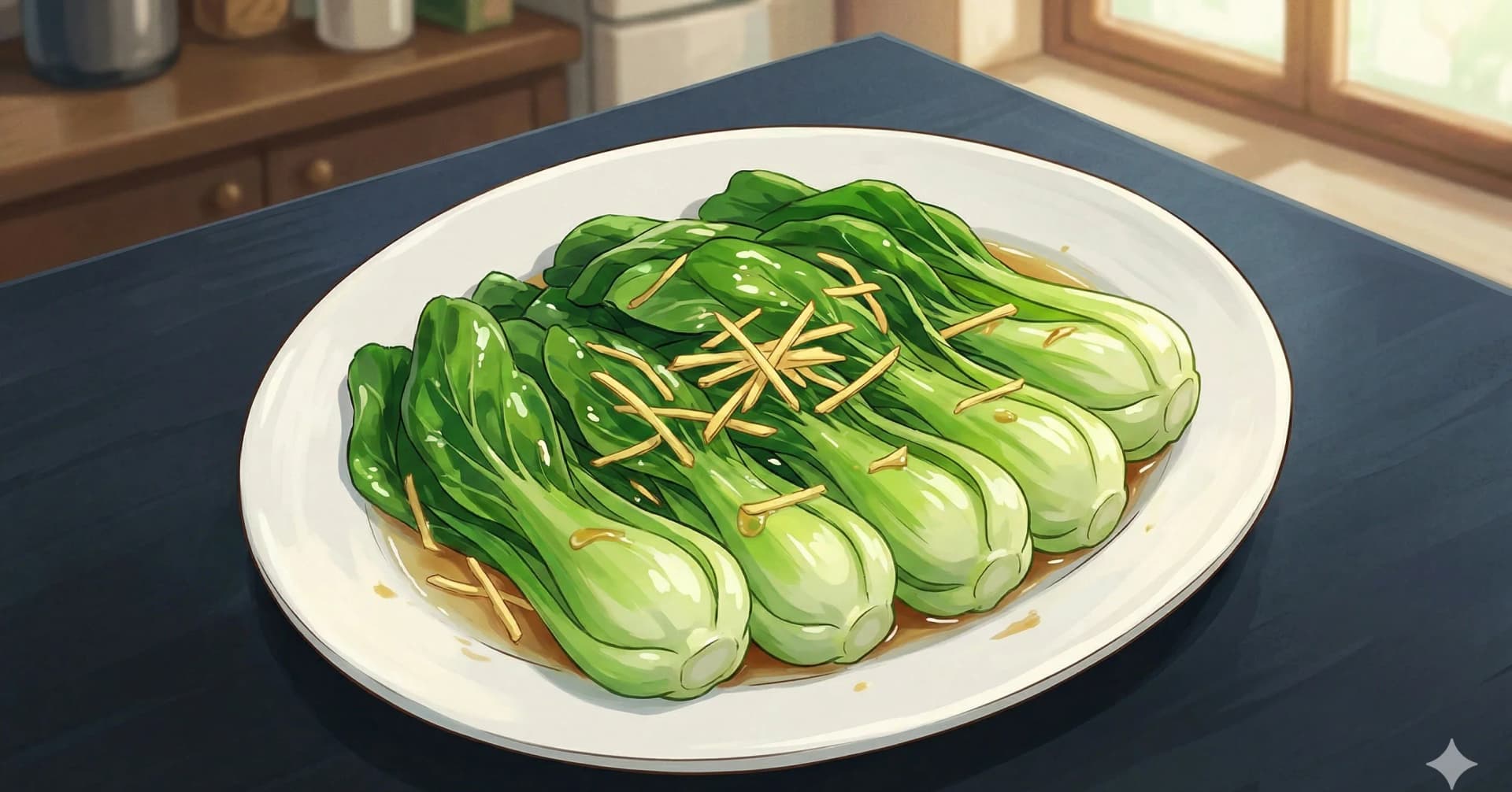
Bok Choy in Ginger Sauce (姜汁白菜)
6 minutes
 Easy
EasyCross-Cultural · China
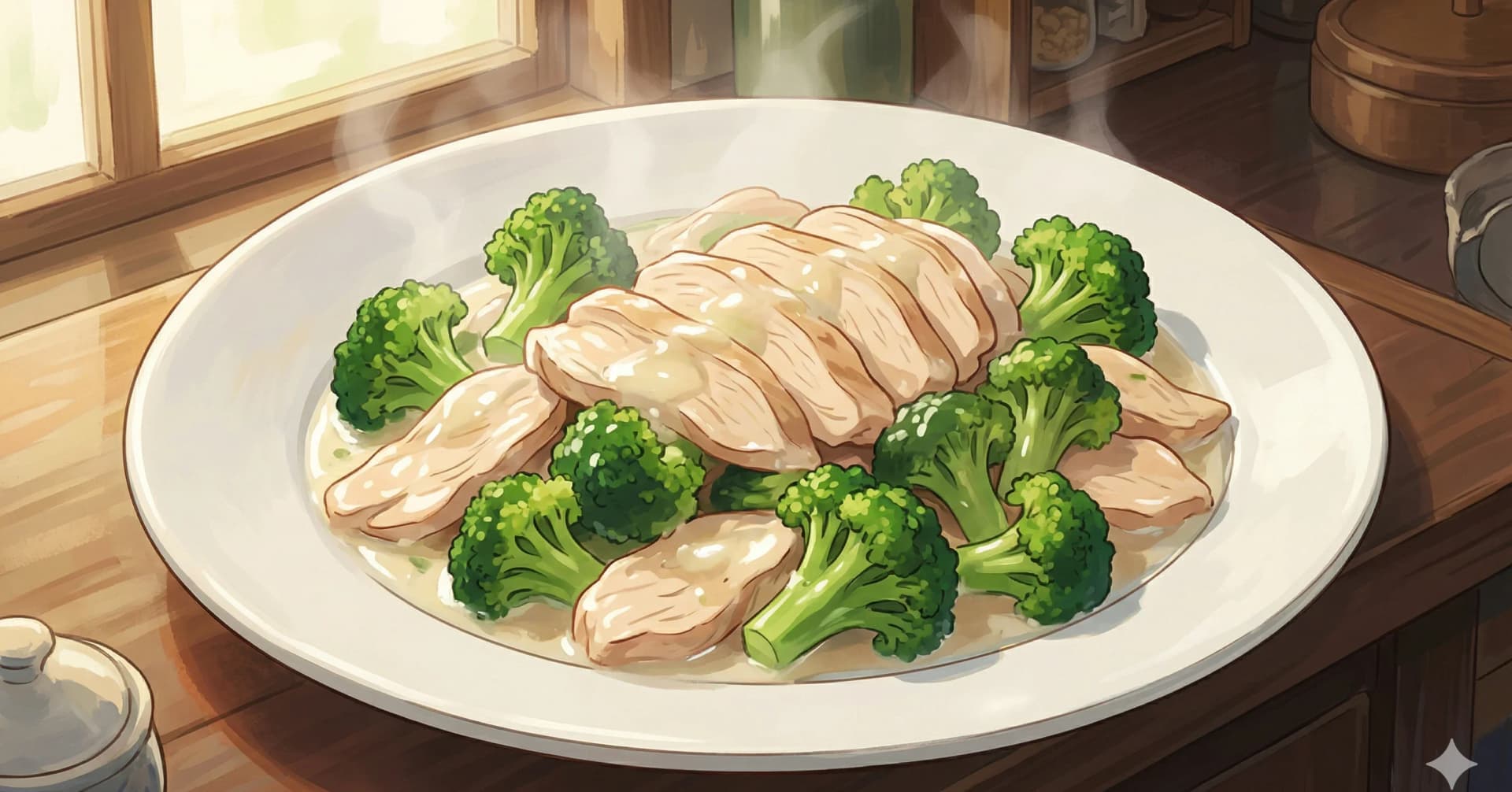
Chicken and Broccoli in White Sauce (白汁鸡花椰)
45 minutes
 Medium
Chinese Cuisine
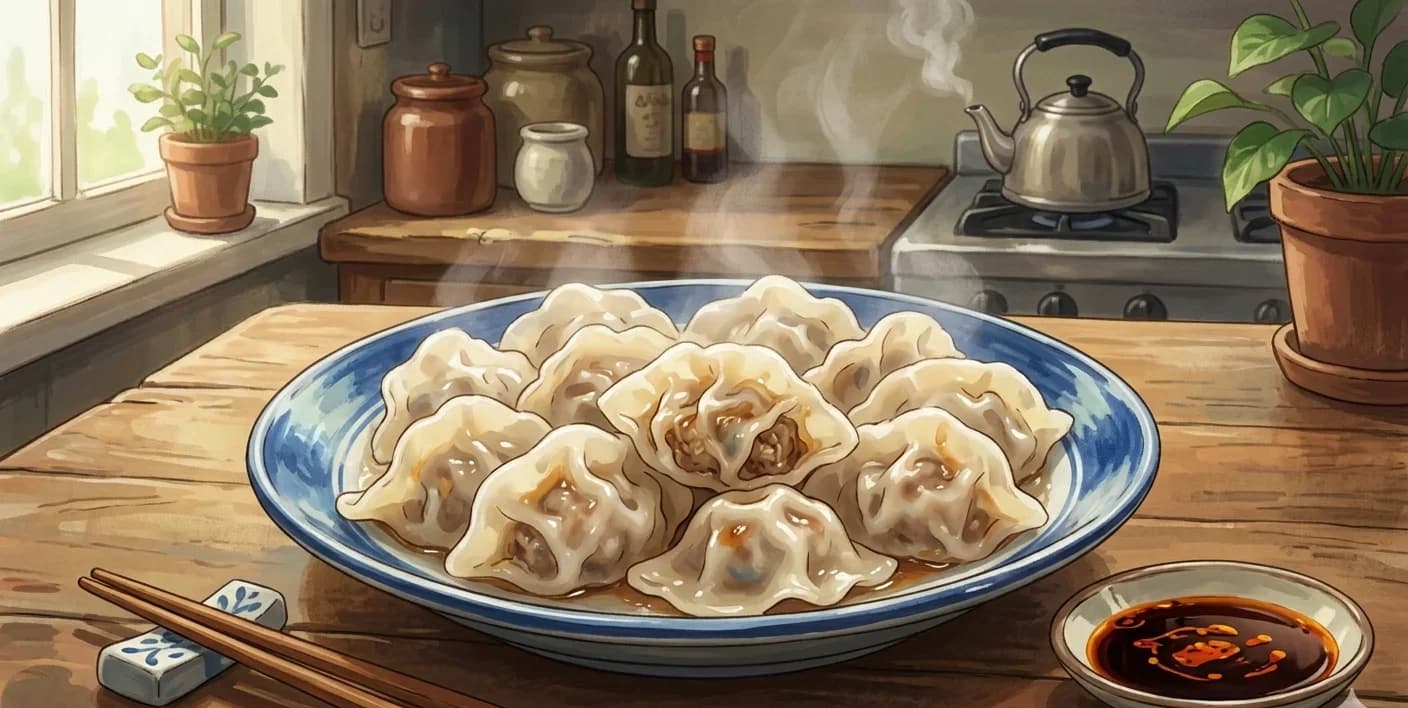
Niu Rou Yang Cong Jiaozi (Beef and Onion Dumplings)
60 minutes
 Medium
Chinese Cuisine
Bai Qie Ji (White Cut Chicken)
4 hours 30 minutes
Ratings & Comments
Ratings & Comments
Ratings
Share your thoughts on this recipe.
Sign in to rate and comment