Ayurveda · India
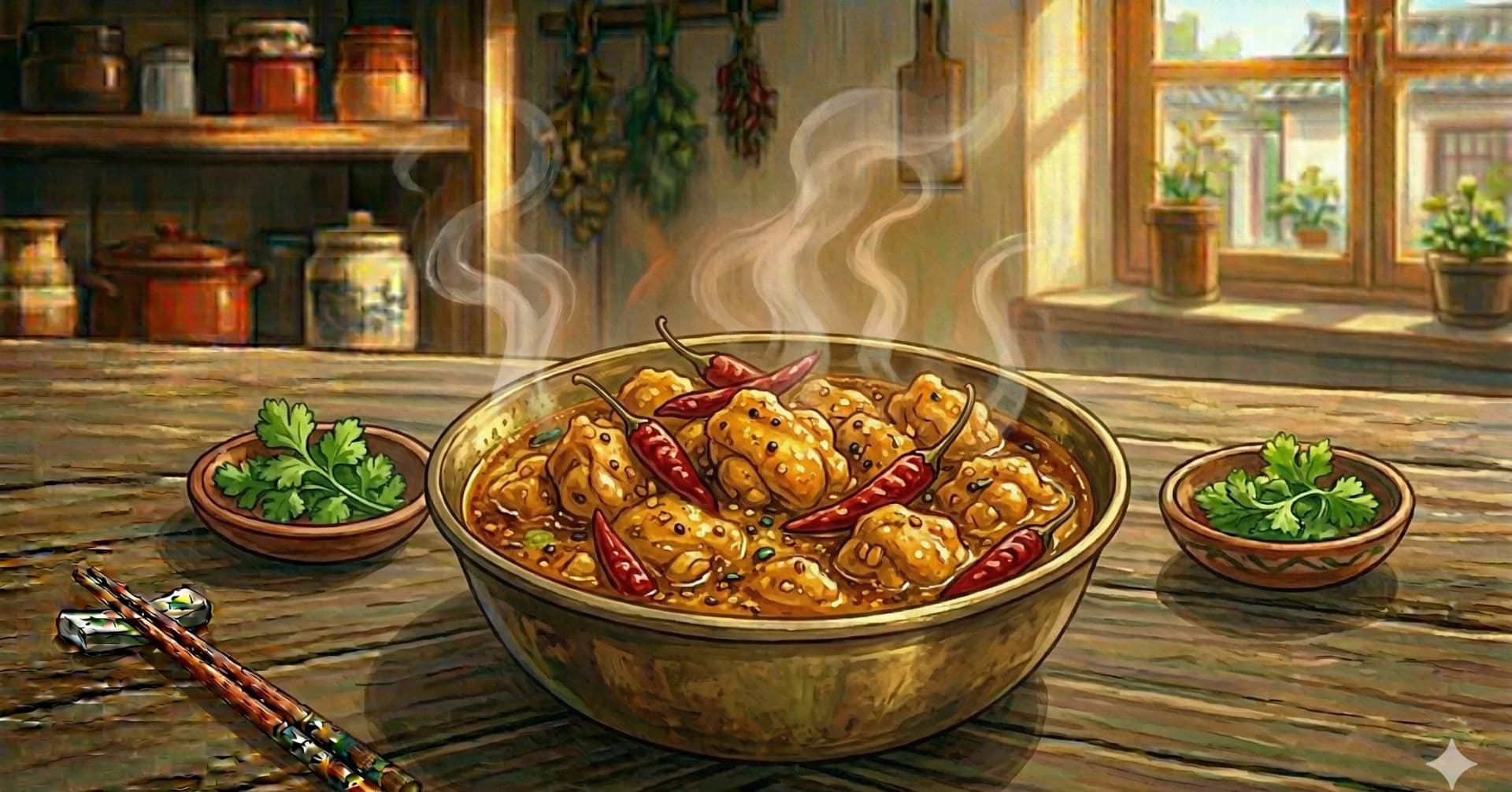
Chicken Achar
Pickle-spiced chicken braised in smoked mustard oil with fenugreek seeds and vinegar, the Punjabi dish that turns condiment logic into a main course
Achar is the Urdu and Hindi word for pickle, and across South Asia, pickle is not a cucumber in brine. It is a category unto itself: vegetables or fruit preserved in mustard oil with a heavy hand of whole spices, chili, and something sour. Every household has its own recipe, its own jar, its own opinions about whose mother's mango achar is the best. Chicken achar takes that entire flavor system and applies it to fresh chicken, cooking the meat in the same spices and fat that would normally preserve raw mangoes for a year.
The dish starts with mustard oil, and the mustard oil starts with a ritual. You heat it until it smokes, a gray haze rising from the surface as the harsh, acrid compounds in the raw oil burn off. Then you turn off the heat completely and let it cool for a few minutes. Then you bring it back to heat and add the fenugreek seeds. This smoking and cooling process is not optional. Raw mustard oil tastes bitter and unpleasant. Smoked mustard oil is pungent, warm, and deeply aromatic, with a sinus-clearing sharpness that no other cooking fat can replicate.
The fenugreek seeds are used sparingly, a heaped teaspoon at most. They provide the bitter, maple-like undertone that makes anything taste like achar. The ginger-garlic-onion paste cooks down until nearly dry before the chicken goes in, which concentrates the flavors and prevents a watery gravy. The vinegar is added at the end, after the heat is off, so its sharpness stays intact. This is a family recipe from a Punjabi kitchen, the kind of dish that gets made without measuring and tastes slightly different every time, which is part of the point.
At a Glance
Yield
4 to 6 servings
Prep
15 minutes
Cook
30 minutes
Total
45 minutes
Difficulty
Medium
Ingredients
Marinade Ingredients
- 2.2 lbschicken (1 kg), bone-in pieces preferred, or boneless thighs cut into large chunks
- 1 tspsalt
- 1 tspred chili powder
Curry Ingredients
- 1/2 cupmustard oil, about 120 ml
- 1 heaped tspfenugreek seeds, methi dana
- 9 ozonion, made into a paste or very finely chopped
- 3.5 ozginger-garlic paste, roughly equal parts ginger and garlic
- 2long dried red chilies, whole
- —salt and red chili powder, to taste
- 2-3 tbspmalt vinegar, white vinegar works fine
Method
- 1
Marinate the chicken. Rub the chicken pieces with the salt and chili powder. Set aside while you prepare the rest.
- 2
Smoke the mustard oil. Pour the mustard oil into a wok or kadai and heat it over high heat until it begins to smoke, a visible gray haze rising from the surface. This takes 3 to 4 minutes. Turn the heat off completely and let the oil cool for 3 to 4 minutes.
- 3
Bloom the fenugreek. Turn the heat back on to medium for about 20 seconds. Add the fenugreek seeds. They will darken quickly, turning reddish-brown in about 30 seconds. Stir constantly. Do not let them blacken.
- 4
Cook the base. Add the ginger-garlic paste and onion paste. Add the whole dried red chilies and a little salt and chili powder. Lower the heat and cook until most of the water has evaporated and the paste has thickened, about 10 to 12 minutes. The oil should start to separate.
- 5
Braise the chicken. Add the marinated chicken to the wok while the heat is still low. Stir to coat. Cover with a lid and cook for about 10 minutes for boneless, 20 to 25 minutes for bone-in, stirring once or twice. The chicken will release its own liquid. Do not add water.
- 6
Add the vinegar and finish. Turn off the heat. Add the vinegar and stir through. Cover and let sit for at least 5 minutes before serving. The dish is even better the next day.
Key Ingredient Benefits
Mustard Oil: Rich in monounsaturated and polyunsaturated fats, including alpha-linolenic acid (an omega-3 fatty acid). Used in Ayurvedic medicine for centuries as a warming oil to stimulate digestion and circulation. The smoking process burns off allyl isothiocyanate, transforming the harsh raw oil into a pungent, deeply flavored cooking fat.
Fenugreek Seeds (Methi Dana): One of the most clinically studied plants for blood sugar management. Multiple randomized trials show fenugreek reduces fasting glucose and improves insulin sensitivity. In Ayurveda, fenugreek is classified as heating, used to stimulate digestive fire. The seeds provide the bitter, maple-like signature of achari cooking.
Vinegar: Added off-heat to preserve its volatile acidity. The sourness connects this cooked dish to the raw, pungent world of actual South Asian pickle, where acid serves as both preservative and flavoring agent.
Why This Works
The smoking and cooling of mustard oil volatilizes allyl isothiocyanate, the compound that makes raw mustard oil harsh. What remains is pungent, warm, and deeply aromatic. Fenugreek seeds in small quantities provide the bitter-sweet depth that defines achari flavor. Cooking the onion-ginger-garlic paste until nearly dry (bhuno) concentrates the aromatics into an intense paste. Adding vinegar off-heat preserves its sharp tang. The three non-negotiable elements of achari cooking are mustard oil, whole pickling spices, and a sour element.
Substitutions & Variations
For full achari spice blend, add 1 tsp each mustard seeds, nigella seeds (kalonji), fennel seeds, and cumin seeds with the fenugreek. Lemon juice or amchur (dried mango powder) can replace vinegar. Boneless thighs cook in 10 minutes vs 20-25 for bone-in. Without mustard oil, use vegetable oil plus mustard powder and a drizzle of mustard oil at the end. Some Punjabi versions add 2-3 pureed tomatoes for a thicker gravy.
Serving Suggestions
Serve with hot naan, paratha, or roti. For a complete Punjabi meal, add steamed basmati rice, a simple dal, and a cooling raita of yogurt with cucumber and mint.
Storage & Reheating
Store for up to 4 days. The flavor improves significantly overnight. Warm gently in a covered pan. The mustard oil may solidify when cold, which is normal. Freezes well for up to 2 months.
Cultural Notes
Achar (pickle) is a cornerstone of South Asian cuisine. Chicken achar takes the entire flavor system of mustard oil pickling and applies it to fresh chicken. It is a winter dish in many households, as mustard oil is considered warming. The flavor improves the next day, making it ideal for dinner parties.
Nutrition Facts
Calories: 354kcal (18%)|Total Carbohydrates: 11g (4%)|Protein: 31g (62%)|Total Fat: 20g (26%)|Saturated Fat: 3.8g (19%)|Cholesterol: 125mg (42%)|Sodium: 446mg (19%)|Dietary Fiber: 2.2g (8%)|Total Sugars: 2.1g
You Might Also Like
Ratings & Comments
Ratings & Comments
Ratings
Share your thoughts on this recipe.
Sign in to rate and comment