Tamil Nadu · Indian Cuisine
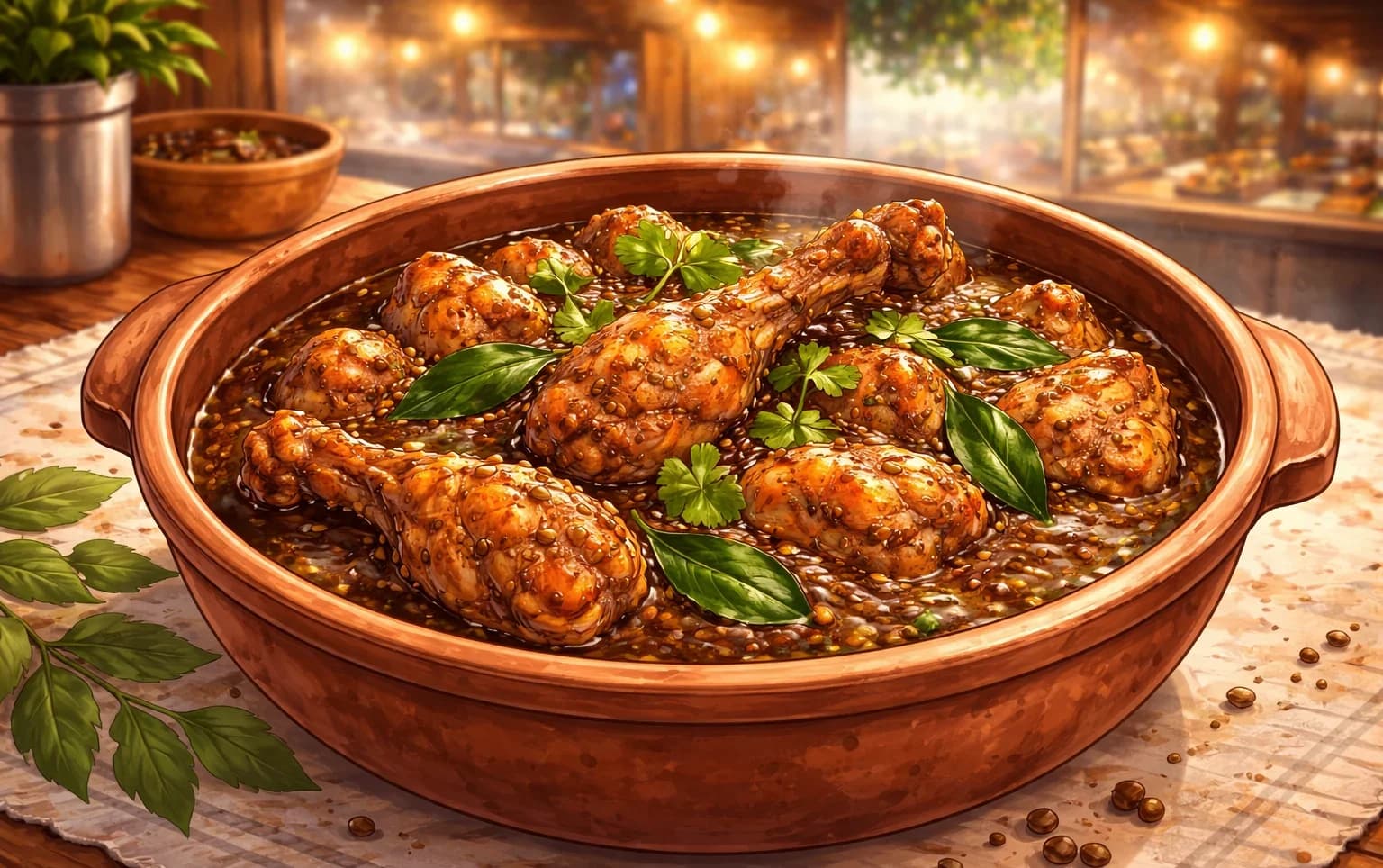
Chicken Chettinad
A fiery, aromatic chicken curry built on freshly ground black pepper and roasted spices
The first thing you notice is the pepper. Not the rounded warmth of a European pepper sauce but a direct, climbing heat that starts at the back of the tongue and opens outward, layered with the dark sweetness of star anise and the licorice edge of fennel. Chicken Chettinad is one of the most intensely spiced dishes in the South Indian repertoire, and it comes from a community whose cooking reflects centuries of spice trading across Southeast Asia.
The Chettiars, a merchant community from the Sivaganga and Ramanathapuram districts of Tamil Nadu, built their wealth on trade routes that connected the Coromandel Coast to Burma, Malaya, and beyond. Their kitchens absorbed influences from those journeys: star anise, which is uncommon in most Indian regional cooking, appears here alongside kalpasi (stone flower lichen) and marathi mokku (dried flower pods). The result is a spice profile unlike anything else on the subcontinent.
What makes this dish work, beyond the spice blend, is the method of dry-roasting each spice before grinding. Roasting activates volatile oils that raw grinding cannot access, creating a depth of flavor that distinguishes Chettinad cooking from preparations that rely on pre-ground powders. The coconut is roasted in the same pan until it darkens, adding a nutty bitterness that tempers the heat.
The practical insight here is patience with the masala paste. It must cook until the oil separates, which means the raw edge of the ground spices has been driven off and the paste has concentrated into something that will coat the chicken rather than slide off it. Rush this step and the curry tastes sharp and dusty. Give it the time it needs and the flavors fuse into something cohesive and powerful.
At a Glance
Yield
Serves 4
Prep
30 minutes
Cook
45 minutes
Total
1 hour 15 minutes
Difficulty
Medium
Ingredients
Spice Paste Ingredients
- 1¾ tbspblack peppercorns
- 1½ tbspcoriander seeds
- 2⅓ tspcumin seeds
- 2½ tspfennel seeds
- 3star anise
- 4dried red chillies (such as Byadgi or Kashmiri)
- 1¾ tsppoppy seeds
- 1¾ ozfresh grated coconut (or frozen grated coconut, thawed)
- 1small piece of mace (about 1 g)
- 3cloves
- 2green cardamom pods
- 1small cinnamon stick (about 3 cm)
Curry Ingredients
- 1¾ lbbone-in chicken, cut into medium pieces (skin on or off, your preference)
- 3 tbspneutral oil or sesame oil
- 1⅔ tspmustard seeds
- ¾ cupfresh or dried curry leaves (about 2 sprigs)
- 5½ ozonions (about 1 onion), finely sliced
- 1 tbspginger-garlic paste
- 7 oztomatoes (about 1½–2 tomatoes), finely chopped
- 1⅞ tspturmeric
- 1 tspsalt
- ⅞ cupwarm water
- ½ cupfresh coriander leaves, roughly chopped
Method
- 1
Dry-roast the whole spices. Place a heavy pan over medium-low heat. Add the black peppercorns (15 g), coriander seeds (8 g), cumin seeds (5 g), fennel seeds (5 g), star anise (3), dried red chillies (4), poppy seeds (5 g), mace (1 g), cloves (3), cardamom pods (2), and cinnamon stick (1). Stir continuously for 3 to 4 minutes until the spices darken slightly and release a complex, toasted fragrance that fills the kitchen. The coriander seeds will pop gently. Remove to a plate and let cool completely.
- 2
Roast the coconut. In the same dry pan, add the grated coconut (50 g) and stir over medium-low heat for 3 to 4 minutes until it turns a deep golden brown and smells nutty. Watch carefully as coconut burns quickly once it begins to color. Remove to the plate with the spices.
- 3
Grind the spice paste. Transfer the cooled roasted spices and coconut to a spice grinder or mortar. Grind to a fine paste, adding 50 to 75 ml of water to help the blade move. The paste should be smooth and dark, with the gritty texture of the pepper and coconut barely perceptible. Set aside.
- 4
Prepare the chicken. Pat the chicken pieces dry with a cloth or paper towel. Season lightly with a pinch of salt and the turmeric (5 g). Toss to coat evenly and set aside while you build the masala.
- 5
Start the tempering. Heat the oil (45 ml) in a wide, heavy-based pan or kadai over medium-high heat. When the oil shimmers, add the mustard seeds (5 g). They will begin to crackle and pop within seconds. Immediately add the curry leaves (2 sprigs), standing back as they sputter in the hot oil.
- 6
Cook the onions. Add the sliced onions (150 g) to the pan. Stir well to coat in the oil and cook for 10 to 12 minutes over medium heat, stirring occasionally, until the onions turn a deep golden brown and smell sweet. Do not rush this step. The caramelization of the onions provides the base sweetness that balances the aggressive pepper heat of the finished curry.
- 7
Add ginger-garlic paste. Add the ginger-garlic paste (15 g) and stir for 2 minutes until the raw smell softens and the paste begins to turn golden at the edges.
- 8
Cook the tomatoes. Add the chopped tomatoes (200 g) and stir to combine. Cook over medium heat for 6 to 8 minutes, mashing the tomatoes down with the back of a spoon, until they break down completely and the mixture thickens. The oil will begin to separate from the edges of the masala, forming small pools of color.
- 9
Add the ground spice paste. Add the entire ground spice paste to the pan. Stir well to combine with the onion-tomato masala. Cook over medium-low heat for 5 to 6 minutes, stirring frequently to prevent sticking. The paste will darken further and the raw, sharp smell of ground spices will transform into something round and deeply aromatic. This is the critical moment. If the paste sticks, add a tablespoon of water and scrape the bottom of the pan.
- 10
Brown the chicken. Add the seasoned chicken pieces to the pan. Stir to coat each piece thoroughly in the masala. Increase heat to medium-high and cook for 4 to 5 minutes, turning the pieces once, until the chicken is sealed on the outside and the masala clings to the surface rather than pooling at the bottom.
- 11
Braise the chicken. Add the warm water (200 ml) and the remaining salt (6 g). Stir, bring to a gentle boil, then reduce heat to low. Cover and cook for 20 to 25 minutes, stirring once halfway through, until the chicken is cooked through and tender. The gravy should be thick and dark, coating the chicken rather than being soupy. If it is too thin, remove the lid for the last 5 minutes to reduce.
- 12
Check the seasoning. Taste the gravy. Adjust salt if needed. The heat from the pepper should be prominent but not overwhelming, balanced by the sweetness of the caramelized onion and the nuttiness of the roasted coconut. If the heat is sharper than you want, a small squeeze of lime juice can soften it.
- 13
Finish and rest. Remove from heat. Scatter the fresh coriander (10 g) over the top. Cover and let the curry rest for 5 minutes before serving. This resting period allows the spices to settle and the flavors to become more cohesive.
Key Ingredient Benefits
Black pepper (Piper nigrum) is the defining spice of Chettinad cooking. It contains piperine, a compound that research suggests may enhance the bioavailability of other nutrients, particularly curcumin from turmeric. In Tamil folk medicine, black pepper has traditionally been used as a digestive aid and warming agent. The quantity used in this dish is significantly higher than most North Indian curries, reflecting the Chettinad palate.
Star anise (Illicium verum) is unusual in South Indian cooking and reflects the Chettiar community's trade connections with Southeast Asia. It contains anethole, the same compound found in fennel and anise, which has been studied for potential anti-inflammatory properties. Its presence in this dish creates a distinctive aromatic signature that sets Chettinad curries apart from other Indian regional preparations.
Fennel seeds contribute a sweet, licorice-like note that tempers the heat of the pepper. In Ayurvedic tradition, fennel is considered a cooling spice, traditionally used to balance pungent and heating ingredients in a preparation. Research has explored fennel's potential role in digestive comfort, though findings remain preliminary.
Curry leaves are used abundantly in South Indian cooking and are particularly important in Chettinad preparations. They provide a distinctive citrusy, nutty aroma that is not replicable with any substitute. Curry leaves are traditionally associated with blood sugar regulation in South Indian folk medicine, an area that has attracted some research interest.
Why This Works
The dry-roasting of whole spices before grinding is the foundation of Chettinad cooking and the technique that separates this curry from versions made with pre-ground powders. Roasting triggers Maillard reactions in the spice compounds and activates volatile oils that are locked inside the cellular structure of raw seeds. Black peppercorns, for instance, contain piperine, which becomes more bioavailable and aromatic when heated. The result is a spice paste with a depth and complexity that no amount of raw powder can replicate.
Roasting the coconut to a deep golden brown introduces bitter, caramelized sugar compounds that act as a counterbalance to the aggressive heat of the black pepper. Without this roasted bitterness, the curry would read as simply hot. With it, the heat is layered, with sweetness and darkness underneath.
The extended cooking of the spice paste in oil ensures that the raw, dusty quality of freshly ground spices is cooked out entirely. Spices that are ground but not properly fried retain a sharpness that sits on top of the dish rather than integrating into it. The oil separation point signals that the water from the tomatoes has evaporated and the spice compounds have begun to fry in fat, which changes their flavor profile fundamentally.
Substitutions & Variations
Kalpasi and marathi mokku: Traditional Chettinad recipes include kalpasi (stone flower lichen) and marathi mokku (dried flower pods), which add a musky, earthy depth. These are available in Indian specialty stores. If you find them, add 2 to 3 small pieces of each to the dry-roasting step. The dish is complete without them but gains another layer of complexity with their inclusion.
Bone-in versus boneless: Bone-in chicken (thighs and drumsticks) produces a richer, more flavorful gravy as the bones release collagen during cooking. Boneless chicken thighs can be used for convenience, but reduce the braising time to 12 to 15 minutes to avoid overcooking.
Heat adjustment: The black pepper quantity here produces a genuinely fiery curry. For a milder version, reduce the peppercorns to 8 g and increase the fennel seeds to 8 g to maintain aromatic complexity without the same level of heat.
Vegetarian version: Replace the chicken with 400 g of paneer cubes (added at the very end, simmered for just 5 minutes) or 500 g of mixed vegetables (potato, cauliflower, green beans), adjusting the braising time accordingly.
Serving Suggestions
Chicken Chettinad is traditionally served with steamed rice, idiyappam (string hoppers), appam, or parotta (flaky layered flatbread). The richness and heat of the curry pairs well with something plain and starchy that can absorb the gravy. A simple cucumber raita or sliced raw onion with lime juice on the side provides relief from the pepper heat. In a fuller Tamil Nadu meal, it would sit alongside rasam, a dry vegetable poriyal, and papadum.
Storage & Reheating
Chicken Chettinad keeps well in the refrigerator for up to 3 days and freezes successfully for up to 2 months. The spice flavors deepen and meld overnight, and many cooks consider this a better dish on day two. Reheat gently over medium-low heat with a splash of water if the gravy has thickened. Avoid boiling vigorously as this can cause the chicken to toughen and the spice balance to shift.
Cultural Notes
Chettinad chicken curry (செட்டிநாடு கோழி குழம்பு, Chettinadu kozhi kuzhambu) is the spicy aromatic chicken curry from the Chettinad region of southern Tamil Nadu, the homeland of the Chettiar merchant community whose distinctive cuisine is one of the most celebrated regional traditions of South India. The Chettiar community historically traveled and traded extensively across Southeast Asia (Burma, Malaya, Indonesia, Vietnam) from the eighteenth century onward, and their cuisine absorbed influences from those regions while remaining anchored in Tamil cooking. The result is a cuisine that uses an unusually wide range of spices (many more than typical Tamil home cooking) and that has produced some of the most internationally recognized South Indian dishes.
The dish's signature spice profile sets it apart from other South Indian curries. The Chettinad masala blend includes a heavy hand of black peppercorns (Tellicherry peppercorns are the traditional choice), fennel seeds, cumin, coriander, fenugreek, dried red chilies, star anise, cinnamon, cloves, green and black cardamom, stone flower (kalpasi), and marathi mokku (dried caper buds). The use of stone flower and marathi mokku, two ingredients rarely seen outside Chettinad cooking, is one of the markers of an authentic Chettinad preparation. The spices are dry-roasted, then ground fresh and combined with grated coconut and shallots to form the base masala paste.
The technique builds the curry from this freshly ground masala. The paste is sautéed in coconut or sesame oil with curry leaves and small onions (sambar onions, the small purple-skinned shallots that Chettiar cooking prizes), then chicken pieces are added and seared with the masala. Tamarind water or yogurt provides the souring element, and the curry simmers for forty-five minutes to an hour until the chicken is tender and the gravy has reduced to a thick coating consistency. The dish is finished with fresh curry leaves and chopped cilantro. Chettinad chicken curry is the dish that introduced most international diners to Chettinad cuisine, and Chennai restaurants like Anjappar and Karaikudi (named for the Chettinad capital city) serve canonical versions across their multiple Tamil Nadu and global locations.
Nutrition Facts
Calories: 439kcal (22%)|Total Carbohydrates: 18g (7%)|Protein: 39g (78%)|Total Fat: 24g (31%)|Saturated Fat: 7.9g (40%)|Cholesterol: 150mg (50%)|Sodium: 738mg (32%)|Dietary Fiber: 7.4g (26%)|Total Sugars: 4.3g
You Might Also Like
Ratings & Comments
Ratings & Comments
Ratings
Share your thoughts on this recipe.
Sign in to rate and comment