Chinese Cuisine
Bao Zai Fan (Claypot Rice)
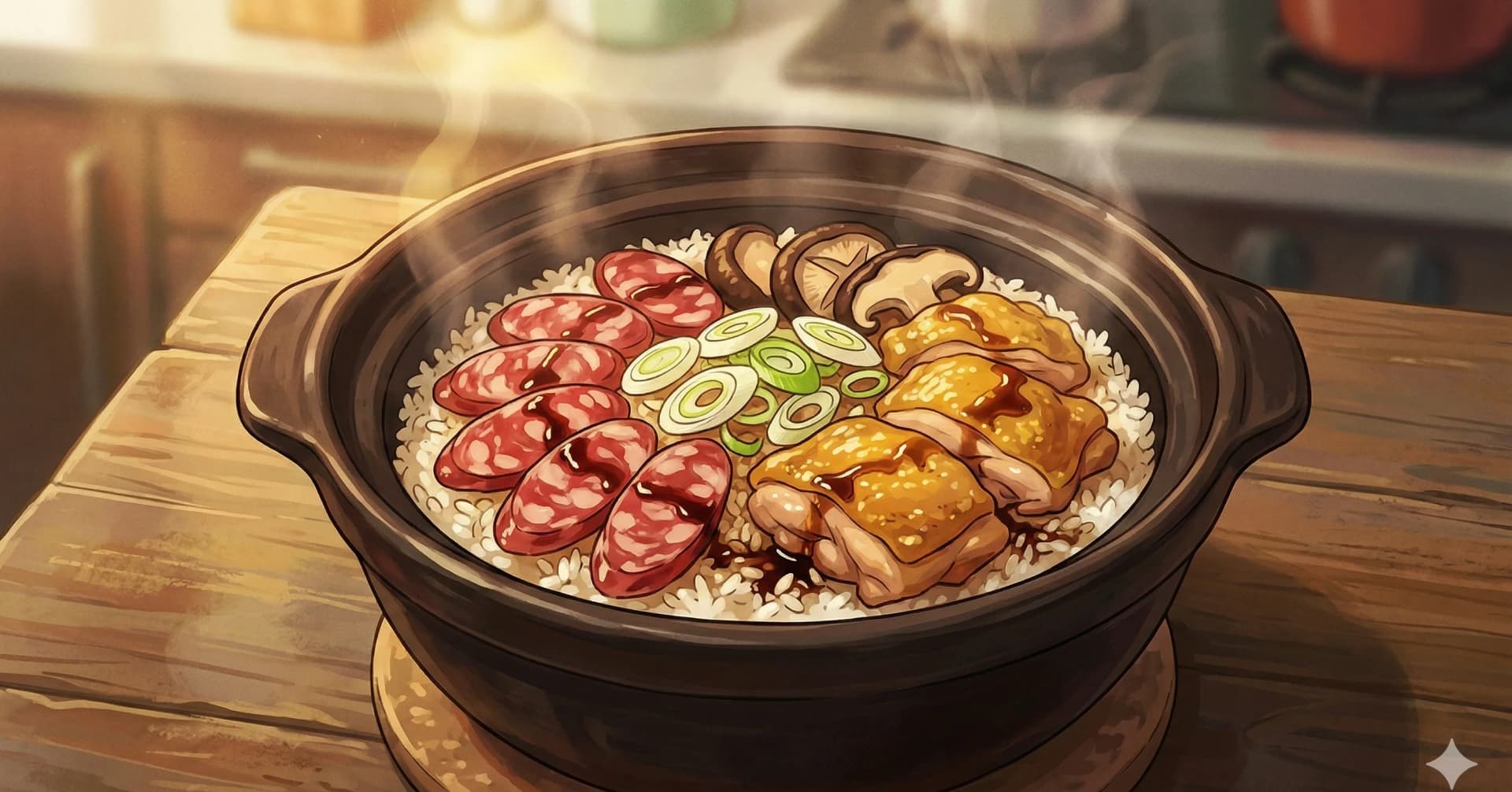
Cantonese rice cooked in a clay pot with chicken, sausage, and a crackling golden crust
There is a moment when you are cooking claypot rice that tells you everything is going right. The rice begins to crackle. Not a slow, lazy pop, but a steady, confident snapping sound that means the bottom layer is turning golden and crispy. The kitchen fills with a nutty, toasted fragrance. That crust, called the guoba, is the entire point of this dish. Without it, you just have rice with toppings. With it, you have something that makes people lean in and pay attention.
Claypot rice is a Cantonese street classic, the kind of dish served at small sidewalk stalls in Guangzhou and Hong Kong, each pot made to order over roaring gas burners. The rice cooks directly in the clay pot with just enough water to steam it through, then the toppings go on and the pot is tilted over the flame to toast the sides. Oil is drizzled around the rim to help the crust form. It requires your attention for the last few minutes of cooking, but the payoff is remarkable.
The seasoned soy sauce is what separates a good claypot rice from a great one. Instead of simply drizzling plain soy sauce over the finished rice, you make a quick aromatic reduction with shallots, ginger, garlic, and scallions simmered in a blend of light and dark soy sauce with Shaoxing wine and sugar. It concentrates and deepens in flavor, becoming something closer to a sauce than a condiment. You will have extra, which is a good thing. It keeps for weeks in the refrigerator and works beautifully on noodles, steamed vegetables, or cheung fun.
This recipe uses a traditional combination of marinated chicken, lap cheong sausage, and shiitake mushrooms, but the method is flexible. Once you learn the technique of managing the heat and toasting the crust, you can top the rice with nearly anything you like.
At a Glance
Yield
2 to 4 servings
Prep
2 hours (includes soaking)
Cook
30 minutes
Total
2 hours 30 minutes
Difficulty
Medium
Ingredients
- 6½ ozjasmine rice
- 2lap cheong (Chinese sausages)
- 2dried shiitake mushrooms, soaked in 240 ml warm water (reserve 80 ml soaking liquid)
- 2boneless, skin-on chicken thighs, cut into 2 cm pieces
- 1¼ ozoyster sauce
- 1 tbsplight soy sauce
- 1 tbspShaoxing wine
- 1 tspsugar
- ½ tspsalt
- ¼ tspwhite pepper
- 1 tbsppeanut oil (or vegetable oil)
- 1shallot, finely sliced
- 3scallions, cut into 2.5 cm pieces
- 1thumb-sized piece fresh ginger, sliced
- 5 clovesgarlic
- ⅓ cupreserved mushroom soaking liquid
- ⅓ cuplight soy sauce
- ⅓ cupdark soy sauce
- 3 tbspShaoxing wine
- 2¾ tbspsugar
- 3 tbsppeanut oil, divided
- —About 240 ml hot water
- 2scallions, thinly sliced
- 4 stalksgai lan (Chinese broccoli), trimmed and blanched (optional)
Method
- 1
Soak the rice. Rinse the jasmine rice three times in cold water, stirring with your hand to release the starch and draining each time. Cover with water by about 2.5 cm (1 inch) and soak for 2 hours. Drain thoroughly in a colander.
- 2
Soak the sausages and mushrooms. Place the lap cheong in a bowl of cold water and soak for 2 hours alongside the rice. Soak the shiitakes in 1 cup of warm water until soft. Squeeze out excess water and reserve 1/3 cup of the soaking liquid. Slice the mushrooms.
- 3
Marinate the chicken. Combine the chicken pieces with the oyster sauce, soy sauce, Shaoxing wine, sugar, salt, and white pepper. Refrigerate until ready to use.
- 4
Make the seasoned soy sauce. Heat 1 tablespoon peanut oil in a small pan over medium heat. Add the shallot, scallions, ginger, and garlic. Cook, stirring occasionally, until golden brown. Pour in the mushroom soaking liquid to deglaze. Add the light soy sauce, dark soy sauce, Shaoxing wine, and sugar. Bring to a boil, reduce heat, and simmer until the liquid reduces by about two-thirds, roughly 5 minutes. Let the sauce cool with the aromatics still in it. Once cool, strain into a bowl, discarding the solids. Set aside.
- 5
Start the rice. Add the drained rice to the claypot with 1 tablespoon peanut oil. Stir to coat the grains. Pour in about 1 cup of hot water, just enough to cover the rice by about half a centimeter (1/4 inch). Do not add too much water. The rice has already absorbed moisture during soaking.
- 6
Cook covered. Place the claypot on a gas burner over medium heat. Cover and cook until steam begins to escape from the lid. Using chopsticks, poke several ventilation holes through the rice.
- 7
Add the toppings. Spread the marinated chicken, sliced mushrooms, and whole lap cheong sausages in an even layer over the rice. Cover immediately and reduce heat to low. Cook for 10 minutes.
- 8
Toast the crust. After 10 minutes, the water should be absorbed and you should hear the rice beginning to crackle at the bottom. With the lid still on, drizzle 2 tablespoons peanut oil evenly around the inner rim of the pot. Turn the heat up to medium. Listen for the crackling to intensify. Toast the bottom for about 1 minute.
- 9
Toast the sides. Using oven mitts, carefully lift the claypot and tilt it so one side is exposed directly to the flame. Hold for 1 to 2 minutes, then rotate a quarter turn and repeat until the entire circumference has been toasted. Return the bottom to the flame for one final minute. Throughout this process, trust your nose. The steam should smell toasty and nutty, not burnt. If you detect any scorching, reduce the heat.
- 10
Rest and serve. Turn off the heat. Let the pot sit covered for 10 minutes. Remove the sausages, slice them into bite-sized pieces, and return them to the pot. Drizzle 2 tablespoons of the seasoned soy sauce over the rice. Scatter with sliced scallions. Mix everything together thoroughly, scraping up the crispy rice from the bottom. Taste and add more seasoned soy sauce if desired. Serve with blanched gai lan on the side.
Key Ingredient Benefits
Lap Cheong (Chinese Sausage). A cured, slightly sweet pork sausage with a firm texture and distinctive taste. It is higher in sugar and fat than most Western sausages. Soaking it before cooking softens the casing and renders some of the fat, producing a more tender result.
Dark Soy Sauce. Thicker, less salty, and darker than light soy sauce, with a slight molasses-like sweetness. Its primary role in this dish is color. It gives the seasoned sauce its deep mahogany tone and stains the rice a beautiful amber when mixed in.
Shiitake Mushrooms. Dried shiitakes contribute umami via naturally occurring glutamic acid. The soaking liquid is a natural stock that adds depth to the seasoned soy sauce. Do not discard it.
Why This Works
Pre-soaking the rice for a full two hours changes the game. The grains absorb water slowly and evenly, which means they cook through uniformly in the pot without requiring excess liquid. Too much water produces soggy rice, which is the most common mistake with claypot rice. Soaked rice needs only enough water to barely cover it.
The oil drizzled around the rim during the toasting stage is essential. It seeps between the rice and the clay, creating a barrier that allows the grains to crisp rather than stick permanently. Without it, you get a scorched mess instead of a clean, golden crust.
Tilting the pot to toast the sides is what distinguishes a homemade version from a mediocre one. In Hong Kong stalls, the pot sits at an angle directly over high flames, with the cook rotating it steadily. The sides of the pot get hot enough to toast rice but not so hot that it burns. This technique gives you a larger surface of crispy rice, which is ultimately what everyone at the table is fighting over.
The seasoned soy sauce benefits from being cooked with aromatics and then strained, rather than simply mixed. Simmering the soy sauces with shallot, garlic, and ginger allows the flavors to meld and the sugars to caramelize slightly, creating a more rounded, less raw-tasting sauce than simply combining the liquids cold.
Substitutions & Variations
No claypot? A Dutch oven or heavy-bottomed cast iron pot can produce similar results, though the crust will form only on the bottom, not the sides. Follow the same method and toast the bottom over medium heat for 2 to 3 minutes.
Sausage only. Many Cantonese stalls serve claypot rice with just lap cheong and no other protein. Slice 3 to 4 sausages and lay them on the rice during the covered cooking stage.
Salted fish addition. A small piece of salted fish (about 30 g), fried until crisp and crumbled over the rice at the end, is a traditional option that adds an intense savory punch.
Vegetarian version. Replace the chicken with firm tofu, omit the sausage, and use additional shiitake mushrooms and baby bok choy. The seasoned soy sauce remains the star.
Serving Suggestions
Claypot rice is a one-pot meal and needs very little alongside it. Blanched gai lan with oyster sauce is the classic pairing. A bowl of Hot and Sour Soup makes a good starter. For a larger spread, serve with Mapo Tofu or Bitter Melon with Egg.
In Cantonese restaurants, claypot rice is typically served at the end of the meal as the rice course, after the soup and stir-fry dishes have been cleared. At home, it works just as well as the centerpiece of a simple dinner. For a Cantonese feast, pair with Soy Sauce Chicken and finish with Red Date Sticky Rice.
Storage & Reheating
Leftover claypot rice keeps in the refrigerator for up to 2 days. The crispy crust will soften overnight, which is unavoidable. Reheat in a covered pan with a splash of water over medium-low heat, or microwave with a damp paper towel over the bowl.
The seasoned soy sauce stores separately in an airtight container in the refrigerator for up to 1 month, or in the freezer for 3 months. It is useful far beyond this recipe.
Do not freeze the cooked rice with toppings, as the texture degrades significantly.
Cultural Notes
Bo zai fan (煲仔飯, "claypot rice") is the Cantonese cold-weather dish in which raw rice, broth, and toppings are cooked together inside a small unglazed clay pot over an open flame until the rice steams to tenderness on top and forms a brown crackling crust (fan jiu) along the bottom and sides of the pot. The dish is a winter specialty in Hong Kong and Guangdong, with the open-flame stalls and small noodle shops that specialize in it operating most prominently from October through March. The clay pot itself is essential to the dish: the porous walls absorb and release moisture in a way that produces the characteristic balance of soft rice on top and crusted rice at the bottom that no other cooking vessel can replicate.
The technique demands attention. Raw long-grain rice is partly cooked with broth in the covered clay pot over high heat for about ten minutes, then the heat is reduced and the toppings (sliced cured Chinese sausage and liver sausage, marinated chicken pieces, salted fish, frog legs, or whatever the diner ordered) are arranged on top of the partly cooked rice. The pot is covered again and cooked over moderate flame for another ten to fifteen minutes, during which the toppings release their fat and seasonings into the rice and the rice at the bottom of the pot begins to crust. The pot arrives at the table still smoking, and a soy-based sauce is drizzled over the rice and toppings before the diner mixes everything together and scrapes up the prized crust from the bottom.
The cultural place of bo zai fan is grounded in the open-flame claypot rice stalls along Temple Street in Hong Kong, which fire up dozens of small clay pots simultaneously on coal-burning stoves and serve the dish to diners packed onto plastic stools along the street. Heritage shops including Hing Kee Restaurant on Temple Street have served the dish for decades and use coal rather than gas, which gives the rice a faint smoky note. The dish is also a fixture of home cooking in cold-weather months, especially in older Hong Kong households that still have the traditional clay pots and the patience for the open-flame method.
Nutrition Facts
Calories: 608kcal (30%)|Total Carbohydrates: 61.4g (22%)|Protein: 29g (58%)|Total Fat: 26.1g (33%)|Saturated Fat: 6.8g (34%)|Cholesterol: 88mg (29%)|Sodium: 3327mg (145%)|Dietary Fiber: 1.3g (5%)|Total Sugars: 15.6g
You Might Also Like

Ratings & Comments
Ratings & Comments
Ratings
Share your thoughts on this recipe.
Sign in to rate and comment