Chinese Cuisine
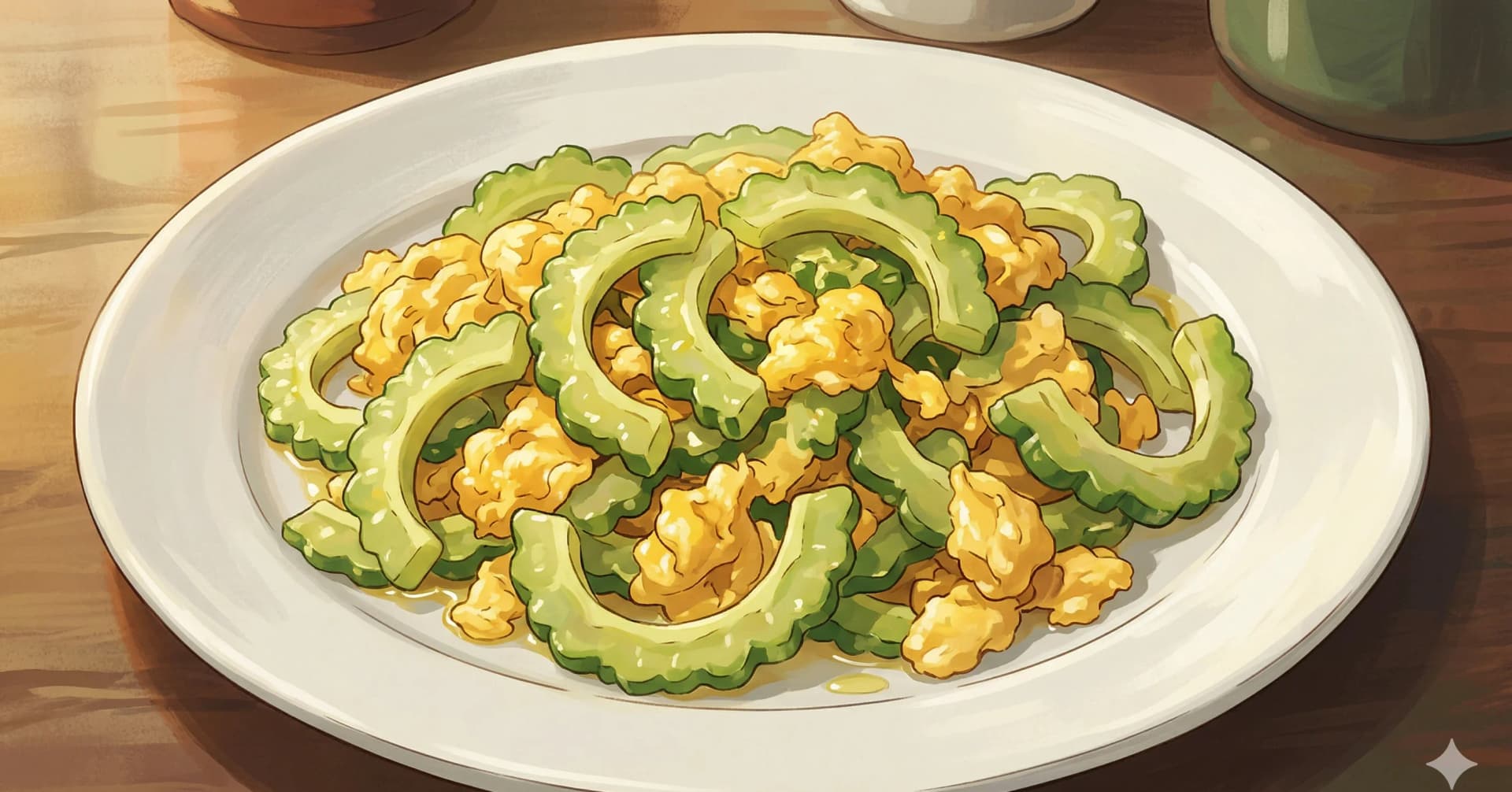
Bitter Melon with Egg
A southern Chinese home-style stir-fry that pairs the bracing bitterness of bitter gourd with soft, savory scrambled egg
Bitter melon is a vegetable that divides people cleanly into two camps. If you grew up eating it, you probably crave it. If you did not, you may need some convincing. This stir-fry is the best argument for giving it a chance, because the scrambled egg does something remarkable: it wraps around the bitter melon slices and softens their sharp green taste without eliminating it. What you get is a dish that is both bracing and comforting at the same time.
In southern China and across Southeast Asia, bitter melon with egg is one of those dishes that every family makes but nobody writes down. The grandmother just does it. She halves the melon, scoops out the seeds and white pith, slices it thin, and maybe salts the pieces or blanches them briefly to draw out some of the bitterness. The eggs are beaten with a splash of Shaoxing wine, and the whole thing comes together in a hot wok in less than five minutes.
The bitterness is the point. In Chinese food culture, bitter flavors are valued for what they do to the palate. They wake you up, cut through rich and fatty flavors, and in the framework of traditional Chinese medicine, they are associated with clearing heat from the body. This makes bitter melon a summer staple, eaten when the weather is hottest and the body most in need of cooling.
The key to making this dish accessible is controlling the bitterness level. Salting the sliced melon and letting it sit for 10 minutes draws out some of the bitter juices. A brief blanch in boiling water does even more. Between the salting, the blanching, and the rich egg that envelops each slice, the bitterness becomes a pleasant background note rather than a frontal assault.
At a Glance
Yield
2 to 3 servings
Prep
15 minutes
Cook
10 minutes
Total
25 minutes
Difficulty
Easy
Ingredients
- 1medium bitter melon (about 280 g)
- 1 tspsalt (for salting)
- 4large eggs
- 1 tbspShaoxing wine
- ¼ tspsalt
- ⅓ tspwhite pepper
- 2 tbspvegetable oil, divided
- 3 clovesgarlic, minced
- 1 tsplight soy sauce
- ½ tspsugar
- 0 tbspsesame oil
Method
- 1
Prepare the bitter melon. Cut the bitter melon in half lengthwise. Use a spoon to scrape out the seeds and white pith. Slice each half into thin crescents, about 1/8 inch thick. Place the slices in a bowl, sprinkle with 1 teaspoon salt, toss to coat, and let sit for 10 minutes. Liquid will bead on the surface of the slices. Rinse thoroughly under cold water and squeeze gently to remove excess moisture.
- 2
Blanch for milder flavor (optional but recommended). Bring a small pot of water to a boil. Add the salted and rinsed bitter melon slices and blanch for 1 minute. Drain immediately and run under cold water to stop the cooking. Squeeze dry. This step significantly reduces the bitterness.
- 3
Beat the eggs. Crack the eggs into a bowl. Add the Shaoxing wine, salt, and white pepper. Beat until the whites and yolks are fully combined.
- 4
Stir-fry the bitter melon. Heat 1 tablespoon oil in a wok over high heat. Add the garlic and stir for 10 seconds until fragrant. Add the bitter melon slices and stir-fry for 2 to 3 minutes until they are slightly tender and their edges begin to turn translucent. Season with the soy sauce and sugar. Toss to combine.
- 5
Add the eggs. Push the bitter melon to the edges of the wok. Add the remaining 1 tablespoon oil to the center. Pour in the beaten eggs. Let the eggs set on the bottom for about 15 seconds, then begin to fold and break them into large, soft curds, incorporating the bitter melon as you go. The eggs should be just set but still slightly soft and custardy.
- 6
Finish and serve. Drizzle the sesame oil over the top and give one final toss. Transfer to a plate and serve immediately with steamed rice.
Key Ingredient Benefits
Bitter melon: Also called bitter gourd or ku gua in Chinese, Momordica charantia is a tropical vine fruit used widely across Asian cuisines. It contains charantin and polypeptide-p, which have been studied in several clinical trials for potential glucose-lowering effects. A 2014 meta-analysis by Yin and colleagues in Nutrition & Diabetes pooled the randomized-trial evidence and concluded that the human data are too limited and inconsistent to draw firm conclusions, which is also the conclusion of the 2012 Cochrane review. Treat bitter melon as a flavorful traditional food rather than a medicine. Traditional Chinese medicine classifies it as cold and bitter, used to clear heat and benefit the liver. It is rich in vitamin C and folate.
Eggs: A complete protein source containing all essential amino acids, plus choline (important for brain health) and vitamins D, B12, and A. The fat in egg yolks helps the body absorb fat-soluble vitamins from the bitter melon.
Shaoxing wine: This fermented rice wine adds depth and a subtle sweetness to both marinades and egg mixtures. It also helps reduce the sulfurous smell that eggs can develop during cooking. See the Shaoxing Wine ingredient guide.
Why This Works
The salting and blanching steps are not about removing all the bitterness. They are about removing the harshest, most aggressive edge of it. Bitter melon contains momordicin, the compound responsible for its taste, which concentrates in the white pith and seeds. Removing the pith thoroughly and then salting the flesh pulls out some of the water-soluble bitter compounds. Blanching goes further. What remains is a cleaner, more nuanced bitterness that works with the egg rather than against it.
The eggs serve as both a flavor partner and a textural shield. The fat and protein in the egg yolk coat the bitter melon slices, creating a rich barrier that buffers the bitterness on the tongue. The Shaoxing wine in the eggs adds a subtle sweetness and removes any eggy taste.
The small amount of sugar in the seasoning is not there to make the dish sweet. It counterbalances the bitterness just enough to bring all the flavors into alignment. You should not taste sugar in the finished dish.
Substitutions & Variations
Bitterness level: For the mildest result, choose lighter-colored, smoother-skinned bitter melons (Indian variety tends to be less bitter). Slice very thin and both salt and blanch. For a more assertive dish, skip the blanching and use only the salt treatment.
Protein additions: Dried shrimp soaked and chopped, or thinly sliced pork, can be stir-fried with the garlic before adding the bitter melon. Fermented black beans add an umami depth that pairs naturally with the bitterness.
Egg style: Some cooks prefer to cook the eggs first, remove them, stir-fry the bitter melon separately, and then combine at the end. This produces distinct, larger egg curds rather than the integrated style described above.
Seasoning: A tablespoon of oyster sauce in place of the soy sauce creates a richer, sweeter flavor profile. A pinch of dried chili flakes added with the garlic provides a gentle heat that contrasts nicely with the bitter notes.
Serving Suggestions
This dish is a side rather than a main, best served alongside a richer protein dish and steamed rice. It pairs beautifully with Ginger Scallion Beef, where the clean bitterness of the melon cuts through the richness of the beef. Bai Qie Ji offers a mild, cooling counterpoint that works well on the same table. For a full Cantonese family dinner, add Congee and a simple soy-braised fish. Black Bean Chicken provides savory depth that complements the vegetable's sharpness.
Storage & Reheating
Refrigerator: Store in an airtight container for up to 2 days. The bitter melon will soften further and the eggs will firm up.
Reheating: Reheat briefly in a hot wok or skillet. The eggs will tighten when reheated, so a splash of water helps keep the texture from becoming rubbery.
Freezing: Not recommended. Both the egg and bitter melon textures deteriorate significantly when frozen.
Cultural Notes
Ku gua chao dan (苦瓜炒蛋, "bitter melon stir-fried with egg") is the southern Chinese home dish that pairs the assertively bitter bitter melon (ku gua, also called bitter gourd) with soft scrambled eggs, balancing the vegetable's challenging flavor with the eggs' richness. The dish is most strongly associated with Cantonese and Hokkien cooking, where bitter melon is treated as a summer cooling vegetable that supposedly helps the body shed excess heat (a traditional Chinese medicine concept called qing re or "clearing heat"), and where the bitter flavor is appreciated as a sign of healthful cooking rather than something to be hidden.
The technique manages the bitterness through preparation, not seasoning. The bitter melon is split lengthwise, the white spongy pith and seeds are scooped out (the pith and seeds are where most of the bitterness concentrates), and the green outer flesh is sliced thin on a sharp diagonal. The slices are salted heavily and left to sit for fifteen to twenty minutes, during which the salt draws out water and some of the bitter compounds. The slices are then rinsed briefly, squeezed dry, and stir-fried over high heat with hot oil, garlic, and sometimes a small piece of douchi (fermented black beans) for added umami. The eggs are added in the final thirty seconds, stirred just enough to coat the bitter melon, and the dish is served immediately.
The cultural place of the dish is grounded in the traditional Chinese view of bitter as a beneficial flavor in moderation. The Chinese five-flavor system (wu wei: sweet, sour, salty, bitter, pungent) treats each flavor as corresponding to one of the five elements and to a specific organ system, with bitter associated with the heart and circulation. Bitter melon is one of the most strongly bitter vegetables in the traditional Chinese vegetable repertoire and is consumed seasonally for what is treated as a cleansing or balancing effect. Bitter melon has been studied for possible effects on blood-sugar regulation; the 2012 Cochrane review by Ooi and colleagues concluded that the human-trial evidence is too limited and inconsistent to support therapeutic use, and the vegetable is best treated as a flavorful traditional food rather than a medicine.
Nutrition Facts
Calories: 176kcal (9%)|Total Carbohydrates: 6.1g (2%)|Protein: 9.7g (19%)|Total Fat: 12.4g (16%)|Saturated Fat: 2.6g (13%)|Cholesterol: 248mg (83%)|Sodium: 392mg (17%)|Dietary Fiber: 2.8g (10%)|Total Sugars: 1.1g
You Might Also Like



Ratings & Comments
Ratings & Comments
Ratings
Share your thoughts on this recipe.
Sign in to rate and comment