Indian Cuisine
Pav Bhaji
Mumbai's beloved mashed vegetable curry, buttery and vivid, with toasted pav
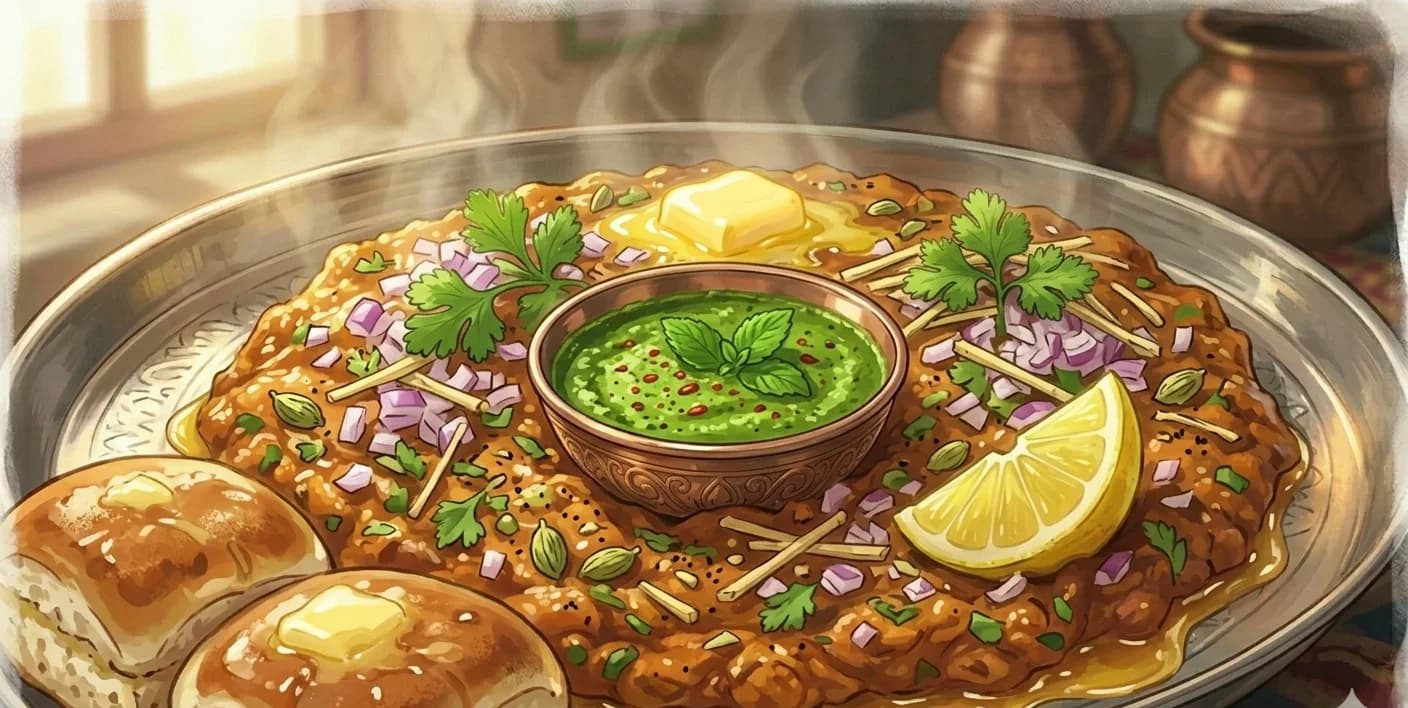
The large iron tawa is the canvas and the spatula is the tool, and in the hands of a Mumbai pav bhaji vendor the work is almost meditative. Mounds of coloured vegetables (red-orange from tomatoes, green from capsicum, soft white from potato) are pressed, folded, and mashed into a single unified curry, butter added in generous knobs that sizzle and vanish into the mix. The smell is unmistakable: rich, spiced, buttery, with the particular warmth of pav bhaji masala cutting through.
Pav bhaji emerged in Mumbai in the 1850s, according to most accounts, as a practical solution for mill workers who needed a quick, filling, inexpensive meal. The bhaji used leftover vegetables, whatever was available, mashed together with spices and butter; the pav was the soft white bread roll brought to Mumbai through Goa's Portuguese culinary history. It became a city institution and then a national one, the standard at school canteens, evening snack spots, and large family gatherings.
The bhuno technique is the critical process: cooking the vegetable mixture on high heat, pressing and stirring it repeatedly against the pan surface. This does several things simultaneously: it drives off moisture, concentrates flavour, and develops a slight caramelisation on the bottom of the pan that gets incorporated back into the mixture when you fold it over. The bhaji darkens in colour and deepens in flavour as this process continues. A great pav bhaji is not just cooked. It is worked.
The quality of your pav bhaji masala matters. Brands vary significantly. A good masala should be fragrant, complex, and slightly sour from dried mango. If yours seems flat, add a squeeze of lemon juice and an extra pinch at the end.
At a Glance
Yield
6–8 servings
Prep
20 minutes
Cook
40 minutes
Total
1 hour
Difficulty
Easy
Ingredients
Bhaji Ingredients
- 1 lbpotatoes (about 3–3½ potatoes), boiled and mashed
- 7 ozcauliflower, broken into small florets and boiled until very soft
- 3½ ozgreen peas (fresh or frozen)
- 7 oztomatoes (2–3 medium), finely chopped
- 7 ozonion (2 medium), finely chopped
- 1 ozcapsicum (green or red bell pepper), very finely chopped
- 3⅓ tbspbutter (plus more for finishing and serving)
- 1¼ tbspginger-garlic paste
- ¾ ozpav bhaji masala
- 1¾ tbspred chilli powder
- 1⅞ tspturmeric powder
- 1 cupfresh coriander, chopped (for garnish)
- 1¼ tbsplemon juice
- 1⅔ tspsalt, or to taste
To Serve
- 8pav buns (soft white dinner rolls)
- 2 tbspbutter, for toasting
- —Pinch of pav bhaji masala and red chilli powder, for the butter
Method
- 1
Boil the vegetables. Boil the cauliflower (200 g) florets until completely soft — softer than you'd cook them for serving, about 12–15 minutes. The peas (100 g) need only 3–4 minutes. Drain both. Mash the potato completely. Mash or finely crush the cauliflower too — there should be no large pieces of cauliflower remaining.
- 2
Start the bhaji base. Heat a large wide pan, tawa, or flat-bottomed pan over medium-high heat. Add 3 tablespoons of butter (50 g). When it foams, add the onions. Cook, stirring, for 8–10 minutes until the onions are deep golden and beginning to soften toward translucency. Don't rush this stage. The caramelised onion (200 g) is the flavour foundation.
- 3
Add aromatics and tomatoes (200 g). Add ginger-garlic paste (20 g) and stir for 1–2 minutes until fragrant. Add capsicum (30 g) and cook for 2 minutes. Add tomatoes, turmeric (5 g), and red chilli powder (10 g). Cook on medium-high heat, pressing and stirring, for 8–10 minutes until the tomatoes have completely broken down and the mixture looks jammy and is beginning to leave the pan sides.
- 4
Add the vegetables. Add the mashed potato, cauliflower, and peas. Mix thoroughly into the tomato base. Add pav bhaji masala (20 g) and salt (10 g). Mix well.
- 5
Bhuno the bhaji. This is the key technique. Increase heat to high. Press the bhaji flat against the pan with the back of the spatula, hold for 30 seconds, then fold it back over itself and press again. Continue this pressing-and-folding motion for 8–10 minutes. The bhaji will deepen in colour, develop small browned bits throughout, and lose excess moisture. Add splashes of water (2–3 tablespoons at a time) when the mixture sticks, scraping the caramelised bits off the base and incorporating them. That is flavour. Add butter (30 g) in 2–3 more generous knobs as you work.
- 6
Finish. Add lemon juice (20 ml), taste, and adjust salt and pav bhaji masala. The bhaji should be thick, vivid red-orange, glossy from the butter, and deeply seasoned. Scatter with fresh coriander (20 g).
- 7
Toast the pav. Mix softened butter with a pinch each of pav bhaji masala and red chilli powder. Heat a flat pan. Spread spiced butter on the cut faces of the pav. Toast, cut side down, until golden and slightly charred at the edges.
- 8
Serve. Plate the bhaji with a knob of butter melting over it, coriander scattered on top, and the toasted pav alongside. Provide lemon wedges and finely chopped raw onion.
Key Ingredient Benefits
Butter is the defining fat of pav bhaji and cannot be authentically replaced with oil. Mumbai street vendors use it generously. It emulsifies the vegetable mixture into a cohesive curry and contributes the characteristic richness. Use as much or as little as your conscience allows, but don't go below a generous amount.
Pav bhaji masala is a proprietary blend typically including coriander, cumin, fennel, black pepper, chilli, dried mango, cinnamon, cloves, and often dried capsicum. Its character comes from the balance of warm spices and souring agents. The blend as a whole is a concentrated source of antioxidant polyphenols.
Cauliflower is a cruciferous vegetable rich in glucosinolates. In pav bhaji it is mashed to near invisibility, a useful technique for incorporating vegetables into a dish without obvious chunks.
Tomatoes provide the acidity, colour, and umami depth of the bhaji base. Their lycopene content is made significantly more bioavailable when cooked in fat, which pav bhaji achieves in abundance.
Capsicum (bell pepper) is among the richest food sources of vitamin C, with red capsicum containing nearly three times the vitamin C of an orange. It contributes mild bitterness and brightness to the bhaji.
Why This Works
The bhuno technique, pressing and folding the mixture repeatedly on high heat, is how a wet vegetable mixture becomes a cohesive, deeply flavoured curry rather than a soggy mash. The Maillard reaction and caramelisation happening at the base of the pan with each pressing creates complex, browned flavour compounds that get folded back into the mixture when water is added and the pan is deglazed. This cycle of browning and deglazing is how pav bhaji develops its characteristic deep red colour and concentrated flavour over the course of 10 minutes rather than 2 hours.
Butter is not optional. It emulsifies into the bhaji as it's worked in, giving the curry a silky texture and rich mouthfeel. The fat also carries the fat-soluble flavour compounds in the pav bhaji masala spices more effectively than water can. The spice aroma deepens and integrates when worked with butter rather than sitting on the surface.
The combination of vegetables is flexible but purposeful. Potato provides starch and body; cauliflower, which becomes virtually invisible when well mashed, adds bulk and mild sweetness; peas add colour and a pop of sweetness. Capsicum adds a slight bitterness and green freshness. All together they create a more complex flavour than any single vegetable could.
Substitutions & Variations
- Cheese pav bhaji: Generously grate processed cheese over the serving bowl immediately before serving. The cheese melts into the hot bhaji. Popular variant, especially with young crowds.
- Jain pav bhaji: Omit onion, garlic, and ginger entirely; use only vegetables and spices. The bhaji will be milder but still deeply flavoured.
- Khada (chunky) pav bhaji: Leave more texture in the vegetables rather than mashing completely for a more rustic, chunkier version.
- Pav bhaji masala substitute: If unavailable, combine ½ tsp each of cumin powder, coriander powder, fennel powder, and dried mango powder with ¼ tsp each of cinnamon and black pepper as a rough approximation.
Serving Suggestions
Pav bhaji is always served with toasted pav alongside the bhaji bowl. The standard accompaniments are a knob of butter melting into the hot bhaji, freshly chopped raw onion, a wedge of lemon, and fresh coriander. Add extra pav bhaji masala dusted on top if you want more spice. The bhaji and pav are eaten together: tear a piece of pav, use it to scoop the bhaji, the soft bread absorbing the buttery sauce. A glass of nimbu pani (lemon soda) or buttermilk alongside is traditional.
Storage & Reheating
Pav bhaji reheats exceptionally well. Some argue it improves overnight as the spices settle and integrate. Store cooled bhaji in an airtight container in the refrigerator for up to 3 days. Reheat in a pan over medium heat with a splash of water and a knob of butter, stirring until hot through. The flavour will deepen on reheating. Pav is best toasted fresh; leftover pav kept at room temperature for a day is acceptable but loses its softness. The bhaji can be frozen for up to 1 month; thaw overnight in the refrigerator before reheating.
Cultural Notes
Pav bhaji (पाव भाजी, "bread vegetable") is the Mumbai street food of a thick spiced mashed-vegetable curry (bhaji) served alongside soft pillowy bread rolls (pav) toasted on a griddle with butter and a dusting of pav bhaji masala. The dish has a documented origin in the late nineteenth century Mumbai textile mill industry: as cotton mill workers needed a fast, filling lunch that could be eaten standing up in the brief midday break, street vendors near the mills developed pav bhaji as an efficient one-plate meal that combined leftover vegetables in a fast-cooked form with the locally available Portuguese-style bread rolls.
The bread itself reflects Mumbai's colonial history. Pav is the Portuguese-Indian bread roll that traces to the Portuguese settlement of Goa and Bombay in the sixteenth century, when Portuguese bakeries established a wheat-bread baking tradition that the broader Indian wheat-bread tradition did not previously include. The pav is soft, slightly sweet, and shaped in connected square clusters that are torn apart at serving. The soft bread provides the perfect vehicle for scooping up the thick bhaji and the cultural marker of the dish's Mumbai-Goan-Portuguese genealogy.
The bhaji is the technical heart. Boiled potatoes, peas, carrots, cauliflower, and bell peppers are roughly mashed together with onions, tomatoes, ginger-garlic paste, kashmiri red chili powder, and the dish's signature pav bhaji masala spice blend (which includes coriander, cumin, fennel, black pepper, cinnamon, cloves, black cardamom, and dried mango powder). The mixture cooks on a hot tava (flat griddle) for fifteen to twenty minutes with a generous amount of butter mashed in at the end. The pavs are split horizontally and toasted on the same griddle with butter until both sides develop a golden crust. The serving plate has a mound of bhaji on one side, two pavs on the other, garnished with a small heap of chopped raw onion, a wedge of lemon, and a sprinkle of chopped cilantro. The dish appears at every street stall and restaurant across Mumbai, with heritage establishments like Sardar Pav Bhaji in Tardeo (founded 1966) serving the canonical reference version that local food guides cite as the standard against which other versions are measured.
Nutrition Facts
Calories: 273kcal (14%)|Total Carbohydrates: 39.9g (15%)|Protein: 6.3g (13%)|Total Fat: 9.9g (13%)|Saturated Fat: 5.5g (28%)|Cholesterol: 22mg (7%)|Sodium: 1460mg (63%)|Dietary Fiber: 4g (14%)|Total Sugars: 5.3g
You Might Also Like
Ratings & Comments
Ratings & Comments
Ratings
Share your thoughts on this recipe.
Sign in to rate and comment