Tamil Nadu · Indian Cuisine
Dosa Masala
The spiced potato filling for masala dosa — dry potato subzi with mustard seeds, curry leaves, turmeric and ginger
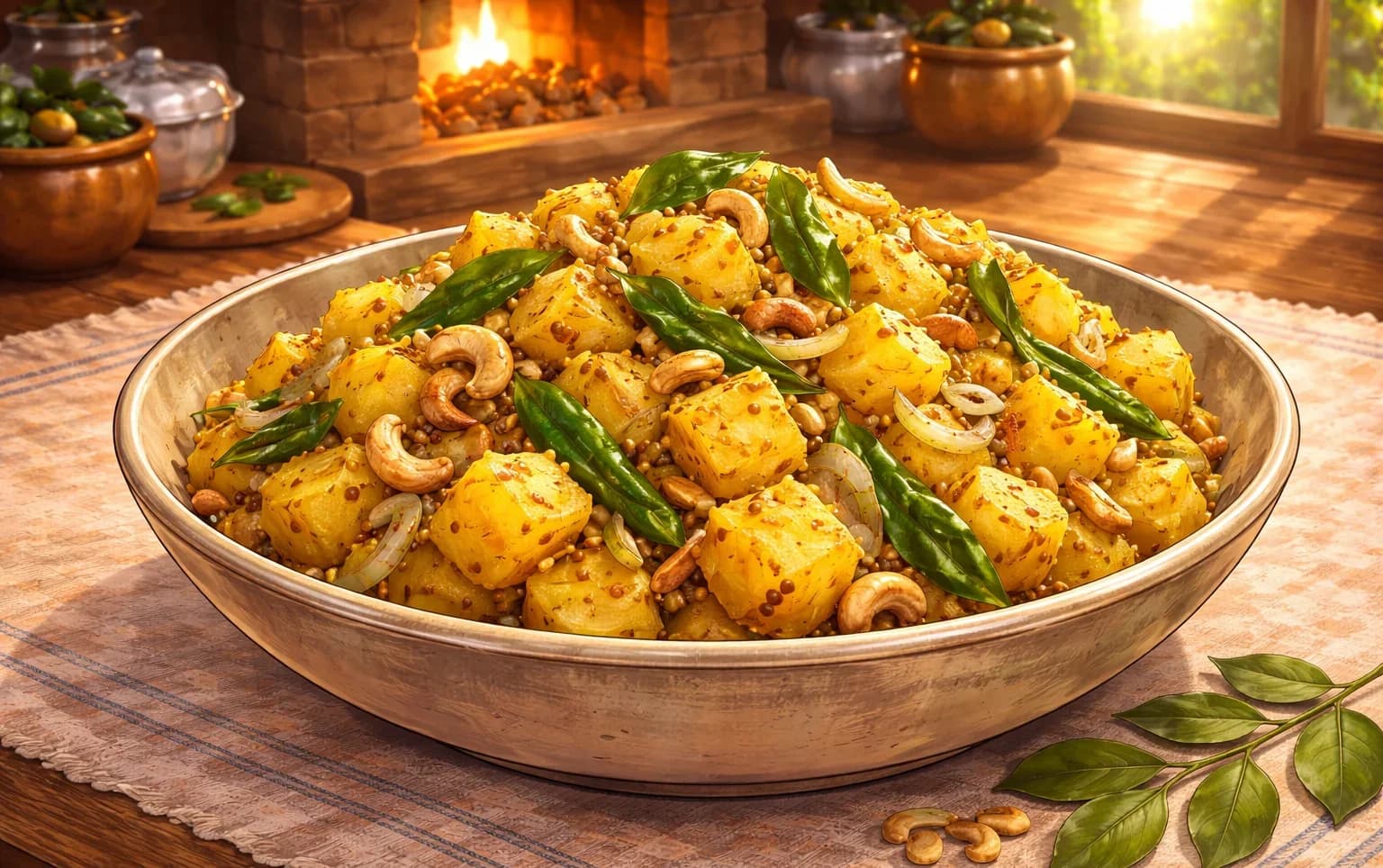
The masala dosa is two things at once: the crisp, fermented rice crepe that carries it, and the filling inside. Of these two, the filling is often what people remember. Dosa Masala is not a curry. It is not wet. It is a dry potato subzi — boiled, roughly crushed potatoes seasoned with a tempering of mustard seeds, urad and chana dal, curry leaves, ginger, and the particular sweetness of lightly cooked onion. Turmeric gives it its colour: a vivid, warm yellow that is part of the masala dosa's identity.
The potatoes should not be puréed or mashed smooth. The correct texture is rough — a hand or fork pressed in, breaking the potatoes into irregular pieces, some almost smooth, others still holding their shape in chunks. This unevenness gives the masala texture inside the dosa, and means each bite is slightly different.
The cashews are the subtle luxury here. Fried in the same oil as the dal, they turn golden and slightly caramelised, and their richness punctuates the starchy potato without overwhelming it. This is a Tamil Brahmin kitchen touch, present in tiffin hotel cooking across the state.
The seasoning must be confident. Dosa Masala should taste fully seasoned as a dish on its own — it is filling a crepe, where it competes with the fermented sour note of the dosa's batter. Under-seasoning the masala produces a flat, starchy filling; correct seasoning produces the masala dosa you remember.
At a Glance
Yield
Fills 8–10 masala dosas
Prep
10 minutes
Cook
15 minutes
Total
25 minutes
Difficulty
Easy
Ingredients
- 2¼ lbboiled potatoes (about 6½–7 potatoes), peeled
- 1 tspmustard seeds
- ¾ ozurad dal (split black gram, skinned)
- ½ ozchana dal
- ⅓ cupgreen chillies, slit or finely chopped
- ¼ cupginger, cut into fine juliennes
- 3½ ozonion (about ½–1 onion), thinly sliced
- ¼ ozcashew nuts, broken
- 3½ cupcurry leaves (about 60–80 leaves)
- 2½ tbspturmeric powder
- 3⅓ tbspoil
- 1 tbspsalt, or to taste
Method
- 1
Boil and cool the potatoes. Boil the potatoes until completely tender — a knife or skewer should meet no resistance. Drain and allow to cool slightly before peeling. Do not refrigerate; the masala is assembled with warm potatoes.
- 2
Heat oil and temper. Heat the oil in a wide, heavy pan over medium heat. Add the mustard seeds and wait for them to pop and crackle. Add the urad dal and chana dal. Stir constantly — the dals will turn golden very quickly, in 30–45 seconds. Watch carefully; burnt dal is bitter.
- 3
Add cashews. Add the broken cashew pieces to the pan. Stir and cook for 1 minute until the cashews are golden. The oil should smell nutty and rich.
- 4
Add aromatics. Add the slit green chillies and ginger juliennes. Stir for 30 seconds. Add the sliced onions and cook over medium heat for 4–5 minutes until translucent and slightly soft — not browned.
- 5
Add turmeric, salt and curry leaves. Add the turmeric powder and salt. Stir through. Add the curry leaves (60–80 leaves) and stir for 30 seconds — they will crisp in the seasoned oil.
- 6
Add potatoes. Add the boiled, peeled potatoes to the pan. Using a spoon or your hands, break them roughly into the pan — not mashed smooth, but broken into irregular pieces. Stir everything together so the turmeric, tempering, and oil coat the potato pieces evenly. Cook together for 3–4 minutes over medium heat. Taste for salt. The masala should be dry and well-seasoned.
- 7
Use immediately or keep warm. Dosa Masala is used as a filling while still warm. Spread a generous portion along the centre of the dosa just before it finishes cooking on the tawa, then fold the dosa around it.
Key Ingredient Benefits
Boiled potatoes: The starch in cooked and cooled potatoes partially retrograds (re-crystallizes) into resistant starch, which behaves more like dietary fibre than digestible starch. Potatoes boiled and used warm (as here, without refrigerating) have less retrogradation than cold potatoes, but the rough texture and the presence of other ingredients mean the glycemic impact is gentler than boiled potatoes eaten alone.
Urad and chana dal in the tempering: Small in quantity but structurally important — they provide the textural pop and crunch that mustard seeds alone cannot. Urad dal becomes slightly crisp and nutty; chana dal stays firmer and more distinct.
Cashews: Fried cashews in a potato subzi are a marker of restaurant or celebration cooking. In modest home versions, cashews are often omitted — the masala is entirely good without them, but with them it is slightly more interesting.
Curry leaves: Used in very large quantity here. Fresh curry leaves provide their best flavour — the aromatic compounds are highly volatile and largely absent in dried leaves.
Why This Works
The layered tempering — mustard seeds first, then dal, then cashews, then aromatics — is a sequenced flavour-building technique. Each ingredient needs a slightly different time to cook correctly in the hot oil, and adding them in the right order ensures each is properly done before the next arrives. Mustard seeds need the hottest oil; the dal needs sustained time to turn golden without burning; cashews need moderate heat to colour without going bitter.
Turmeric added to the oil with the tempering, rather than directly to the potato, distributes more evenly. Fat is a better carrier of turmeric's fat-soluble pigments (curcuminoids) than water; the oil carries the colour uniformly through all the potato pieces during the final toss.
Not mashing the potato fully is a texture decision: smooth mash would compress inside the dosa into a dense, slightly gluey mass. The rough texture allows the masala to stay cohesive while retaining enough porosity that each bite of dosa-masala has movement and variation.
Substitutions & Variations
- Without cashews: Omit them entirely. The masala is complete without them.
- With tomato: Some Tamil Nadu versions add a chopped tomato to the onions, cooking it down until soft. This adds a slight sourness that complements the dosa's fermented tang.
- Grated carrot: A small amount of grated carrot added with the potato extends the masala and adds sweetness and colour variety.
- Peas: A handful of cooked green peas folded in with the potato is common in North Indian masala dosa versions.
- No onion version: Skip the onion for a plainer masala suited to stricter vegetarian observance.
Serving Suggestions
- This preparation exists solely as a filling for masala dosa — it is not eaten as a standalone dish in its traditional context.
- As a component in dosa: place 2–3 tablespoons of masala along the lower half of the dosa just before removing from the tawa, fold the top over it, and serve immediately.
- Pairs with the same accompaniments as the dosa itself: coconut chutney and sambar.
- Can also be served as a simple dry potato subzi alongside rice and dal for a modest everyday meal.
Storage & Reheating
Store cooled Dosa Masala in the refrigerator for up to 2 days. Reheat in a pan over medium heat, stirring and breaking up any compressed pieces. Add a splash of water if necessary to prevent sticking. Taste and adjust salt. Freezing is not recommended — the potato texture becomes mealy after freezing and thawing.
Cultural Notes
Masala dosa (मसाला डोसा) is the Mysore-Karnataka variation of the basic dosa in which the fermented rice-and-dal crepe is folded around a spiced potato filling. The dish is the single most internationally famous form of dosa and the dish that introduced most non-South-Indian eaters to the broader dosa tradition. The masala dosa is documented as a Karnataka innovation, with origins traced to the Udupi-Mangalore region of coastal Karnataka in the late nineteenth or early twentieth century, when Udupi Brahmin restaurants began adding potato fillings to their plain dosas to create a more substantial breakfast option.
The potato filling defines the dish. Boiled potatoes are roughly mashed (not smooth; chunks should remain), then mixed with a spice tempering of mustard seeds, urad dal, chana dal, curry leaves, dried red chilies, green chilies, turmeric, and onions sautéed until soft. The mixture is finished with a generous handful of chopped fresh cilantro and a small squeeze of lemon. The filling is moist enough to spread on the dosa but firm enough to hold a folded shape, and the bright yellow turmeric color is the signature visual element of the dish.
The Mysore variation called Mysore masala dosa adds a layer of red chili-and-garlic chutney spread on the inside of the dosa before the potato filling is placed, which gives the dosa a distinctly spicy character not present in the plain Karnataka masala dosa. The dish is served at countless South Indian breakfast restaurants and tiffin counters from morning until late lunchtime, with the standard accompaniments being coconut chutney, tomato chutney, and a small bowl of sambar (lentil-and-vegetable stew). The dish has spread through the global Indian diaspora and is one of the most ordered items at South Indian restaurants in the United States, the United Kingdom, Singapore, and the Gulf states. Bangalore's Vidyarthi Bhavan (founded 1943) and Mysore's Mylari Hotel are widely cited as canonical reference establishments for the Karnataka and Mysore versions respectively.
Nutrition Facts
Calories: 178kcal (9%)|Total Carbohydrates: 30g (11%)|Protein: 5g (10%)|Total Fat: 5g (6%)|Saturated Fat: 0.7g (3%)|Cholesterol: 0mg (0%)|Sodium: 980mg (43%)|Dietary Fiber: 4.7g (17%)|Total Sugars: 2g
You Might Also Like
Ratings & Comments
Ratings & Comments
Ratings
Share your thoughts on this recipe.
Sign in to rate and comment