Kerala · Indian Cuisine
Kerala Fried Fish (Meen Porichattu)
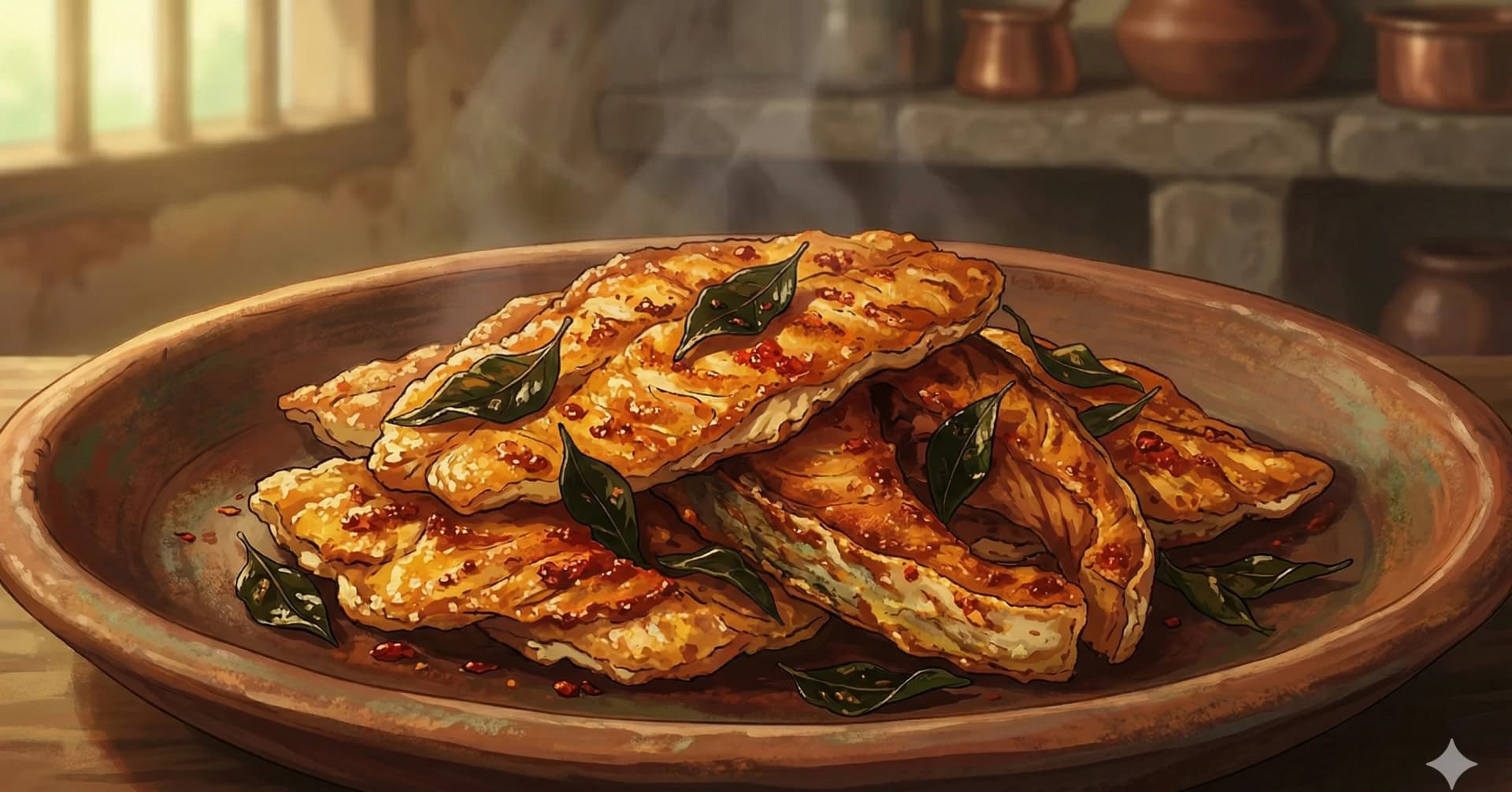
Kerala pan-fried fish — king fish marinated in a thick red chilli-turmeric paste with vinegar, fried in coconut oil with curry leaves
In Kerala, where the Arabian Sea meets the backwaters and the rivers run through coconut-shaded land, fish is not a luxury. It is the daily protein, the thing that appears on the table most often, cooked in more ways than any single cookbook can hold. Meen Porichattu (literally "fried fish" in Malayalam) is the simplest of these preparations and, arguably, the most satisfying.
A thick paste of red chilli, Kashmiri chilli, black pepper, turmeric, ginger, garlic, and vinegar. Fish sliced thin so the marinade has maximum surface contact. An hour in the refrigerator, minimum; more is better. Then a hot pan with coconut oil, curry leaves slid in first to scent the oil, and the fish laid in one by one.
The crust that forms is the point. Not a batter crust, not a breadcrumb crust. Just the marinade paste, thinned slightly with vinegar and water, that dries and caramelizes against the hot pan. Rice flour is sometimes added, as here, to help this crust crisp rather than steam. The result is deeply colored (the Kashmiri chilli gives an orange-red that is beautiful without excessive heat) and fragrant with curry leaf and coconut oil.
Vinegar, used both in the marinade and as a cleaning agent for the fish, is the element that speaks to the particular geography of coastal Kerala cooking and its historical connection to Portuguese influences along this coast.
At a Glance
Yield
4–6 servings
Prep
15 minutes + 30 minutes minimum marinating
Cook
20 minutes
Total
1 hour (with marinating)
Difficulty
Easy
Ingredients
- 2¼ lbking fish (or any firm-fleshed fish), cleaned and thinly sliced, about 1.5–2 cm thick
- 1⅓ tspginger powder
- 1¼ tspgarlic powder
- ⅞ tspblack pepper powder
- ⅔ cupred chilli powder
- 1¾ tbspKashmiri chilli powder
- ¾ tspturmeric powder
- 1 tbspsalt
- 1¼ tbspvinegar (white or coconut vinegar), for marinade
- 3½ tbspwater, to make paste
- ⅓ cupcurry leaves (about 10–12 leaves)
- ¾ ozrice flour
- ¾ cupoil (coconut oil preferred)
- —Salt and vinegar, as needed
Method
- 1
Clean the fish. Place the fish slices in a wide bowl. Rub generously with salt and vinegar (about 2 tablespoons of each). Work it into the flesh and between any cuts. Let sit for 5 minutes, then rinse thoroughly under cold running water. Pat completely dry with paper or cloth. This step removes any muddy or strong smell from the fish and seasons the surface.
- 2
Make the marinade paste. Combine the ginger powder, garlic powder, black pepper powder, red chilli powder, Kashmiri chilli powder, turmeric, salt, rice flour, vinegar, and water in a bowl. Mix to a thick, smooth paste. It should be dense enough to coat the fish without dripping. Adjust water or vinegar accordingly.
- 3
Marinate the fish. Coat each fish slice thoroughly in the marinade paste, working it into any crevices. Place on a tray or plate, cover, and refrigerate for at least 30 minutes. An hour or two is better. The acid in the vinegar begins to cure the fish surface gently and the flavors penetrate the flesh.
- 4
Heat the pan. Pour enough oil into a wide, heavy pan (ideally cast iron or a heavy-bottomed steel pan) to come about 5 mm up the sides. Heat over medium-high heat until the oil is hot but not smoking.
- 5
Add curry leaves. Slide the curry leaves (10–12 leaves) into the hot oil. They will crackle and crisp immediately. Let them fry for 20–30 seconds until crisp, then move them to the side of the pan.
- 6
Fry the fish. Carefully slide the marinated fish pieces into the pan, one at a time, laying them away from you to avoid splashing. Do not crowd. Fry in batches if needed. Cook without moving for 3–4 minutes until the underside is deeply colored and crusted. Flip carefully using a spatula and cook the second side for 2–3 minutes.
- 7
Finish and serve. If not using coconut oil for frying, sprinkle a teaspoon of coconut oil over the fish just before removing from the pan for fragrance. Serve immediately.
Key Ingredient Benefits
Kingfish (Seer fish / Neymeen): Kerala's most prized fish for pan-frying. Its firm, dense flesh holds up to high heat without breaking apart, and its fat content keeps it moist through the frying time. Any firm saltwater fish (mackerel, pomfret, snapper) works well. Freshwater fish is softer and can crumble.
Vinegar: White vinegar or coconut vinegar (toddy vinegar, as used in Kerala) are both traditional. Coconut vinegar has a slightly fruity, fermented quality that is more authentic. The acid tenderizes the fish surface and adds a subtle sharpness to the crust.
Red chilli and Kashmiri chilli together: The combination provides color (from Kashmiri) and heat (from red chilli). Kashmiri chilli alone would produce a beautiful color but insufficient heat; red chilli alone lacks the vivid orange-red depth.
Rice flour: A traditional coating in South and Southeast Asian fried fish preparations. Higher starch content than wheat flour, lower protein. This means it crisps rather than toughens, creating a shell that shatters rather than chews.
Why This Works
Cleaning fish with salt and vinegar is a technique used across South Asian and Southeast Asian coastal cooking. The salt draws out surface moisture along with some of the compounds responsible for strong fish odor; the acid in the vinegar denatures surface proteins slightly, creating a better surface for the marinade to adhere to.
Rice flour in the marinade is the crisping agent. Besan or cornflour can perform this role but rice flour produces the finest, crispest crust. It absorbs surface moisture from the marinade during cooking rather than steaming, allowing the paste to dry and caramelize.
Kashmiri chilli powder is used for color rather than heat. Its capsaicin content is low compared to standard red chilli, but its carotenoid pigments produce that vivid brick-red color that makes pan-fried Kerala fish so visually distinctive.
The curry leaves-first technique perfumes the oil before the fish arrives. The volatile aromatic compounds released by curry leaves in hot oil are fat-soluble and will carry through to the fish's crust.
Substitutions & Variations
- Whole spices: Fresh ginger and garlic, pounded to paste, can replace the powders. The flavor will be slightly fresher and more pungent.
- Mackerel: The most economical and traditional Kerala fish for this preparation. Oily, flavorful, and excellent fried. Butterflied whole mackerel works beautifully.
- Baked version: The marinated fish can be baked at 200°C for 15–18 minutes on an oiled rack. The crust will be less caramelized but the preparation is lighter.
- Tamarind instead of vinegar: Replace vinegar in the marinade with an equal volume of tamarind water (tamarind soaked in warm water and strained) for a more complex sourness.
Serving Suggestions
- With steamed plain rice and a Kerala curry. The fish functions as the "dry" element in the meal.
- Alongside sliced raw onion, a wedge of lime, and fresh green chilli as a simple plate.
- With Kerala boiled rice and a thin rasam. The fried fish and the sour-thin soup make a very complete, simple meal.
- As a starter: serve the fried fish pieces on banana leaf with coconut chutney and lime.
Storage & Reheating
Fried fish is best eaten immediately. The crust softens within 30 minutes as residual moisture redistributes. Leftovers can be refrigerated for 1 day. To reheat, place in a dry non-stick pan over medium heat for 2–3 minutes per side. This partially restores the crust. Do not microwave. Uncooked marinated fish can be refrigerated for up to 6 hours before frying; marinating overnight in the refrigerator produces the most deeply flavored result.
Cultural Notes
Meen porichathu (മീൻ പൊരിച്ചത്, "fried fish") is the Kerala home-cooked pan-fried fish marinated in a rust-red paste of kashmiri red chili powder, turmeric, ginger-garlic paste, lemon juice, and salt, then shallow-fried in coconut oil with curry leaves until the surface forms a crisp crust and the flesh inside stays tender. The dish is one of the most basic and most universal Kerala fish preparations, appearing at homes across every Kerala community (Hindu, Christian, and Muslim) and serving as the prototype for the broader category of Kerala fried fish that varies in spicing but shares the basic technique.
The marinade is the technical heart of the dish. The spice paste combines kashmiri red chili powder (which provides color and gentle heat), turmeric, finely minced ginger and garlic, a small amount of black pepper, lemon juice or vinegar (the acid both tenderizes and helps the spices adhere), salt, and sometimes a small amount of asafoetida or fennel powder. The paste is rubbed thickly over both sides of the fish (kingfish steaks, pomfret, sardines, mackerel, anchovies, or whatever the local catch happens to be) and the fish marinates for thirty minutes to two hours before frying.
The frying technique uses coconut oil (a Kerala signature) and curry leaves. The oil is heated until just smoking, a handful of fresh curry leaves goes in and crackles briefly, and the marinated fish slides into the pan in a single layer. The fish fries for three to four minutes per side, undisturbed, until the surface develops a deep red-brown crust and the flesh just flakes cleanly. The dish appears at lunch and dinner tables across Kerala, served alongside rice, sambar or moru curry (a buttermilk curry), and a vegetable thoran. The Kerala fishing communities along the coast (the Latin Catholic communities of Kollam, Alleppey, and Vypin Island) prepare the dish daily as a way to use the morning's catch, and the small Kerala-style fish-fry stalls (meen vechathu kada) that appear at backwater villages and on highways across the state are a defining feature of Kerala roadside food.
Nutrition Facts
Calories: 329kcal (16%)|Total Carbohydrates: 3.5g (1%)|Protein: 33.7g (67%)|Total Fat: 20.7g (27%)|Saturated Fat: 15.3g (77%)|Cholesterol: 83mg (28%)|Sodium: 168mg (7%)|Dietary Fiber: 0.4g (1%)|Total Sugars: 0.2g
You Might Also Like


Ratings & Comments
Ratings & Comments
Ratings
Share your thoughts on this recipe.
Sign in to rate and comment