Indian Cuisine
Lentil Crepes (Moong Dal Chilla)
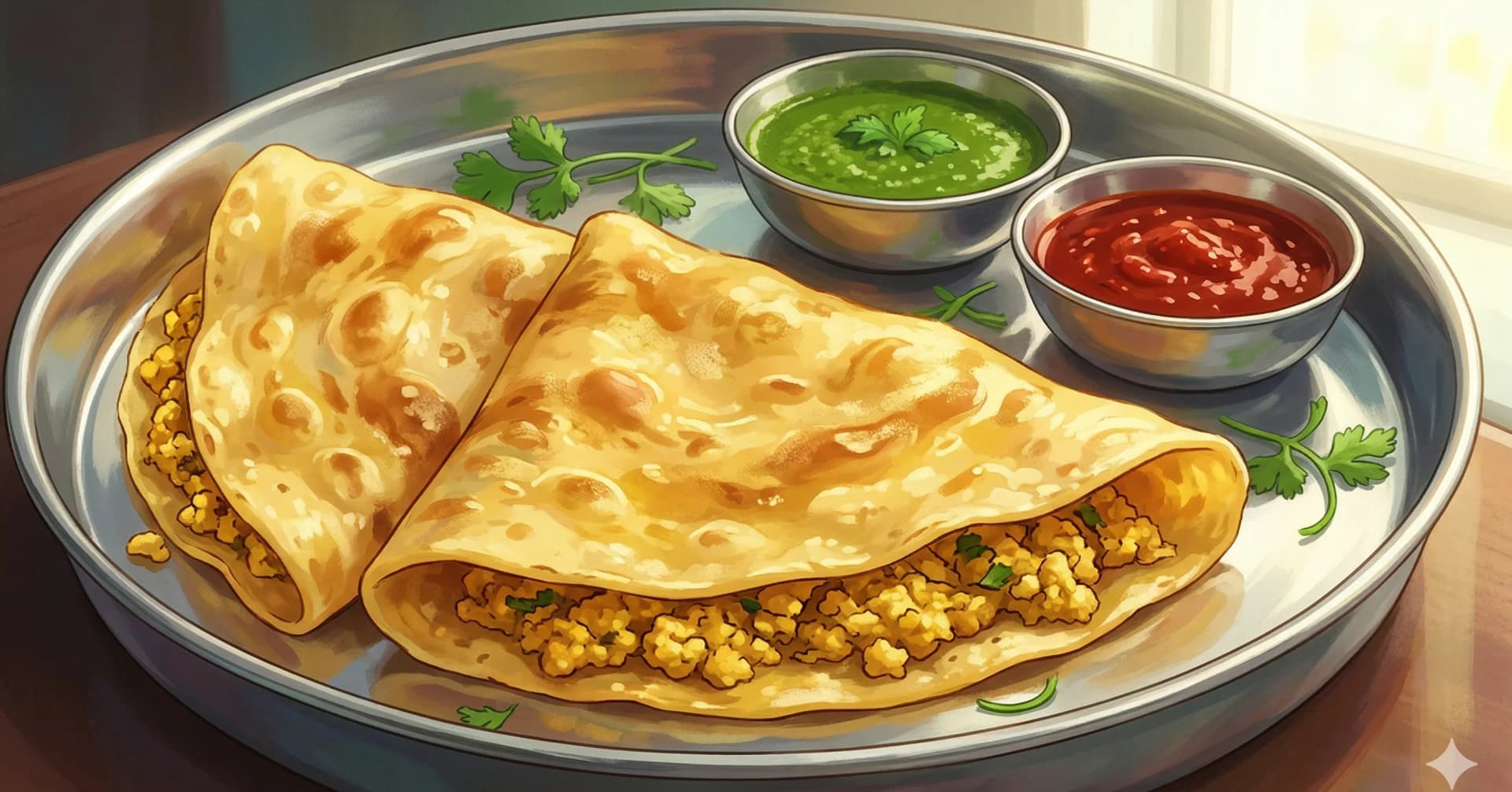
Gujarati Moong Dal Pancakes Folded Over Grated Paneer
A chilla is a pancake in the most practical sense: batter poured onto a hot tawa, spread thin with the back of a ladle, cooked until it crisps at the edges and develops pale gold freckles across its surface. Made from soaked moong dal, it is one of the fastest, most protein-rich breakfasts in the Gujarati and North Indian repertoire, requiring only overnight soaking and fifteen minutes at the stove.
The batter starts simply: split yellow moong dal soaked overnight, ground with green chilli and salt into a fine, pourable paste, then rested for thirty minutes before cooking. Besan (gram flour) is folded into the batter to give it body and a slightly nuttier flavour than moong dal alone provides. Fresh coriander goes in for brightness. Then it hits the hot tawa.
The paneer filling is the finishing move. After the chilla is cooked on both sides, a handful of grated paneer goes over half the surface and the chilla is folded into a half moon. The heat of the pancake warms the paneer from the inside without cooking it into rubbery chunks, just softening it, making it creamy and mild against the slightly crisped exterior.
The texture to aim for is thin and lightly crisp at the edges, with a soft but not wet centre. The tawa must be at the right temperature: hot enough that batter sizzles on contact and begins to set immediately when poured, but not so hot that it colours before it can be spread. A single ladle of batter should spread to roughly 20 cm in diameter with a circular motion.
Serve with saunth chutney (tamarind and ginger) and fresh mint chutney alongside. The contrast of sweet-sour and sharp-green against the mild pancake and creamy paneer is the full picture.
At a Glance
Yield
8–10 chillas
Prep
10 minutes active (plus overnight soaking, 30-minute batter rest)
Cook
20 minutes
Total
Overnight soak plus 1 hour active
Difficulty
Easy
Ingredients
- ½ lbsplit yellow moong dal (dhuli moong dal)
- ½ cupbesan (gram flour / chickpea flour)
- 1 cupfresh coriander, finely chopped
- ½ cupgreen chillies (4–5 chillies), finely chopped
- ⅞ tspsalt, or to taste
- —Water, as needed
- 3½ ozfresh paneer, grated
- —Saunth chutney (tamarind-ginger)
- —Fresh mint chutney
- —Oil or ghee, for the tawa
Method
- 1
Soak the dal overnight. Wash the moong dal in several changes of water until clear. Cover with cold water and soak overnight (at least 8 hours). The dal will swell and soften.
- 2
Grind the batter. Drain the soaked moong dal thoroughly. Transfer to a blender with the green chillies and a few tablespoons of water. Grind to a fine, smooth paste, adding water gradually until the batter reaches a thin, pourable consistency, similar to dosa batter, a little thicker than crêpe batter.
- 3
Combine the batter. Transfer the ground moong dal to a mixing bowl. Add the besan, coriander, and salt. Stir well to combine. Adjust consistency with water as needed. The batter should pour and spread easily.
- 4
Rest the batter. Leave the batter aside for 30 minutes. This allows the besan to hydrate fully and the batter to become slightly more cohesive and easier to spread.
- 5
Heat the tawa. Place a cast iron tawa or non-stick flat pan over medium-high heat. Allow it to heat fully for at least 2 minutes. Test by flicking a drop of water onto the surface; it should sizzle and evaporate immediately. Brush or wipe a light coat of oil over the surface.
- 6
Cook the chilla. Pour a ladle of batter (approximately 80 ml) onto the centre of the hot tawa. Spread immediately in concentric circles using the back of the ladle, working outward to produce a thin, even disc about 20 cm in diameter. Sprinkle a teaspoon of oil around the edges. Cook over medium heat for 2–3 minutes until the edges lift slightly, the surface looks dry, and small golden patches appear underneath.
- 7
Flip. Slide a thin spatula underneath and flip in a single confident movement. Cook the second side for 1–2 minutes until small golden patches appear. The second side will cook faster than the first.
- 8
Add paneer and fold. Turn the chilla back to the first side briefly. Spread a layer of grated paneer over half the surface. Fold the chilla in half over the paneer to form a half moon. Press gently with the spatula for 30 seconds. Transfer to a plate.
- 9
Serve hot with saunth chutney and mint chutney.
Key Ingredient Benefits
Moong dal is one of the most nutritionally complete and digestible legumes used in Indian cooking: approximately 24% protein by dry weight, with significant iron, folate, and a low glycaemic index. In Ayurvedic tradition it is considered sattvic, among the purest and most easily assimilated of foods, and is often the first legume introduced to those returning to eating after illness.
Besan (gram flour) is made from dried chickpeas and is naturally gluten-free. It contributes additional protein and fibre, and its earthy, slightly bitter flavour balances the mildness of the moong dal.
Paneer provides fresh dairy protein and fat, making the chilla a substantially more filling meal than the pancake alone. Its mild, milky flavour works as a neutral backdrop for the spiced batter and sharp chutneys. Fresh paneer, made that day, is noticeably softer and creamier than refrigerated. If you can make or buy fresh, the chilla is better for it.
Green chillies in this recipe are present in quantity. 50 g is generous and produces a distinctly spicy batter. Reduce to taste; the structural role of the chilli is purely flavour here, so quantity can be adjusted freely.
Why This Works
Moong dal batter spreads and cooks differently from urad dal batter. Moong has a higher simple starch content that hydrates readily during soaking, producing a smooth, pourable batter without extended grinding. This makes chilla more forgiving and faster to prepare than urad-based dishes.
Besan is added to give the chilla body and a slightly more structured texture. Without it, a pure moong dal chilla can be delicate and prone to tearing when flipped. The besan also adds a nuttier flavour depth that complements the mild moong dal.
The thirty-minute rest is not decorative. It allows the starch granules in both the moong dal and the besan to hydrate fully, which slightly thickens and stabilises the batter and produces a more cohesive chilla that spreads cleanly and flips without tearing.
Adding paneer after the chilla is fully cooked rather than incorporating it into the batter keeps the filling soft and creamy. Cooking paneer in the batter would make it rubbery and dense.
Substitutions & Variations
- Without paneer: Serve the chilla plain, folded in half, with chutneys on the side. Lighter, quicker.
- Spiced potato filling: Replace paneer with mashed potato seasoned with cumin, coriander, green chilli, and salt, for a heartier, more robust filling.
- Grated vegetable addition: Grate one small carrot or courgette (squeezed dry) into the batter for colour and extra nutrition.
- Pure moong dal: Omit the besan entirely for a more delicate, thinner chilla. Works best on a well-seasoned cast iron tawa.
- Pesarattu style: Use whole green moong (unshelled) instead of split yellow moong. Requires longer soaking (8–10 hours) and produces a greener, more earthily flavoured chilla. The Andhra Pradesh version.
Serving Suggestions
Moong dal chilla is breakfast and snack food. Serve hot from the tawa with saunth chutney (tamarind-ginger-jaggery) and fresh mint and coriander chutney. The contrast of sweet-sour and sharp-green against the mild pancake is the classic combination. For a complete breakfast, add a small bowl of spiced yogurt and sliced cucumber alongside. As an afternoon snack, serve with a single chutney for simplicity.
Storage & Reheating
Cooked chillas hold well at room temperature for 30–45 minutes before the texture begins to change. Refrigerate cooked chillas for up to 24 hours, separated by parchment paper; reheat in a dry pan over medium heat for 1–2 minutes per side. Batter can be stored refrigerated for up to 48 hours. Overnight fermentation produces a slightly sour note that is acceptable and often pleasant. Stir thoroughly and adjust consistency with water before using.
Cultural Notes
Moong dal chilla (मूंग दाल चीला, "mung bean crepe") is the North Indian savory crepe made from ground split skinned moong dal (split green gram with the skin removed) batter, spiced with chopped onions, ginger, green chilies, and cilantro, then cooked thin on a hot griddle until both sides develop a golden crust. The dish is among the most strongly health-positioned preparations of North Indian home cooking (high in plant protein, low in fat, naturally gluten-free, easy to digest), and it appears at family breakfasts as the protein-focused alternative to wheat-based parathas or rice-based dosa.
The dish has a documented Punjabi and Delhi origin in the household cooking tradition of the broader north Indian region. Where the South Indian dosa uses a fermented rice-and-urad-dal batter, the North Indian chilla uses an unfermented moong dal batter that produces a denser, more protein-rich crepe with a distinctly different flavor character. The dish is also one of the standard items at the Punjabi nashta (breakfast) tradition, served alongside a small bowl of yogurt or a green chutney for dipping.
The technique starts with the moong dal soak and grind. Split skinned moong dal is soaked in cold water for at least four hours, drained, and ground in a high-powered blender with a small amount of fresh water, finely chopped ginger, finely chopped green chilies, and salt to form a thick smooth batter. The batter should be the consistency of thick pancake batter, thin enough to spread easily on the griddle but thick enough to hold its shape during cooking. Chopped onion and chopped fresh cilantro are folded in just before cooking (mixing them too early causes the onion to release moisture and thin the batter). The batter is poured onto a hot oiled tava (flat griddle) and spread thin with the back of a ladle into a six-inch round, drizzled with a small amount of ghee or oil around the edges, and cooked for two minutes per side until both surfaces turn golden. The dish is served folded over with a smear of green chutney inside, alongside a small bowl of plain yogurt. The dish has spread through health-focused Indian restaurants in the United States, the United Kingdom, and the Gulf, where its high-protein gluten-free profile fits well into contemporary dietary preferences.
Nutrition Facts
Calories: 162kcal (8%)|Total Carbohydrates: 18.9g (7%)|Protein: 8.9g (18%)|Total Fat: 5.6g (7%)|Saturated Fat: 1.9g (10%)|Cholesterol: 5mg (2%)|Sodium: 509mg (22%)|Dietary Fiber: 4.6g (16%)|Total Sugars: 2.2g
You Might Also Like
Ratings & Comments
Ratings & Comments
Ratings
Share your thoughts on this recipe.
Sign in to rate and comment