Korean Cuisine
Galbitang (Short Rib Soup)
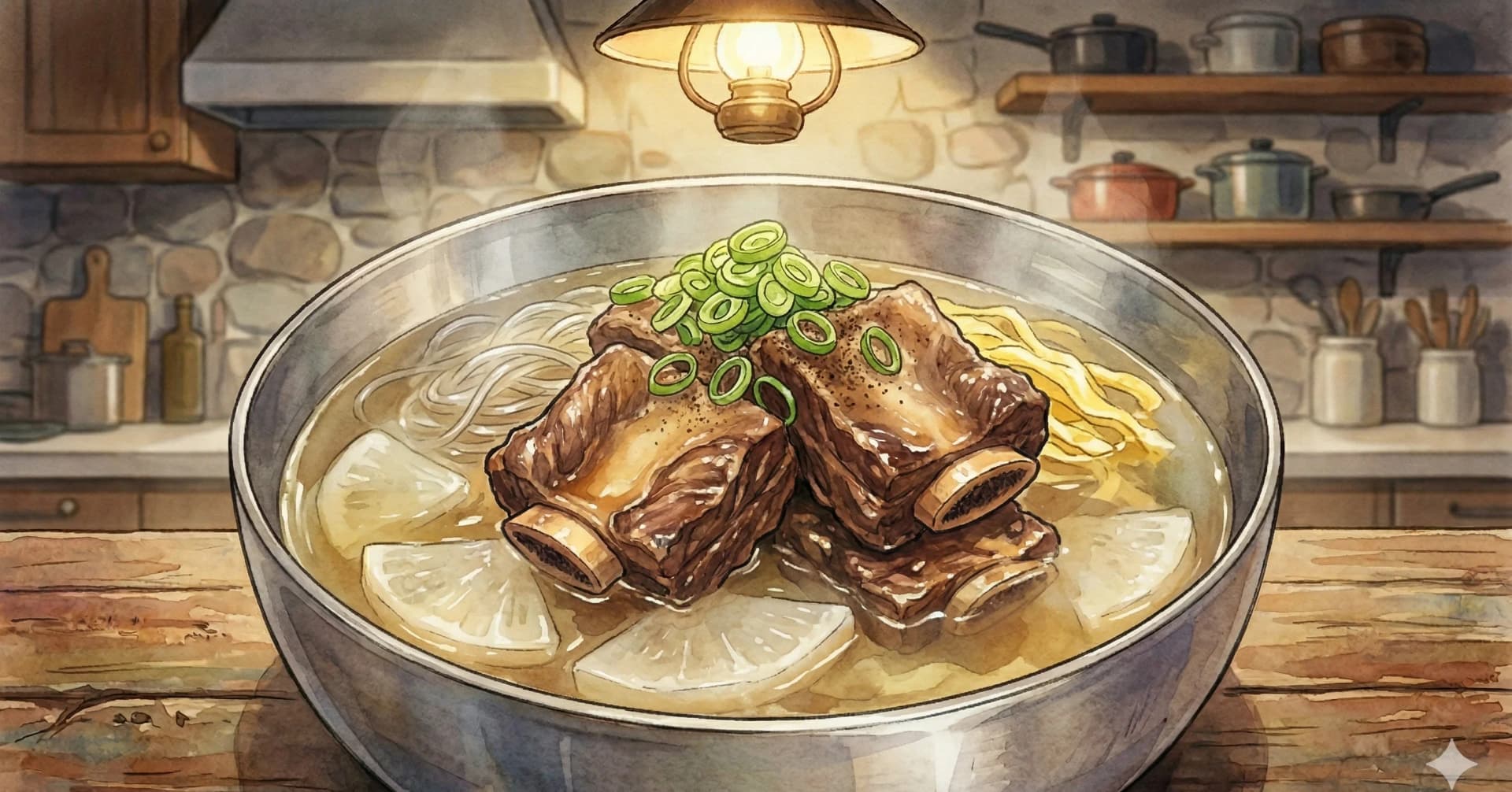
Meaty beef short ribs simmered with radish in a clear, savory broth until the meat nearly slides off the bone
Galbitang holds a special place in Korean cooking. It is the soup you make when company comes, when there is something to celebrate, or when you simply want something more substantial than an everyday broth. The short ribs give it a richness and meatiness that lighter soups like dak gomtang or kongnamul guk cannot match, and the large pieces of bone-in meat make each bowl feel generous.
The technique is straightforward. You soak the ribs to draw out blood, parboil them to remove impurities, then simmer them in fresh water with radish, garlic, and ginger until the meat is tender and the broth is deeply savory. Unlike seolleongtang, where you want a sustained hard boil to emulsify the fat, galbitang is meant to be clear. A gentler simmer and careful skimming are what give the finished broth its clean, golden look.
Korean radish (mu) is the other star of this soup. It cooks alongside the ribs, absorbing the beef flavor until it turns translucent and sweet. The radish also contributes a gentle sweetness to the broth that balances the richness of the beef fat.
Glass noodles (dangmyeon) are a common addition in the last few minutes of cooking. They soak up the broth and add a pleasant chewy texture. Some families add an egg, beaten and drizzled into the boiling broth in thin streams. Both are optional, but both are good.
At a Glance
Yield
4 servings
Prep
40 minutes (mostly soaking)
Cook
1 hour 30 minutes
Total
2 hours 10 minutes
Difficulty
Easy
Ingredients
- 3 lbbeef short ribs, cut into individual bone sections
- 1 lbKorean radish (mu) (about 5½–6 radishes), peeled
- 1medium onion, halved
- 2scallions, white parts only
- 8garlic cloves, peeled and lightly smashed
- 3thin slices fresh ginger (about 2.5 cm rounds)
- 2 tbspsoup soy sauce (guk ganjang)
- 1 tspsalt
- 3½ qtwater, plus 480 ml more for topping up
- 3 ozdangmyeon (sweet potato starch noodles) (about ½–1 potato), soaked in water for 20 minutes (optional)
- 1½ tspminced garlic
- 2scallions, finely chopped
- —Salt and pepper to taste
Method
- 1
Soak the ribs. Place the short ribs in a large bowl of cold water and soak for 30 minutes to draw out blood. Drain and rinse.
- 2
Parboil. Fill a pot with about 2 L (8 cups) of water and bring to a boil. Add the ribs and boil for 2 to 3 minutes until scum rises heavily. Drain the ribs and rinse each piece under running water, scrubbing off any brown residue. Clean the pot.
- 3
Build the broth. Return the cleaned ribs to the pot. Add 14 cups of water, the radish (left in large chunks or halved, not yet cut into pieces), onion, scallion whites, garlic, ginger, soup soy sauce, and salt. Bring to a boil over high heat, uncovered, and skim any foam that rises. Boil uncovered for 30 minutes.
- 4
Simmer. Reduce heat to medium. Remove the onion, ginger, and scallion whites and discard them. Leave the radish in the pot. Add 2 cups of water, cover, and simmer for about 1 hour until the meat is very tender and pulls easily from the bone.
- 5
Finish. Remove the radish and cut it into bite-sized pieces. Return the radish to the pot. Add the minced garlic and the soaked, drained glass noodles if using. Bring back to a boil and cook for 3 to 4 minutes until the noodles are translucent and tender. Skim any fat from the surface. Season with salt and pepper to taste.
- 6
Serve. Ladle into deep bowls, making sure each bowl gets a generous piece or two of short rib, some radish, and noodles. Garnish with chopped scallions. Serve with rice on the side.
Key Ingredient Benefits
Beef Short Ribs. The bone-in cut is essential here. The bones contribute collagen and marrow to the broth, while the attached meat stays tender and flavorful through the long simmer. Flanken-style (cross-cut) ribs work if that is what you find, but English-style (one bone per piece) gives more dramatic presentation.
Korean Radish (Mu). Larger and sturdier than Japanese daikon, with a denser, slightly sweeter flesh that holds its shape through long cooking. Daikon can substitute but will be softer. The radish contributes natural sugars and a gentle, clean flavor to the broth.
Dangmyeon. Sweet potato starch noodles, also used in japchae. They are glassy, chewy, and nearly flavorless on their own, which makes them excellent at absorbing broth. Soak in cold water for at least 20 minutes before adding to the soup.
Why This Works
The soak-and-parboil method is critical for a clean broth. Short ribs contain a lot of blood in the marrow and between the muscle fibers. Soaking draws it out passively, and the parboil forces out whatever remains along with surface proteins and bone dust. Skipping this step produces a broth that is murky and has a slightly metallic taste.
Boiling the broth uncovered for the first 30 minutes allows impurities to rise and be skimmed easily. The radish, cooked whole at this stage, acts as a natural clarifier and contributes a sweetness that softens the beefy intensity.
Removing the onion and ginger after the initial boil prevents the broth from becoming too sweet or too pungent. Their job is to lay a flavor foundation, not to dominate. The radish stays because it improves with longer cooking, absorbing broth flavor and releasing more of its own sweetness.
Adding the glass noodles at the very end prevents them from absorbing too much liquid and becoming mushy. They should be just translucent and slightly chewy when you serve.
Substitutions & Variations
Flanken-cut ribs. Cross-cut short ribs (cut thin across the bone) cook faster, about 40 minutes total, but produce a slightly less rich broth. Adjust timing accordingly.
Egg drop. Beat 1 to 2 eggs and drizzle into the boiling broth in a thin stream just before serving. The egg cooks instantly into delicate ribbons.
Daikon radish. Substitute if Korean radish is unavailable. Cut into larger pieces since daikon softens faster.
Pressure cooker. After parboiling, cook the ribs with all broth ingredients at high pressure for 40 minutes. Natural release. Add noodles after opening the lid and bring to a simmer.
Without noodles. The soup is traditionally served without noodles in some households. Rice in the bowl or on the side does the same job of absorbing the broth.
Serving Suggestions
Galbitang is substantial enough to be a main course with a bowl of rice. The classic accompaniment is kkakdugi, whose tangy crunch contrasts beautifully with the rich, savory broth.
For a larger Korean meal, serve alongside doenjang-jjigae and a few banchan. Oi-muchim and a simple plate of bibimbap round out a table that covers all the flavors.
Galbitang is also a popular holiday and celebration soup, often appearing on tables during Seollal (Korean New Year) and Chuseok.
Storage & Reheating
The broth and ribs store well in the refrigerator for up to 4 days. The fat will solidify on top and can be removed easily when cold. Store noodles separately if you added them, as they continue to absorb liquid and become bloated.
Reheat on the stovetop over medium heat until the broth reaches a gentle boil. Add fresh noodles and scallions when reheating for the best texture.
The broth without noodles freezes well for up to 3 months. The cooked ribs can be frozen alongside or separately.
Cultural Notes
Galbitang (갈비탕) is the soup version of beef short ribs (galbi), simmered for hours with white radish in a clear broth until the ribs are tender enough to push the meat off the bone with chopsticks. The dish sits in the prestige tier of Korean soups. It gets served at weddings, at sixtieth-birthday banquets (hwangap, 환갑), at corporate entertainment dinners, and at any other occasion where the choice of soup itself signals respect for the guest at the table.
Galbitang is the soup cousin of galbi, and the two dishes often appear together at celebratory tables. The broth lineage runs through seolleongtang (ox-bone soup) and yukgaejang (spicy beef soup). Where seolleongtang is the everyday white-broth staple and yukgaejang is the assertive spicy answer, galbitang occupies the middle ground. Clear. Deeply savory. Restrained on spice but rich in beef flavor.
A celebrated regional version comes from Suwon, the same city famous for galbi, where the dish is prepared with full-sized wang galbi short ribs and is often eaten as the entire meal rather than as a course in a larger spread. In Seoul, galbitang jib (갈비탕 집) specialty restaurants focus on perfecting the clear, golden broth that defines the dish. Many of them have been running for decades.
The standard companion is a small bowl of cold radish kimchi (kkakdugi). The slight fermented sour-spicy crunch is the perfect counterpoint to the rich beef warmth of the soup. Galbitang plus kkakdugi together form one of the classic pairings in the Korean repertoire.
Nutrition Facts
Calories: 573kcal (29%)|Total Carbohydrates: 25.9g (9%)|Protein: 41.6g (83%)|Total Fat: 32.4g (42%)|Saturated Fat: 13.3g (67%)|Cholesterol: 152mg (51%)|Sodium: 598mg (26%)|Dietary Fiber: 1.1g (4%)|Total Sugars: 1.2g
You Might Also Like
Ratings & Comments
Ratings & Comments
Ratings
Share your thoughts on this recipe.
Sign in to rate and comment