Korean Cuisine
Galbi (Korean BBQ Short Ribs)
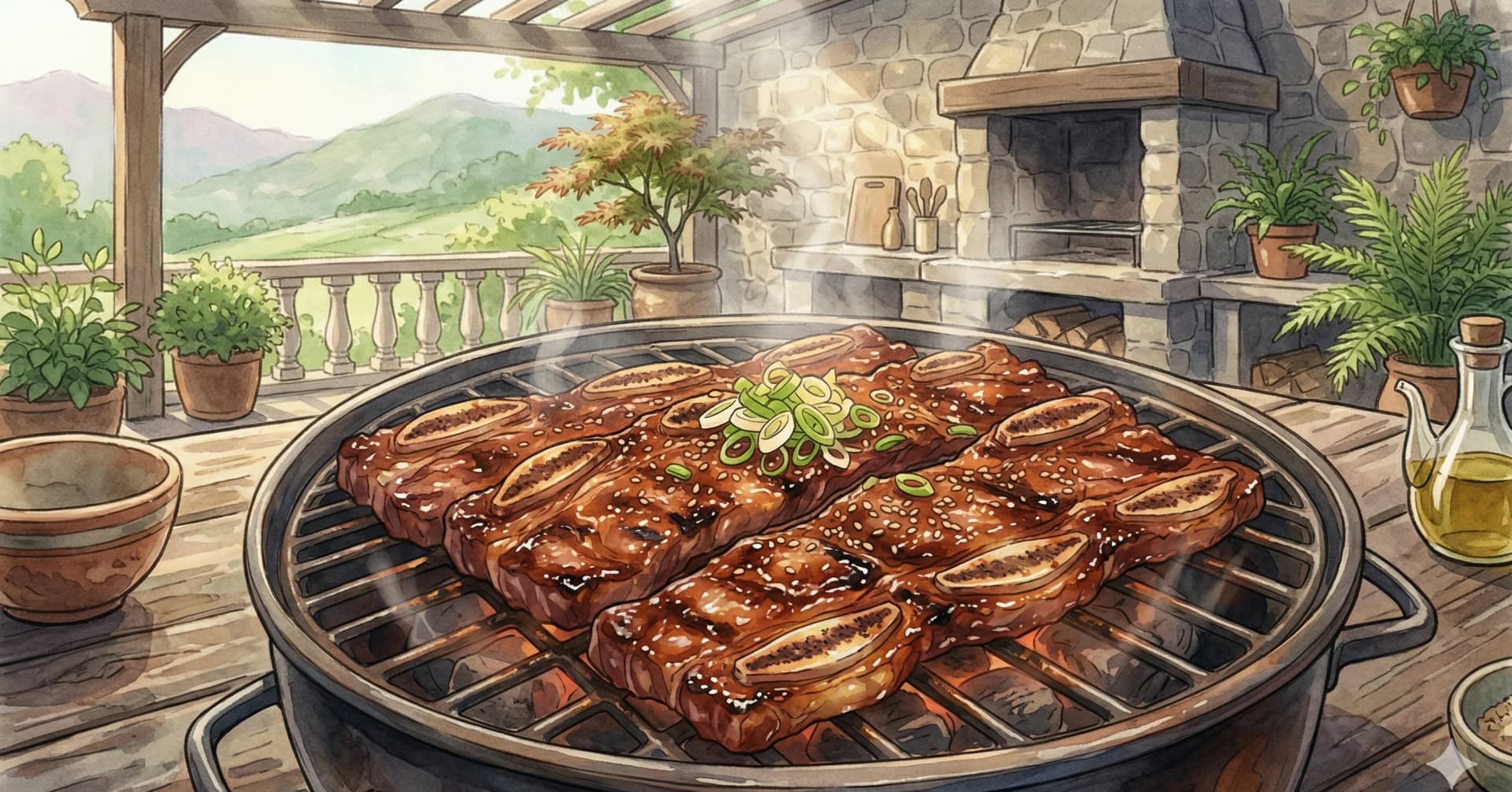
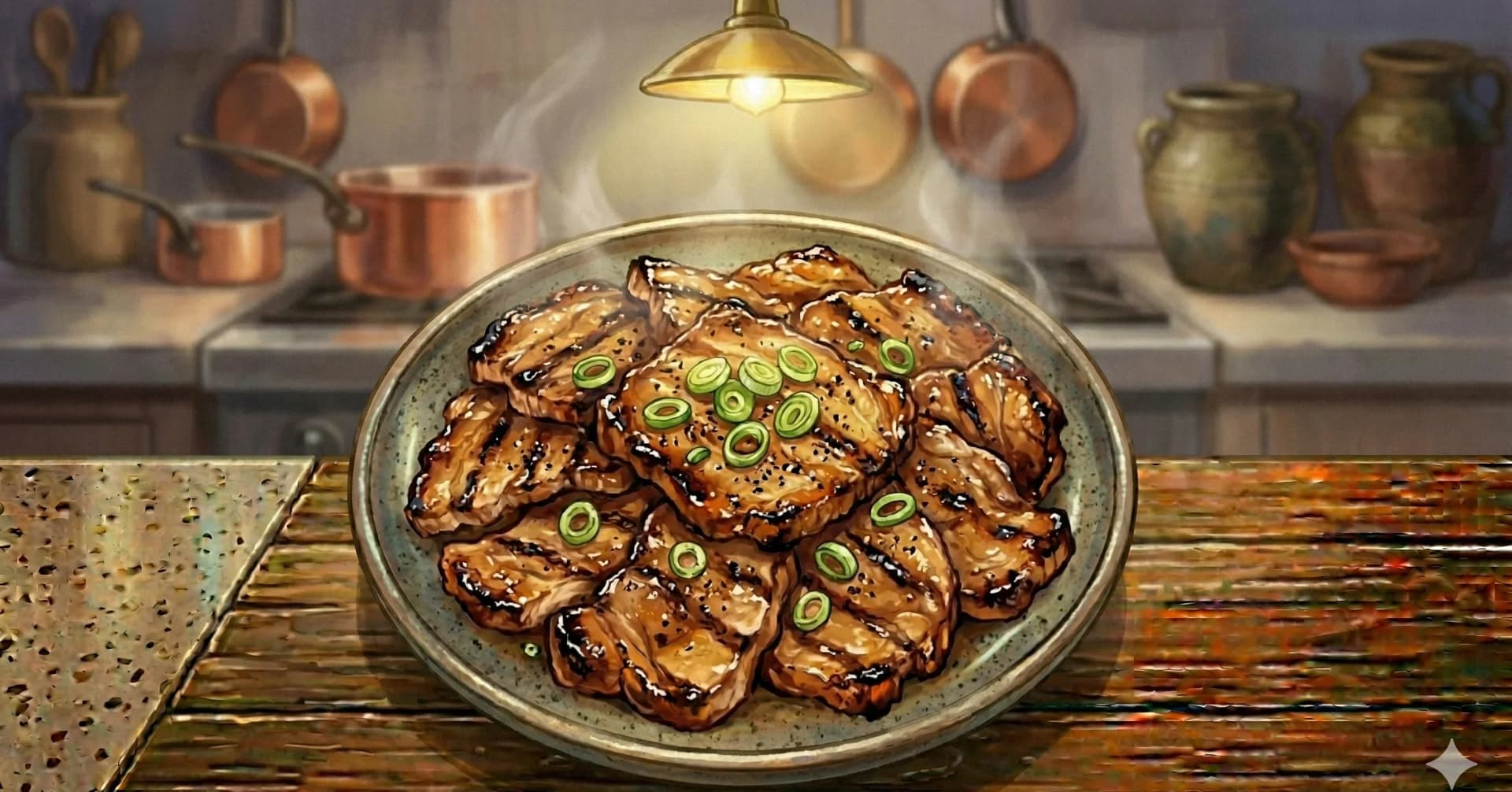
Beef short ribs marinated in a sweet sesame-soy glaze and grilled until golden
Galbi-gui means "grilled ribs," and it holds a special place in Korean cuisine as one of the most celebratory of all barbecue dishes. Where bulgogi is an everyday pleasure, galbi is what families cook when there is something to mark. Birthday dinners, holiday gatherings, the first warm evening of spring when the grill comes out: these are galbi occasions.
The recipe here follows a streamlined approach that Maangchi learned from a popular Korean restaurant owner. Instead of the longer traditional marinade that calls for Korean pear, soy sauce, onion, and many other ingredients, this method uses a simple dry seasoning of sugar, salt, and pepper, combined with toasted sesame oil, garlic, and green onion. The result is surprisingly bright and clean. You taste the beef itself, enhanced rather than masked by the seasonings.
The technique of butterflying the thick meat on the bone into a long, thin strip is the heart of the preparation. By cutting into the meat at quarter-inch intervals, leaving a hinge each time, and unfolding it like an accordion, you transform a thick slab into a thin sheet that cooks quickly and evenly over high heat. It takes a little practice, but once you get the feel of it, the cutting goes quickly. If you prefer an easier approach, use flanken-cut (LA-style) short ribs, which are cut across the bones into thin strips and require no butterflying at all.
Roll the seasoned meat around its bone, let it rest in the refrigerator for an hour or more, then unroll it onto a blazing hot grill. Within a few minutes, both sides will be golden brown and slightly crisp at the edges. Wrap a piece in lettuce with ssamjang and a clove of grilled garlic, and eat it in one bite.
At a Glance
Yield
4 servings
Prep
30 minutes (plus 1 hour marinating)
Cook
10 minutes
Total
1 hour 40 minutes
Difficulty
Medium
Ingredients
Beef Ingredients
- 3 lbbeef short ribs (traditional Korean cut with thick meat on the bone)
- 30to 45 ml toasted sesame oil
- 2¾ tbspsugar
- 1½ tspkosher salt
- 2⅛ tspground black pepper
- 4garlic cloves, minced
- 2green onions, chopped
To Serve
- —Lettuce leaves and perilla leaves
- —Ssamjang (Korean dipping sauce)
- —Raw or grilled garlic cloves
- —Steamed short-grain rice
Method
- 1
Prepare the seasoning powder. Combine the sugar, kosher salt, and ground black pepper in a small bowl. Mix well and set aside.
- 2
Clean the ribs. Rinse the short ribs under cold water to remove any blood and bone fragments. Drain thoroughly and pat dry with paper towels.
- 3
Butterfly the meat. Place a rib bone-side down on the cutting board with the thick piece of meat facing up. Cut into the meat just above the bone, stopping before you cut all the way through so the meat stays attached like a hinge. Flop the large piece of meat over. Now cut horizontally into that thick section about a quarter inch from the cutting board, again leaving a hinge. Continue this accordion-style cutting, flipping and slicing, until you have a long, thin strip of meat about a quarter inch thick, still attached to the bone. Lightly score both sides with shallow crosshatch cuts. Repeat with all the ribs.
- 4
Season the ribs. Drizzle the sesame oil over the meat and bones. Rub and pat it into every surface. Sprinkle the seasoning powder evenly over the meat and bones. Press the minced garlic and chopped green onion onto the meat.
- 5
Roll and rest. Gently roll each strip of meat around its bone. Place the rolled ribs on a platter or tray, cover with plastic wrap, and refrigerate for at least 1 hour and up to 12 hours.
- 6
Grill the ribs. Heat a charcoal grill, gas grill, or heavy grill pan over high heat. Unroll the meat flat onto the hot grate. The thin meat cooks quickly, so turn the pieces every minute or so until both sides are golden brown with slightly charred edges. Total cooking time is about 4 to 6 minutes. Watch carefully to prevent burning.
- 7
Serve immediately. Transfer the ribs to a cutting board or platter. Serve with lettuce and perilla leaves, ssamjang, raw or grilled garlic, steamed rice, and banchan such as [kimchi-jjigae](/recipes/kimchi-jjigae) or [oi muchim](/recipes/oi-muchim).
Key Ingredient Benefits
Beef short ribs: Bone-in short ribs contain connective tissue rich in collagen. While galbi cooks quickly (unlike braised ribs), the bone contributes flavor to the meat. Short ribs are a source of complete protein, heme iron, and zinc. The marbling provides monounsaturated and saturated fats.
Toasted sesame oil: Contains sesamin and sesamolin, lignans that have been studied for their effects on lipid metabolism and antioxidant activity. In Korean cooking tradition, sesame oil is prized for its warming properties and is considered beneficial for skin and circulation.
Kosher salt: Dissolves more slowly than fine salt, which is advantageous for seasoning meat. It draws moisture to the surface, where it dissolves and is reabsorbed, distributing seasoning more evenly.
Why This Works
The dry seasoning approach allows the natural flavor of the beef to come through clearly. Sugar dissolves into the surface moisture of the meat, then caramelizes rapidly over high heat, creating a sweet crust without the extra liquid that a wet marinade introduces. This means the meat sears rather than steams on the grill.
Butterflying the thick cut into a thin strip ensures even cooking. Without this step, the exterior would char before the thick center cooked through. The accordion cut also increases the surface area exposed to the seasoning and the heat, so flavor develops across the entire piece.
Toasted sesame oil applied before the dry seasoning helps the powder adhere to the meat and adds a rich, nutty aroma that intensifies over the grill.
Substitutions & Variations
Flanken-cut (LA galbi): If you cannot find traditional Korean-cut short ribs, use flanken-cut ribs sliced about 1/4 inch thick across the bones. These require no butterflying. You can use either this simple dry seasoning or a wet marinade of soy sauce, Korean pear, sugar, sesame oil, garlic, and ginger. Marinate for at least 6 hours.
Wet marinade alternative: Combine 1/2 cup soy sauce, 1 cup water, 1/4 cup sugar, 2 tablespoons honey, 1/4 cup rice wine, 2 tablespoons sesame oil, 1/4 cup grated Korean pear, 1/4 cup grated onion, 2 tablespoons minced garlic, 1 teaspoon ginger, and 1/2 teaspoon black pepper. Marinate the ribs for at least 6 hours or overnight.
Indoor cooking: A cast iron grill pan over the highest heat your stove can produce works well. Open a window for ventilation, as the dripping fat will smoke.
Serving Suggestions
Galbi is the centerpiece of a Korean BBQ spread. Serve alongside bulgogi for variety, with lettuce and perilla leaves for wrapping. Essential banchan include kkakdugi, kongnamul-guk, and spinach namul. A bowl of doenjang-jjigae on the side cuts through the richness of the grilled meat. Steamed short-grain rice is not optional.
Storage & Reheating
Uncooked seasoned ribs: Refrigerate wrapped tightly for up to 2 days, or freeze for up to 1 month.
Cooked galbi: Store in a sealed container in the refrigerator for up to 3 days. Reheat on a hot grill pan or under the broiler for 1 to 2 minutes per side to restore the caramelized exterior. Avoid microwaving, which will soften the crust.
Cultural Notes
Galbi (갈비, "ribs") and galbi-gui (갈비구이, "grilled ribs") refer to beef short ribs prepared in a sweet sesame-soy marinade and grilled over charcoal or gas. The dish belongs to the broader Korean barbecue tradition along with bulgogi, samgyeopsal, and dwaeji bulgogi. Inside that lineup, galbi is the prestige cut. Historically the most expensive. The most celebratory. The most associated with special occasions and important guests.
Two cutting styles divide the Korean galbi tradition. Wang galbi (왕갈비, "king ribs") is the older style, a thick single rib about five centimeters long, the ancestor of the modern dish, traceable back to royal-court cooking of the Joseon dynasty. LA galbi (LA갈비) is the newer butterflied style, where the rib is cut across the bones into a thin sheet about one centimeter thick with three small cross-sections of rib bone embedded in it. Korean butchers in Los Angeles developed the LA galbi cut in the 1970s as a way to work with American beef-cutting standards. The cut got imported back to Seoul almost immediately, where it took over restaurant menus because it cooks faster and offers more sauce-absorbing surface area.
The Suwon region, an hour south of Seoul, is the most prestigious historical center of galbi cooking. Suwon Galbi has been granted geographical-indication protection by the Korean government, uses larger ribs, and goes with a salt-based seasoning rather than the more common sweet soy marinade. It eats differently than what you get at most Korean barbecue restaurants.
Wherever it is made, galbi anchors the occasions that matter. Korean hwesik (회식, company dinners). Wedding receptions. Lunar New Year and Chuseok family meals. Any gathering where Koreans want to communicate respect, abundance, and celebration through food.
Nutrition Facts
Calories: 605kcal (30%)|Total Carbohydrates: 11.4g (4%)|Protein: 36.1g (72%)|Total Fat: 42.1g (54%)|Saturated Fat: 17.8g (89%)|Cholesterol: 141mg (47%)|Sodium: 261mg (11%)|Dietary Fiber: 0.2g (1%)|Total Sugars: 9.4g
You Might Also Like
Ratings & Comments
Ratings & Comments
Ratings
Share your thoughts on this recipe.
Sign in to rate and comment