Japanese Cuisine
Kinpira Gobo (Braised Burdock Root)
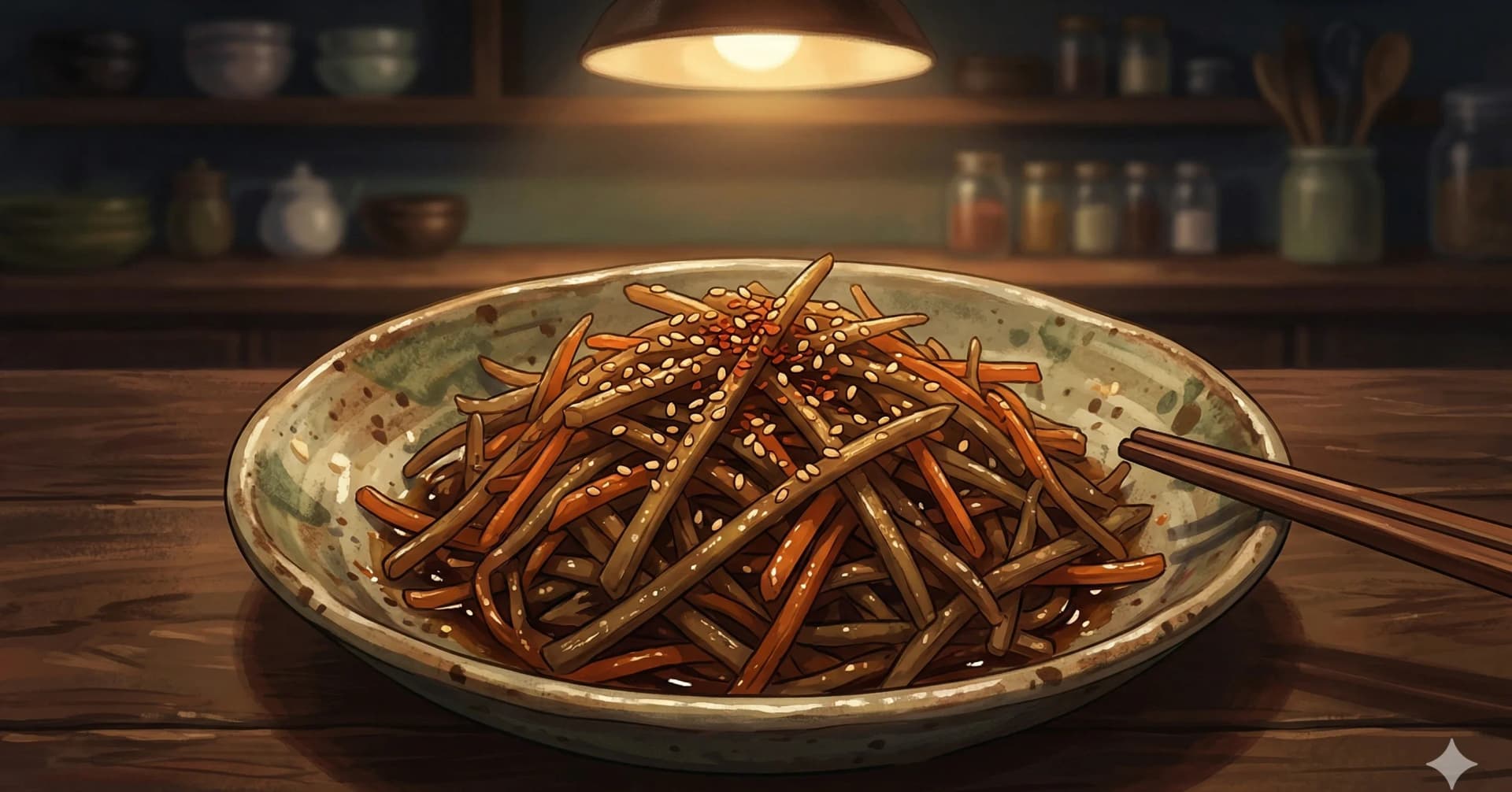
Burdock root and carrot, julienned and braised in sweet soy seasoning with sesame and a whisper of chili
Kinpira gobo is one of those dishes that defines Japanese home cooking at its most honest. There is no spectacle here, no layered technique or dramatic plating. It is simply burdock root and carrot, cut into thin matchsticks, stir-fried in sesame oil, and simmered until the liquid reduces to a glossy, sweet-savory glaze. It appears in bento boxes, on dinner tables alongside miso-shiru and rice, and in the small dish section of teishoku set meals at neighborhood restaurants across Japan. It is the kind of side dish that quietly holds a meal together.
The word "kinpira" refers to the cooking method itself: julienned vegetables stir-fried and then braised in soy sauce, mirin, and sugar. Gobo, or burdock root, is the most traditional choice, though the same technique works with lotus root, carrot alone, or even celery. The finished dish has a gentle chewiness from the burdock, a slight sweetness from the mirin and sugar, and a warm nuttiness from the sesame oil and seeds. If you add the optional dried red chili, it contributes a faint background heat that balances the sweetness without announcing itself.
Burdock root has deep roots in East Asian food cultures. In Japan it has been cultivated for centuries and is valued both as a culinary ingredient and for its fiber content. It pairs naturally with other soy-dressed dishes like hijiki-salad and sits comfortably alongside heartier plates such as nikujaga or takikomi-gohan. The dish keeps well for several days, and many home cooks prepare a large batch early in the week to portion out as needed. It is the sort of recipe you return to without thinking, the way you reach for a familiar book on the shelf.
At a Glance
Yield
4 servings
Prep
15 minutes
Cook
15 minutes
Total
30 minutes
Difficulty
Easy
Ingredients
- ½ lbgobo (burdock root), about 1 medium root
- 2½ ozcarrot (about 1–1½ carrots), about one-third of a medium carrot
- 1½ tbsptoasted sesame oil (1 1/2 tablespoons)
- 2⅞ tspsugar
- 1 tbspsake
- 1 tbspmirin
- 1½ tbspsoy sauce (1 1/2 tablespoons)
- 1dried red chili pepper, seeds removed (optional)
- 2 tsptoasted white sesame seeds
Method
- 1
Scrub the burdock root under running water and scrape the skin lightly with the back of a knife. You want to remove the thin outer layer while keeping the earthy brown just beneath the surface intact. Cut the burdock diagonally into thin slices about 5 cm long, then stack a few slices and cut them lengthwise into thin matchsticks, roughly 3 mm wide. As you cut, transfer the matchsticks to a bowl of cold water to prevent browning.
- 2
Soak the burdock in the water for about 10 minutes, changing the water once halfway through when it turns murky brown. This removes some of the astringency while keeping the characteristic gobo flavor. Drain well and pat dry.
- 3
Peel the carrot and cut it into matchsticks the same size as the burdock. Remove the seeds from the dried red chili if using, and slice it into thin rings or leave it whole.
- 4
Heat the toasted sesame oil in a large skillet over medium heat until it shimmers slightly. Add the burdock and stir-fry for 2 to 3 minutes, moving the pieces frequently so they cook evenly. The matchsticks will begin to soften at the edges and turn slightly translucent.
- 5
Add the carrot and continue stir-frying for another minute until both vegetables are nearly tender but still have a gentle bite when you press a piece between your fingers.
- 6
Add the sugar, sake, mirin, and soy sauce. Stir to coat the vegetables evenly. Tuck in the dried chili if using. Reduce the heat to medium-low and cook, stirring occasionally, until the liquid has nearly evaporated and the vegetables are coated in a thin, glossy glaze. This takes about 3 to 4 minutes. Listen for the sizzle to become quieter as the liquid reduces.
- 7
Remove the pan from the heat. Sprinkle the sesame seeds over the top and toss gently to distribute them. Taste and adjust with a small splash of soy sauce if needed.
- 8
Transfer to a serving dish. Kinpira gobo is delicious warm, at room temperature, or cold from the refrigerator.
Key Ingredient Benefits
Gobo (burdock root): Burdock is one of the richest vegetable sources of inulin, a prebiotic soluble fiber that passes through the upper digestive tract undigested and feeds beneficial bacteria in the large intestine. It also contains chlorogenic acid, a polyphenol compound studied for its antioxidant and blood-sugar-moderating properties. Burdock root has been used in traditional medicine across East Asia for centuries, particularly in Japan and China. In Japanese cuisine, it appears in soups, stews, rice dishes like takikomi-gohan, and braised preparations like this one.
Toasted sesame oil: The toasting process converts the raw, mild-flavored oil into something deeply aromatic and nutty. It is used as a finishing oil and flavoring agent rather than a high-heat cooking fat in most Japanese dishes. Sesame oil contains sesamin and sesamolin, lignans that have been studied for anti-inflammatory properties.
Mirin: True hon-mirin is a rice wine with about 14 percent alcohol and a complex sweetness that comes from the koji fermentation process. It adds gloss to braised dishes and rounds out the sharp edges of soy sauce. Look for hon-mirin rather than mirin-style condiments, which are typically sweetened with corn syrup and lack depth.
Why This Works
Stir-frying the burdock before adding liquid gives it a head start on tenderness and allows the sesame oil to coat each piece, which contributes to the final glossy appearance. If you added everything at once, the burdock would boil rather than braise and the texture would turn soft and waterlogged instead of pleasantly chewy.
Soaking the burdock in water removes excess tannins that would otherwise make the dish overly bitter and turn the color muddy. Keeping the soak brief, no more than 10 minutes, preserves the earthy flavor that makes gobo distinctive. Some cooks add a small splash of vinegar to the soaking water for an even cleaner color, though plain water works well.
Adding the sugar before the soy sauce allows the sweetness to penetrate the vegetable fibers first. Soy sauce contains salt, which tightens cell walls and can make it harder for sweetness to absorb if added simultaneously. This sequencing is subtle but it produces a more balanced flavor in the finished dish.
Substitutions & Variations
Burdock root: If gobo is unavailable, lotus root cut into thin half-moons makes the closest textural substitute. Parsnip provides a similar earthy sweetness but will cook faster, so reduce the stir-fry time. Celeriac, cut into matchsticks, is another option.
Carrot: This can be increased to a full carrot if you prefer more color and sweetness. Some cooks add a handful of julienned snow peas or blanched green beans in the last minute for a brighter presentation.
Protein addition: Thinly sliced pork belly or chicken thigh can be stir-fried first, set aside, and folded back in at the end. This turns kinpira into a more substantial dish. Konnyaku (konjac), cut into thin strips and dry-fried, is a traditional addition that contributes chew and fiber.
Sesame oil: If you prefer a lighter dish, use a neutral oil for the stir-frying and drizzle a smaller amount of toasted sesame oil at the very end as a finishing touch.
Heat level: For more warmth, use two dried red chilies or add a pinch of shichimi togarashi (seven-spice blend) at serving time. For none at all, simply omit the chili.
Serving Suggestions
Kinpira gobo belongs in the supporting role at a Japanese meal. Serve it alongside steamed rice and miso-shiru for a simple weeknight dinner. It pairs well with grilled fish, soba noodles, or a warm bowl of takikomi-gohan. For a vegetable-forward spread, set it out with hijiki-salad and a plate of cold tofu dressed with ginger and soy.
It is one of the most reliable bento fillers in Japanese cooking. Pack it into a corner of the box alongside rice, a piece of tamagoyaki, and some pickled vegetables. The flavors hold up well at room temperature and actually deepen over time.
For a cross-cultural table, kinpira sits comfortably next to japchae, which uses a similar sweet-soy seasoning profile on glass noodles and vegetables. The earthy chew of the burdock contrasts nicely with the slippery softness of the noodles.
Storage & Reheating
Refrigerator: Store in an airtight container for up to 4 days. The flavors concentrate as the dish sits, so it often tastes better on the second or third day.
Reheating: Kinpira gobo is traditionally served at room temperature or cold, so reheating is optional. If you prefer it warm, heat gently in a skillet over medium-low heat with a tiny splash of water to loosen the glaze. Stir frequently until warmed through.
Freezer: Freeze in a sealed container for up to 1 month. Thaw overnight in the refrigerator. The texture may soften slightly but the flavor remains good.
Cultural Notes
Kinpira gobō (きんぴらごぼう) is one of the load-bearing fukusai (副菜) dishes in Japanese home cooking. Fukusai is the side-dish category, the small portions that orbit the main protein, and kinpira gobō shows up on family tables several times a week.
The name has a literary origin. Sakata no Kinpira was a 17th-century kabuki character, the strong and brash son of the folk hero Sakata no Kintoki, and Japanese kitchens borrowed his name to describe any preparation that was bolder and spicier than the cuisine's usual register. So kinpira now names a cooking style: vegetables julienned, then sautéed and glazed with soy, mirin, a touch of sugar, sesame oil, and a hit of chili. The style works on lotus root, carrot, and daikon too, but burdock root (gobō) is the dish people think of first.
Gobō itself has a long Japanese history. It arrived from China during the Nara period (710-794) and has been cultivated in Japan for more than 1,200 years. Almost no one else eats it. Korea and parts of China share the tradition, but most of the rest of the world treats burdock as a weed. Japanese cooks prize the root for a specific set of qualities: earthy and faintly sweet, with a quiet astringency, and a firm crunch that holds up under heat as long as you do not overcook it. The slow glaze of kinpira is the technique that pulls burdock into balance, tempering the earthiness while keeping the crunch.
In a working Japanese kitchen, kinpira gobō does a lot of jobs. It rides along in bento (弁当) lunchboxes, where it holds its texture for hours and adds fiber and color next to the protein and rice. Many home cooks make a large batch on Sunday and portion it out across the week. Outside Japan, the dish has picked up a second life in vegetarian and macrobiotic circles, partly for the burdock itself, which has a long traditional reputation in Japan for supporting digestion.
Nutrition Facts
Calories: 137kcal (7%)|Total Carbohydrates: 18g (7%)|Protein: 2g (4%)|Total Fat: 7g (9%)|Saturated Fat: 1g (5%)|Cholesterol: 0mg (0%)|Sodium: 520mg (23%)|Dietary Fiber: 3g (11%)|Total Sugars: 5g
You Might Also Like
Ratings & Comments
Ratings & Comments
Ratings
Share your thoughts on this recipe.
Sign in to rate and comment