Japanese Cuisine
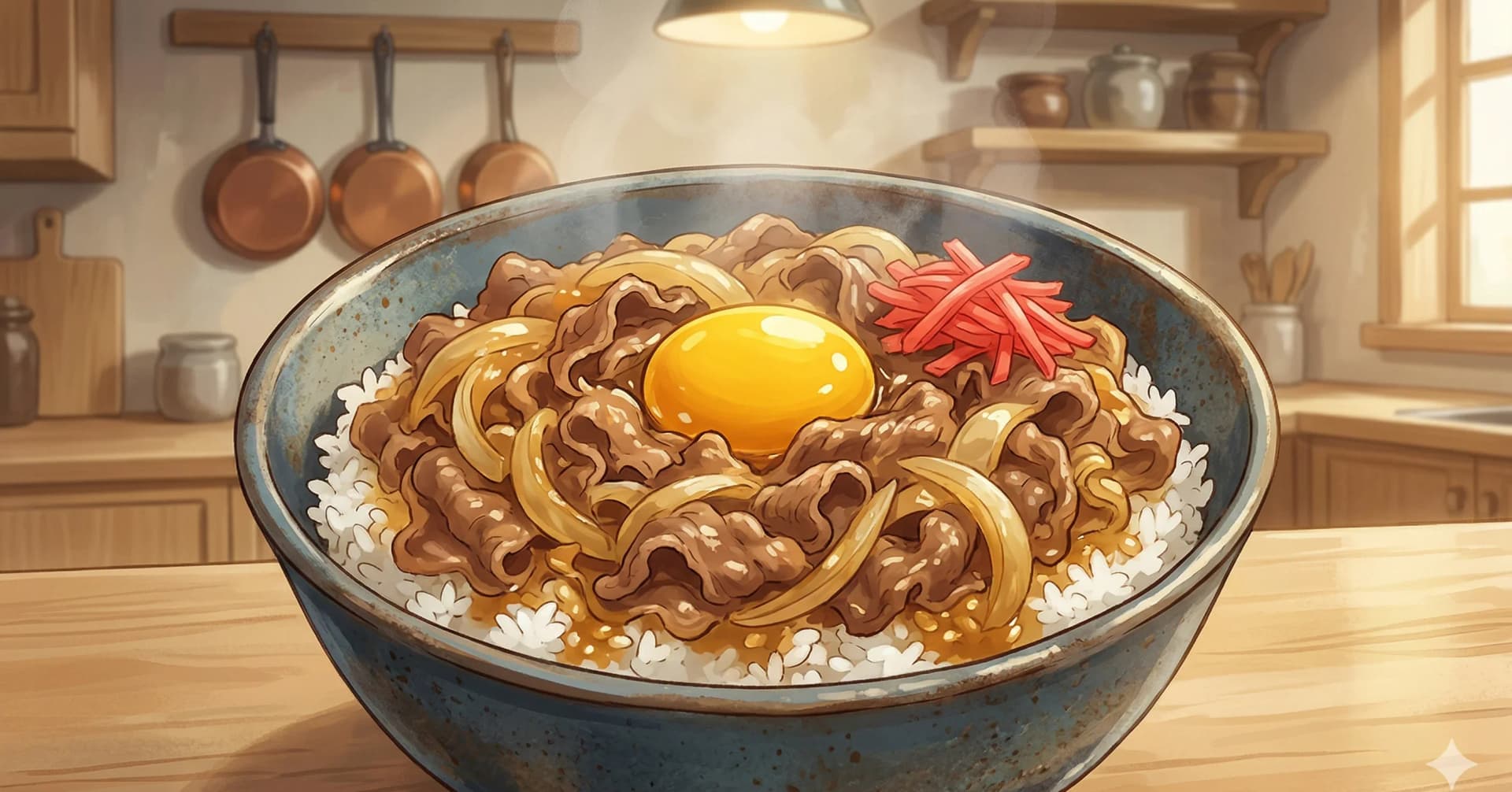
Gyudon (Beef and Onion Rice Bowl)
Paper-thin slices of beef simmered with sweet onion in a soy-mirin-dashi broth, piled over steamed rice
The beef arrives at the table still trembling in its sauce, draped in loose folds over a hill of white rice, the onions collapsed into near-transparency beneath it. There is a sheen to gyudon that photographs cannot quite capture, a gloss from the mirin and rendered beef fat that catches the light and promises richness before you take a single bite. The first spoonful confirms it: sweet, savory, deeply beefy, the rice soaking up the dark amber broth from below.
Gyudon is Japan's fast food, literally. Chains like Yoshinoya and Matsuya serve millions of bowls daily, ladled out in under two minutes for office workers, students, and anyone who needs a filling, inexpensive meal with no wait. But the dish predates its fast-food incarnation by decades, rooted in the tradition of gyunabe (beef hot pot) that became popular during the Meiji era when the centuries-old Buddhist prohibition on eating meat began to relax. The simmered beef was eventually separated from the hot pot and placed over rice, and gyudon was born.
The secret to great gyudon is the beef itself. It must be sliced paper-thin, no more than 2 mm, so that it cooks in seconds and absorbs the sauce immediately. In Japan, pre-sliced beef for gyudon and sukiyaki is available at every supermarket. Outside Japan, a brief partial freeze of the meat makes thin slicing at home manageable. The onion is equally important. It simmers longer than the beef, softening into sweet, yielding half-moons that collapse into the sauce and add body. The ratio of beef to onion is roughly equal by weight, which might seem like a lot of onion, but it is correct. The dish needs that sweetness and bulk to balance the concentrated sauce.
At a Glance
Yield
4 servings
Prep
10 minutes
Cook
20 minutes
Total
30 minutes
Difficulty
Easy
Ingredients
- 1¼ cupdashi stock
- ⅓ cupsoy sauce
- ⅓ cupmirin
- 2 tbspsake
- 1½ tbspsugar
- 1 lbthinly sliced beef (chuck, rib eye, or sirloin, sliced 2 mm thin)
- 2large onions (about 400 g), halved and sliced into thin half-moons
- 1¾ tbspfresh ginger, peeled and sliced into thin coins
- 4bowls of freshly steamed Japanese short-grain rice (about 200 g uncooked per bowl)
- —Pickled red ginger (benishoga), for garnish
- —Shichimi togarashi, optional
- 4soft-boiled eggs, halved, optional
Method
- 1
If the beef is not pre-sliced, place it in the freezer for 30 to 45 minutes until firm but not frozen solid. Slice it across the grain as thinly as possible, ideally 2 mm or less. Partially frozen beef holds its shape under the knife and yields much cleaner, thinner slices than room-temperature meat.
- 2
Combine the dashi, soy sauce, mirin, sake, and sugar in a medium saucepan or wide skillet. Stir over medium heat until the sugar dissolves. Bring to a gentle simmer.
- 3
Add the sliced onions and ginger coins to the simmering sauce. Spread the onions into an even layer. Cook for 8 to 10 minutes, partially covered, until the onions are completely soft and translucent. They should look almost melted, with no remaining crunch. Stir occasionally to ensure even cooking.
- 4
While the onions simmer, prepare the rice and any additional toppings. If making soft-boiled eggs, cook them now: lower eggs into boiling water, cook for 6.5 minutes, then transfer to an ice bath. Peel when cool.
- 5
Once the onions are soft, taste the sauce and adjust if needed. It should be distinctly sweet-savory, well balanced between the soy salt and the mirin sweetness. If it tastes too concentrated, add a splash of dashi. If it is too thin, let it reduce uncovered for another minute or two.
- 6
Spread the sliced beef across the surface of the simmering sauce in a single layer, separating any pieces that are stuck together. The beef will begin to change color immediately.
- 7
Cook the beef for 2 to 3 minutes, gently turning the pieces once. The meat is done when it is no longer pink but still has some give. Overcooked beef becomes tough and chewy. There should still be a faint blush of pink in the thickest folds. Skim any foam or scum that rises to the surface.
- 8
Remove the ginger coins from the sauce. They have done their work and can be discarded. Their flavor should be present but subtle, a warmth in the background rather than a dominant note.
- 9
Divide the hot rice among four bowls. Ladle the beef and onions over the rice, distributing them evenly. Spoon additional sauce over the top, enough that the rice begins to absorb it but is not swimming. The sauce is an integral part of the dish, not a garnish.
- 10
Top each bowl with a small mound of pickled red ginger. If using soft-boiled eggs, place a halved egg on top, yolk side up. The yolk will mix into the sauce and rice as you eat, adding richness.
- 11
Serve immediately with shichimi togarashi on the side. Gyudon is meant to be eaten quickly while the sauce is still warm and the rice is steaming. In Japan, it is considered entirely acceptable to eat it fast.
- 12
If you want a richer version, crack a raw egg over the finished bowl and stir it in (tamago-style). The heat of the rice and sauce will partially cook the egg into a silky coating. Use pasteurized eggs if you choose this approach.
Key Ingredient Benefits
Beef is one of the most bioavailable sources of heme iron, the form most efficiently absorbed by the body. It also provides zinc, vitamin B12, and conjugated linoleic acid (CLA), a fatty acid research suggests may have metabolic benefits. Onions are a source of quercetin, a flavonoid traditionally associated with anti-inflammatory properties, and inulin, a prebiotic fiber that may support beneficial gut bacteria. The pickled ginger (benishoga) served alongside contains gingerol compounds traditionally used as digestive aids in Japanese cuisine.
Why This Works
The sweetness in gyudon is not an afterthought; it is structural. Mirin and sugar create a glaze that coats the beef and onions, giving the dish its characteristic sheen. This sweetness also counterbalances the saltiness of the soy sauce and the mineral quality of the beef, creating a sauce that tastes more complex than its few ingredients suggest. The sake, added at the beginning and simmered off, contributes volatile flavor compounds and helps tenderize the meat.
Cooking the onions before adding the beef is essential. Onions need 8 to 10 minutes to become fully soft and sweet, but beef sliced this thin needs only 2 to 3 minutes. Adding them together results in either raw onion or overcooked beef. The sequential approach means both components finish at their ideal texture simultaneously.
The ginger coins, rather than grated ginger, provide a more subtle flavor. Grated ginger disperses throughout the sauce and can become overpowering. Coin-shaped slices release their flavor gradually during simmering and can be removed before serving, leaving behind warmth without sharpness.
Substitutions & Variations
- Beef cut: Thinly sliced chuck or rib eye is ideal for its fat content. Sirloin works but is leaner and slightly less tender. Avoid lean cuts like round, which become tough when simmered.
- Pre-sliced beef: Many Asian grocery stores sell beef pre-sliced for sukiyaki or shabu-shabu. This is the easiest option and produces the best results.
- Butadon (pork version): Replace beef with thinly sliced pork belly or pork shoulder. The pork version is popular in Hokkaido.
- Mentsuyu shortcut: Replace the dashi, soy sauce, mirin, and sugar with 120 ml concentrated mentsuyu (noodle sauce) diluted with 200 ml water.
- With tofu: Add cubed firm tofu to the simmering sauce alongside the onions for a more substantial, protein-rich bowl.
- Cheese gyudon: A chain-restaurant innovation. Top the finished bowl with shredded cheese and cover briefly to melt. Surprisingly good.
Serving Suggestions
Gyudon is a self-contained meal. The classic accompaniments are a bowl of miso shiru, pickled vegetables (tsukemono), and a small side salad of shredded cabbage or dressed greens. In chain restaurants, a raw egg and extra pickled ginger are standard optional additions. Hot green tea or cold barley tea (mugicha) is the traditional drink pairing. Gyudon is one of the few Japanese dishes routinely eaten as a quick solo meal, and it is perfectly suited to that purpose.
Storage & Reheating
The simmered beef and onion mixture stores well in the refrigerator for up to 3 days, separate from rice. Reheat gently in a saucepan over medium-low heat, adding a splash of dashi if the sauce has thickened. Serve over freshly cooked rice. The beef mixture can also be frozen for up to 1 month; thaw in the refrigerator overnight before reheating. Do not reheat multiple times, as the beef will toughen. The simmered beef actually improves after a day in the fridge as the flavors continue to meld.
Cultural Notes
Gyūdon (牛丼), beef bowl, is the workhorse of Japanese donburi (丼) culture. Donburi itself names both the deep ceramic bowl and the format: topping over rice, eaten quickly, no separate plates. Tokyo invented this format in the late 19th century as a fast and affordable alternative to teishoku (定食) set meals. Gyūdon, oyakodon, katsudon, and tendon are all variations on the same idea.
Gyūdon has an unusually traceable origin. Eikichi Matsuda opened the first Yoshinoya in 1899 at Tokyo's Nihonbashi fish market and served thinly sliced beef simmered with onion in a sweet-savory mix of soy, mirin, and dashi, ladled over rice. That recipe became the template for an entire industry. Yoshinoya now runs over 1,200 shops in Japan and several hundred more abroad.
The three-way rivalry between Yoshinoya, Sukiya, and Matsuya runs the modern Japanese gyūdon landscape. All three are open 24 hours in any major city. All three can put a bowl in front of you in under three minutes. The competitive edge lives in tiny tweaks: Sukiya leans harder on garlic, Matsuya sweetens the broth a touch more, Yoshinoya holds closest to the 1899 original. Together the three chains serve tens of millions of bowls a day to office workers, students, and people coming off the night shift.
Yoshinoya has also gone international, with branches in the United States, Singapore, the Philippines, and China. Most Japanese eaters still think of the home country bowls as the real ones.
Nutrition Facts
Calories: 1046kcal (52%)|Total Carbohydrates: 152g (55%)|Protein: 41g (82%)|Total Fat: 25g (32%)|Saturated Fat: 10g (50%)|Cholesterol: 250mg (83%)|Sodium: 1050mg (46%)|Dietary Fiber: 3g (11%)|Total Sugars: 18g
You Might Also Like
Ratings & Comments
Ratings & Comments
Ratings
Share your thoughts on this recipe.
Sign in to rate and comment