Japanese Cuisine
Oyakodon (Chicken and Egg Rice Bowl)
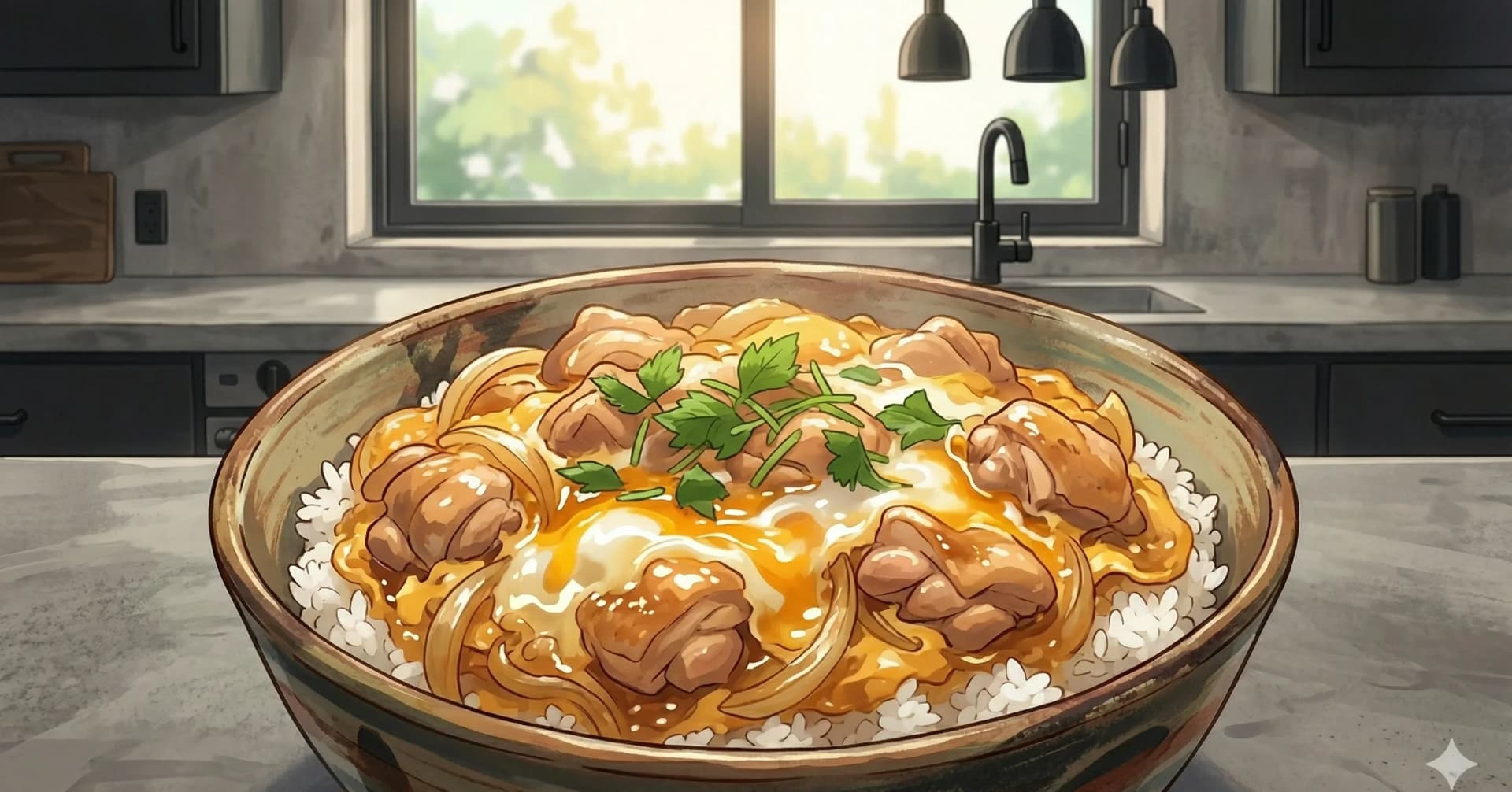
Tender chicken thigh and sweet onion simmered in dashi broth, cloaked in a silky, half-set egg over steamed rice
The name is unexpectedly poetic for such a humble dish. Oyakodon means "parent and child bowl," a reference to the chicken and egg that share the same pot and the same bowl of rice. It is one of those Japanese food names that is both matter-of-fact and quietly funny, and it captures something about the spirit of the dish: this is not food that takes itself too seriously, but it is made with real care.
Oyakodon is arguably the most popular donburi in Japanese home cooking, and it is not difficult to understand why. The ingredient list is short and pantry-friendly. The technique is fast enough for a weeknight. And the result is deeply satisfying in a way that belies its simplicity. Tender pieces of chicken thigh and thin slices of onion simmer briefly in a sweetened dashi broth laced with soy sauce and mirin, then are blanketed in barely set egg that cooks to a trembling, custard-like softness in under a minute. Slid over a bowl of hot rice, the egg melds with the broth and the rice absorbs everything, each spoonful a mix of textures and temperatures.
The egg is where oyakodon succeeds or fails. Overcooked, it becomes rubbery and dry, turning the bowl into something ordinary. Barely set, with streaks of runny yolk still visible on the surface, it transforms the dish into something luxurious. The technique is the same two-stage method used in katsudon: most of the egg goes in first and sets partially, then the remainder is poured over the top and barely warmed. The result is a gradient of textures from bottom to top, custardy to liquid, that makes each bite slightly different from the last.
At a Glance
Yield
4 servings
Prep
10 minutes
Cook
15 minutes
Total
25 minutes
Difficulty
Easy
Ingredients
- ⅓ cupdashi stock
- 1¼ tbspsoy sauce
- 1¼ tbspmirin
- 1¼ tspsugar
- 4 ozboneless, skinless chicken thigh (about 3 cm), cut into bite-sized pieces
- —Half a medium onion (about 80 g), sliced into thin half-moons
- 2large eggs, lightly beaten with visible streaks of white and yolk
- —A few sprigs of mitsuba (Japanese parsley) or scallion greens, cut into 3 cm lengths
- 4bowls of freshly steamed Japanese short-grain rice (about 200 g uncooked per bowl)
- —Shichimi togarashi, optional
Method
- 1
Prepare the rice and have it hot and ready in bowls. Oyakodon is assembled one serving at a time for the best egg texture, so have all components prepped and within reach before you begin cooking.
- 2
Combine the simmering sauce ingredients for one serving in a small bowl: 75 ml dashi, 20 ml soy sauce, 20 ml mirin, and 5 g sugar. Stir until the sugar dissolves. The sauce should taste sweet and savory, with the dashi's umami clearly present beneath the soy.
- 3
Beat 2 eggs lightly in a small bowl with chopsticks, using a gentle lifting motion rather than a vigorous whisk. Stop when you can still see distinct streaks of white running through the yolk. This matters for the finished texture.
- 4
Heat a small skillet or oyakodon pan (18 to 20 cm) over medium heat. Pour in one portion of the simmering sauce and add one portion of sliced onion. Spread the onion into a single layer across the bottom of the pan.
- 5
Bring the sauce to a simmer and cook the onion for 2 minutes until it begins to soften and turn translucent. The sauce will start to smell sweet and fragrant as the mirin reduces.
- 6
Add one portion of chicken pieces to the pan, distributing them evenly among the onion slices. Cook for 3 to 4 minutes, turning the pieces once, until the chicken is just cooked through. The pieces should be opaque on the outside but still very tender. Press a piece with your finger; it should feel firm but yield easily.
- 7
Pour approximately two-thirds of the beaten egg in a slow, circular motion around the pan, letting it flow into the spaces between the chicken and onion. Do not stir. Cover with a lid and cook for 30 to 40 seconds. The egg on the bottom should be set into soft curds while the top remains liquid.
- 8
Remove the lid and pour the remaining one-third of the egg over the top, focusing on the center and any spots where the surface looks dry. Scatter mitsuba or scallion greens over the surface. Cover again and remove from the heat immediately. Let it sit, covered, for 15 to 20 seconds. The residual heat will barely set the top layer of egg, leaving it glistening and trembling.
- 9
Slide the contents of the pan onto a bowl of hot rice, using a spatula to guide everything out in one piece if possible. The egg, chicken, and onion should sit as a single layer atop the rice. Pour any remaining sauce from the pan over the top.
- 10
Repeat steps 2 through 9 for each remaining serving. The entire process takes about 5 minutes per bowl once you have a rhythm.
- 11
Serve immediately. The donburi is best eaten while the egg is still soft, the rice is steaming, and the sauce is warm. Offer shichimi togarashi at the table for those who want a touch of heat.
- 12
If cooking for a group, keep assembled bowls covered in a warm oven (set to its lowest temperature) while you finish the remaining servings. They hold well for up to 10 minutes, though the egg will continue to set slightly from residual heat.
Key Ingredient Benefits
Chicken thigh meat provides more iron and zinc than breast meat, along with B vitamins essential for energy metabolism. The higher fat content also helps keep the meat tender during the brief simmer. Eggs are one of the most nutrient-dense foods available, providing complete protein, choline (research suggests supports cognitive function), and vitamin D. The partially cooked preparation preserves more heat-sensitive nutrients than fully cooked methods, though individuals concerned about food safety should cook eggs more thoroughly. Dashi stock provides umami with very few calories, a quality that research suggests may help promote satiety.
Why This Works
Oyakodon's depth of flavor comes from layered umami. Dashi provides glutamate. Chicken provides inosinate. Soy sauce adds both glutamate and a complex fermented savoriness. When these three umami sources combine, they create a synergistic effect that is perceived as far more intense than any single source alone. This is why oyakodon tastes richer and more complex than its short ingredient list suggests.
The two-stage egg technique creates a textural gradient that is central to the dish. The first addition of egg cooks to soft curds that nestle around the chicken and absorb the sauce. The second addition barely sets, creating a glossy, custard-like layer on top that coats the rice when you break into it with chopsticks. This contrast between set and flowing egg is what distinguishes restaurant-quality oyakodon from the flat, fully cooked version.
Cooking one serving at a time in a small pan is not just tradition; it is practical necessity. The egg cooks in under a minute, and timing is everything. A larger pan spreads the sauce too thin, causing the egg to set too quickly and unevenly. The small pan keeps the sauce at the right depth and allows precise control.
Substitutions & Variations
- Dashi alternatives: If you do not have dashi ingredients, a light chicken broth with a small piece of kombu works. Instant dashi powder is the most common shortcut.
- Tsuyu shortcut: Bottled mentsuyu (noodle sauce concentrate) diluted with water can replace the dashi-soy-mirin sauce. Adjust sweetness to taste.
- Other proteins: Thinly sliced pork, shrimp, or mushrooms can replace the chicken. Each creates a different but equally valid donburi.
- Tanin-don: Replace the chicken with thinly sliced beef to make the "stranger bowl" (tanin means "other people," as the beef and egg are not parent and child).
- Egg doneness: If runny egg is not to your taste, cook the second addition of egg for an additional 30 seconds with the lid on. The bowl will be less traditional but still delicious.
- Mitsuba: Substitute scallion greens, fresh shiso, or a sprinkle of nori strips if mitsuba is unavailable.
Serving Suggestions
Oyakodon is a complete meal needing very little alongside it. The traditional accompaniment is a small bowl of miso shiru and a few pieces of tsukemono (pickles). A light salad of sliced cucumber dressed with rice vinegar and sesame seeds is a refreshing addition. Hot green tea is the classic drink pairing. In Japan, oyakodon is often eaten as a quick solo lunch, making it one of the great comfort foods for anyone cooking for one.
Storage & Reheating
Like all egg-topped donburi, oyakodon does not store or reheat well. The egg overcooks and becomes rubbery, and the rice absorbs all the sauce. It is best made and eaten immediately. If you have leftover cooked chicken, store it in the simmering sauce in the refrigerator for up to 2 days, then reheat and assemble fresh bowls with new eggs and freshly steamed rice. The simmering sauce itself keeps well refrigerated for up to 4 days.
Cultural Notes
Oyakodon (親子丼) means "parent and child bowl." The name describes the dish itself: chicken (the parent) and egg (the child) sharing the same rice bowl. The metaphor is one of the more characteristic small touches in Japanese food language, the habit of naming a dish for what it represents rather than for what it contains. The form belongs to the donburi (丼) family alongside gyūdon, katsudon, and a dozen others.
The dish has a commercial origin date and address. In 1891, the fifth-generation owner of the Tamahide restaurant in Tokyo's Ningyocho district, a man named Toku Yamada, is credited with serving the first recognizable modern oyakodon. Tamahide had been operating since 1760, originally as a specialist in shamo fighting cocks, which gave it access to particularly high-quality chicken. Oyakodon began as a use for cuts that could not be sold to higher-end customers. Tamahide is still open today at the same Ningyocho address. The lines on a weekend morning start hours before opening, and most Japanese diners would name it the highest-prestige destination for traditional oyakodon in the country.
The parent-and-child naming logic spawned a small family of related dishes. Tanindon (他人丼, "stranger bowl") substitutes beef for chicken, so the meat and the egg no longer share a relation. The name openly acknowledges the change. Kaisendon (海鮮丼, seafood bowl), unaju (うな重, eel bowl), and several other donburi use the same rice-bowl format without the family metaphor.
Oyakodon has become a reliable order at Japanese restaurants almost everywhere, especially with diners who want a chicken-and-rice dish that feels more genuinely Japanese than teriyaki-chicken.
Nutrition Facts
Calories: 840kcal (42%)|Total Carbohydrates: 162g (59%)|Protein: 23g (46%)|Total Fat: 7g (9%)|Saturated Fat: 2g (10%)|Cholesterol: 140mg (47%)|Sodium: 580mg (25%)|Dietary Fiber: 1g (4%)|Total Sugars: 4g
You Might Also Like
Ratings & Comments
Ratings & Comments
Ratings
Share your thoughts on this recipe.
Sign in to rate and comment