Japanese Cuisine
Chicken Teriyaki
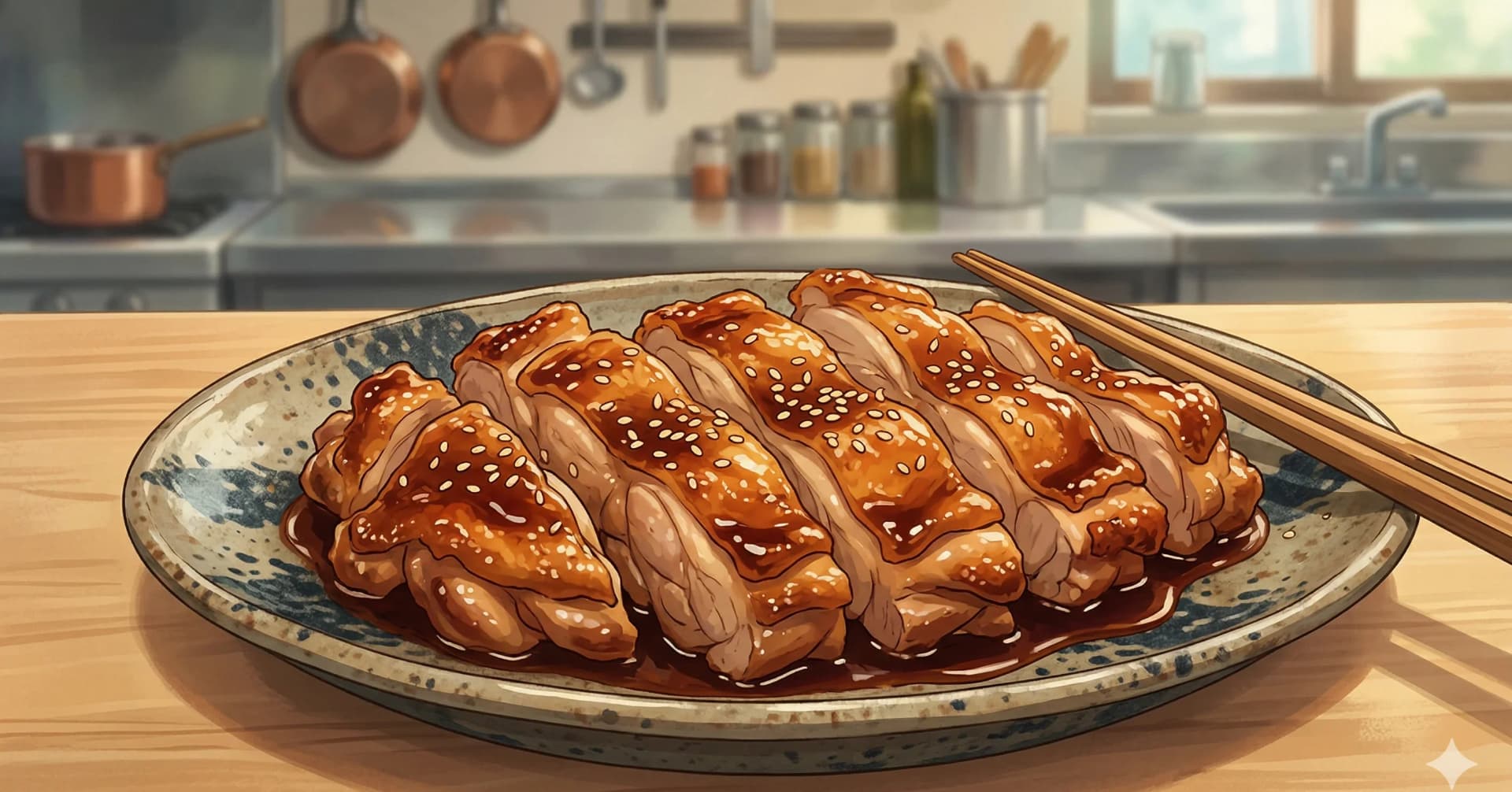
Pan-seared chicken thighs glazed in a homemade sauce of soy, mirin, sake, and sugar until lacquered and glossy
Teriyaki is one of those words that has traveled so far from its origin that it barely resembles its source. In Japanese, teri means luster or shine, and yaki means to grill or pan-cook. The name describes the technique perfectly: you cook protein in a hot pan, then glaze it repeatedly with a sweet soy sauce until the surface takes on a deep, lacquered shine. There is no thick, corn-starch-bound sauce. There is no pineapple. The real thing is leaner, sharper, and far more elegant than its Western adaptations suggest.
The sauce itself is almost absurdly simple. Equal parts soy sauce, mirin, and sake, with a measure of sugar, heated together until the sugar dissolves and the alcohol softens. That is it. The complexity comes from the cooking process, from the Maillard reaction on the chicken skin, from the way the sauce reduces in the pan and concentrates against the hot metal, building layer after layer of caramelized sweetness over the savory base. You spoon the sauce over the chicken as it cooks, tilting the pan, letting gravity do most of the work.
This recipe uses boneless, skinless chicken thighs scored on the underside to help them cook evenly and absorb the glaze. The technique is common in Japanese home cooking and produces consistently juicy results. If you enjoy this style of sweet-savory Japanese cooking, shogayaki (ginger pork) uses a similar pan-glazing method with ginger as the dominant flavor. For a Thai approach to grilled chicken with a different spice profile, gai yang is worth exploring. And if you want to see how Korean cooks handle beef with sweet soy, bulgogi makes for a natural comparison.
At a Glance
Yield
2 servings
Prep
10 minutes
Cook
10 minutes
Total
20 minutes
Difficulty
Easy
Ingredients
Chicken Ingredients
- 340to 450 g boneless (2–3 thighs), skinless chicken thighs
- 1 pinchfine sea salt
- 1 pinchfreshly ground black pepper
- 1 tbspneutral oil, such as vegetable or rice bran oil
Method
- 1
Combine the sauce. Stir the soy sauce, mirin, sake, and sugar together in a small bowl. If the sugar does not dissolve easily at room temperature, microwave the mixture for 20 to 30 seconds and stir again until the liquid is clear and uniform. Set aside.
- 2
Prepare the chicken. Place the thighs smooth side down on a cutting board. Using a sharp knife, score the flesh side in a crosshatch pattern at roughly 1 cm intervals, cutting about halfway through the thickness of the meat but not all the way through. This helps the thighs cook evenly and allows the glaze to penetrate. If any thigh is noticeably thicker on one side, press it open gently with your palm to flatten it to an even thickness. Season both sides lightly with salt and pepper.
- 3
Sear the first side. Heat a large frying pan over medium-high heat until a drop of water flicked onto the surface evaporates on contact. Add the oil and swirl to coat. Place the chicken smooth side down in the pan. Press each piece firmly with a spatula for the first 30 seconds to ensure full contact with the hot surface. Cook without moving for about 5 minutes, until the underside is golden and you can see the color climbing up the edges of the meat. The kitchen should smell toasty and savory, not burnt.
- 4
Cook the second side. Flip the chicken. Press again briefly with the spatula. Reduce the heat to low, cover the pan, and let the chicken steam for 3 minutes. The residual heat and trapped moisture will cook the interior gently. When you lift the lid, the surface should look opaque and the juices pooling around the thighs should run mostly clear.
- 5
Remove excess fat. Uncover the pan. If there is a noticeable pool of rendered fat, carefully tilt the pan and blot the grease with a folded paper towel, or pour it off into a heatproof container. Removing the fat keeps the sauce from turning greasy and allows it to cling directly to the chicken.
- 6
Glaze the chicken. Increase the heat to medium. Give the sauce a quick stir and pour it into the pan. It should sizzle immediately on contact. Tilt the pan and use a spoon to baste the chicken repeatedly, spooning the bubbling sauce over the top of each piece. As the sauce heats, it will begin to thicken and darken. Continue basting for 1 to 2 minutes, turning the chicken once, until the sauce coats the meat in a glossy, mahogany-colored layer and the chicken is cooked through. The sauce should look syrupy and stick to the back of the spoon, not pool thinly on the plate.
- 7
Rest and slice. Transfer the chicken to a cutting board and let it rest for 2 minutes. Slice each thigh crosswise into strips about 1.5 cm wide. The interior should be juicy and just cooked through, with no pink remaining. Arrange the slices on a plate, slightly overlapping. Spoon any remaining sauce from the pan over the top.
Key Ingredient Benefits
Chicken thighs: Dark meat has a higher fat content than breast, which keeps it moist during pan-cooking and makes it more forgiving of slight overcooking. Thighs provide approximately 26 g of protein per 100 g of cooked meat, along with niacin, vitamin B6, phosphorus, and selenium. The fat in chicken thighs is roughly split between saturated and monounsaturated fatty acids.
Soy sauce: Naturally brewed soy sauce undergoes months of fermentation, during which enzymes break down soy and wheat proteins into amino acids, including glutamic acid, which contributes umami. A single tablespoon contains about 900 mg of sodium, making it the primary source of salt in this dish. Reduced-sodium varieties contain roughly 40 percent less.
Mirin: True hon-mirin is a fermented rice condiment with about 14 percent alcohol and a rich, layered sweetness. It contains oligosaccharides, which brown more slowly than simple sugars, contributing to the glossy rather than burnt appearance of teriyaki glaze. Avoid mirin-style condiments (mirin-fu) if possible, as they are sweetened with corn syrup and lack depth.
Sake: Cooking sake (ryorishu) is fine here, though drinkable sake produces a cleaner flavor. The alcohol content (typically 15 percent) evaporates during cooking, leaving behind subtle fruity and floral notes that round out the sauce.
Why This Works
The teriyaki sauce achieves its characteristic gloss through the interplay of sugar and mirin. As the liquid reduces in the pan, the sugars concentrate and begin to caramelize, creating a thin, sticky glaze that adheres to the chicken surface. Mirin, a sweet rice wine with roughly 14 percent sugar content, contributes a more complex sweetness than sugar alone and helps suppress the fishy or gamey notes sometimes present in dark meat.
Sake serves a dual purpose. Its alcohol acts as a solvent for flavor compounds that are not water-soluble, drawing out deeper savory notes from the soy sauce. As the alcohol evaporates during cooking, it carries volatile aroma compounds into the air, which is why the dish smells so appealing while it cooks.
Scoring the chicken thighs on the flesh side increases the surface area exposed to heat, which promotes faster, more even cooking. It also creates small channels that the sauce fills during glazing, so the teriyaki flavor reaches the interior of the meat rather than sitting only on the surface.
Pressing the chicken with a spatula during the initial sear maximizes contact between the meat and the pan. Chicken thighs tend to curl when they hit heat because the muscle fibers contract unevenly. Pressing counteracts this and ensures a uniformly golden crust.
Substitutions & Variations
Chicken breast: Boneless breast can replace thighs but will cook faster and dry out more easily. Pound the breast to an even 1.5 cm thickness before cooking, reduce the initial sear to 3 to 4 minutes per side, and watch the glazing step carefully to avoid overcooking.
Skin-on thighs: For crispier results, use skin-on thighs and start them skin side down. Cook the skin side for 6 to 7 minutes until deeply golden and the fat has rendered, then flip and proceed. The skin adds richness and a satisfying textural contrast under the glaze.
Sake substitute: Dry sherry works in a pinch. Water is a distant fallback that will produce a flatter-tasting sauce but will still function.
Mirin substitute: Mix 15 ml of sake or dry sherry with 5 g of sugar for each tablespoon of mirin needed. The result is less nuanced but serviceable.
Sugar: Light brown sugar or honey can replace white sugar. Honey will darken the glaze slightly and add a floral note. Reduce the quantity by about a quarter since honey is sweeter by volume.
Spicy variation: Add 5 to 10 ml of gochujang or a pinch of shichimi togarashi to the sauce for warmth. This moves the dish closer in spirit to something like pad krapow, where heat and sweetness play against each other.
Bowl-style (donburi): Serve sliced teriyaki chicken over a bowl of steamed rice with a side of quick-pickled cucumber and a soft-boiled egg for a satisfying one-bowl meal.
Serving Suggestions
Steamed Japanese short-grain rice is the most natural companion. The slightly sticky grains catch the sauce and make every bite complete. A bowl of miso shiru alongside rounds out the meal in the way most Japanese home cooks would serve it.
For a more composed plate, pair the teriyaki chicken with blanched broccoli, steamed green beans, or a simple salad of shredded cabbage dressed with rice vinegar and a pinch of salt. Quick-pickled cucumbers or daikon provide a crisp, tart counterpoint to the sweet glaze.
If you are building a larger Japanese dinner, nikujaga makes a comforting side that echoes the sweet-soy flavor profile in a gentler, brothier form. For variety across cuisines, teriyaki chicken pairs surprisingly well alongside Korean bulgogi, as the two dishes share a love of sweet soy marinades but differ enough in aromatics to feel distinct on the same table.
Storage & Reheating
Refrigerator: Store cooked teriyaki chicken in an airtight container for up to 3 days. Keep the sauce and chicken together so the meat stays moist.
Freezer: Freeze in a sealed container or zip-top bag with as much air removed as possible. The chicken keeps well for up to 1 month. Thaw overnight in the refrigerator before reheating.
Reheating: Warm sliced chicken gently in a covered skillet over medium-low heat with a splash of water or additional sauce to prevent drying. Alternatively, reheat in a microwave at reduced power in 30-second intervals. Avoid high heat, which will toughen the protein and scorch the sugar in the glaze.
Sauce only: The teriyaki sauce can be made in larger batches and stored separately in the refrigerator for up to 2 weeks. It thickens when cold. Warm gently before using.
Cultural Notes
Teriyaki (照り焼き), literally "shine-grilled" or "luster-grilled," names a cooking technique with a complicated international biography. In Japan, teriyaki is a method rather than a dish. You brush a soy-mirin-sake-sugar glaze onto fish, chicken, or meat as it grills, building a glossy lacquered surface in successive coats. The technique is most often applied to fish in traditional Japanese cooking, especially buri (yellowtail), tai (sea bream), and saba (mackerel). Chicken exists in the tradition too, but it sits well outside the center of what Japanese cooks mean by teriyaki.
The "teriyaki chicken" that the rest of the world knows is largely a Japanese-American invention. Japanese immigrants to Hawaii in the late 19th and early 20th centuries adapted the teriyaki method to chicken, which was much easier to source than premium Japanese fish on a Pacific island. The Hawaiian Japanese-American version then traveled to mainland Japanese-American restaurants in California and Washington during the post-war period. The standardized version most non-Japanese people picture, a thick sweet sauce poured over chicken thighs, was popularized in Seattle by the restaurateur Toshihiro Kasahara in the 1970s. From Seattle, that "Seattle teriyaki" style spread across the United States and eventually into global restaurant chains.
The gap between Japanese and international teriyaki has produced its own small cultural literature. Japanese food writers regularly point out that the dish most of the world calls "teriyaki chicken" bears almost no resemblance to traditional Japanese teriyaki preparations. The international version runs much sweeter, much thicker, almost always uses a bottled sauce, and treats the glaze as a sauce rather than as a built-up surface. Traditional Japanese teriyaki is lighter and more subtle.
Inside modern Japan, "teriyaki chicken" mostly exists as a Western-style restaurant dish that Japanese consumers order when they want American-style chicken. The dish has, in a sense, been reverse-imported. The Japanese-American invention has come back to Japan as a foreign food. It remains one of the most internationally beloved "Japanese" dishes, even though its exact relationship to actual Japanese cooking is complicated.
Nutrition Facts
Calories: 572kcal (29%)|Total Carbohydrates: 15g (5%)|Protein: 41g (82%)|Total Fat: 34g (44%)|Saturated Fat: 9g (45%)|Cholesterol: 190mg (63%)|Sodium: 920mg (40%)|Dietary Fiber: 0g (0%)|Total Sugars: 12g
You Might Also Like
Ratings & Comments
Ratings & Comments
Ratings
Share your thoughts on this recipe.
Sign in to rate and comment