Korean Cuisine
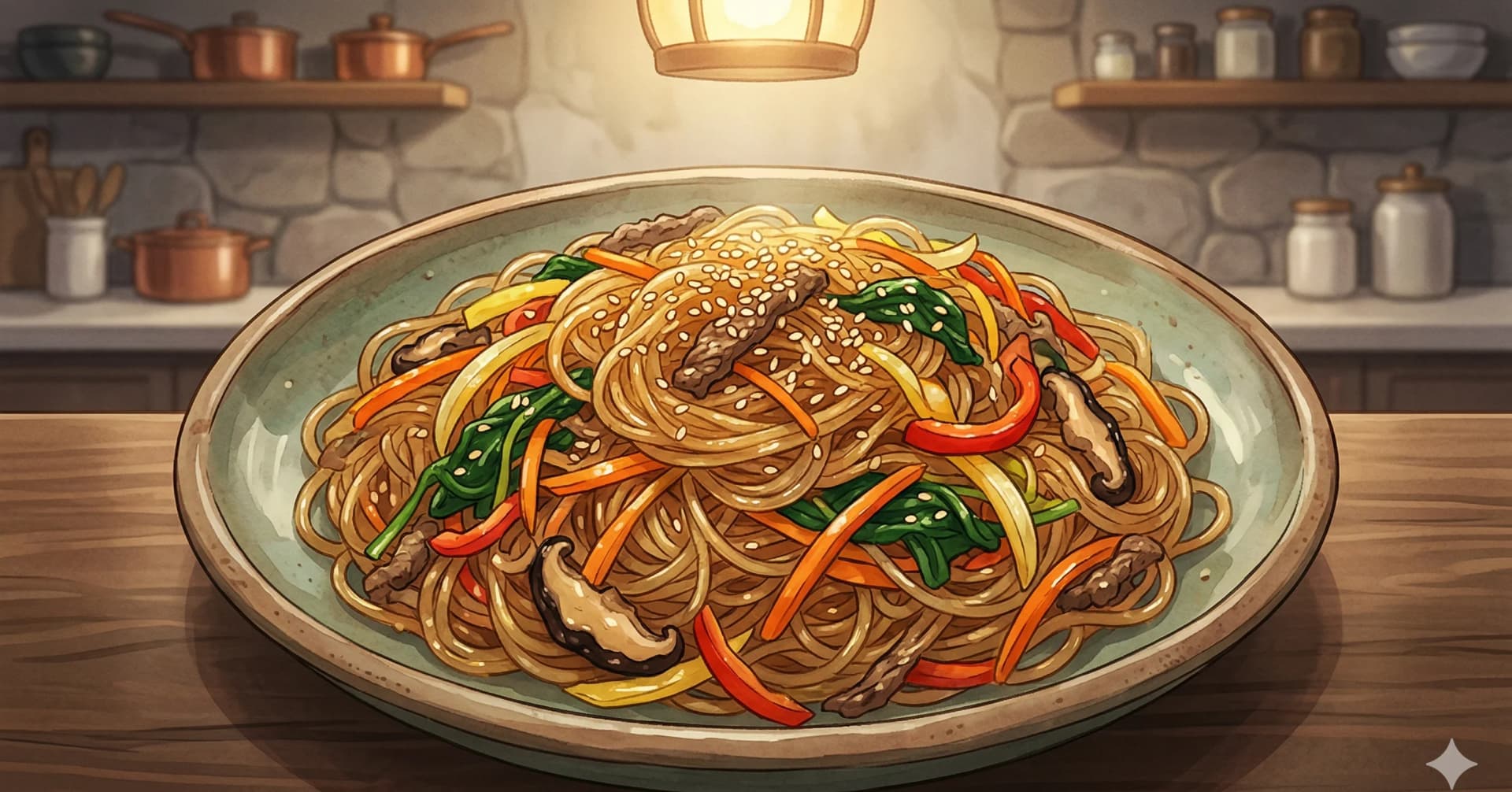
Japchae (Glass Noodles with Vegetables)
Sweet potato starch noodles stir-fried with colorful vegetables, beef, and sesame oil
Japchae is the dish that disappears first at every Korean gathering. At birthday parties, holiday tables, and potluck dinners, the platter of glossy, chewy noodles threaded with colorful vegetables somehow empties before anything else. There is something about the combination of textures, the slippery softness of sweet potato starch noodles, the slight crunch of just-cooked carrot and bell pepper, the silky spinach, that makes it almost impossible to stop reaching for one more bite.
The key to excellent japchae is patience with the process. Each ingredient gets its own time in the pan because they all cook at different rates and need different amounts of seasoning. Spinach is blanched, squeezed dry, and dressed with sesame oil. Carrot is sauteed for barely a minute so it keeps its crunch. Mushrooms need a couple of minutes longer. The beef and soaked shiitakes are stir-fried with a splash of soy sauce and garlic. The noodles are boiled, drained, and snipped into manageable lengths, then tossed with sesame oil and soy sauce while still warm so they absorb the flavors.
All of these individually prepared components meet in a large mixing bowl, where you toss them together by hand with a final seasoning of garlic, soy sauce, sugar, sesame oil, and black pepper. The egg garnish, thin golden crepes cut into delicate strips, goes on last. The result is a dish that looks elaborate (and it is) but tastes light, fresh, and balanced.
Japchae was once a royal court dish, served to kings during the Joseon dynasty. The original version did not even include noodles. They were added later, and the dish evolved into the version beloved across Korea today. Whether you make it for two people on a weeknight or quadruple the recipe for a crowd, it never disappoints.
At a Glance
Yield
4 servings
Prep
40 minutes
Cook
30 minutes
Total
1 hour 10 minutes
Difficulty
Medium
Ingredients
Noodle Ingredients
- 4 ozdangmyeon (sweet potato starch noodles) (about ½–1 potato)
- 2 tsptoasted sesame oil
- 1 tspsoy sauce
- 1 tspsugar
Marinade Ingredients
- 4 ozbeef tenderloin (or sirloin), cut into thin 6 cm strips
- 2large dried shiitake mushrooms, soaked in warm water for 2 to 3 hours, sliced thin
- 1 clovegarlic, minced
- 1 tspsugar
- 2 tspsoy sauce
- 1 tsptoasted sesame oil
- 1/4 tspground black pepper
Vegetable Ingredients
- 4 ozspinach, washed and drained
- 1medium carrot, cut into matchsticks
- 1medium onion, thinly sliced
- 2to 3 green onions, cut into 5 cm pieces
- 4to 5 white mushrooms, thinly sliced
- 1/2red bell pepper, cut into thin strips (optional)
- —Vegetable oil for stir-frying
- —Kosher salt
To Garnish
- 1large egg, yolk and white separated
- —Pinch of salt
- 1 tspvegetable oil
To Finish
- 1 clovegarlic, minced
- 1 tbspsoy sauce
- 2⅞ tspsugar
- 2 tsptoasted sesame oil
- 1/2 tspground black pepper
- 1 tbsptoasted sesame seeds
Method
- 1
Marinate the beef and mushrooms. Combine the sliced beef and soaked shiitake mushrooms in a bowl with 1 clove minced garlic, 1 teaspoon sugar, 2 teaspoons soy sauce, 1 teaspoon sesame oil, and 1/4 teaspoon black pepper. Mix well, cover, and refrigerate while you prepare the other ingredients.
- 2
Make the egg garnish. Separate the egg yolk from the white. Beat the yolk with a pinch of salt. Heat a nonstick pan with 1 teaspoon oil, wipe off excess, and turn off the heat. Pour the beaten yolk into the pan, tilting to spread it into a thin crepe. Let it cook in the residual heat for about 1 minute, flip gently, and let sit 1 minute more. Cool and cut into thin strips. Set aside.
- 3
Blanch the spinach. Bring a large pot of water to a boil. Add the spinach and blanch for 30 seconds to 1 minute. Remove with a slotted spoon, keeping the water boiling for the noodles. Rinse the spinach under cold water, squeeze out excess moisture, and chop a few times. Toss with 1 teaspoon soy sauce and 1 teaspoon sesame oil. Transfer to a large mixing bowl.
- 4
Cook the noodles. Add the dangmyeon to the boiling water. Cover and cook for about 8 minutes, stirring occasionally, until the noodles are soft and chewy but not mushy. Drain and cut a few times with kitchen scissors. Toss the noodles with 2 teaspoons sesame oil, 1 teaspoon soy sauce, and 1 teaspoon sugar while still warm. Add to the mixing bowl.
- 5
Stir-fry the vegetables separately. Heat a skillet over medium-high heat with a little vegetable oil for each batch: - **Onion and green onion** with a pinch of salt, about 2 minutes until slightly translucent. Transfer to the mixing bowl. - **White mushrooms** with a pinch of salt, about 2 minutes until softened. Transfer. - **Carrot** for 20 seconds, then add **red bell pepper** and cook 20 seconds more. Transfer.
- 6
Cook the beef mixture. Heat the skillet with a little oil over medium-high heat. Stir-fry the marinated beef and shiitake mushrooms for 2 to 3 minutes until the beef is no longer pink and the mushrooms are softened and glossy. Transfer to the mixing bowl.
- 7
Combine everything. Add 1 clove minced garlic, 1 tablespoon soy sauce, 1 tablespoon sugar, 1/2 teaspoon black pepper, and 2 teaspoons sesame oil to the mixing bowl. Toss everything together by hand, gently but thoroughly, until all the ingredients are evenly distributed and coated with seasoning. Add the egg strips and sesame seeds. Toss once more.
- 8
Serve. Transfer to a large platter and serve at room temperature. Japchae is delicious warm, at room temperature, or even cold.
Key Ingredient Benefits
Dangmyeon (sweet potato starch noodles): Made entirely from sweet potato starch and water, these noodles are naturally gluten-free. They are higher in carbohydrates and lower in protein than wheat noodles. Their distinctive chewy, slightly bouncy texture comes from the high amylose content of sweet potato starch. See also glass noodles used in other Asian cuisines.
Spinach: Provides folate, vitamin K, iron, and lutein. Blanching briefly and shocking in cold water preserves the bright green color and removes some of the oxalic acid that can interfere with mineral absorption.
Shiitake mushrooms: Contain lentinan, a polysaccharide that has been studied for immune-modulating properties in clinical research. Dried shiitakes have a more concentrated flavor than fresh due to the formation of guanylate, a natural umami compound, during the drying process.
Why This Works
Cooking each vegetable separately preserves its individual color, texture, and flavor. If everything went into the pan together, the spinach would turn brown, the carrot would be either raw or the mushrooms overcooked, and the distinct character of each ingredient would be lost. This is why japchae looks so vibrant.
Tossing the noodles with sesame oil immediately after draining prevents them from clumping into a sticky mass. The oil coats the surface of each noodle, and the soy sauce and sugar season them while they are still warm and absorbent.
Cutting the noodles with kitchen scissors after draining makes them easier to toss with the other ingredients and easier to eat. Long, uncut dangmyeon noodles tend to clump together.
Substitutions & Variations
Protein: Pork shoulder can replace beef. For a vegetarian version, omit the meat and add extra mushrooms and perhaps some pressed tofu, sliced thin and pan-fried until golden.
Vegetables: Japchae is flexible. Zucchini, asparagus, baby bok choy, or Korean chives can all be substituted based on what is available. The key is variety in color and texture.
Noodles: Dangmyeon is traditional and produces the best texture. Mung bean glass noodles can substitute but cook faster and have a different, more delicate texture.
Make-ahead: Japchae holds well at room temperature for several hours, making it ideal for bibimbap assembly or potluck gatherings.
Serving Suggestions
Japchae works as a main course over steamed rice or as a side dish alongside grilled meats like bulgogi or galbi. It often appears at Korean birthday celebrations and holiday tables. For a complete meal, serve with gyeran-jjim and kkakdugi.
Storage & Reheating
Refrigerator: Store in a sealed container for up to 3 days. The noodles may stiffen as they cool. Let the japchae come to room temperature before serving, or reheat gently.
Reheating: Warm in a skillet over medium heat with a splash of water and a drizzle of sesame oil. Toss frequently. The noodles will soften and regain their chewiness. Add a pinch of sugar and soy sauce to refresh the seasoning.
Freezer: Not recommended. The noodles and vegetables do not freeze well.
Cultural Notes
Japchae (잡채) has one of the most royal pedigrees in the entire Korean repertoire. The name literally means "mixed vegetables" (jap = mixed, chae = vegetables), and the dish was invented for King Gwanghaegun of the Joseon dynasty (reigned 1608-1623). Court records credit a nobleman named Yi Chung with creating the dish to please the king at a royal banquet, and the recipe was such a success that Yi was promoted to one of the highest ministerial positions in the kingdom. The original 17th-century japchae contained no noodles at all. It was an elaborate arrangement of finely sliced, individually sautéed vegetables and meats.
The sweet potato starch noodles (dangmyeon, 당면) that now define modern japchae were a later addition. They were incorporated only in the early 20th century, during the period of Japanese colonial rule and the introduction of new starch-processing technologies. The transformation from a luxury vegetable dish to a noodle-centric celebration food was rapid. By the 1940s japchae had standardized into its contemporary form.
In modern Korean culture, japchae is the celebratory noodle dish above all others. It is the platter that anchors birthday parties, weddings, doljanchi (돌잔치, first-birthday celebrations), Chuseok and Lunar New Year tables, and corporate banquets. The symbolism is straightforward. Noodles represent long life. The colorful vegetables represent abundance and prosperity. The labor-intensive preparation, where each vegetable is traditionally sautéed separately to preserve its color and texture, represents the host's investment in their guests.
Japchae is one of the few dishes in the Korean canon that is equally welcome warm or at room temperature, which makes it ideal for buffet-style spreading.
Nutrition Facts
Calories: 335kcal (17%)|Total Carbohydrates: 42.3g (15%)|Protein: 11.7g (23%)|Total Fat: 14.2g (18%)|Saturated Fat: 3.2g (16%)|Cholesterol: 65mg (22%)|Sodium: 494mg (21%)|Dietary Fiber: 3.4g (12%)|Total Sugars: 8.8g
You Might Also Like
Ratings & Comments
Ratings & Comments
Ratings
Share your thoughts on this recipe.
Sign in to rate and comment