Korean Cuisine
Bibimbap (Mixed Rice Bowl)
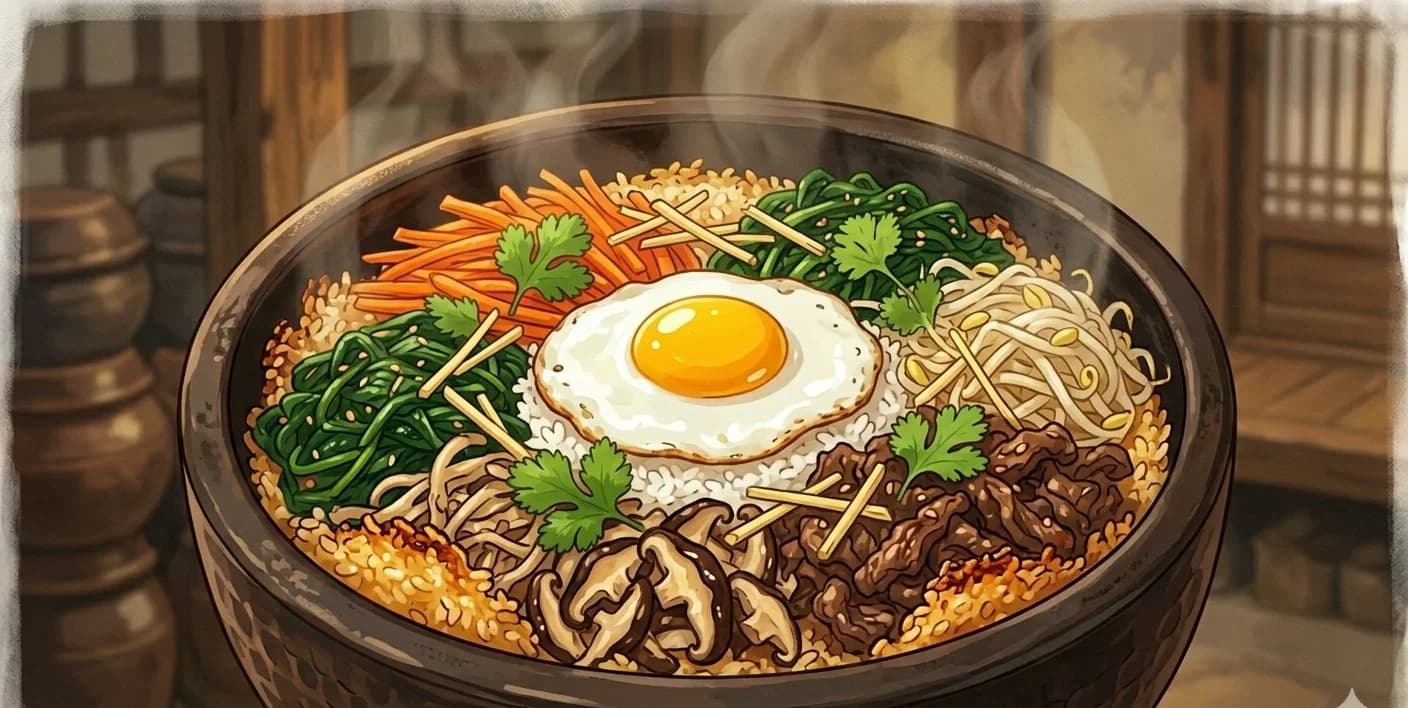
A vibrant bowl of rice topped with seasoned vegetables, beef, a fried egg, and gochujang sauce
Bibim means "mixed" and bap means "cooked rice." Before eating, you are supposed to stir everything together, blending the individually prepared toppings into the rice with a generous spoonful of gochujang sauce until every grain is coated in flavor. This is a dish built on the idea that harmony comes from bringing distinct elements together.
The beauty of bibimbap lies in the care given to each topping. Every vegetable is prepared separately, blanched or sauteed or salted, then seasoned with a simple combination of sesame oil, garlic, soy sauce, or salt. Soybean sprouts are boiled and dressed. Spinach is blanched, squeezed dry, and tossed with sesame oil. Carrot and zucchini are cut into matchsticks and quickly sauteed. Cucumber is salted, drained, and dressed. The beef is marinated in soy sauce, sugar, and sesame oil before a quick stir-fry. Each component tastes complete on its own, but together in the bowl, with a fried egg on top and gochujang tying it all together, they become something greater.
At home in Korea, bibimbap is often the delicious practical solution for using up leftover banchan. Any combination of seasoned vegetable side dishes from the refrigerator can top the rice. But for a more considered version, the recipe below includes the classic toppings that create the traditional color palette. In Korean food culture, the five colors (red, green, yellow, white, and black) represent balance and well-being.
For the full experience, serve it in a dolsot, a heated stone bowl that makes the bottom layer of rice turn golden and crispy while the rest stays soft. The sizzling sound when you mix is part of the pleasure.
At a Glance
Yield
4 servings
Prep
40 minutes
Cook
30 minutes
Total
1 hour 10 minutes
Difficulty
Medium
Ingredients
Rice Ingredients
- 1¼ lbshort-grain rice, rinsed and cooked with slightly less water than usual
Beef Ingredients
- 8 ozthinly sliced tender beef (rib eye, sirloin, or tenderloin)
- 1½ tbspsoy sauce
- 1⅞ tspsugar
- 2 tspsesame oil
- 2 tsprice wine (mirin)
- 2½ tspminced garlic
- 1 tbspchopped scallion
- —Pinch of ground black pepper
Vegetable Ingredients
- 8 ozsoybean sprouts (kongnamul) or mung bean sprouts
- 8 ozspinach (about 1 bunch)
- 5 ozcucumbers (about 2 small), halved lengthwise and thinly sliced
- 4 ozmushrooms (shiitake, cremini, or white), thinly sliced
- 5 ozcarrots (about 2 medium), cut into matchsticks
- 2 tbspminced garlic, divided
- —Chopped scallion, divided (about 3 tablespoons total)
- —Toasted sesame oil
- —Toasted sesame seeds
- —Kosher salt
- —Cooking oil
To Finish
- 4eggs
Sauce Ingredients
- ¼ cupgochujang
- 1⅞ tspsugar
- 1 tbspsesame oil
- 1 tbspwater
Method
- 1
Cook the rice. Rinse the rice until the water runs clear. Cook in a rice cooker or heavy pot using slightly less water than normal. The rice for bibimbap should be a little drier and firmer than usual, so it holds up when mixed.
- 2
Prepare the beef. Cut the beef into thin 2-inch strips. Mix with soy sauce, sugar, sesame oil, rice wine, garlic, scallion, and black pepper. Marinate for 20 minutes. Stir-fry in a hot skillet over high heat for 2 to 3 minutes until cooked through and slightly caramelized. Set aside.
- 3
Prepare the soybean sprouts. Bring 2 cups of water to a boil. Add the sprouts and boil for 2 to 3 minutes. Drain quickly and cool under cold running water. Toss with 1/2 teaspoon minced garlic, 1 teaspoon sesame oil, 1/2 teaspoon sesame seeds, and salt to taste.
- 4
Prepare the spinach. Blanch the spinach in salted boiling water until just wilted, about 40 seconds. Drain and shock in cold water. Squeeze out excess water and cut into 3-inch lengths. Toss with 1 tablespoon chopped scallion, 1/2 teaspoon minced garlic, 1 teaspoon sesame oil, 1/2 teaspoon sesame seeds, and salt to taste.
- 5
Prepare the cucumbers. Sprinkle the sliced cucumbers with about 1/2 teaspoon salt and set aside for 10 to 15 minutes. Squeeze out excess liquid. Toss with 1 tablespoon chopped scallion, 1/2 teaspoon minced garlic, 1 teaspoon sesame oil, and 1/2 teaspoon sesame seeds.
- 6
Saute the mushrooms and carrots. Thinly slice the mushrooms and carrots. Saute each vegetable separately in a lightly oiled skillet for 1 to 2 minutes over medium-high heat, sprinkling with about 1/4 teaspoon salt each.
- 7
Fry the eggs. Fry 4 eggs sunny-side up in a little oil, or to your preference.
- 8
Make the bibimbap sauce. Combine the gochujang, sugar, sesame oil, and water in a small bowl. Mix until smooth.
- 9
Assemble the bowls. Divide the rice among 4 large bowls. Arrange the prepared vegetables and beef in neat sections on top of the rice, creating a colorful pattern. Top each bowl with a fried egg. Drizzle with a little sesame oil and sprinkle with sesame seeds. Serve with the bibimbap sauce on the side.
- 10
Mix and eat. Add as much gochujang sauce as you like, then mix everything together thoroughly with a spoon before eating. ### For dolsot bibimbap (optional) Lightly oil a stone or earthenware bowl with 1 teaspoon sesame oil. Place over medium heat. Add a serving of rice, arrange toppings, and cook for several minutes until you hear the rice crackling and sizzling at the bottom. The bottom layer will turn golden and crispy. Top with the egg and serve immediately.
Key Ingredient Benefits
Soybean sprouts (kongnamul): A staple Korean ingredient rich in plant-based protein, dietary fiber, and vitamin C. The sprouting process increases bioavailability of nutrients compared to dried soybeans. In Korean medicine tradition, kongnamul soup is considered a remedy for hangovers.
Gochujang: A fermented condiment made from red chili peppers, glutinous rice, fermented soybeans, and salt. The fermentation process produces beneficial enzymes and may improve nutrient bioavailability. Research on fermented chili pastes suggests potential benefits related to antioxidant activity, though these findings are preliminary.
Spinach: One of the most nutrient-dense leafy greens, providing folate, vitamin K, iron, and lutein. Brief blanching preserves most nutrients while reducing oxalic acid content.
Sesame seeds: Contain calcium, magnesium, iron, and zinc. The lignan compounds sesamin and sesamol have been studied for their antioxidant properties.
Why This Works
Preparing each vegetable separately is the single most important step. Each topping needs a different cooking time and a different level of seasoning. Blanching the spinach for just 40 seconds keeps it bright green and tender. Salting the cucumbers draws out excess water so they stay crisp rather than making the rice soggy. Quick sauteing of mushrooms and carrots at high heat preserves their texture and develops their natural sweetness.
Using slightly drier rice ensures the grains remain distinct when mixed with the sauce and toppings. Wet or sticky rice would become pasty and heavy.
The gochujang sauce binds everything together. Its fermented, spicy, slightly sweet character reaches into every part of the bowl, unifying disparate flavors into a coherent whole.
Substitutions & Variations
Protein: Ground beef seasoned the same way works well if pre-sliced beef is unavailable. Chicken bulgogi or spicy pork can replace beef. For vegetarian bibimbap, omit the meat and use pan-fried tofu instead.
Vegetables: This recipe is flexible. Zucchini, bell pepper, radish salad (musaengchae), fernbrake (gosari), and bellflower root (doraji) are all traditional options. Use whatever combination is available. The minimum for a satisfying bowl is sprouts, spinach, carrot, and gochujang.
Sauce: Ssamjang or a soy-sauce-based dressing (yangnyeom ganjang) can replace gochujang for a non-spicy version.
Serving Suggestions
Bibimbap is a complete meal in one bowl. The traditional accompaniment is a simple soybean sprout soup made from the water used to boil the sprouts, seasoned with a little salt and topped with chopped scallion. Kimchi-jjigae or doenjang-jjigae also pair beautifully alongside.
Leftover namul vegetables from bibimbap preparation can be served separately as banchan with other meals, or used in japchae or kimbap the next day.
Storage & Reheating
Prepared toppings: Each vegetable topping can be stored separately in the refrigerator for up to 3 days, making bibimbap an excellent meal-prep option. Cook the rice fresh for each meal.
Assembled bibimbap: Best eaten immediately after mixing. The rice absorbs the sauce quickly and becomes softer over time.
Dolsot bibimbap: Cannot be stored assembled. The stone bowl must be served immediately to enjoy the crispy rice.
Cultural Notes
Bibimbap (비빔밥) is probably the single most internationally recognized Korean dish. Its origins inside Korea are humbler and more layered than the global fame suggests. The most widely cited theory traces it back to the rural farming custom of gōldonggban (골동반), a way of cleaning out the rice bowl by mixing leftover side dishes (banchan) and grains together at the end of a meal. The dish also has roots in jesa (제사), the ancestral memorial rite, where the food first offered to ancestors was later mixed and shared by the family.
A second origin story locates bibimbap in the royal kitchens of Jeonju, where it evolved into a court dish prepared with carefully arranged seasonal vegetables, yukhoe (raw beef), pine nuts, and gold leaf. Jeonju bibimbap is still the most prestigious regional style. The city in North Jeolla province is officially recognized by UNESCO as a Creative City of Gastronomy, in part because of this dish. Other regional variants exist: Jinju bibimbap, with raw beef and a chilled, lighter feel. Tongyeong haemul bibimbap, with seafood.
The dolsot (돌솥, hot stone bowl) version popular at restaurants is a relatively modern adaptation. It dates to the 1960s in Jeonju, and the stone bowl is what produces the prized crackly layer of nurungji (눌어붙은 밥) at the bottom. Astronaut bibimbap, developed for the Korean space program, made Yi So-yeon the first person to eat the dish in orbit in 2008.
Today bibimbap shows up everywhere from school lunchrooms to Michelin-starred dining rooms. The underlying logic, rice plus seasoned vegetables plus a unifying sauce, has turned out to be one of the most flexible templates in the global vegetarian repertoire.
Nutrition Facts
Calories: 735kcal (37%)|Total Carbohydrates: 94.6g (34%)|Protein: 32.8g (66%)|Total Fat: 23.8g (31%)|Saturated Fat: 6.4g (32%)|Cholesterol: 254mg (85%)|Sodium: 892mg (39%)|Dietary Fiber: 5.3g (19%)|Total Sugars: 8.9g
You Might Also Like
Ratings & Comments
Ratings & Comments
Ratings
Share your thoughts on this recipe.
Sign in to rate and comment