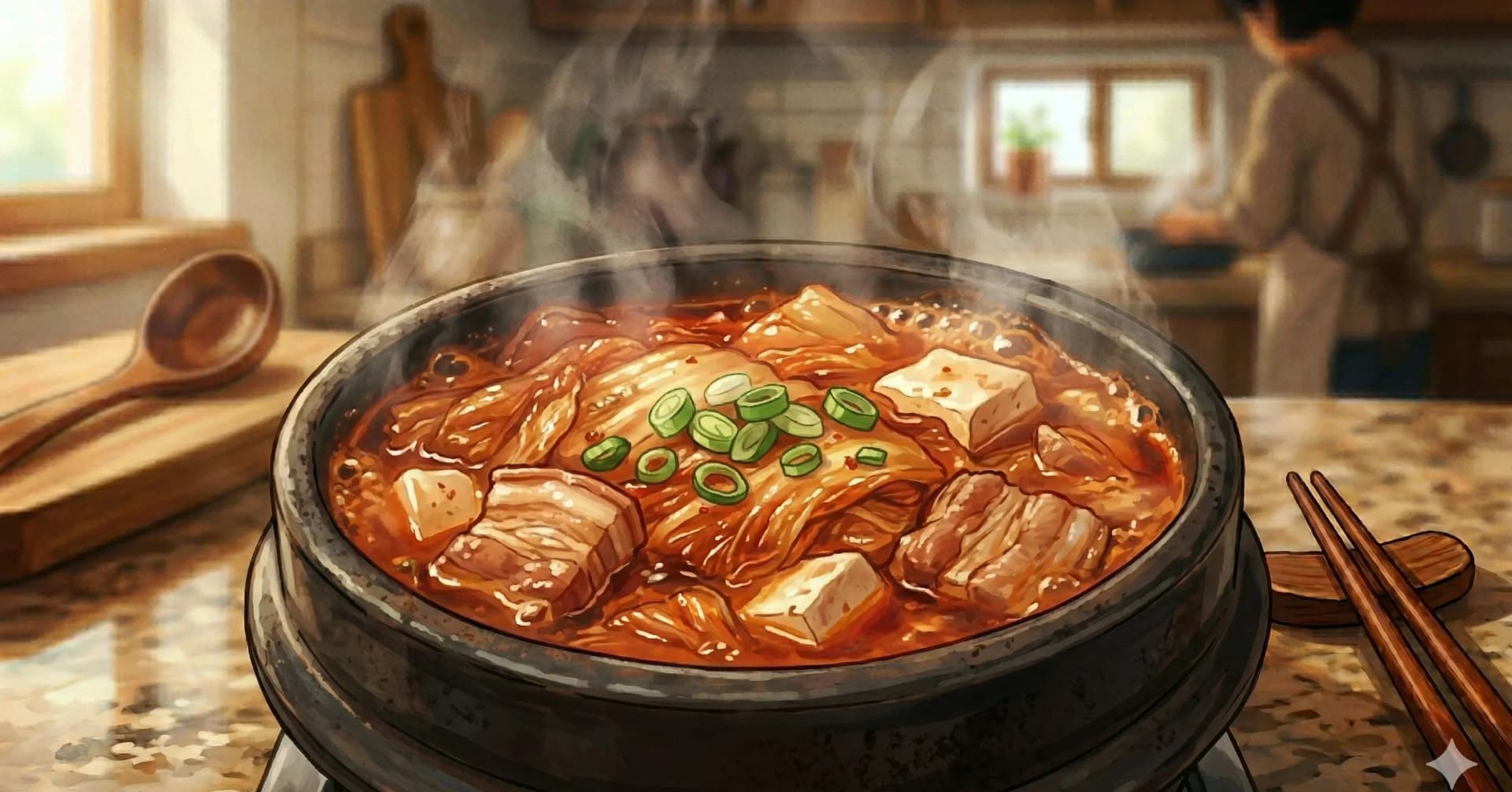
Korean Cuisine
Kimchi Jjigae (Kimchi Stew)
A tangy, fiery stew made with well-fermented kimchi, pork belly, and tofu that gets better with age
Every Korean household has a version of kimchi jjigae, and opinions about the right way to make it run strong. Some families insist on pork. Others swear by tuna from a can. Some add gochujang for extra body; others say the kimchi should do all the work on its own. The one thing everyone agrees on is that the kimchi must be old. Fresh, crisp, newly-made kimchi will not produce a good jjigae. You need kimchi that has been fermenting for weeks, ideally months, until it has gone sour, pungent, and deeply funky. That sourness is the engine of the whole stew.
When aged kimchi hits a hot pan with fatty pork, something wonderful happens. The lactic acid in the kimchi cuts through the richness of the pork, the pork fat mellows the sourness of the kimchi, and together they produce a broth that is tangy, savory, and just a little sweet. Add a block of tofu cut into thick slabs, let everything bubble until the tofu is hot through, and you have a stew that is impossibly satisfying for how little work it takes.
This is the dish that Korean university students cook in their dorm rooms, that office workers eat for lunch at neighborhood restaurants, that families serve at dinner three or four nights a week. It is as fundamental to Korean cooking as rice itself. If you have a jar of aging kimchi in the back of your refrigerator, you already have most of what you need.
The relationship between kimchi jjigae and doenjang jjigae is like the relationship between two siblings. Both are everyday stews, both are served bubbling hot with rice, but they have different temperaments. Doenjang jjigae is earthy and grounding. Kimchi jjigae is sharp and energizing.
At a Glance
Yield
2 to 3 servings
Prep
10 minutes
Cook
30 minutes
Total
40 minutes
Difficulty
Easy
Ingredients
- ¾ lbwell-fermented kimchi, cut into bite-sized pieces
- 4 ozpork belly, cut into bite-sized pieces
- ½ cupkimchi juice (from the jar)
- 6 ozmedium-firm tofu, cut into slabs about 1 cm thick
- 2scallions, roughly chopped
- 2to 5 g gochugaru (Korean red chili flakes), to taste
- 1½ tspminced garlic
- 1 tbspcooking oil (vegetable or sesame)
- 480to 600 ml water or anchovy-kelp broth
- —Salt, soup soy sauce, or soy sauce to taste
- —Black pepper to taste
Method
- 1
Cook the kimchi and pork. Heat the oil in a medium pot over medium-high heat. Add the kimchi, pork, gochugaru, and garlic. Cook, stirring occasionally, for 5 to 7 minutes until the kimchi has softened noticeably and the pork is cooked through. The kimchi will deepen in color and the pot will smell intensely savory.
- 2
Add the liquid. Pour in the kimchi juice and 2 to 2.5 cups of water or broth. Stir well. Bring to a boil, then reduce heat to medium. Cover and simmer for about 15 minutes, allowing the flavors to concentrate and the broth to develop body.
- 3
Add the tofu. Lay the tofu slabs gently into the stew. Add the scallions. Season with salt or soy sauce and pepper to taste. Return to a boil and cook for another 5 minutes until the tofu is heated through and has absorbed some of the red broth.
- 4
Serve. Bring the pot directly to the table while still bubbling. Serve with steamed rice. The stew should be eaten hot, with the rice cooling each spoonful.
Key Ingredient Benefits
Kimchi. Korea's most iconic fermented food, made from salted and seasoned napa cabbage. The fermentation produces lactic acid bacteria, primarily Lactobacillus species, which are associated with gut health in traditional practice and some modern research. Kimchi also contains vitamins A and C, as well as capsaicin from the chili. For this stew, the kimchi should be at least 2 to 3 weeks old, ideally older. Many Korean families keep a dedicated supply of kimchi specifically for jjigae.
Kimchi Juice. The brine that accumulates in the kimchi jar. It is concentrated with lactic acid, garlic, ginger, and chili flavor. Never throw it away. It is one of the most flavorful liquids in any kitchen and is excellent in stews, marinades, and dressings.
Tofu. Medium-firm tofu works best here, holding its shape in the bubbling stew while absorbing the spicy, tangy broth. For an even softer texture, use the silken-style tofu found in sundubu-jjigae.
Why This Works
The quality of kimchi jjigae depends almost entirely on the quality and age of the kimchi. Well-fermented kimchi has a high concentration of lactic acid, which gives the stew its characteristic tangy punch. Fresh kimchi lacks this acidity and produces a stew that tastes flat. If your kimchi is not sour enough, add the kimchi juice, which concentrates the fermented flavors.
Cooking the kimchi with the pork before adding liquid serves the same purpose as building a flavor base in any stew. The sugars in the kimchi caramelize slightly, the pork fat renders and coats the kimchi, and the gochugaru blooms in the heat. All of this happens before the liquid goes in, which means the broth starts with a deeper, more complex flavor.
Pork belly is the traditional choice because the fat content is high. That fat does not just add richness. It emulsifies into the broth and carries the capsaicin and other fat-soluble flavor compounds across your palate more effectively than lean meat would. If you find pork belly too rich, pork shoulder is a good middle ground.
Substitutions & Variations
Tuna kimchi jjigae. Omit the pork entirely. Add one can of tuna (with its oil) to the pot along with the kimchi. This is one of the most popular quick lunch versions in Korea.
Spam. Sliced Spam is a common and beloved addition, especially in army stew (budae jjigae) traditions. Add it with the tofu.
Seafood. Clams, shrimp, or squid can replace or supplement the pork. Add them late so they do not overcook.
Ramyeon noodles. Adding a block of instant ramyeon noodles to the stew in the last 3 minutes of cooking is a popular home-style variation.
Vegetarian. Omit the pork, use vegetable broth, and double the tofu. The kimchi provides enough flavor to carry the stew on its own.
Serving Suggestions
Kimchi jjigae and a bowl of steamed rice is a complete meal. For banchan, gyeran-jjim (steamed egg) is the classic pairing, its mild, custard-like texture a perfect foil for the stew's heat. A plate of oi-muchim adds cool crunch.
For a Korean barbecue table, kimchi jjigae is often served alongside bulgogi or galbi. The stew's acidity helps cut through the richness of the grilled meat.
A bowl of kongnamul guk alongside the stew rounds out a warming, everyday Korean dinner.
Storage & Reheating
Kimchi jjigae is one of those stews that improves with time. Store in an airtight container in the refrigerator for up to 4 days. The flavors deepen and meld as it sits, and many Koreans prefer it reheated the next day.
Reheat on the stovetop over medium heat until bubbling. Add a splash of water if the broth has thickened. The tofu may become slightly denser after sitting, which some people prefer.
The stew can be frozen for up to 2 months, though the tofu will develop a spongier texture after freezing. Consider freezing the stew base without tofu and adding fresh tofu when reheating.
Cultural Notes
Kimchi jjigae (김치찌개) is, along with doenjang jjigae, one of the two stews that anchor Korean home cooking. Doenjang jjigae covers the mellow, fermented-soybean register of Korean comfort. Kimchi jjigae covers its sharp, fermented-cabbage counterpart. The two stews together cover the full Korean fermented-flavor spectrum, and most Korean households cook one or the other multiple times every week.
The dish's defining requirement is muk-eun-ji (묵은지), well-aged sour kimchi. Kimchi that has fermented for two months or longer and developed the deep, almost wine-like sour funk that fresh kimchi lacks. Younger kimchi cannot produce the same depth of broth no matter how long it simmers. This is why kimchi jjigae is fundamentally a winter and spring dish in traditional Korean kitchens. It uses up the cabbage kimchi made during the previous autumn's kimjang (김장), as that kimchi reaches its peak fermented sourness in late winter.
Regional and household variations on kimchi jjigae are close to infinite. Pork belly is the most common protein. Canned tuna (chamchi, 참치) is a popular weeknight version, especially in younger households. Some families add Spam. Some add cheese. Some add ramyeon noodles directly to the pot in the final minutes (kimchi ramyeon jjigae). Some add freshly extruded soft tofu (sundubu, see sundubu jjigae). Restaurants in the working-class Mapo neighborhood of Seoul are known for their pork-heavy versions, while restaurants in the older Jongno district are known for the leaner, more broth-forward style.
The smell of kimchi jjigae simmering on a Korean stovetop is, for most Koreans, the most direct olfactory cue of "home" there is.
Nutrition Facts
Calories: 527kcal (26%)|Total Carbohydrates: 68.7g (25%)|Protein: 16.2g (32%)|Total Fat: 27.7g (36%)|Saturated Fat: 9g (45%)|Cholesterol: 28mg (9%)|Sodium: 2244mg (98%)|Dietary Fiber: 10.4g (37%)|Total Sugars: 5.7g
You Might Also Like


Ratings & Comments
Ratings & Comments
Ratings
Share your thoughts on this recipe.
Sign in to rate and comment