Korean Cuisine
Sundubu Jjigae (Soft Tofu Stew)
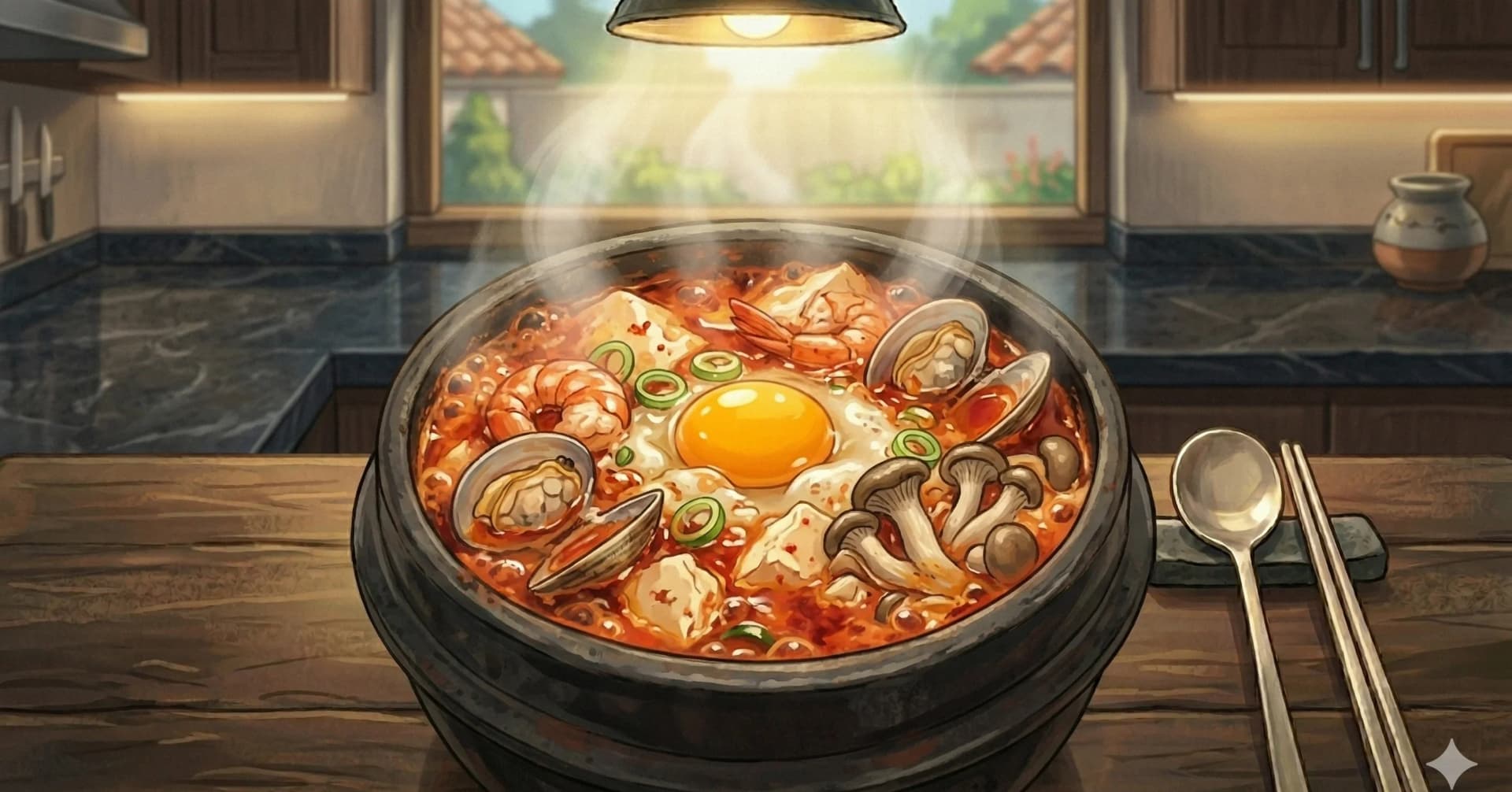
A vibrant, spicy stew of silky soft tofu, seafood, and vegetables in a chili-red broth finished with a raw egg
Sundubu jjigae is one of the fastest, most dramatic dishes in Korean cooking. From cutting board to table takes about twenty minutes, and the stew arrives still roaring in the pot, so hot that the egg you crack on top cooks itself in the residual heat while you watch. That egg, barely set around the edges and still runny in the center, is one of the great pleasures of this dish. You break it into the stew, stir it through, and it enriches the already fiery broth into something silky and voluptuous.
The tofu here is sundubu, a very soft, almost custard-like variety that comes in tubes rather than blocks. It is too delicate to stir-fry or grill. It exists for stews like this one, where it breaks into soft, irregular clouds in the broth and absorbs the chili-red liquid until every piece carries the full flavor of the pot.
The seafood version is perhaps the most popular. Littleneck clams and shrimp cook quickly in the hot broth, adding a briny sweetness that plays off the heat of the gochugaru and the earthiness of the tofu. But sundubu jjigae is infinitely adaptable. Pork, beef, kimchi, mushrooms, or just vegetables can replace the seafood, and the stew will still be excellent.
At Korean restaurants specializing in sundubu, you choose your spice level and your protein, and the stew arrives in a stone pot with the egg already cracked on top. At home, the experience is the same, just a shorter walk from the stove. Serve it with rice and let the contrast between the cool grain and the hot, spicy stew do its work.
At a Glance
Yield
2 servings
Prep
15 minutes
Cook
15 minutes
Total
30 minutes
Difficulty
Easy
Ingredients
- ¾ lbKorean soft tofu (sundubu), or silken tofu
- 4 ozlittleneck clams, scrubbed and cleaned
- 4medium shrimp (about 80 g), peeled and deveined
- 3½ ozenoki mushrooms, bottom stems trimmed
- 2shiitake mushrooms, stems removed (about 20 g), thinly sliced
- 1scallion, sliced diagonally
- 1½ cupanchovy-kelp broth (or water)
- 1 tbspKorean chili oil, or neutral cooking oil
- 1 tbspgochugaru (Korean red chili flakes)
- 1½ tspminced garlic
- 1⅔ tspKorean fish sauce
- 1⅔ tspsoy sauce
- 1egg per serving
- 0 tbspsesame oil
- —Fine sea salt to taste
- —Black pepper to taste
Method
- 1
Build the chili base. Set a stone pot (ttukbaegi) or small heavy pot over medium-low heat. Add the chili oil, gochugaru, and garlic. Stir for about 30 seconds until the oil turns red and the garlic is fragrant. Do not let the chili burn.
- 2
Add the seafood. Add the clams and shrimp to the pot. Stir to coat them in the chili mixture. Add the fish sauce and soy sauce. Cook for about 1 minute, stirring.
- 3
Add the broth. Pour in the anchovy-kelp broth. Increase heat to medium-high and bring to a rapid boil. This should take 2 to 3 minutes.
- 4
Add the tofu and mushrooms. Spoon the soft tofu into the pot in large, irregular pieces. Add the enoki and shiitake mushrooms. Let the stew boil for 2 to 3 minutes until the clams open and the shrimp are pink. Discard any clams that do not open. Season with salt to taste.
- 5
Finish. Crack an egg directly on top of the bubbling stew. Do not stir it in yet. Remove the pot from heat immediately. Garnish with sliced scallion, a grind of black pepper, and a drizzle of sesame oil. Bring the pot to the table while still bubbling.
- 6
Serve. Each person breaks the egg into the stew and stirs it through. Eat with steamed rice, alternating bites of cool rice with spoonfuls of the hot stew.
Key Ingredient Benefits
Sundubu (Soft Tofu). Much softer and more delicate than regular silken tofu, sundubu is sold in tubes at Korean grocery stores. It has a higher water content and a custard-like texture that breaks apart beautifully in the stew. If unavailable, regular silken tofu is the closest substitute, though it holds its shape a bit more.
Littleneck Clams. The clams add brininess and visual appeal. Scrub them under cold running water and discard any that are already open before cooking or that fail to open during cooking. Manila clams are an excellent substitute.
Gochugaru. The spice level of sundubu jjigae is highly personal. Two tablespoons produces a moderately spicy stew. Reduce to 1 tablespoon for mild, or increase to 3 for aggressive heat. The fruity, slightly sweet character of gochugaru is essential; generic red pepper flakes will not produce the same flavor.
Why This Works
Blooming the gochugaru in oil before adding any liquid is the key step. The fat-soluble capsaicin and color compounds in the chili flakes dissolve into the oil, creating a more uniform, rounded heat throughout the stew. Adding dry chili flakes to water produces a harsher, more uneven spiciness.
The anchovy-kelp broth provides a savory foundation that supports the chili and seafood flavors. Plain water works in a pinch, but the stew will taste thinner. To make a quick anchovy-kelp broth, simmer 6 large dried anchovies (heads and guts removed) and a 10 cm (4 inch) piece of dried kelp in 2 cups of water for 10 minutes, then strain. This same broth appears in doenjang jjigae and kimchi jjigae.
Cracking the egg on top at the very end and leaving it undisturbed creates a visual drama and a textural contrast. The white sets partially from the residual heat of the pot, while the yolk stays liquid. When you break it open, the yolk runs into the broth and thickens it slightly, adding richness without heaviness.
Substitutions & Variations
Pork sundubu. Replace the seafood with 85 g (3 oz) thinly sliced pork belly. Cook the pork in the chili base until the fat renders before adding the broth.
Kimchi sundubu. Add 120 g (1/2 cup) chopped aged kimchi with the chili base. The fermented tang pairs beautifully with the soft tofu.
Beef sundubu. Use 85 g (3 oz) thinly sliced beef (ribeye or sirloin). Cook briefly in the chili base before adding broth.
Vegetable only. Omit the seafood and fish sauce. Use vegetable broth or mushroom broth. Add extra mushrooms and a small diced zucchini.
Spice level. For a milder stew, reduce gochugaru to 1 tablespoon and omit the fish sauce. For a very mild version suitable for children, use just 1 teaspoon of gochugaru.
Serving Suggestions
Sundubu jjigae is a complete meal with steamed rice. The stew is intentionally intense, and the plain rice provides the necessary contrast. A few banchan on the side are welcome but not required.
For a fuller table, pair with bibimbap and a bowl of miyeok-guk. The mild seaweed soup offers a gentle counterpoint to the fiery stew.
Oi-muchim and kkakdugi are both natural companions, providing crunch and acidity.
Storage & Reheating
Sundubu jjigae is best eaten immediately. The tofu loses its delicate texture as it sits, and the egg cannot be replicated once stirred in. If you must store leftovers, keep them in the refrigerator for up to 2 days and reheat on the stovetop. Add a fresh egg when reheating.
The chili base (without broth, tofu, or seafood) can be prepared ahead and stored in the refrigerator for up to 3 days. When ready to eat, add the broth, bring to a boil, and add the tofu, seafood, and egg fresh.
This stew does not freeze well due to the tofu and seafood.
Cultural Notes
Sundubu jjigae (순두부찌개) is the youngest of the three great Korean jjigae that anchor everyday Korean home cooking, alongside kimchi jjigae and doenjang jjigae. Sundubu (순두부) refers to a freshly extruded, unmolded soft tofu with a custard-like rather than firm texture, the same uncoagulated curd that has been the foundation of Korean tofu cooking for centuries. The dish itself, in its modern fiery red and seafood-rich form, is largely a 20th-century invention.
The city most associated with the sundubu base is Gangneung, on the east coast of Gangwon province. Gangneung's Chodang Dubu (초당두부) village, named after a 16th-century scholar who first developed the local tofu tradition by using seawater rather than the usual brine coagulants, remains the most prestigious source of Korean sundubu today. Restaurants in the Chodang neighborhood serve sundubu in dozens of variations, and the village holds an annual Chodang Tofu Festival that draws tens of thousands of visitors every October.
The modern restaurant version of sundubu jjigae, fiery red, packed with seafood, served bubbling in an individual stone ttukbaegi pot with a raw egg cracked on top at the table, is a Korean-American invention. The dish was popularized in 1990s Los Angeles by Korean immigrants serving the city's growing Koreatown community, then reverse-imported back to Seoul. The spicier, more theatrical individual-pot version largely replaced the older, gentler shared-pot home recipe.
The Beverly Soon Tofu restaurant chain, founded in Los Angeles in 1986 by Monica Lee, is widely credited as the originator of this style and remains a pilgrimage destination for Korean-American food history enthusiasts.
Nutrition Facts
Calories: 293kcal (15%)|Total Carbohydrates: 25.9g (9%)|Protein: 23.1g (46%)|Total Fat: 13.1g (17%)|Saturated Fat: 2g (10%)|Cholesterol: 168mg (56%)|Sodium: 1057mg (46%)|Dietary Fiber: 4.2g (15%)|Total Sugars: 2g
You Might Also Like

Ratings & Comments
Ratings & Comments
Ratings
Share your thoughts on this recipe.
Sign in to rate and comment